
Understanding the Basics of the ELD Mandate Law for Local Drivers
Determining if a local operation requires an ELD involves looking beyond the daily route and focusing on the vehicle and the nature of the operation.
Defining Local vs. Long-Haul
In the eyes of Canadian regulators, “local” is defined by the operational pattern rather than the vehicle type. A driver is generally considered local — and potentially exempt from ELD use — by operating within a specific radius (typically 160 km) and returning to the work reporting location at the end of every shift. Spending the night away from the home terminal effectively classifies the operation as “long-haul” for that day with respect to hours-of-service and logging requirements.
The 4,500 kg Rule
The requirement for an ELD often starts with the vehicle itself. The mandate generally applies to commercial vehicles operating under federal hours-of-service rules that meet any of these criteria:
- Weight threshold. The vehicle has a gross weight of more than 4,500 kg. Note: Alberta and Saskatchewan have higher thresholds for intra-provincial carriers.
- Passenger capacity. The vehicle is designed to transport more than 10 passengers (including the driver).
- Dangerous goods. The vehicle transports dangerous goods that require placards.
Vehicles meeting these standards without qualifying for a specific exemption (such as the short-haul radius exemption) will generally require an ELD.
Interprovincial vs. Intraprovincial Distinctions
Distinguishing between interprovincial and intraprovincial operations is a common source of confusion.
- Interprovincial operations. Cargo that originates in another province or territory, or is destined for another province, typically places the operation under federal jurisdiction, even if the truck never crosses a provincial border during the trip. Federal ELD rules apply in these cases.
- Intraprovincial operations. Operations where the driver and cargo remain entirely within one province are subject to provincial regulations. Most provinces and territories have adopted ELD requirements that closely mirror the federal mandate, though enforcement dates and administrative details may vary.
Warning for Provincial Drivers: While federal rules allow a 160 km radius and up to 14 hours on duty before returning to the home terminal, some provinces apply different limits or additional conditions for intraprovincial short-haul drivers. Always verify the specific rules enforced by your province or territory.
2026 Enforcement Trends
As 2026 progresses, enforcement in Canada is focusing heavily on device validity and labor compliance. Unlike the U.S. system of self-certification, Canadian ELDs must be certified by an accredited third-party body. A major priority for officers this year is checking the Transport Canada list of certified devices. If a device has been removed from this list (due to a software failure or a manufacturer leaving the market), it is considered illegal. Officers are actively verifying that the software version running in the cab matches the approved version on the official list.
A significant shift for 2026 involves the Canada Revenue Agency (CRA) joining the enforcement conversation. The moratorium on penalties for failing to report payments to “Driver Inc.” operators (incorporated drivers) has ended. While this is a tax issue, it is closely tied to safety. Carriers flagged for “Driver Inc.” violations are being prioritized for National Safety Code (NSC) audits, as these operations frequently bypass Hours of Service and training regulations.
Standard License & “Grey Area” Compliance
A common mistake among operators is assuming that a standard driver’s license (like a Class 5 or Class G) means they are exempt from commercial regulations. This is incorrect. In Canada, compliance is usually determined by the Registered Gross Weight (RGW), not just the license class.
For 2026, enforcement is strictly monitoring vehicles that meet the National Safety Code threshold of 4,500 kg (approx. 9,920 lbs). This limit is significantly lower than the U.S. standard. A driver operating a heavy pickup truck with a trailer that exceeds a combined weight of 4,500 kg is often subject to daily logs and ELD requirements, unless they strictly meet the 160 km radius exemption and return to their home terminal daily.
The Short-Haul Exemption: A Critical Tool
For local operations, the Short-Haul Exemption is the primary method for legally operating without an ELD. However, this is a specific conditional exemption that must be earned daily. Violating its terms voids the exemption for that day, and standard logging rules apply.
The 160 Kilometer Radius Rule
To qualify for this exemption, operations must meet specific criteria.
- 160 km radius. Canada uses a strict distance radius. Drivers must operate within a 160 km radius of their home terminal.
- Start and end location. The driver must return to the same home terminal each day to be released from work. Starting at a terminal and ending at a customer’s site or home generally disqualifies the driver from this specific exemption.
- The duty limits. Drivers must be released from work and begin their off-duty period (minimum 8 consecutive hours) after their shift. During the shift, standard daily limits apply:
- No more than 13 hours of driving.
- No more than 14 hours of on-duty time.
Record-Keeping Requirements
Operating without an ELD does not remove the need for records. In place of a daily logbook (RODS), the motor carrier must maintain accurate records for a minimum of 6 months. These records must show:
- The driver’s name and the date.
- The time the driver reports for duty.
- The time the driver is released from duty.
- The total hours on duty for the day.
Failure to produce these records during a facility audit or inspection can result in a citation for failing to maintain a daily log.
Short-Term Rental Exception
The only “safety valve” for a temporary truck is the Short-Term Rental Exemption. If you rent a truck for 30 days or less, you are not required to use an ELD, provided you carry a copy of the rental agreement in the cab. You cannot renew the agreement for the same vehicle to extend this exemption.

Other Key Exemptions Local Drivers Should Know
While the short-haul rule is the most common, other specific exemptions can prevent local fleets from purchasing unnecessary equipment. Understanding these nuances ensures efficient compliance management.
Pre-2000 Model Year Exemption
This exemption is based strictly on the vehicle’s registration.
- The details. Vehicles with a chassis model year of 1999 or older are exempt from the ELD mandate.
- Clarification. While the regulation refers to the vehicle model year, Transport Canada enforcement generally accepts the engine model year. This means a newer ‘glider kit’ fitted with a pre-2000 engine is typically exempt from the ELD mandate, provided documentation of the engine year is kept in the vehicle.
- Documentation. Ensure the vehicle registration is available to prove the model year during an inspection.
Driveaway-Towaway Operations
This applies specifically when the commercial motor vehicle is the cargo itself.
- Qualifying scenarios. Examples include delivering a new truck from a factory to a dealership.
- The condition. If the vehicle being driven is the commodity being delivered, an ELD is not required. However, if you are driving a tow truck hauling another vehicle, you typically require an ELD unless you fall under the short-haul exemption.
Agricultural Exemptions
Drivers hauling agricultural products benefit from flexibility, though rules vary by province.
- The radius. Federally, drivers generally do not need a logbook if they are transporting primary agricultural products within a 160 km radius of the place where the product was produced.
- Provincial variance. Many provinces have specific rules for “farm plated” vehicles that may offer wider radiuses or weight exemptions. Always verify the specific rules of the province you are operating in.
Mixed-Use Vehicle Considerations (Personal Conveyance)
Personal Conveyance (PC) allows for the personal use of a commercial vehicle while Off-Duty.
- The guideline. PC permits the use of the truck for personal reasons, such as commuting home. The vehicle must be unloaded, and trailers unhitched.
- The distance limit. Canada enforces a strict maximum of 75 km per day for Personal Conveyance.
- The restriction. PC cannot be used to advance the load, go for maintenance, or move towards the next pick-up. Exceeding 75 km in a day switches the status back to “Driving” and impacts your cycle hours.
Strict adherence to PC guidelines is essential to maintain accurate logs and avoid falsification violations.
Common Compliance Challenges for Local Drivers
Local operations face a unique set of compliance hurdles that differ significantly from long-haul trucking. While long-haul drivers settle into a steady rhythm of driving, local drivers manage frequent stops, complex duty status changes, and the constant risk of inadvertently breaking exemption rules.
Stop-and-Go Delivery Patterns
High-frequency delivery routes create a complex log of duty status changes.
- Duty status accuracy. Drivers making 10 to 20 stops a day must ensure their status accurately reflects their activity. While the “Driving” status triggers automatically once the vehicle reaches approximately 8 km/h, the driver must manually switch to “On-Duty Not Driving” upon arrival at a delivery site.
- Best practices. Maintaining a habit of updating status immediately upon stopping ensures the 14-hour on-duty limit is tracked accurately and prevents “Driving” time from accumulating while the vehicle is stationary but idling.
Yard Moves and Personal Conveyance
Misunderstanding these special driving categories is a frequent source of violations during audits.
- Yard moves. This status allows for moving the vehicle within a terminal, depot, or customer yard without triggering driving time. It requires the driver to remain in an “On-Duty” status and limits operation strictly to non-public roadways.
- Personal conveyance limits. As discussed, using the vehicle for personal transportation is permitted under specific conditions, but using it to position the vehicle closer to a work location or staging area for the next day is considered driving time.
Crossing the Line: When Exemptions Don’t Apply
The most critical challenge for local fleets is managing the transition from “exempt” to “non-exempt.”
- Unexpected route changes. A detour or additional pickup that pushes a driver beyond the 160 km radius immediately voids the short-haul exemption for that day.
- Traffic and delays. Extended loading times or traffic congestion can easily push a shift beyond the 14-hour on-duty limit. Once that limit is exceeded, the exemption no longer applies, and a standard daily log must be completed for the entire day.
- Emergency compliance. Fleets must have a protocol in place for these situations. Drivers should carry blank paper logs or have an ELD installed and ready to use if exemption limits are exceeded.
Documentation Management
For exempt drivers, the time record is the legal equivalent of a logbook.
- Paperwork consistency. Time records must clearly show the start time, end time, and total hours on duty for each day. Missing or incomplete records are treated with the same seriousness as a missing log during a roadside inspection.
Maintaining audit-ready records requires diligence. Ongoing training ensures that drivers understand the ELD mandate law for local drivers, applicable exemptions, and when they must transition to full electronic logging.
HOS247 ELD: The Smart Solution for Local Fleets
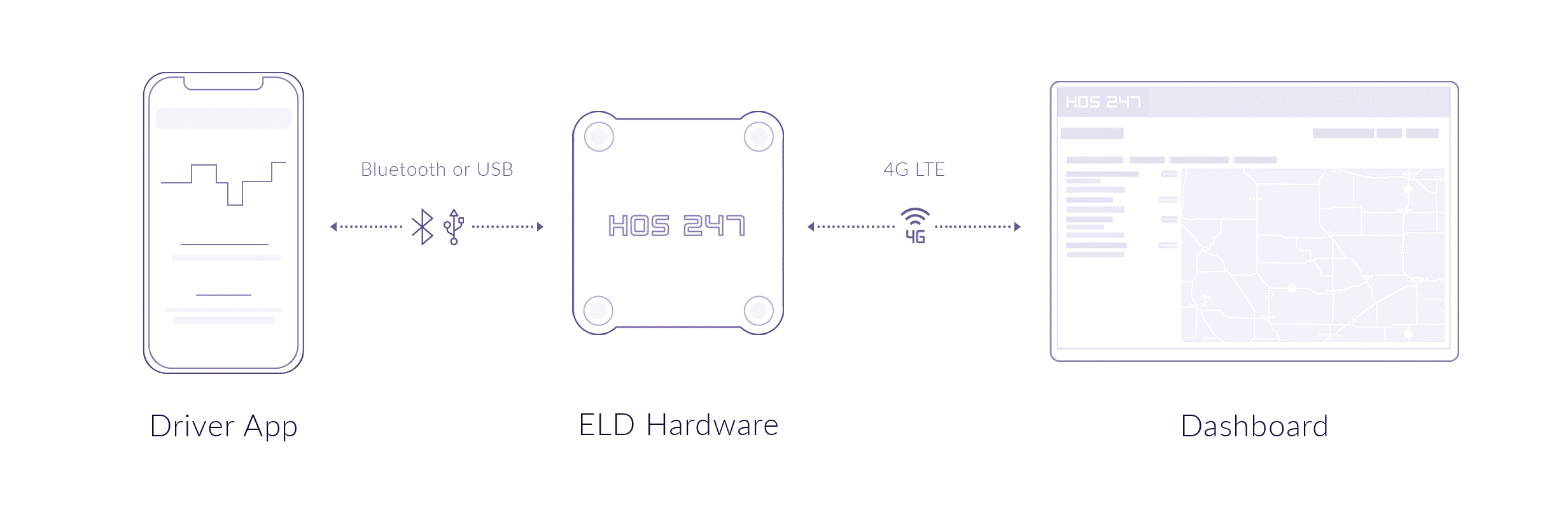
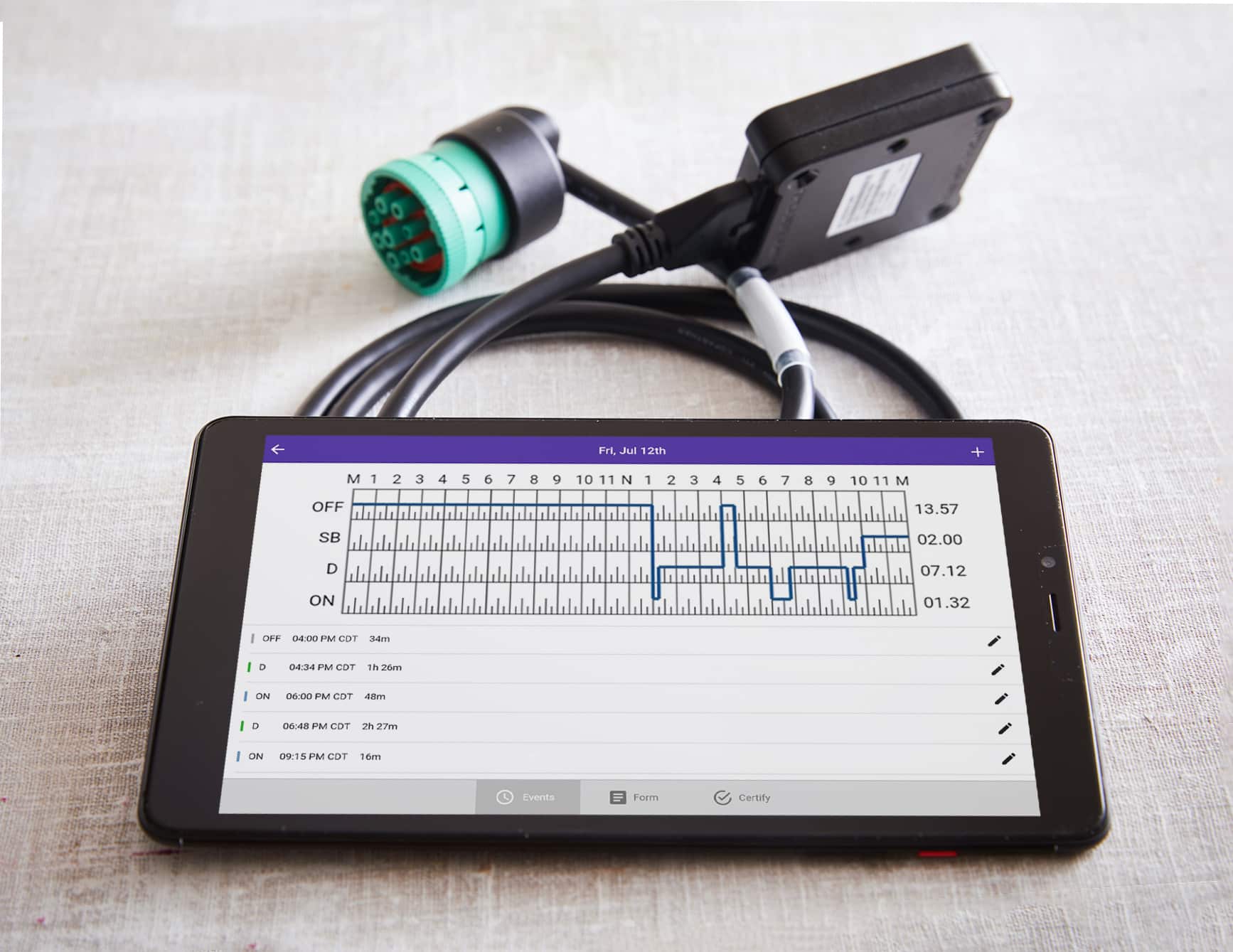
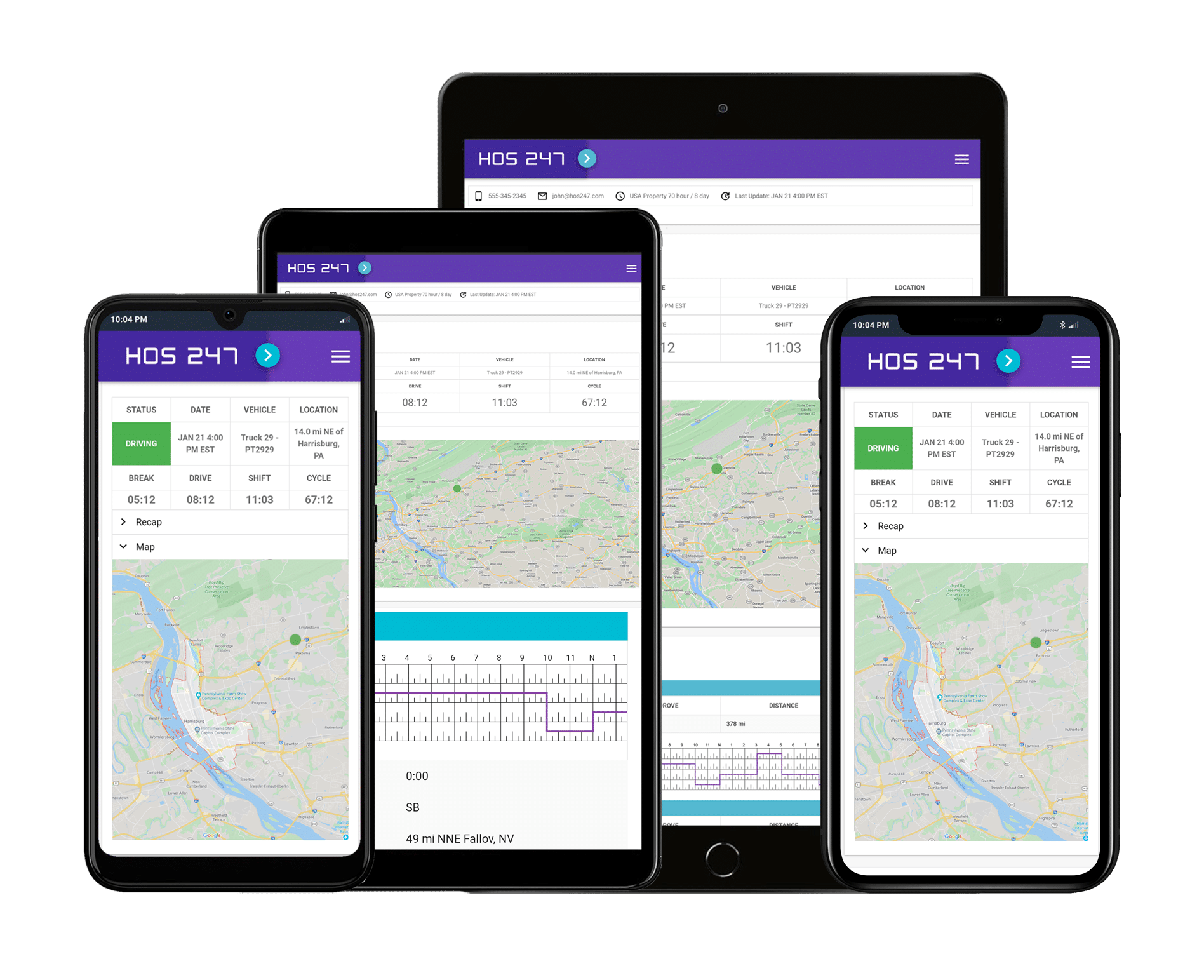
Local fleets require technology that adapts to variable schedules and frequent stops. The HOS247 system is designed to provide the flexibility and simplicity that local operations demand, ensuring compliance without slowing down deliveries.
Tailored Benefits for Local Operations
The HOS247 platform offers specific features that address the needs of short-haul and mixed-use fleets.
- Flexibility features. The service operates on a month-to-month basis with no long-term contracts. This model allows seasonal operations to scale up or down as needed without financial penalties.
- Easy status switching. The system allows for seamless transitions between exempt and non-exempt operation. Drivers can maintain logs when longer trips occur and return to short-haul operation when appropriate.
- Two-week trial. Fleets can test the hardware and software on their actual local routes to ensure compatibility before committing.
User-Friendly Design for Local Drivers
The interface is built for efficiency, minimizing interaction during a busy delivery day.
- Quick installation. The hardware installs in minutes, allowing vehicles to return to service quickly.
- Intuitive interface. The app requires minimal training. Large, clear buttons make duty status changes simple, even for drivers who are less comfortable with technology.
- Automatic duty status. The system automatically switches to “Driving” when the vehicle reaches the regulated speed threshold, ensuring driving time is captured accurately without manual input.
- Violation prevention. Clear visual and audio alerts notify drivers of approaching limits, helping prevent violations before they occur.
Support That Understands Local Operations
Reliable support is essential for maintaining a compliant fleet.
- Multilingual assistance. The support team offers service in English, Spanish, Russian, and Polish, supporting diverse driving teams.
- Seven-day availability. Support is available every day of the week, accommodating varied schedules, including weekends.
- Callback policy. A callback system ensures drivers and managers are not left waiting on hold during critical operating hours.
The HOS247 system provides a dependable, flexible foundation for local fleet compliance. By combining reliable hardware with adaptable software and accessible support, the platform helps ensure local operations remain efficient and compliant.
Best Practices for Maintaining Compliance
For local fleets, compliance is not about simply installing a device; it is about establishing a routine that prevents violations before they happen. Whether operating under an exemption or using an ELD, these actionable strategies ensure operations remain audit-ready.
Route Planning and Buffer Time
The most common violation for short-haul drivers is exceeding the 14-hour on-duty limit due to unforeseen delays.
- Smart scheduling. Dispatchers should build “buffer time” into routes. If a route typically takes close to the daily limit, a single traffic delay or slow receiver can push the driver past the allowable on-duty window, voiding the exemption.
- Radius technology. Use GPS tools to alert dispatchers if a vehicle approaches the 160 km radius limit. This allows for proactive decision-making — either reassigning the load or ensuring the driver switches to a standard daily log immediately.
Training and Communication
Drivers often unknowingly create violations because they misunderstand the rules.
- Regular education. Conduct brief, quarterly training sessions on exemption rules. Ensure every driver understands exactly what triggers a switch from “exempt” to “non-exempt” status.
- Clear policies. Establish a simple company policy for “exception days.” If a driver knows they will exceed exemption limits, they should have a clear protocol to follow: activate the ELD, complete a full daily log, and notify safety management.
- Annotation habits. Train drivers to properly annotate edits or unassigned driving time. A short explanatory note, such as clarifying a “yard move,” can prevent a false violation during a compliance review.
The Hybrid Approach: Using ELDs for Exempt Fleets
Many forward-thinking local fleets in Canada now choose to run ELDs on all vehicles, including those that normally qualify for exemptions.
- Competitive advantage. A fully connected fleet provides real-time visibility for customers, enabling more accurate ETAs and improved service reliability.
- Automated safety. Continuous ELD use eliminates the risk of missing time records or incomplete paperwork. It acts as an automated safeguard, ensuring that if a driver unexpectedly exceeds exemption limits or operates beyond planned parameters, compliance is maintained without relying on paper logs.
- Added benefits. Beyond hours-of-service compliance, the collected data supports IFTA fuel tax reporting and provides vehicle diagnostics and maintenance alerts, helping prevent breakdowns that could disrupt deliveries.
By applying these strategies, fleets can simplify compliance significantly. Whether relying on time records or electronic logs, consistent training and accurate documentation remain the most effective way to avoid penalties and keep vehicles on the road.
Looking Ahead: Future of ELD Rules for Local Drivers
Commercial driving regulations continue to evolve. As the industry moves through 2026, local operators should prepare for potential changes that could affect exemption eligibility and inspection practices.
Regulatory Changes on the Horizon
- Pre-2000 engine review. Canadian regulators continue to evaluate the exemption for pre-2000 model year engines. Safety stakeholders have raised concerns that older vehicles should meet the same electronic tracking standards as newer equipment. Fleets relying on this exemption should closely monitor regulatory updates.
- Stricter “false exemption” enforcement. Enforcement agencies are increasingly focused on identifying carriers that claim short-haul exemptions while routinely operating beyond permitted limits. Inspectors are placing greater emphasis on reviewing time records during roadside inspections to verify compliance with daily on-duty limits.
Technology and Provincial Trends
- Provincial alignment. Provinces and territories are continuing to refine intraprovincial rules to better align with federal hours-of-service and ELD standards. This trend suggests that operational differences between local and long-haul rules may continue to narrow over time.
- Smarter enforcement. Roadside inspections are becoming more technology-driven. Inspectors increasingly rely on electronic data transfers rather than manual document checks. This shift makes it essential for local fleets to use systems capable of producing clean, accurate, and immediate data transfers when requested.
Staying prepared for these developments is critical for long-term business stability. As enforcement becomes more precise and technology advances, outdated compliance methods carry greater risk. Flexible, modern solutions help ensure fleets remain audit-ready as regulations continue to evolve.
Conclusion: Making the Right Choice for Local Operations
Navigating the ELD mandate for local drivers does not need to be stressful. The key is clarity: understanding when exemptions apply, maintaining accurate records, and having a contingency plan for unexpected route or schedule changes.
For many local fleets, moving away from paper records altogether is the prudent choice. While short-haul exemptions remain valuable, managing them manually introduces risk. A dependable ELD system serves as a safeguard, protecting the operation from violations while delivering operational insights that improve efficiency.
Proactively reviewing compliance practices is essential to avoid complications during roadside inspections. For fleets seeking a solution that combines contract flexibility with reliable hardware and software, HOS247 offers a practical option. The 14-day risk-free trial allows operators to experience firsthand how a tailored ELD system can simplify local compliance.
A Note to Our Readers on Compliance
This article is intended for informational and educational purposes only. It is not a substitute for official regulatory guidance or legal advice. HOS and ELD regulations are complex and subject to change and interpretation by enforcement officials. Please always refer to official sources for the most current and accurate information.

I’ve co-founded, built and managed several transportation-related businesses. Now, I’m a founder and CEO of HOS247 – an AI Transportation Platform for trucking companies, freight brokers and other logistics operations. We are transitioning old-style operations to technology-advanced logistics entities and help them to grow their businesses. ELDs (electronic logging devices), fleet tracking and management 2.0 combined with AI-powered dispatch tools.










Optimizing Operations with Mobile Device Fleet Management Solutions in Canada Effective fleet management is crucial for ensuring operational efficiency, cost control, and customer satisfaction in the transportation sector. The widespread adoption of mobile devices and advancements in technology have revolutionized

You’re cruising down the highway when your ELD app crashes — again. Sound familiar? If you’re like thousands of truck drivers across America, you’ve probably dealt with unreliable electronic logging devices that promise the world but deliver headaches. Finding an

Come January 1, 2023, truck drivers must comply with a series of rules and requirements set by Transport Canada. One such requirement is the use of a truck log book to record drivers’ hours of service when operating commercial motor