
What is ELD Compliance Software? (And Why It’s As Important As Hardware)
A compliant ELD system is always made of two distinct parts that must work in perfect harmony. Many users focus only on the hardware, but the software is just as important for the system’s reliability and ease of use.
- The hardware (The Collector). This is the physical device, often a small box, that connects via a cable to the truck’s Engine Control Module (ECM). Its only job is to securely pull raw, uninterpreted data from the engine. This includes engine power status, vehicle motion status, miles driven, and engine hours.
- The software (The Brain). This is the driver’s app on a smartphone or tablet and the web-based portal for the back office. This software does all the heavy lifting. It is responsible for:
- Taking the raw data from the hardware and interpreting it into clean, compliant Hours of Service (HOS) logs.
- Displaying remaining drive time and all HOS clock statuses to the driver in a simple, real-time interface.
- Providing automated alerts and warnings for upcoming breaks or potential violations of Canadian HOS limits (13-hour driving limit, 14-hour on-duty limit, and cycle rules).
- Generating the standardized inspection-ready ELD output file and must support email transfer for roadside inspections; local transfer methods such as USB or Bluetooth are also supported under the Technical Standard.
- Securely storing and managing all driver logs and vehicle data for audits and back-office reporting.
To use an analogy: the hardware is the microphone, but the software is the recording studio, the sound engineer, and the record keeper. A reliable system depends on both, but the software is what you will interact with most of the time. If the software is confusing or unreliable, it doesn’t matter how well the hardware captures data, compliance will be a lot harder.
What to Look for in a Driver-Friendly ELD App
A hard-to-use app is a primary source of frustration, HOS violations, and turnover. The elog app is the co-pilot for compliance, and it must be reliable.
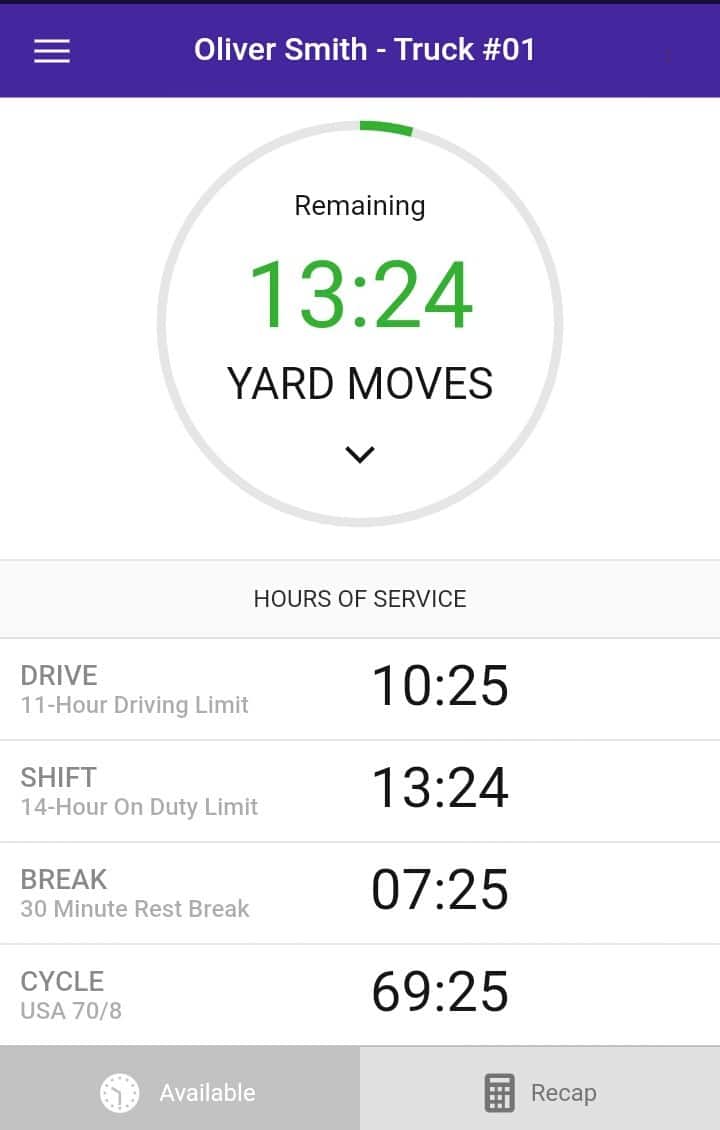
- A simple, intuitive interface. Changing duty status, viewing all remaining HOS clocks (13-hour drive limit, 14-hour on-duty limit, cycle hours), and certifying logs should take only seconds. A cluttered or confusing screen is a liability.
- Proactive HOS violation alerts. Good software helps prevent violations. The app should provide clear, advance warnings (for example, approaching the 13-hour driving limit or 14-hour on-duty limit) that allow time to find a safe place to stop.
- Stable connectivity. The app is the bridge between the hardware and the back office. It must maintain a stable Bluetooth connection to the hardware piece. Apps that crash, freeze, or require constant re-pairing are a major source of frustration and potential data loss.
- Fast inspection mode. A simple, unambiguous button should generate the Transport Canada–compliant output file or display for an officer, minimizing stress during a roadside inspection.
- Easy log management and annotations. Honest mistakes happen, like forgetting to log “Off-Duty” at the end of a shift. The software must allow for easy corrections (which are tracked, as required by Transport Canada) and annotations to explain any edits.
The logbook app is the first and most important line of defense against compliance violations. An unreliable or untrusted app leads to compliance problems and frustration.
Back Office Features of ELD Compliance Management Software
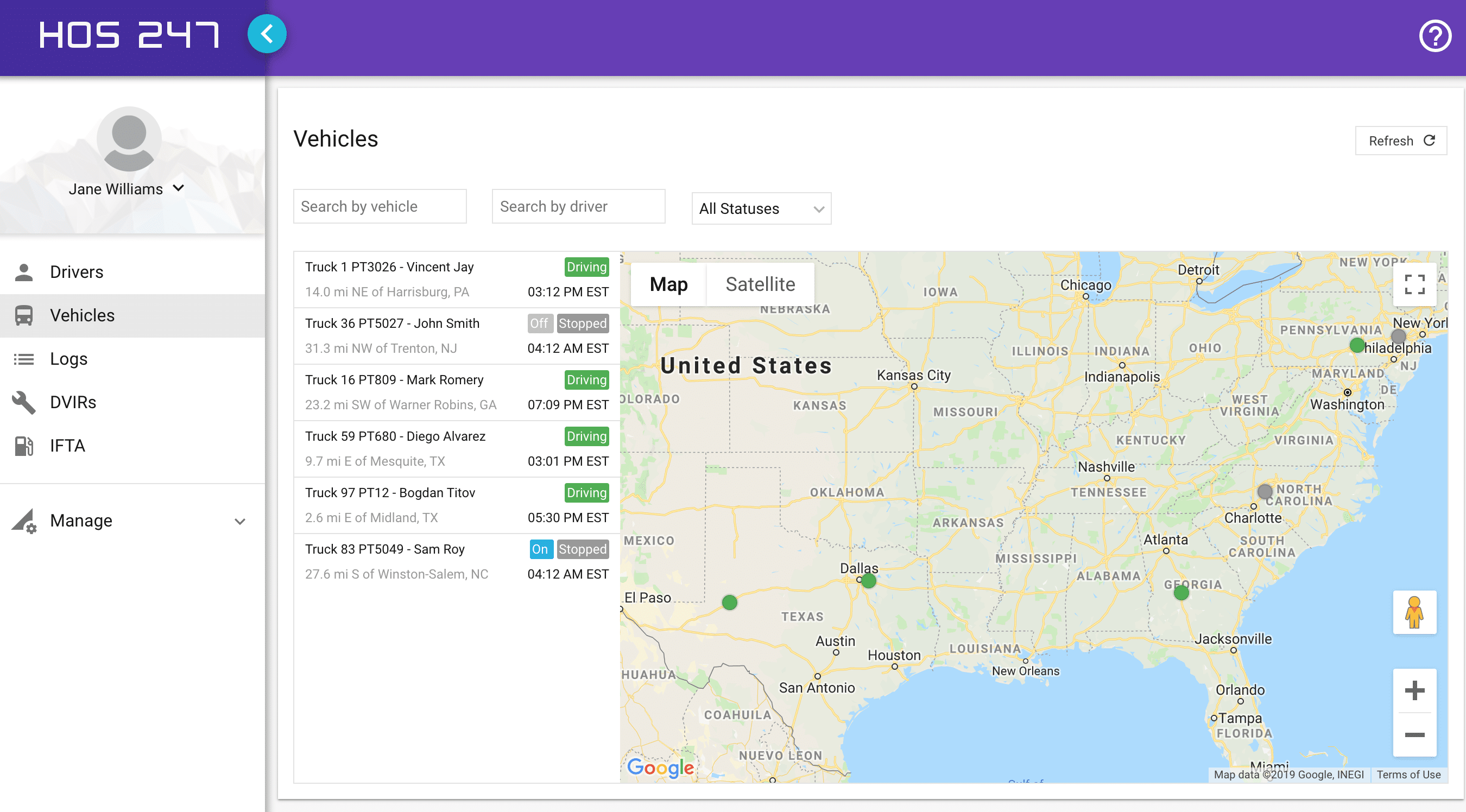
While the app is for the driver, the ELD management software is the powerful back-office portal for the owner-operator or fleet manager. This web-based dashboard is the command center for your entire operation.
- A centralized fleet dashboard. The portal must provide a real-time, at-a-glance view of your entire fleet. A good dashboard instantly shows you who is driving, who is off-duty, and who is nearing a Hours of Service (HOS) limit.
- Automated HOS auditing & log history. This is a core function. The software makes it easy for a manager to review all driver logs, identify potential errors, and manage necessary edits compliantly. All logs must be stored securely for at least 6 months, as required under Canadian ELD regulations.
- IFTA and mileage reporting. This is a key benefit of top-tier software. The system can automatically capture all the mileage data from the ELD and sort it by jurisdiction. This transforms quarterly IFTA reporting from a multi-day manual headache into a simple, accurate report you can complete in minutes.
- Real-time GPS tracking. Since the ELD is already tracking the truck’s location, good software uses this data to help with dispatching, customer service (providing accurate ETAs), and asset security.
- Vehicle diagnostics & maintenance. The software can also read and interpret engine fault codes. Instead of waiting for a driver to report a check-engine light, the system can send an instant alert to the fleet manager. This proactive approach to maintenance helps schedule repairs before they lead to a costly roadside breakdown.
Dependable ELD mandate compliance management software transforms your electronic logbook into a powerful business management asset. It’s designed to save time on paperwork, reduce compliance risk, and lower overall operational costs.
Transport Canada Requirements for ELD Mandate Compliance Management Software
To be compliant, your ELD — which includes the hardware, the driver app, and the back-office portal — must meet specific technical standards set by Transport Canada. This is what the government requires from a compliant logbook:
- Must be part of a certified ELD system. This is the most critical check. Transport Canada requires ELD hardware and software to be tested and certified by a third-party certification body. When you check the list, you are verifying that the entire system (the provider, the specific hardware model, and the corresponding software version) has been certified as compliant.
- Automatic duty status capture. The software must be integral to the hardware. It must automatically record driving status when the vehicle is in motion and must not allow drivers or managers to delete this recorded drive time, as required under the Canadian ELD Technical Standard. Narrowly defined edits (e.g., assignment of “unidentified driver” records, certain team-driver corrections) are allowed, but must be traceable.
- Data transfer capabilities. Canadian rules differ from U.S. rules. The system must be able to produce the standardized ELD Output File and make it viewable to enforcement officers via:
- A screen display, and
- An email transfer of the standardized output file to the address provided by the officer.
- Note: Canada does not use the FMCSA web services or local USB/Bluetooth transfer options.
- Unassigned driving management. The software must capture all driving time, even if no driver is logged in. It must then present these “unassigned driving events” to a driver upon their next login, who must then either accept or reject them. This process must be fully traceable for audits.
Any software you choose must meet these minimum technical standards. But as most professional drivers and fleet managers know, this technical minimum is a world away from a system that is actually reliable, fast, and easy to use in the real world.
HOS247 Delivers a Reliable ELD Compliant Solution
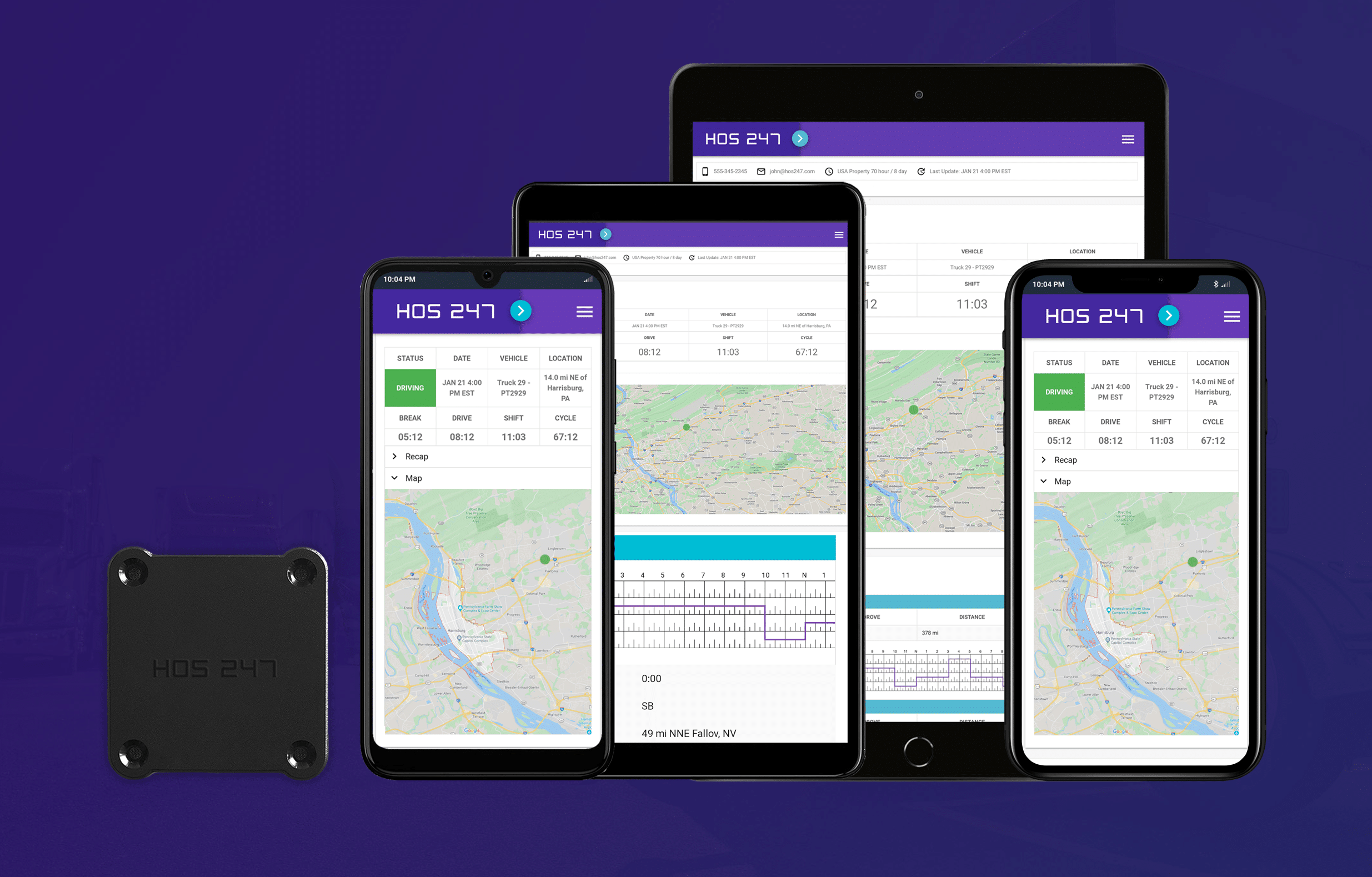
The HOS247 system is built to provide a dependable, easy-to-use solution for HOS compliance. It addresses the common challenges of the mandate by focusing on what matters most: reliable hardware, intuitive software, and accessible support.
Our solution is designed from the ground up to be a complete, stable ecosystem. This ensures the app, the back-office portal, and the hardware all work in perfect sync, providing a straightforward and reliable experience for both drivers and managers. Some of the benefits our customers enjoy include:
- A driver-friendly app that just works. The HOS247 app is designed for simplicity. It is consistently top-rated on the Google Play and Apple App stores because it’s stable, intuitive, and makes HOS compliance straightforward for drivers.
- All-in-one software. The HOS247 ELD-integrated software provides a complete fleet management system. It includes automated IFTA mileage reporting, real-time GPS tracking, and vehicle diagnostics with fault code alerts, all in one platform.
- Hardware and software in perfect sync. The hardware and software are designed to work together seamlessly. This single-ecosystem design ensures a stable connection, reducing data-sync errors and connection drops.
- Top-rated support. Questions will come up. The HOS247 system is backed by multilingual support from real experts who speak English, Spanish, Polish, and Russian, available every day of the week. A callback policy ensures you are not stuck on hold.
- Transparent, no-contract plans. HOS247 offers service with no long-term contracts. This flexibility means you can adjust plans as needed, with the confidence that the service must earn your business every month.
HOS247 provides a complete, top-rated ecosystem where the hardware, software, and support all work together as one seamless system to keep you compliant and on the road.

As an expert in B2B and B2C sales, I’ve dedicated myself to perfecting sales processes and client retention strategies in the logistics and trucking industry. I have significantly contributed to the expansion of the ELD service, catering to retail and wholesale clients in need of HOS247 ELD solutions. My unwavering commitment to implementing state-of-the-art sales techniques and technologies ensures the continuous growth and success of businesses I work with.










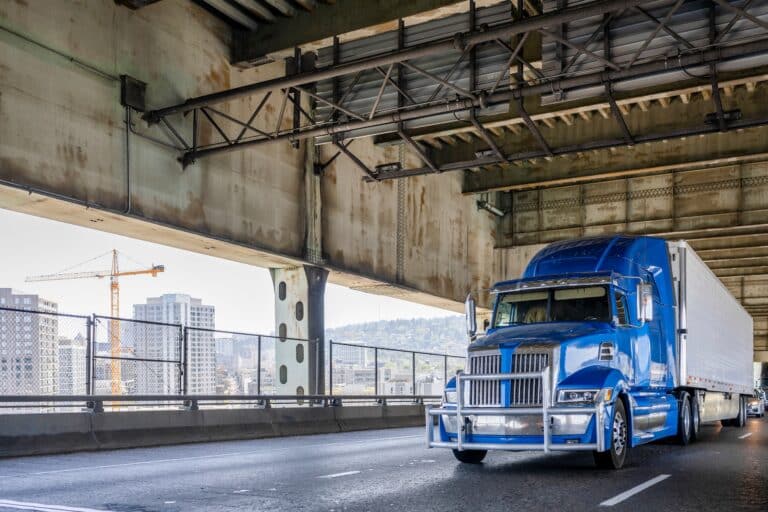
Beginning January 1, 2023, with full enforcement of the ELD mandate, truckers will require electronic logbooks to demonstrate compliance with HOS regulations. While compliance is a priority, finding a device with the right feature for your business can help optimize

In the Canadian trucking industry, having a reliable and efficient electronic logging device (ELD) is essential for maintaining compliance and streamlining operations. As technology advances and regulations evolve, it’s crucial for trucking companies to regularly evaluate their current electronic logbook
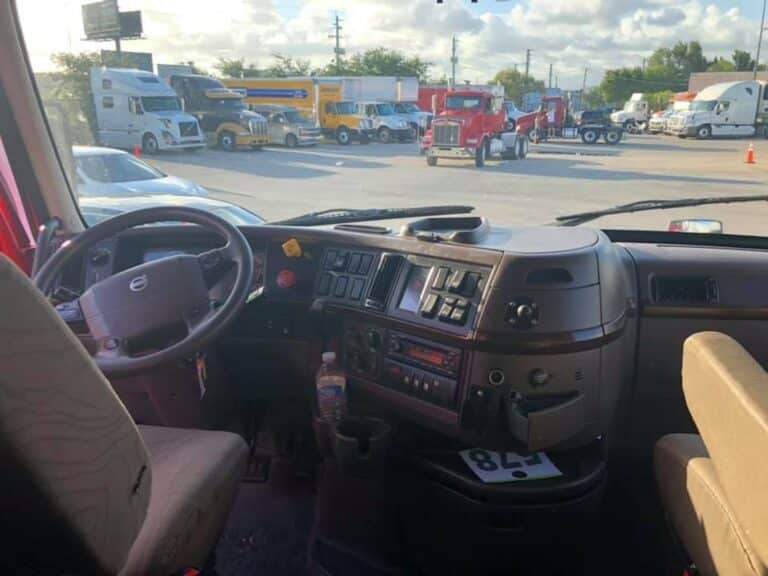
Life on the road comes with its own set of challenges, and managing your hours of service (HOS) is one of the biggest. Every driver knows that staying compliant is critical, but the tools you use can determine whether this