
The Core Rules: A Baseline for Commercial Driver Hours of Service
Before dismantling the most common truck-stop myths, it is necessary to lay down the exact legal baseline established by guidelines. The framework is built around rigid daily and weekly clocks. For a commercial vehicle driver, treating these limits as loose guidelines rather than hard legal boundaries is the fastest way to trigger an enforcement intervention.
The regulations divide commercial driving limits into two distinct zones depending on where the truck is operating:
Standard Shift Parameters (South of Latitude 60°N)
To stay compliant, every operator traveling below the 60th parallel must master the primary clocks that govern a standard shift:
- The 13-hour driving limit. Operators are permitted a maximum of 13 hours of actual steering-wheel time. This clock only unlocks after completing 8 consecutive hours completely off duty or in a compliant sleeper berth.
- The 14-hour on-duty window. The moment an operator logs into the system and begins any work-related task, the daily 14-hour clock begins ticking down. This clock tracks cumulative work time during a shift. Once those 14 hours expire, operators are legally barred from driving a commercial vehicle until taking the required core rest period.
- The 16-hour elapsed time limit. This is a critical clock where many drivers trip up. Operators cannot drive after 16 hours have elapsed since the end of the last core rest period. Unlike the driving or on-duty clocks, this clock ticks continuously regardless of off-duty breaks or meal stops taken throughout the shift.
- The daily off-duty requirement. Regulations mandate that drivers must take at least 10 hours of off-duty time every day. While 8 of these hours must be taken in a single consecutive block to reset the shift, the remaining two hours can be distributed throughout the day in increments of no less than 30 minutes.
- The Cycle 1 and Cycle 2 weekly limits. This tracks cumulative fatigue over several days. If a carrier operates trucks every day of the week, the carrier can choose Cycle 1 (70 hours of on-duty time within any rolling 7-day period) or Cycle 2 (120 hours of on-duty time within any rolling 14-day period). If Cycle 2 is selected, drivers must also take at least 24 consecutive hours off-duty before reaching their 70th on-duty hour.
To keep wheels turning without running out of hours unexpectedly, the regulations provide vital management tools: the cycle reset, which completely wipes the rolling total back to zero after an extended off-duty stretch (36 hours for Cycle 1 or 72 hours for Cycle 2), and the Sleeper Berth Provision, which allows single drivers to split that mandatory rest block into two smaller periods spent entirely in the sleeper berth.
Northern Region Shift Parameters (North of Latitude 60°N)
Operating north of latitude 60°N alters compliance parameters entirely to account for vast tracking distances, sparse infrastructure, and extreme environmental conditions in the northern territories and northern regions of the provinces. Fleets running these routes must adjust their digital tracking profiles to mirror these specialized frameworks.
Maintaining compliance north of 60°N requires operators to track alternative daily and weekly metrics:
- The 15-hour driving limit. Operators may drive a maximum of 15 hours of actual steering-wheel time. This extended allowance supports transit across remote stretches where secure parking and services are limited.
- The 18-hour on-duty window. The daily threshold for total work time extends to 18 hours per shift. Operators must log off-duty rest after completing 18 hours of combined driving and non-driving tasks.
- The 20-hour work shift window. Operators cannot drive a commercial vehicle after 20 hours have elapsed since the end of the last core rest period. This absolute limit ticks continuously from the moment a work shift begins, regardless of any off-duty breaks or meals taken during the day.
- The 8-hour daily off-duty requirement. The standard daily 10-hour rest requirement does not apply north of 60°N. Instead, operators must take at least 8 consecutive hours of off-duty time to reset the work shift.
- Modified weekly cycle limits. Cumulative work blocks expand to accommodate northern distribution patterns. Operators must select either Cycle 1 (80 hours of on-duty time in any rolling 7-day period) or Cycle 2 (120 hours of on-duty time in any rolling 14-day period). Under Cycle 2, drivers must still pause for at least 24 consecutive hours off-duty before accumulating 80 hours of work time.
Advanced compliance systems instantly shift tracking profiles based on precise GPS coordinates as a vehicle crosses the 60th parallel, changing baseline countdowns automatically. This automated adjustment allows operators to transition between regional zones seamlessly, protecting safety profiles during demanding northern transits.

Navigating the Legal Boundaries of HOS Exemptions
Logistical bottlenecks vary across logistics sectors, which is why hours of service regulations include specific, built-in exemptions. However, a major danger zone for carriers is assuming these exceptions grant unlimited freedom. They are tightly enclosed by regulatory parameters, and crossing the line voids compliance status instantly.
The most widely utilized legal exceptions include:
- The 160-kilometer short-haul exception. Designed for localized delivery operations, this exemption frees operators from the hassle of running an electronic logging device. To claim it legally, a commercial vehicle driver must operate strictly within a 160-kilometer radius of the home terminal, report to work and shut down at that exact same location every day, and ensure the carrier maintains accurate daily time records showing start, end, and total on-duty hours.
- The adverse driving conditions exception. When an entirely unforecasted blizzard, flash flood, or multi-vehicle highway closure derails a trip, guidelines allow operators to extend both the driving limit and the on-duty window by up to two additional hours. The critical catch is that the event must have been completely unexpected before the shift began; known rush-hour delays or predicted winter storms never qualify.
- The oil well service vehicle exemption. Specialized commercial motor vehicles used exclusively in oil or gas well servicing can operate under modified cycle parameters. This allowance allows specifically trained operators to clear cumulative cycle hours using a specialized off-duty rest scheme, provided the vehicles are fitted with proper documentation and meet strict operational definitions.
- Personal use status. This provision allows an off-duty driver to use the commercial vehicle for personal transit — such as driving from an overnight parking spot to a nearby grocery store or motel. It is a vital tool for driver comfort, but it features a strict prohibition: the movement must be entirely personal, can never be used to advance a commercial load closer to its receiver, and is strictly capped at a maximum of 75 kilometers per day.
Understanding these precise rules and exceptions gives operators the tools to spot exactly where casual truck-stop advice fails and where real hours of service regulations enforcement begins.
Critical Driving Time Myths and Commercial Driver Hours of Service Rules
Because the vast majority of commercial transportation occurs below the 60th parallel, the following sections focus strictly on regulations governing operations south of latitude 60°N. With this legal baseline established, it becomes much easier to identify why certain truck-stop rumors are so dangerous. Misinterpreting daily driving constraints — often by confusing a strict rule with a flexible exemption — can quickly lead to an enforcement intervention. It is vital for every commercial driver to distinguish between these widely circulated myths and actual law.
Myth #1: “You Can Drive 13 Hours Straight Without Taking Any Breaks”
A common misconception among drivers is that as long as they stay within their maximum 13-hour driving window, they can complete their run without stopping. While standard daily regulations south of 60°N do not mandate a specific standalone “30-minute break after eight hours of driving” like other jurisdictions, the total daily structure requires careful scheduling.
Failing to account for the total daily off-duty requirement results in immediate form-and-manner or hours-of-service violations, adding points to a carrier’s compliance profile. To maintain compliance, an operator must schedule at least 10 hours of off-duty time every day. Because only eight of those hours must be taken in a single consecutive block to reset the shift, the remaining two hours must be distributed throughout the day in blocks of at least 30 minutes. Driving 13 hours straight without planning these additional rest periods will cause a violation of the 24-hour daily rest tracking window.
Myth #2: “Your 14-Hour Clock Pauses During Documented Off-Duty Time”
Many drivers believe that logging “Off-Duty” during a long shipper delay will pause their daily 14-hour clock. This misunderstanding represents a costly operational risk. The 14-hour daily on-duty window tracks cumulative work time during a shift, and the 16-hour elapsed clock runs continuously from the moment you begin your professional workday after a required core rest period.
Miscalculating this window frequently leaves drivers stranded at receiver docks with no legal driving hours remaining, forcing them to choose between a serious violation or finding emergency parking. A smart strategy for managing a schedule is to plan the dispatch day knowing that the 16-hour elapsed clock does not stop for lunch breaks, traffic delays, or loading docks, unless utilizing a qualifying split sleeper berth routine.
Myth #3: “If Your Truck is Under a Certain Weight, Commercial Drivers Hours of Service Regulations Do Not Apply”
One of the most pervasive myths in the light-and-medium-duty transport sectors is that a commercial vehicle driver only falls under logging rules if their truck requires a specialized heavy-class commercial license. In reality, commercial drivers hours of service regulations apply based on standardized vehicle thresholds. Under the National Safety Code, hours of service regulations govern any commercial vehicle operating provincially or extra-provincially that meets specific thresholds:
- The vehicle is a truck. This applies to a truck, tractor, trailer, or any combination of them, with a gross vehicle weight rating (GVWR) or registered gross vehicle weight exceeding 4,500 kilograms (or 11,797 kilograms in specific internal provincial jurisdictions like Ontario, depending on intra-provincial status).
- The vehicle is a bus. This applies to a vehicle designed, constructed, and used for the transportation of passengers with a designated seating capacity of more than 10 passengers, including the driver.
Operating a medium-duty box truck across provincial lines without an active record of duty status or a compliant electronic logging device carries the same regulatory penalties as operating an unlogged class-8 tractor. Compliance is determined by objective vehicle measurements and cargo types rather than license weight brackets.
The Weekly Limits Confusion and Regulations
Managing a daily on-duty window is only one part of maintaining legal compliance. Drivers must also monitor their cumulative weekly hours to avoid violations. Unfortunately, misunderstandings about how these longer cycles calculate are widespread.
Myth #4: “The 70-Hour Cycle Means You Can Drive for 70 Hours”
Many new operators misinterpret the Cycle 1 limit as a cap exclusively on driving time. In reality, the limit restricts total combined on-duty and driving time over a rolling cycle. For carriers operating on Cycle 1, a commercial vehicle driver cannot drive after accumulating 70 hours of on-duty time in seven consecutive days.
The real cost of this misunderstanding is running out of available hours unexpectedly mid-transit. A proactive planning tip is to accurately log and track all on-duty time — including loading, fueling, and vehicle inspections — because every on-duty minute chips away at your 70-hour availability.
Myth #5: “You Must Take a Cycle Reset Every Week”
A persistent rumor claims that taking a cycle reset is a mandatory requirement at the end of every week. The truth is that a cycle reset is completely optional. It serves as a tool to reset your cycle clock to zero, but you are not legally required to use it.
While not mandatory, many fleet operations utilize the reset for scheduling efficiency. If a driver burns through their 70 hours in just five days on Cycle 1, taking a 36-hour consecutive off-duty break is the fastest way to get back on the road with a fresh clock. However, if a driver only works a few hours a day, they may never reach the cycle limit and can operate indefinitely on a rolling recap by dropping the oldest day’s hours without ever taking a full reset break.
Myth #6: “Your Hours Automatically Reset at Midnight on Sunday”
Because many traditional jobs operate on a standard Monday-to-Sunday schedule, drivers sometimes assume their logging cycle resets automatically at the end of the calendar week. Under hours of service regulations for commercial drivers, available hours operate on a continuous, rolling 7-day cycle (Cycle 1) or 14-day cycle (Cycle 2).
This means that at midnight, you simply drop the hours worked on the oldest day of your cycle and regain them for the new day. Miscalculating when hours become available again often leads to premature dispatching and immediate violations. Modern electronic logging devices provide a distinct advantage here, as they automatically calculate rolling hours and display exactly when you will regain driving time without manual math.
The Sleeper Berth Complexities for the Commercial Vehicle Driver
The sleeper berth provisions are among the most misunderstood aspects of hours of service rules. While the math can seem intimidating, learning these rules correctly provides massive operational advantages.
Myth #7: “The Split Sleeper Berth is Too Complicated to Use”
Many drivers avoid the split sleeper berth provision entirely, believing it is too difficult to track legally. The truth is that the split sleeper rule simply allows a driver to divide the mandatory core rest period into two separate periods, providing significant flexibility for dealing with traffic, bad weather, or long shipper delays.
Under current regulations south of 60°N, single drivers can utilize qualifying splits to manage their schedule. While the calculations do require attention to detail, modern compliance software does the heavy lifting for you. When used correctly in conjunction with a reliable electronic logging system, the split sleeper provision helps maximize earning potential without violating the law.
Myth #8: “Any 2-Hour Break Counts for a Split Sleeper”
A common mistake occurs when a driver assumes that any random 2-hour break can be paired with any sleeper period. Regulations dictate strict parameters for a valid split south of 60°N.
To utilize the split successfully, specific requirements must be met:
- Sleeper berth restriction. Both rest periods must be spent entirely in the sleeper berth. Taking one block as standard off-duty time at a truck stop restaurant or on a seat voids the split.
- Minimum duration. Neither rest period can be less than two hours.
- Combined total. The two periods combined must equal at least 10 hours.
Failing to meet these precise minimums results in an invalid split, which invalidates the shift and triggers an hours-of-service violation. The best practice is to always verify specific shift parameters with the logbook interface before assuming a split is legally sound.
Myth #9: “Using the Split Sleeper Berth Stops Your 14-Hour Clock”
Perhaps the most dangerous myth regarding the split sleeper berth is that entering the sleeper simply pauses or stops the 14-hour clock. The truth is that a valid split sleeper berth pauses and recalculates both the 14-hour on-duty window and the 16-hour elapsed window from the end of the first qualifying break, but it does not just freeze time indefinitely.
The complexity arises because the calculations vary based on the sequence of driving and rest periods. If you miscalculate the shifted window, you may find yourself driving beyond the legal limits without realizing it. Because manual calculations are prone to human error, safety managers recommend relying on automated electronic logging tools to verify true available hours after executing a split rest period.

The Exemption Misunderstandings Under Regulations
Regulations offer valuable relief for localized and specialized carriers, but they come with strict boundaries. Misunderstanding these limits is a fast track to fines and compromised safety scores.
Myth #10: “The Short-Haul Exemption Means No Logs Are Needed At All”
Many regional operators assume that working within a localized radius completely frees them from recordkeeping. The truth is that while short-haul drivers utilizing the 160-kilometer exemption do not need to use an electronic logging device (ELD), strict documentation is still legally required.
To maintain this exempt status, a commercial vehicle driver must adhere to specific parameters:
- Maintain the radius. Operate strictly within a 160-kilometer radius of the home terminal.
- Return daily. Report to work and shut down at that exact same location every single day.
- Core rest shift. Complete at least 8 consecutive hours of off-duty rest between shifts.
- Carrier timekeeping. Ensure the motor carrier maintains accurate daily time records showing the start time, end time, and total hours worked for the day.
The real cost of this misunderstanding occurs when a driver breaches one of these limits — such as driving outside the radius to accommodate a new receiver. If you exceed any parameter, the exemption immediately voids for that day, requiring the manual entry of hours for the last 14 days to establish a valid baseline on a record of duty status.
Myth #11: “Bad Weather Automatically Gives You Two Extra Hours”
When winter storms roll in, a rumor circulates that drivers can automatically extend their driving window. The adverse driving conditions exception does allow drivers to extend the 13-hour driving limit to 15 hours and the 14-hour on-duty window to 16 hours, but only under highly specific circumstances.
The conditions must be entirely unexpected before the shift began and not reasonably foreseeable by the dispatcher or the driver. For example, a sudden bridge collapse or an unforecasted flash flood qualifies. However, known weather patterns, forecasted snowstorms, or routine rush-hour traffic do not. Using this exemption requires documenting the exact nature of the unforeseen delay as an annotation in the electronic log. Using it incorrectly during predictable weather events is a direct violation of hours of service regulations.
Myth #12: “The Agricultural Exemption Covers All Farm Hauling”
A persistent rumor among operators suggests that hauling farm-related goods grants a total exemption from tracking requirements. The truth is that the broad 150 air-mile agricultural exemption found in other jurisdictions does not exist under Canadian federal regulations. While individual provinces may offer specific intra-provincial permits or narrow allowances for local farming operations, any commercial trip that crosses provincial or international borders must comply fully with standard hours of service tracking mandates. Assuming that cargo types grant an automatic federal logging exemption will result in severe penalties during roadside inspections. Operators must verify actual provincial or federal permit rules rather than relying on cross-border assumptions.
The ELD Realities of Recording Hours of Service Regulations for Commercial Drivers
An electronic logging device is the primary tool used by enforcement officers to verify daily compliance. Despite the strict regulatory mandate, widespread confusion remains regarding how these systems actually function and what you are allowed to modify within the software.
Myth #13: “All Registered ELDs Work the Same”
Because Transport Canada maintains an official registry of authorized devices, many motor carriers assume that every approved system offers identical functionality. While every registered device must meet a baseline set of technical requirements for tracking commercial driver hours of service under Technical Standard 1.3, the daily operational experience varies drastically between providers.
The differences lie in the quality of the user interface, the stability of the hardware connection, and the availability of technical support. A poorly designed application might freeze during a status change, leaving a commercial vehicle driver frustrated at a scale, while a premium system seamlessly syncs data in the background. When evaluating a provider, carriers must look beyond the basic certification and consider how the system’s design and reliability will impact daily efficiency and driver retention.
Myth #14: “You Cannot Make Any Changes to Electronic Logs”
A common fear among drivers transitioning from paper to digital tracking is that a simple mistaken tap on the screen will result in a permanent violation. The truth is that the regulatory framework explicitly allows drivers to make corrections to their electronic records, provided they follow the proper procedure.
While the system automatically records and preserves the original, unedited engine data (such as vehicle motion and speed), drivers are permitted to propose edits to their duty status to fix legitimate errors. For example, if you forget to log out and the system records you as “On-Duty” overnight, you can edit that block of time to “Sleeper Berth.”
- Data integrity. The original engine data always remains intact in the background for auditors to view.
- Required notes. Every edit must include a typed annotation explaining the specific reason for the change.
- Driver verification. Fleet managers can propose edits from the back office, but the driver must manually approve or reject them on their device.
Making prompt, well-annotated corrections is considered a best practice. However, intentionally falsifying logs to hide driving time remains a severe offense.
Myth #15: “The Cheapest ELD Option is Good Enough for Compliance”
In an effort to keep overhead low, many fleets default to the absolute cheapest logging hardware available. This strategy frequently results in hidden costs that far outweigh the initial savings.
When evaluating the true cost of an electronic logging system, consider the total value of the investment. Bargain providers often lack dedicated customer support, leaving drivers stranded on the highway when the application inevitably drops its connection. Moreover, cheap hardware is prone to continuous malfunctions, which forces drivers to revert to paper logs and increases the risk of compliance violations during inspections. Investing in a highly reliable system ensures maximum uptime, reduces administrative headaches, and provides supplementary fleet management tools that actually improve your bottom line over time.
The Enforcement Realities of Commercial Driver Hours of Service
When a commercial vehicle driver pulls into a scale or gets flagged down for a roadside inspection, they face strict scrutiny. Many operators rely on outdated assumptions about what enforcement officers actually look for, which can lead to unexpected out-of-service orders.
Myth #16: “Inspectors Only Check Today’s Logs”
A surprisingly common belief is that enforcement officers are only interested in your current driving shift. In reality, the law grants inspectors the authority to review your current day’s record of duty status along with the previous 14 consecutive days.
During an audit, officers look for structural patterns rather than just isolated incidents. They routinely cross-reference your electronic logs with supporting documents such as toll receipts, fuel transactions, and bill of lading timestamps to detect falsification patterns. Furthermore, inspectors scrutinize your system’s unassigned driving time queue. If they find unassigned driving miles that clearly match your route, they will assign that time to your active profile, potentially triggering severe hours of service violations retroactively. The most effective preparation strategy is to keep all logs perfectly up-to-date and to address unassigned driving events immediately at the start of every shift.
Myth #17: “Personal Use Has Unlimited Distance”
Personal use is a special driving category that allows a driver to use a commercial motor vehicle for personal reasons while officially off-duty. Because personal use time does not count against daily or weekly driving limits, a dangerous myth has emerged that it can be used limitlessly to manipulate available hours.
The truth is that personal use has highly specific legal limitations. Regulations specify that personal use is strictly capped at a maximum of 75 kilometers per day. Furthermore, you can only claim this status if the vehicle is completely unladen, any trailers are unhitched, and you are completely relieved of all work responsibilities. You absolutely cannot use personal use to advance freight toward its final destination, to extend your driving capacity to reach a preferred location further down your route, or to bypass available resting locations. Any misuse of this status or exceeding the 75-kilometer limit will cause the device to automatically switch the status back to “Driving” and is treated as a false log by enforcement officials.
What This Means for Your Business
Understanding the exact nuances of commercial driver hours of service rules goes far beyond merely surviving a roadside inspection. Mastering these regulations serves as the foundation for building a highly profitable, sustainable trucking operation. When a fleet manager or owner-operator commits to precise compliance, the operational benefits compound rapidly across the entire business.
Operating with a clear understanding of the rules typically improves a carrier’s National Safety Code (NSC) profile. A clean safety profile directly influences operational efficiency, as trucks with excellent scores are far less likely to be pulled into scales for time-consuming inspections. Over time, maintaining these high compliance rates signals stability to insurance providers, which can secure significantly better premium rates for your commercial coverage. Conversely, the cumulative effect of small misunderstandings — like constantly misapplying the split sleeper berth or abusing personal use — leads to repeated violations that inflate insurance costs and jeopardize your operating authority.
Moreover, strict compliance fosters better driver satisfaction and retention. When drivers understand exactly how their hours are calculated, they experience less stress on the road and can maximize their legal earning potential without fear of penalties. This is why accurate, real-time HOS tracking and continuous education are vital. Because regulatory bodies update guidance periodically, relying on modern technology to monitor your compliance ensures that your business adapts seamlessly to the shifting landscape.
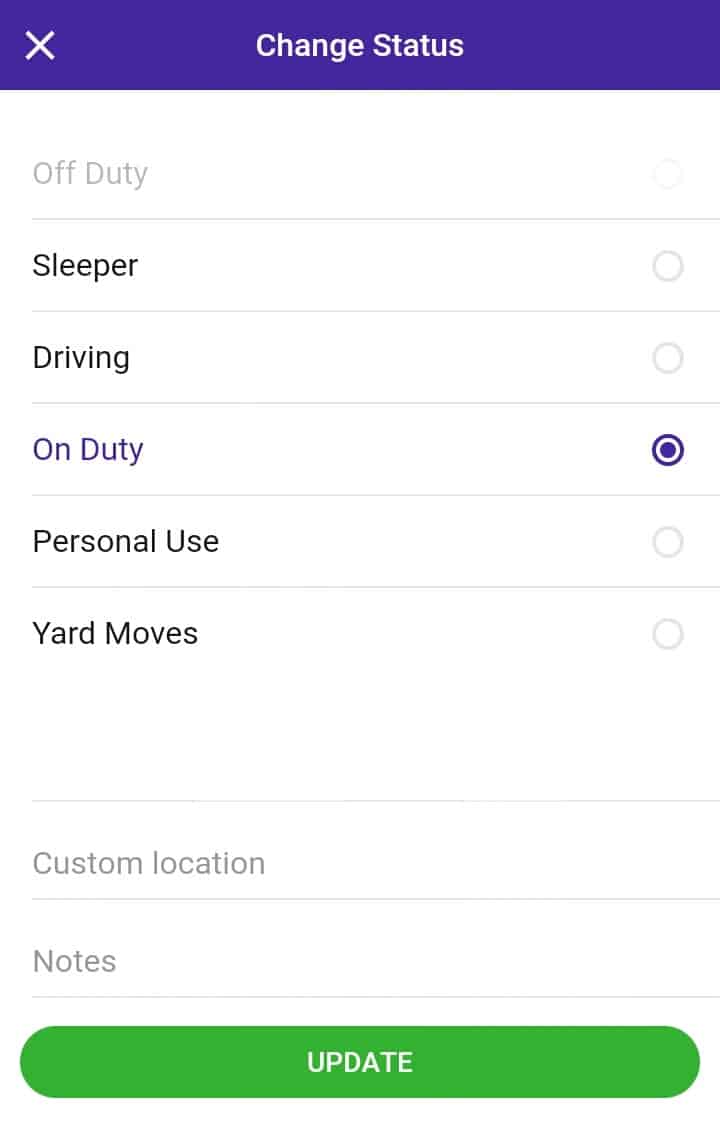
Maximizing Road Efficiency: True HOS247 Advantages for Truckers
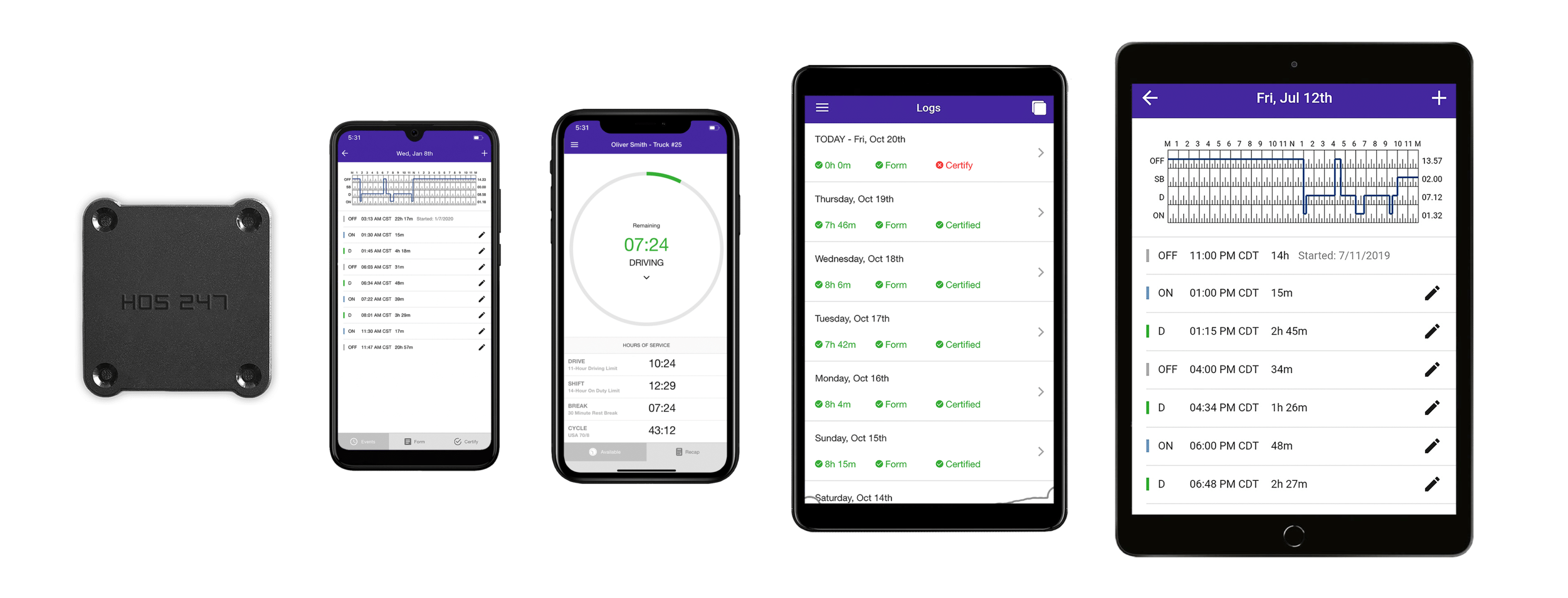
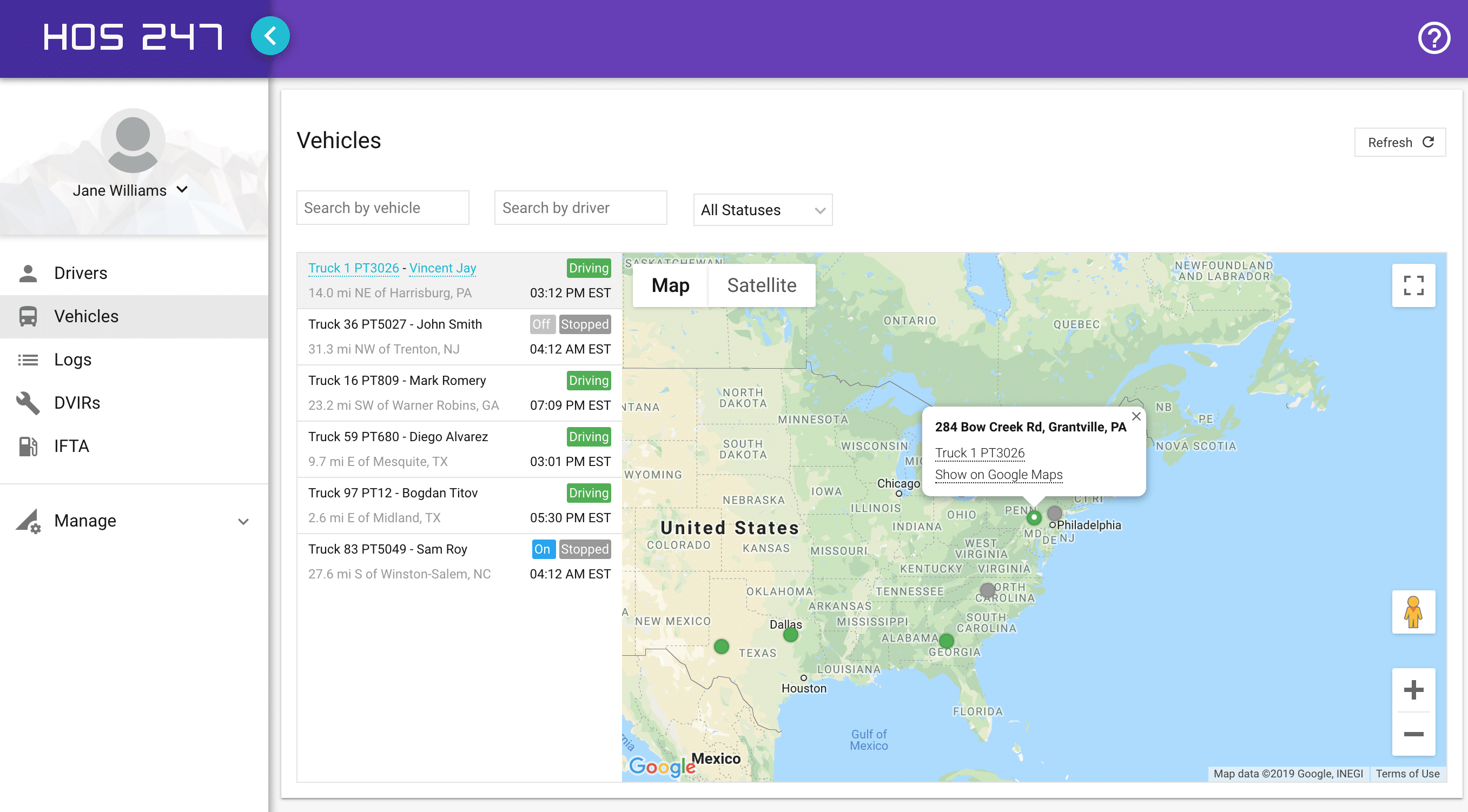
Transitioning from understanding commercial driver hours of service rules to executing them flawlessly on the highway requires a dependable logging tool. HOS247 eliminates compliance guesswork by offering a platform built around the daily realities of professional drivers and fleet managers. This is why owner-operators and fleets choose HOS247:
- No-contract freedom. Motor carriers retain complete financial control with straightforward monthly plans. You are never locked into restrictive multi-year contracts or hit with hidden administrative fees.
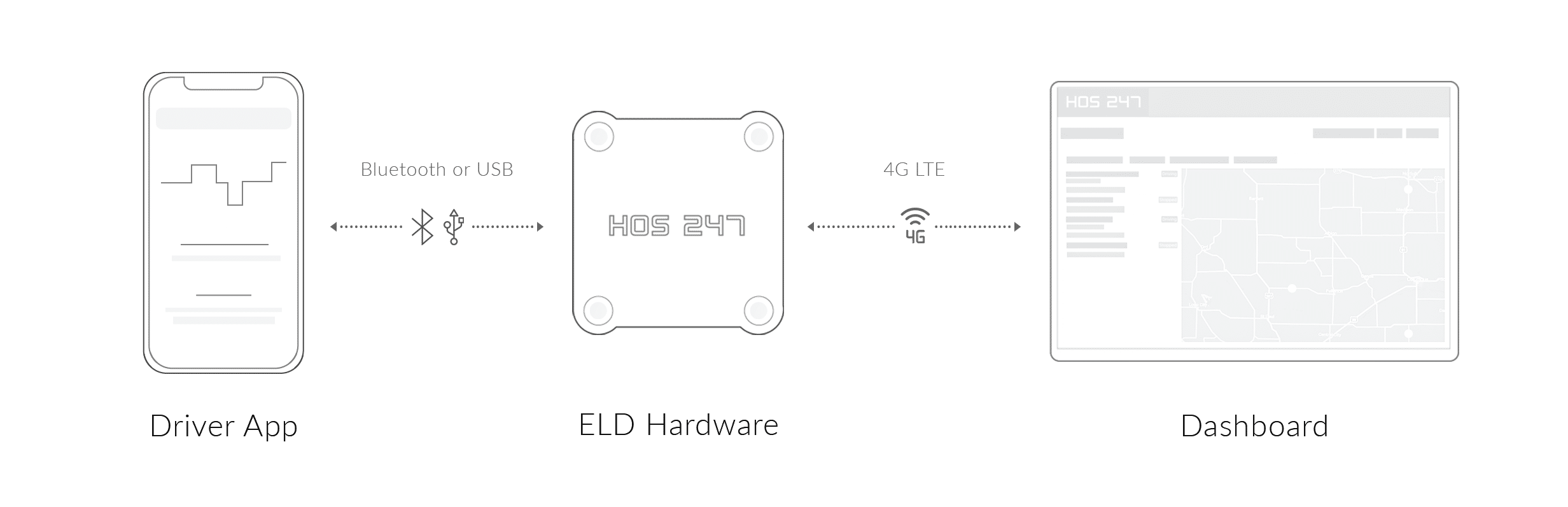
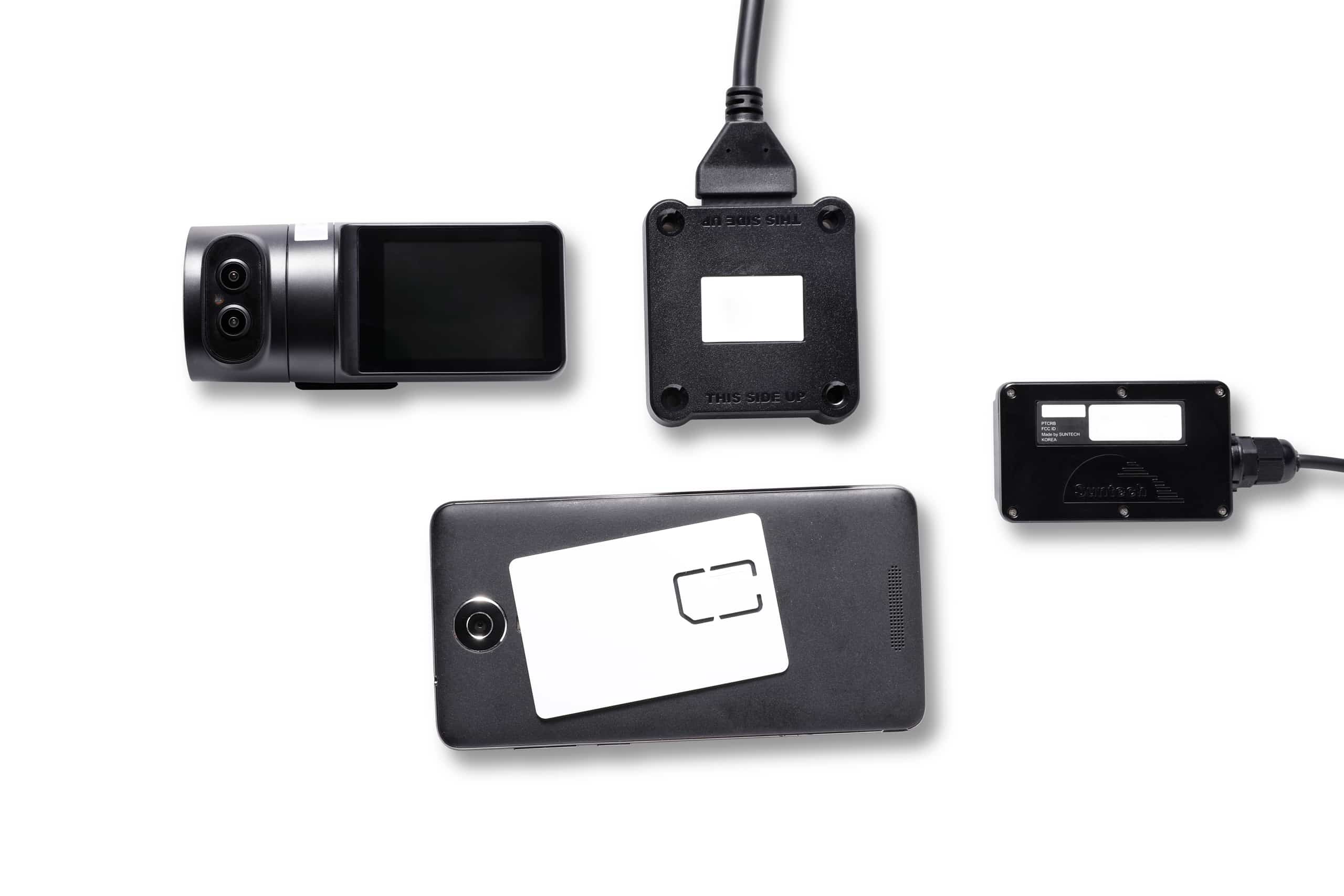
- Instant hardware synchronization. The electronic logging gateway connects directly to your vehicle’s diagnostic port (OBD-II or heavy-duty Deutsch) and pairs seamlessly with your mobile device. This reliable architecture prevents unassigned driving miles and removes connection delays at startup.
- 7-day multilingual support. Drivers gain immediate access to real, knowledgeable technical experts seven days a week. Support is available in English, Spanish, Russian, and Polish to resolve roadside issues rapidly.
- Automated split-sleeper calculations. The software handles complex math automatically. When you log a shift split, the app instantly updates your available driving windows, eliminating manual logging errors.
- Streamlined roadside inspection mode. Transmit your logs to enforcement officers instantly. With a single tap, the app compiles your data and initiates a secure transfer via mandated email or local transfer methods, getting you out of the scale faster.
Ultimately, choosing a logging partner is about securing the stability your business needs to grow. By integrating rugged diagnostic hardware with an intuitive Android or iOS application, HOS247 allows carriers to eliminate administrative friction and maintain permanent, verified compliance on every single haul.

Protecting Your Business, Authority, and Bottom Line
Mastering the complexities of commercial driver hours of service requires a commitment to factual accuracy over industry rumors. Because commercial drivers hours of service regulations undergo regular review and adjustment, relying on outdated advice from the truck stop can easily jeopardize your commercial license and your fleet’s operating authority. It is essential to stay informed and consistently verify unclear operational scenarios with official guidance or your company’s safety department.
While the legal framework remains complex, proper tools and dedicated support make daily compliance highly manageable. Accurate electronic logging systems remove the guesswork from your daily routes, allowing you to focus on safe driving and efficient deliveries.
Stop letting technical glitches and compliance confusion drain your company’s profitability. Protect your business with a system engineered for the demanding realities of commercial freight. Contact HOS247 today to learn more about our approach to simplified compliance, and discover how our intuitive platform can streamline your daily operations.
A Note to Our Readers on Compliance
This article is intended for informational and educational purposes only. It is not a substitute for official regulatory guidance or legal advice. HOS and ELD regulations are complex and subject to change and interpretation by enforcement authorities. Please always refer to official sources for the most current and accurate information.

As an expert in B2B and B2C sales, I’ve dedicated myself to perfecting sales processes and client retention strategies in the logistics and trucking industry. I have significantly contributed to the expansion of the ELD service, catering to retail and wholesale clients in need of HOS247 ELD solutions. My unwavering commitment to implementing state-of-the-art sales techniques and technologies ensures the continuous growth and success of businesses I work with.









In today’s fast-paced business world, managing a commercial fleet can be challenging, but it doesn’t have to be. With the help of fleet management systems, carriers can enjoy various benefits, such as reducing fuel costs, enhancing driver safety, providing better

For years, the box truck industry relied on paper logbooks to track driving hours. Today, the landscape has shifted. An ELD is no longer just a high-tech accessory; for many fleets, it is a strict federal requirement. An electronic logging

A driver is on a critical, time-sensitive delivery. At a roadside inspection, the elog freezes. The officer is waiting, dispatch is on hold, and the driver’s entire Hours of Service (HOS) log is suddenly in question. This scenario is a