
Why Your Equipment Matters: The Reality of ELD Regulations
Canadian ELD regulations are strict, but the real challenge isn’t reading the rulebook — it’s finding equipment that can actually keep up with it. The mandate requires your Record of Duty Status (RODS) to be accurate to the minute and transferable to an enforcement officer on demand.
A cheap or “free” ELD might look good on paper, but it often fails when put to the test of these regulations.
The Technical Demands of Transport Canada Regulations for ELDs
It’s important to realize that Canadian ELD regulations involve more than just recording hours. The rules impose strict technical standards that every certified device must meet.
- Integral synchronization. The device must capture engine data, vehicle movement, and location data automatically and in near real-time. Slow or laggy hardware can cause data gaps that appear suspicious during inspections.
- Data transfer protocols. When an enforcement officer asks for your logs, the ELD must successfully transfer data electronically using supported methods such as wireless transfer or USB/Bluetooth. Failures during an electronic transfer can lead to being cited for non-compliance.
- Unassigned driving capture. The system must record all movement of the vehicle, even when no driver is logged in. Frequent disconnections create excessive unassigned driving events, which raise red flags during audits.
Reliable equipment is the only way to consistently meet these technical requirements.
The Cost of “Form and Manner” Errors
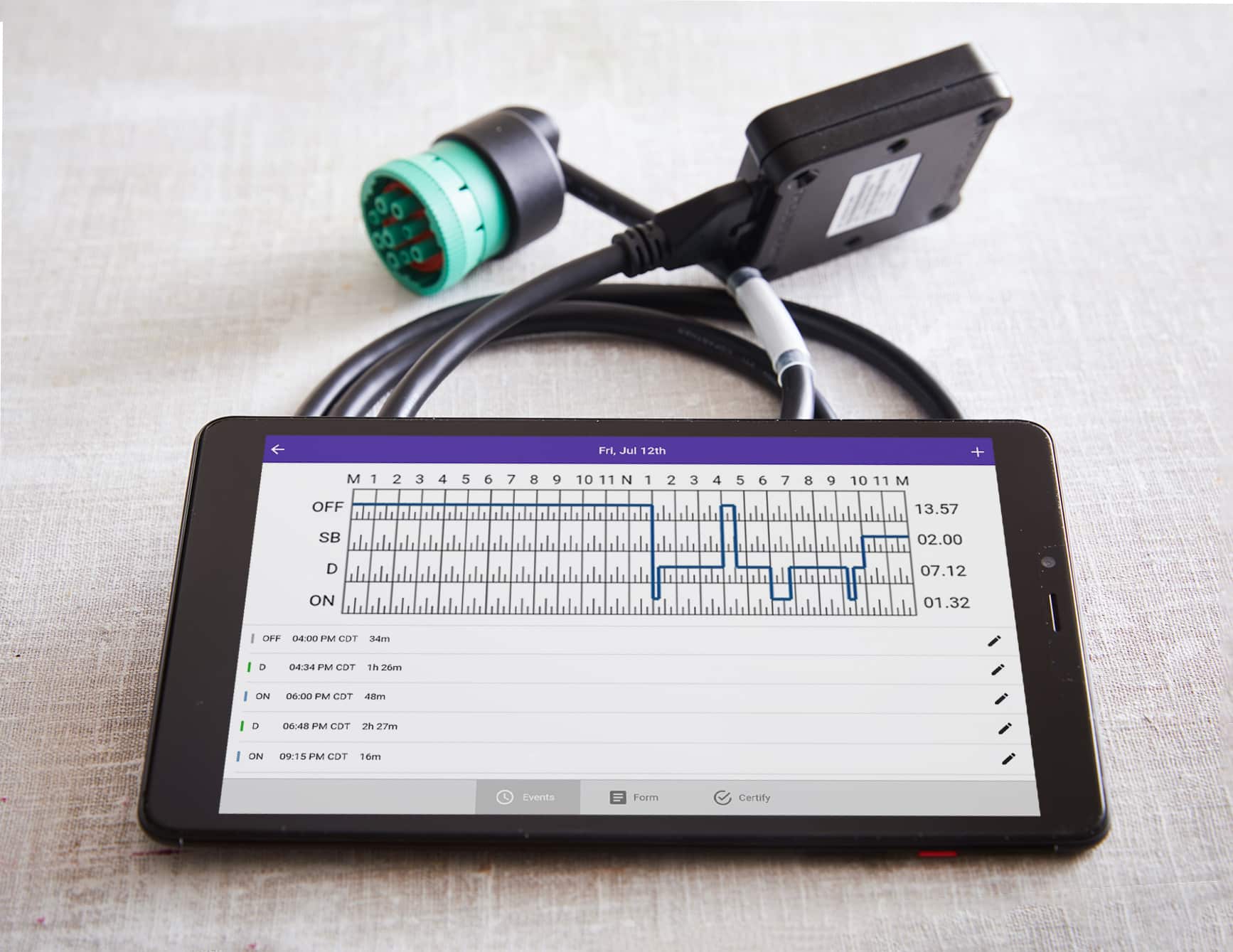
The ELD mandate was designed to eliminate traditional paper log errors, but a poorly designed app can introduce new ones. If a driver cannot easily certify a log, annotate an edit, or transfer data during a roadside inspection, they are at risk of a violation. The interface must be intuitive enough to navigate complex requirements confidently.
Support Is Part of Compliance
Canadian regulations require that a malfunctioning ELD be repaired or replaced promptly. If your provider takes weeks to respond to support requests or ship replacement hardware, you may be forced into a compliance violation. A responsive support partner helps ensure drivers are never left exposed by technical failures.
Who Needs an ELD?
Before selecting a provider, every operation must determine its legal obligations. If a driver is required to keep a RODS under the Commercial Vehicle Drivers Hours of Service Regulations, they must use a Transport Canada certified ELD.
However, specific exemptions allow certain operations to not be fitted with an ELD, while still complying with hours-of-service requirements.
Transport Canada ELD Exemptions
Drivers who meet the following criteria are exempt from installing an ELD, though they must still comply with applicable hours-of-service rules:
- Short-haul (160 km) exemption. Operating entirely within a 160-kilometre radius of the home terminal and returning to that terminal each day with adequate off-duty time means a driver does not need an ELD. Instead, accurate time records showing start and end times and total on-duty hours must be maintained by the carrier.
- Pre-2000 vehicle exemption. Commercial vehicles manufactured before model year 2000 are exempt from the ELD requirement because most older vehicles lack compatible electronic control modules.
- Short-term rental exemption. Vehicles operated under a rental agreement of 30 days or less (and not extended) are exempt from needing an ELD.
- Federal or statutory exemptions/permits. Drivers operating under a valid federal permit or statutory exemption (issued under the Motor Vehicle Transport Act or applicable HOS regulations) may be exempt, subject to specific conditions.
For drivers who do not fit these categories, a certified ELD is mandatory. Choosing a system that is easy to install, dependable, and well supported ensures that moving from paper to digital is a seamless operational upgrade rather than a disruption.
A Trucker’s Guide to HOS Rules
The ELD is the tool used to record compliance, but HOS rules are the standard that must be met. A high-quality ELD system simplifies this complexity by automatically calculating available hours, ensuring drivers can maximize their time on the road without risking a violation.
Key HOS Rules for Property-Carrying Drivers
These are the core limits that every federally regulated property-carrying driver must follow, and which a reliable ELD will track automatically.
- The 14-hour on-duty limit. A driver may not remain on duty beyond 14 hours in a day. This on-duty period begins when the driver starts work and includes all driving and non-driving on-duty time. Off-duty time does not extend this daily on-duty limit.
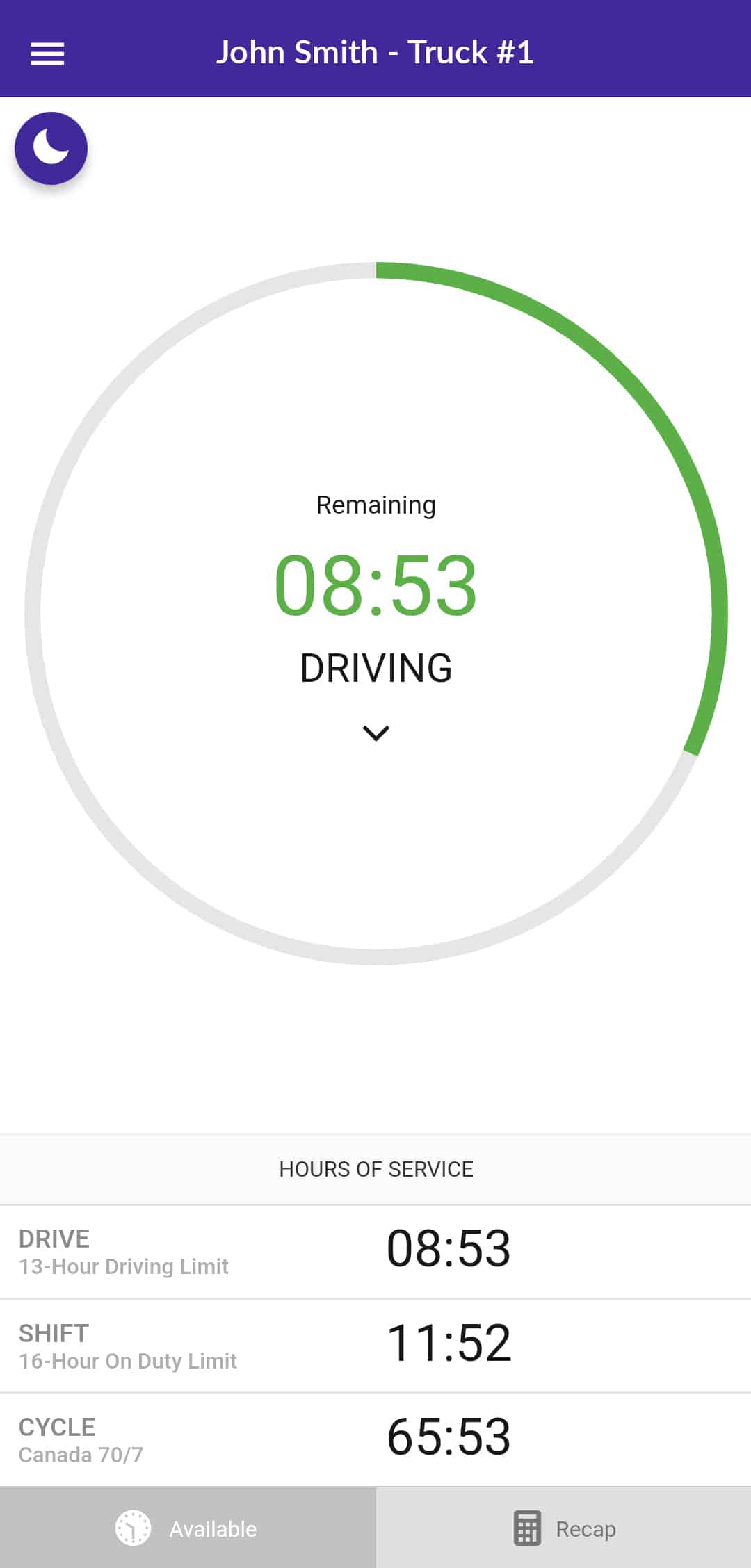
- The 13-hour driving limit. Within the daily on-duty period, a driver may drive a maximum of 13 hours. Once this limit is reached, the driver must take the required off-duty time before driving again.
- Mandatory off-duty time. Drivers must take at least 10 hours off duty in a day, with a minimum of 8 consecutive hours. The remaining off-duty time may be taken in blocks of no less than 30 minutes.
- Cycle limits. A driver may not drive after accumulating:
- 70 hours on duty in 7 consecutive days, or
- 120 hours on duty in 14 consecutive days.
A driver may reset the cycle by taking the required consecutive off-duty time as specified in the regulations.
The “Flexible” Rules
Advanced ELD software also helps drivers utilize flexible provisions to manage unpredictable schedules.
- Sleeper berth provision. Drivers can split their 10 hours into two periods, where one must be at least 8 consecutive hours in the sleeper.
- Adverse driving conditions. If unexpected driving conditions are encountered, such as severe weather or road closures that were not known before the trip began, a driver may extend both driving time and on-duty time by up to 2 additional hours.
- Personal conveyance. This status allows drivers to use the vehicle for personal travel while off duty with a strict 75 km daily limit. When logged correctly and used within regulatory limits, this movement does not count toward daily driving or on-duty limits.
Reliable ELD software visualizes these clocks clearly, helping drivers plan their day efficiently. Instead of manually calculating split-sleeper scenarios or estimating remaining hours, the system provides a clear, real-time view of compliance status.
How to Choose a Transport Canada Compliant ELD
With the mandate fully in effect, hundreds of providers have entered the market. Ensuring compliance requires selecting a system built for real-world operations, not just one that meets the bare minimum technical requirements. Choosing a reliable system ensures ELD regulations remain a manageable part of daily operations rather than a constant obstacle.
Understanding the Transport Canada Certified List
Many drivers assume that if a device appears on Transport Canada’s list of certified ELDs, it is government-tested and guaranteed to work flawlessly. In reality, certification is based on third-party testing against technical standards. Transport Canada does not evaluate devices for long-term reliability, usability, or support quality.
This means a device can be certified and still suffer from connectivity issues, software instability, or poor design. Choosing a provider with a proven track record in real-world use is safer than relying solely on certification status.
5 Things to Look for in a Reliable ELD
To protect your safety rating and ensure smooth operations, evaluate potential providers using these five criteria.
- Transport Canada certification. This is the baseline requirement. Confirm that the exact device model and software version appear on the official Transport Canada certified ELD list and have not been revoked.
- Flexible business models. Providers confident in their solution typically offer month-to-month plans. This flexibility allows carriers to control costs without being locked into long-term contracts.
- An easy-to-use app. Compliance should not require technical expertise. The driver interface should be intuitive, allowing fast duty-status changes, easy log certification, and simple data transfer during inspections.
- Accessible customer support. When an issue occurs during a roadside inspection, immediate help matters. Look for support that is available seven days a week and able to communicate clearly with your drivers.
- Proven connectivity. The hardware must connect reliably to the engine and maintain a stable connection to the mobile device. Strong connectivity ensures logs are accurate, complete, and ready for inspection at all times.
Ultimately, the goal is to choose a partner rather than just a vendor. Prioritizing these factors ensures your ELD investment protects your operation and simplifies daily compliance instead of creating new problems.
Why Top-Rated Drivers Choose HOS247
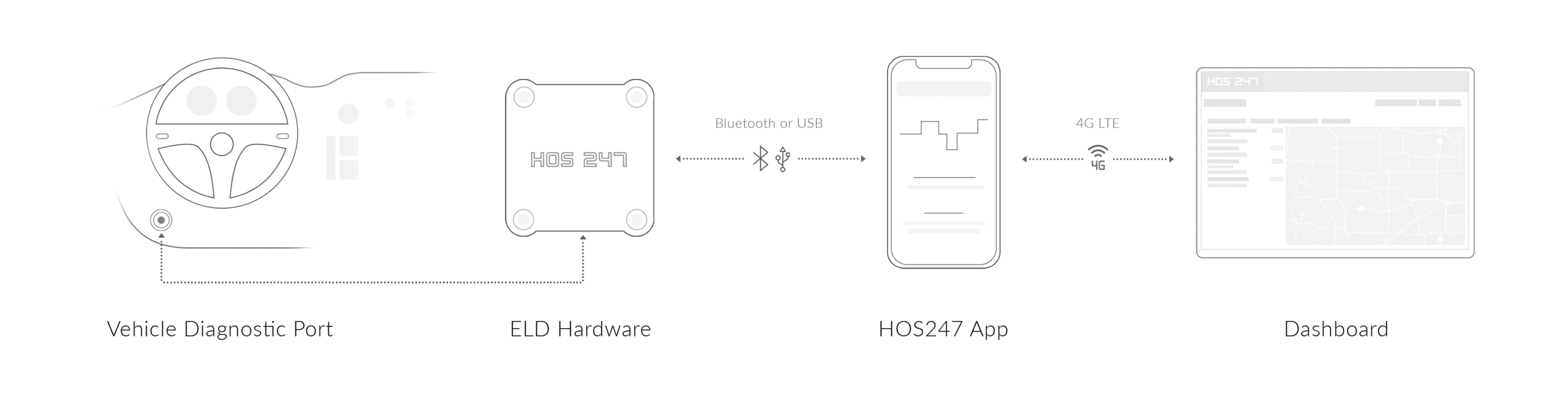
HOS247 is built for drivers and fleets that value reliability and simplicity. The system addresses the practical challenges of the ELD mandate by combining durable hardware with software designed for everyday use.
HOS247 Benefits That Matter on the Road
The HOS247 platform focuses on keeping drivers compliant and vehicles moving. By prioritizing stability and responsive support, the system removes much of the friction associated with electronic logging. Drivers and fleet managers choose HOS247 because it delivers features that directly support real-world operations:
- Rock-solid reliability. The hardware connects securely to the engine and maintains a stable link with the app, ensuring logs are accurate and always ready for inspection.
- Top-rated multilingual support. A dedicated support team is available every day of the week to resolve issues quickly. Agents speak English, Spanish, Russian, and Polish, and a callback policy ensures help without long wait times.
- No long-term contracts. Service is offered on a flexible, month-to-month basis, ensuring customers stay because of performance and service quality, not contractual obligations.
- A simple, fast app. The interface is clean and intuitive. Drivers can review available hours, edit logs, and activate inspection mode with minimal interaction.
- Complete fleet management. The platform supports real-time GPS tracking, automated IFTA mileage reporting, and vehicle diagnostics within a single dashboard.
HOS247 delivers a balance between regulatory compliance and everyday usability. By choosing a solution designed around driver needs, fleets ensure their ELD supports productivity rather than standing in the way.
ELD Transport Canada Regulations FAQ (Quick Answers)
Here are direct answers to the most common questions regarding Transport Canada ELD regulations.
What happens if the ELD malfunctions?
If the device malfunctions, the driver must notify the motor carrier as soon as possible, typically within 24 hours of discovering the issue. The driver must reconstruct the RODS for the current day and the previous 14 days using paper logbooks, if those records are not already available.
The motor carrier is required to repair, replace, or service the ELD within the allowable regulatory timeframe. Until the issue is resolved, the driver must continue maintaining paper logs.
Can a smartphone or portable ELD be used?
Yes. A portable display such as a smartphone or tablet may be used, provided the ELD system itself is Transport Canada–certified and meets all Canadian technical standards. The system must be integrally synchronized with the engine (typically through a dedicated hardware module) and the display must be mounted in a fixed position that is visible to the driver while the vehicle is in motion.
What documents must be in the cab during an inspection?
A driver must have specific items available during a roadside inspection.
- User manual. The user manual for the specific ELD model must be available in the vehicle.
- Data transfer instructions. An instruction sheet describing how to electronically transfer HOS records to an enforcement officer is required.
- Malfunction reporting instructions. Written instructions outlining ELD malfunction reporting procedures and recordkeeping requirements must be kept in the cab.
- Paper logs. A sufficient supply of blank paper Records of Duty Status must be carried to allow the driver to record duty status manually in the event of an ELD malfunction.
Can a carrier edit driver logs?
A motor carrier or an authorized support account may propose edits to correct errors or assign unassigned driving time. However, the driver must review and certify the accuracy of any proposed edit. The system must allow the driver to accept or reject changes, and the original record must always be retained for audit purposes.
Does the ELD mandate prevent harassment?
Yes. Canadian ELD regulations include provisions intended to prevent harassment. Motor carriers are prohibited from using ELD data to pressure a driver into violating hours of service rules or operating while fatigued. Additionally, ELD systems must allow drivers to manage alerts so that the device does not interfere with required off-duty or sleeper-berth periods.
Conclusion
Staying compliant with DOT ELD regulations is non-negotiable, but it does not have to be a daily obstacle. Success comes down to two main factors: maintaining a clear understanding of the Hours of Service rules and operating with a technology partner that prioritizes reliability.
A high-quality ELD functions quietly in the background, securing data and simplifying inspections. By choosing a partner that focuses on stable connectivity, accessible support, and driver-friendly design, fleets can turn a regulatory requirement into a tool for operational efficiency.
Focus on the road and let the technology handle the compliance. A hassle-free, no-contract solution from HOS247 ensures that logs are accurate, inspections are smooth, and business keeps moving forward.
A Note to Our Readers on Compliance
This article is intended for informational and educational purposes only. It is not a substitute for official regulatory guidance or legal advice. HOS and ELD regulations are complex and subject to change and interpretation by enforcement officials. Please always refer to official sources for the most current and accurate information.

As an expert in B2B and B2C sales, I’ve dedicated myself to perfecting sales processes and client retention strategies in the logistics and trucking industry. I have significantly contributed to the expansion of the ELD service, catering to retail and wholesale clients in need of HOS247 ELD solutions. My unwavering commitment to implementing state-of-the-art sales techniques and technologies ensures the continuous growth and success of businesses I work with.










Since the ELD mandate took effect in 2021, electronic logbooks have become an integral working tool both for CMV drivers and fleet managers in Canada. But what does ELD stand for? ELD stands for electronic logging device. What are electronic
In an industry where time is money, owner-operators are constantly seeking the best tools to enhance their efficiency and ensure compliance with stringent regulations. Electronic logging devices (ELDs) have become a crucial part of this quest. However, navigating the vast
Commercial trucking operations, including everyone from large carriers to owner-operators, are subject to the electronic logging device rule and will require ELDs to operate legally. This requirement came into effect on June 12, 2021, with a full implementation date of