
The Foundation of Compliant Logging: Core ELD Rules for Truck Drivers That Still Apply
While enforcement has become stricter, the basic ELD rules for truck drivers under the federal HOS regulations have not changed. When a roadside enforcement officer inspects your truck, they are not interested in marketing claims. They are looking for four specific technical requirements to verify your logs are legal.
Integral Synchronization
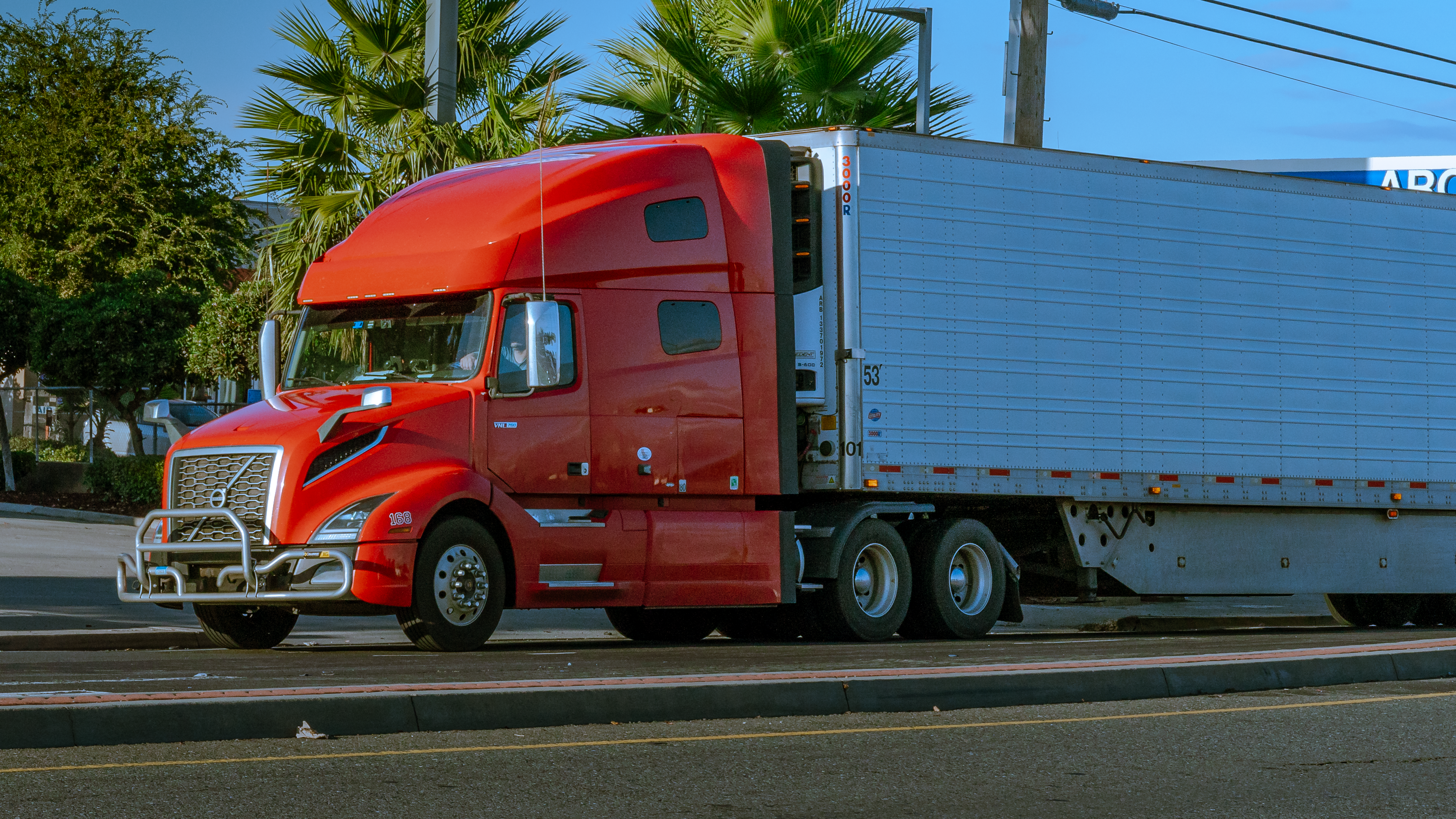
One of the most important requirements of the ELD Technical Standard is proper synchronization with the vehicle’s engine.
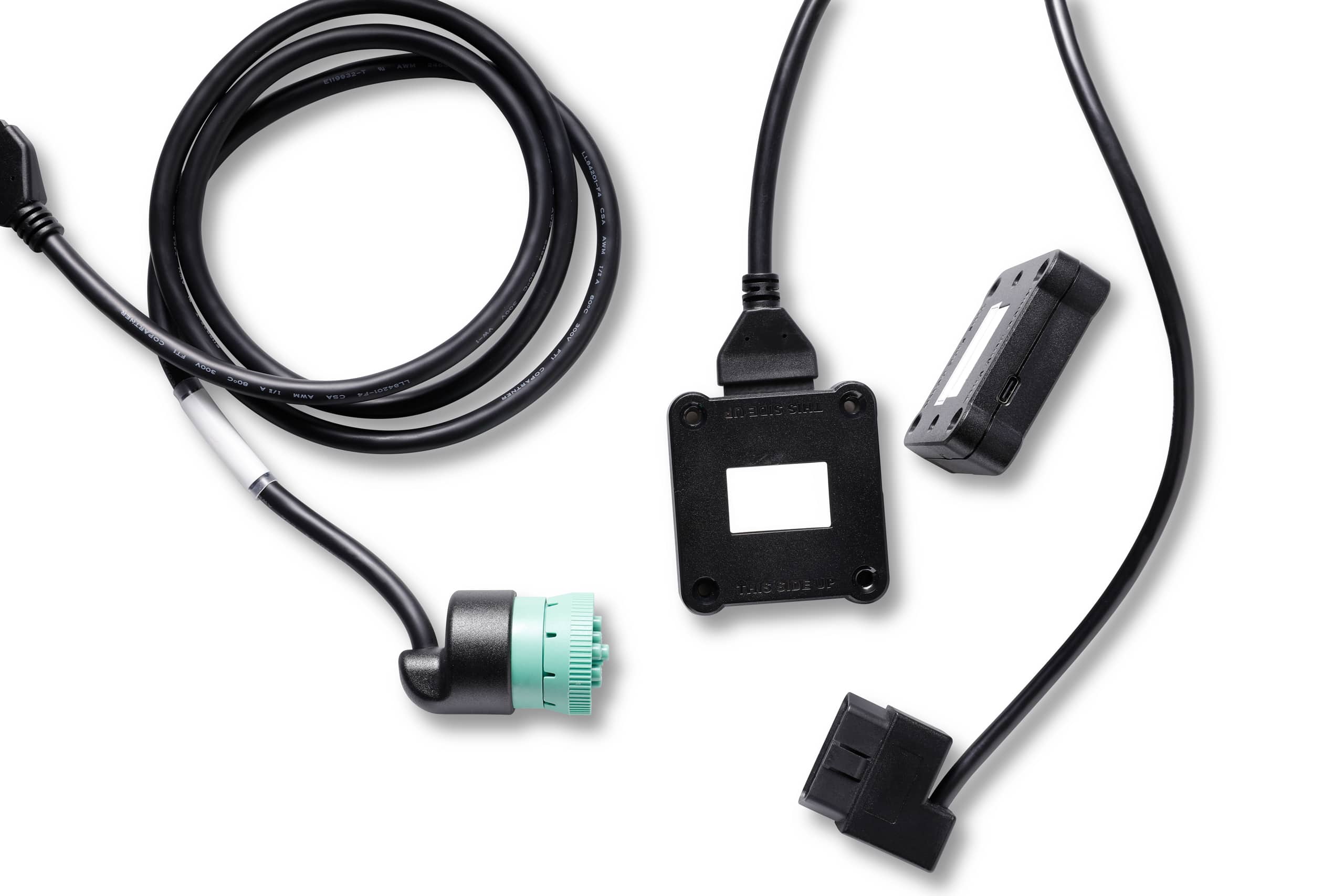
- The rule. The ELD must be hardwired to the truck’s engine (ECM). It must automatically record when the engine turns on, when the vehicle moves, and the total engine hours.
- The reality. You cannot use a GPS-only app on your phone. If your device does not plug into the diagnostic port (J1939 or OBDII) to read actual engine data, it is not compliant.
Using a standalone app without a hardware connection does not meet the Canadian ELD Technical Standard and will be treated as failing to maintain a proper electronic record of duty status.
The “Data Transfer” Standard
Passing a roadside inspection depends entirely on one moment: the Data Transfer.
- The requirement. Your device must be able to send your logs to the officer’s computer immediately. Under the Canadian ELD Technical Standard, this can be done using telematics transfer methods (such as email or web services) or local transfer methods such as Bluetooth or USB.
- The risk. If the transfer fails because of a bad connection or software error, the officer cannot verify your logs electronically. This often leads to a direct review of the logs on the device or supporting documentation and can result in a violation if the records cannot be properly produced.
Unassigned Driving Time
Unassigned driving events are a major target for roadside inspectors and compliance reviews. The ELD automatically records “Driving” status whenever the vehicle moves at 8 km/h (5 mph) or more.
- The mandate. Every mile the truck moves must be assigned to a driver. If a mechanic moves the truck or you drive in the yard without logging in, the device creates an “Unassigned Driving” event. You must review and explain these events daily. Leaving them unresolved looks suspicious to inspectors.
Paper Log Backup Rule
Technology can fail, and the regulations account for that.
- The supply rule. You are legally required to carry a supply of blank paper log graph grids sufficient for 15 days in the cab at all times.
- The function. If your ELD screen goes black or stops syncing, you must switch to paper logs immediately. Failing to produce these blank logs when asked is one of the easiest tickets to avoid, yet it remains a common violation.
These four rules are the pillars of a compliant roadside inspection. If your system cannot maintain a connection to the engine, transfer data instantly, or handle unassigned driving correctly, you are at risk. Ensuring your hardware meets these standards is the first step to protecting your carrier’s compliance record during provincial roadside enforcement.
The “Exemption” Landscape: Who Is Safe?
While the ELD mandate covers most commercial drivers who are required to keep a record of duty status under the federal Hours of Service regulations, it does not cover everyone. Specific operations and vehicle types are exempt from installing a device.
However, drivers claiming an exemption must be able to clearly explain why the ELD requirement does not apply during a roadside inspection. You must be able to document your status clearly to an officer.
Current ELD Exemptions Under the Federal Hours of Service Regulations
1. The Short-Haul (160 km) Exemption
This is the most common exemption for local drivers, but it has strict limits. To qualify, you must meet all of the following criteria:
- Distance. You must operate within a 160-kilometre radius of your home terminal.
- Time. You must return to that same home terminal and be released from duty within the standard daily on-duty window permitted under the Hours of Service rules.
- Rest. You must receive the required daily off-duty time before starting the next shift.
- The catch. Drivers operating under this exemption are not required to keep a daily log or use an ELD, but the motor carrier must maintain accurate time records showing the driver’s duty status for each day. If you exceed the 160-kilometer radius or fail to meet the return-to-home requirements, you must maintain a daily log for that day. It is important to note that if you are required to use an ELD even one day in a month because you broke the short-haul criteria, you must be able to produce logs for the previous 14 days (on the ELD or as paper logs).
2. The Pre-2000 Vehicle Rule
This exemption protects operators of older commercial vehicles. The rule is based on the vehicle’s model year, not the engine as in the U.S. If the commercial vehicle was manufactured before model year 2000, it is exempt from the ELD requirement.
- The proof. During an inspection, the officer may verify the vehicle’s model year using registration documents or the manufacturer’s information plate.
3. Short-Term Rental Vehicles
This exemption is designed for temporary replacement trucks or short-term fleet needs.
- The rule. Commercial vehicles operated under a rental agreement of 30 days or less do not require an ELD.
- The documentation. The driver must carry the rental agreement showing the start date and duration of the rental.
- The limit. If the rental extends beyond 30 days, the vehicle must be equipped with a compliant ELD.
4. Operations Under a Permit or Statutory Exemption
Some specialized operations are conducted under permits issued by federal or provincial authorities.
- The rule. Vehicles operating under a permit issued by a provincial or territorial Hours-of-Service director, or under a statutory exemption granted under the Motor Vehicle Transport Act, may be exempt from the ELD requirement.Examples may include certain emergency operations or temporary regulatory exemptions.
- The documentation. Drivers must carry a copy of the permit or exemption document and present it to an inspector upon request.
If you operate under any of these exemptions, proper documentation is your best defense. Keep rental agreements, permits, and vehicle information readily available during roadside inspections. If there is any doubt about whether you qualify, using a compliant ELD is often the safer choice to avoid arguments during provincial roadside enforcement.
2026 Enforcement Practices
With electronic logging now a routine part of hours-of-service compliance, enforcement focuses on whether the device in the cab meets the Canadian ELD Technical Standard and whether drivers can produce compliant records during roadside inspections.
Three key enforcement practices shape how these rules are applied across provinces.
#1: Certified Device Verification
ELDs used in Canada must be certified by an independent organization accredited by Transport Canada. Enforcement officers and carriers rely on official lists of certified devices maintained by those certification bodies.
- The impact. Carriers must ensure the device installed in the truck remains on the list of certified ELDs and continues to meet the technical standard.
- The danger. If a device cannot properly record or display the required data during an inspection, the driver may be treated as not having a compliant electronic record of duty status. This can lead to violations and, in serious cases, the vehicle being detained until proper records are produced.
#2: Electronic Record Transfer During Roadside Inspections
Canadian roadside enforcement focuses on the driver’s ability to produce electronic records of duty status when requested by an officer.
- The requirement. Under the Canadian ELD Technical Standard, devices must be capable of transferring records using email or web services) to transfer RODS to the authorities. The ELD may also support local transfer via USB 2.0 or Bluetooth. However, the primary mandated electronic transfer method in Canada is the telematics transfer
- The reality. If electronic transfer fails, officers may review the logs directly on the device display and request supporting documents such as shipping papers, fuel receipts, or bills of lading.
- The risk. If the records cannot be transferred or displayed correctly, inspectors may treat the situation as a failure to produce a valid record of duty status, which can trigger enforcement action.
#3: Provincial Enforcement and Compliance Reviews
Although the federal government sets the hours of service framework, enforcement is carried out by provincial and territorial authorities.
- The reality. Roadside inspectors use ELD data as part of broader compliance checks, including verifying duty status records, supporting documents, and carrier record-keeping practices.
- Why it matters. During a compliance review or roadside inspection, officers may compare ELD records with other operational documents to confirm that duty status records are accurate. Inconsistent or incomplete data can lead to violations for both the driver and the carrier.
Whether it is confirming that your device remains properly certified, ensuring your drivers understand how to transfer records during an inspection, or maintaining accurate supporting documents, staying informed is the best way to avoid disruptions and compliance issues.
HOS247 ELD Benefits: Stability in a Volatile Market
HOS247 offers a foundation of stability as a top-rated provider on the ELD market. We don’t just sell hardware; we provide an ecosystem designed to protect your operations.
Compliance You Can Trust
Your compliance is only as good as the technology backing it.
- Vetted technology. HOS247 utilizes industrial-grade hardware that has been rigorously tested to meet technical specifications.
- Future-ready. Our system architecture is built to support advanced data transfer protocols, ensuring your fleet is prepared for compliance checks.
Human Support Monday through Sunday
Regulations are confusing, and automated chatbots cannot explain the nuances of a split-sleeper berth.
- Real people. When you call HOS247, you speak to a human expert, not a machine.
- We speak your language. Our support team is available 7 days a week and speaks English, Spanish, Russian, and Polish. Whether you have a question about an edit or a connection issue at a weigh station, you can get clear answers in the language you are most comfortable with.
The Freedom of No Contracts
We believe a provider should earn your business every month, not lock you into it.
- Flexibility. In a volatile regulatory environment, signing a 3-year contract is a risk. HOS247 offers flexible month-to-month plans, putting the control back in your hands. You stay because the system works, not because you signed a piece of paper.
- One-year warranty. We stand behind our equipment. All HOS247 hardware comes with a one-year replacement warranty, giving you peace of mind against mechanical failures.
Operational Tools Beyond Compliance
Compliance is the baseline, but efficiency is the goal. HOS247 transforms your ELD into a fleet management tool.
- Intuitive interface. The driver app is designed with large buttons and simple workflows to minimize training time and log errors.
- Automated IFTA. The system automatically calculates mileage by jurisdiction, turning hours of fuel tax paperwork into a simple report.
- Real-time visibility. Integrated GPS tracking and vehicle diagnostics help you monitor fleet health and location without needing a separate subscription.
Choosing HOS247 means choosing a partner that is built for the long haul. By combining reliable hardware with flexible terms and expert support, we ensure that your technology is an asset to your business, not a liability.

Protocol for ELD Failures: What Drivers Must Do When a Device Malfunctions
Even the best technology can encounter issues. If your ELD screen goes blank, stops recording duty status correctly, or fails to connect with the vehicle’s engine module, you must follow the malfunction procedures defined in the Canadian ELD Technical Standard. Failing to do so can result in hours-of-service violations during a roadside inspection, even if your actual driving hours are legal.
Immediate Action
If you notice a malfunction, you cannot simply ignore it and hope it fixes itself.
- Driver responsibility. You must notify your motor carrier as soon as the malfunction is discovered. Most carriers require written notice (such as a message through the fleet system, email, or text) so the issue can be documented.
- Reconstruct logs. If the device cannot produce accurate electronic records of duty status, the driver must immediately begin keeping paper records of duty status (RODS). These paper logs must cover the current day and continue until the electronic system is repaired or replaced.
Using Paper Logs During an ELD Malfunction
Canadian regulations allow drivers to temporarily use paper records when an ELD is not functioning properly.
- The rule. Drivers must keep complete and accurate paper records of duty status for each day the device is not working.
- Supporting documents. You should also retain supporting records such as shipping documents, fuel receipts, and bills of lading, which may be used by inspectors to verify the accuracy of the paper logs.
- The risk. If the malfunction is not documented and paper logs are incomplete, enforcement officers may treat the situation as a failure to produce a valid record of duty status.
The 14-Day Repair Limit
The clock starts ticking the moment the malfunction is discovered.
- The rule. The motor carrier is responsible for repairing or replacing the malfunctioning ELD and ensuring the vehicle is returned to compliant electronic logging within 14 days.
- The reality. During roadside inspections, officers may ask when the malfunction occurred and what steps have been taken to correct it.
- The risk. If a carrier continues operating with a malfunctioning device without taking corrective action, enforcement officers may determine that the vehicle is not operating with a compliant ELD.
Documenting the Malfunction
Proper documentation is your best protection during an inspection.
- Keep records. Drivers should keep a note of when the malfunction began and when the carrier was notified.
- Provide proof if asked. Inspectors may ask to see both the paper logs and any documentation showing the carrier is addressing the malfunction.
Handling a malfunction correctly shows an inspector that you are a professional who understands the rules. Keep your paper logs neat, retain your supporting documents, and ensure your carrier acts quickly to restore the electronic logging system.
Frequently Asked Questions About Truck Drivers ELD Rules in 2026
Are older trucks exempt from the ELD mandate?
Yes. Commercial vehicles manufactured before the year 2000 are exempt from the federal ELD requirement. Drivers operating these vehicles must still maintain paper records of duty status unless another hours-of-service exemption applies.
What happens if my ELD stops working during a trip?
If your device malfunctions, you must begin using paper records of duty status immediately and notify your carrier. The carrier must then repair or replace the device within 14 days. You should also retain supporting documents that confirm your work activities during the period when paper logs are being used.
How do officers check ELD records during an inspection?
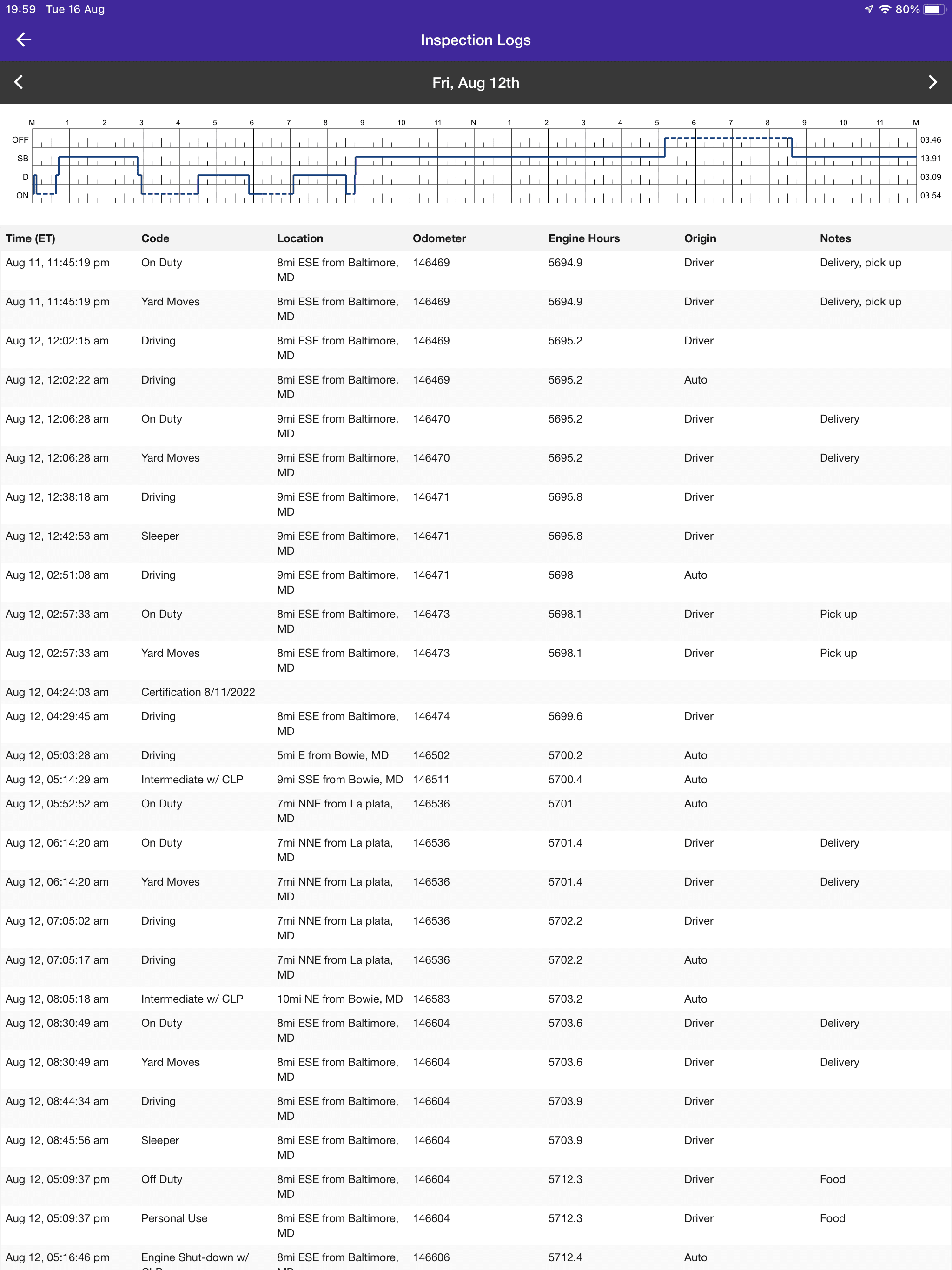
During a roadside inspection, drivers must be able to present their records of duty status for the current day and the previous 14 days. The records may be reviewed directly on the ELD display or transferred electronically using one of the approved data transfer methods defined in the Canadian ELD Technical Standard.
Are wireless roadside inspections used in Canada?
Canada does not currently use the “Level VIII wireless inspection” system used in some U.S. pilot programs. Instead, HOS compliance is typically verified during roadside inspections or through carrier compliance reviews conducted by provincial enforcement agencies.
Can I use a U.S. ELD in Canada?
Not always. Canada requires ELD devices to be certified by an accredited third-party certification body and listed as compliant with the Canadian ELD Technical Standard. A device that is legal in the United States may not be compliant in Canada if it has not received this certification. Drivers operating in Canada should confirm that their device appears on a certified ELD list before crossing the border.
Staying Informed
Regulations change, and relying on outdated information can lead to costly violations. Keeping up with these common questions ensures that you are not caught off guard by inspection requirements or documentation rules.

Secure Your Fleet’s Future with a Certified ELD Partner
The rules of the road continue to evolve. Enforcement today focuses on whether drivers can produce accurate, complete, and transferable records of duty status during inspections.
Regulators expect more than simply having a screen in the cab. The device must meet the Canadian ELD Technical Standard, remain properly certified, and reliably capture the vehicle’s duty status data.
Rather than waiting for a malfunction or compliance issue to disrupt your operations, take control of your compliance strategy now. Choosing a stable, certified ELD system helps protect your operation and reduces the risk of violations during roadside inspections.

As an expert in B2B and B2C sales, I’ve dedicated myself to perfecting sales processes and client retention strategies in the logistics and trucking industry. I have significantly contributed to the expansion of the ELD service, catering to retail and wholesale clients in need of HOS247 ELD solutions. My unwavering commitment to implementing state-of-the-art sales techniques and technologies ensures the continuous growth and success of businesses I work with.











The Logbook App for iPhone to Rely On Electronic logging devices are critical for drivers and carriers that operate under FMCSA hours of service rules. The challenge is finding the right ELD when there are so many on the market.

Transport Canada has mandated that most commercial drivers who are required to maintain records of duty status must do so through an electronic logging device come January 1, 2023. These devices help monitor drivers’ time on the road to meet

The trucking industry has come a long way since the early days of log books. These essential records have been a part of the commercial driving landscape for decades, serving as a critical tool for ensuring compliance with hours of