
ELD Compliance for Local Drivers: The 160 Kilometer Radius and Daily Rest
To safely operate without an electronic logbook, you must completely understand the short-haul exception. This federal rule serves as the foundation of compliance. If you meet all the requirements of this exception every single day, your fleet does not need to install logging hardware in your trucks.

Defining the Local Distance Limit
The most important metric is the 160 kilometer radius. It is crucial to understand that this is a nautical measurement, and the radius is drawn as a perfect straight line from your home terminal. It is not calculated by the actual road distance your truck travels. You can drive 250 kilometers on winding highways in a single day, and as long as the truck never crosses that invisible 160 kilometer boundary line drawn from your starting point, you remain exempt.
The Return and Rest Requirement
Distance is only half of the requirement. To keep your exemption, the driver must begin and end their shift at the exact same home terminal. Furthermore, the motor carrier must ensure the driver is released from duty to begin at least 8 consecutive hours of off-duty time at the end of every shift. While standard 13-hour driving and 14-hour on-duty limits still apply, the defining characteristic of this exemption is returning to that starting point every single day.
Recordkeeping Without an ELD
If you stay within the mileage radius and return to your terminal daily, you bypass the standard logbook rules. Instead, your motor carrier must maintain accurate daily time records. These records must clearly record three specific data points for every shift:
- Start time. The exact time the driver reports for duty.
- End time. The exact time the driver is released from duty.
- Total hours. The total number of hours spent on duty.
The motor carrier must keep these records on file at the main office for at least six months. While the daily log exemption offers significant relief from electronic tracking, it leaves zero room for error. Failing to meet even one condition, such as crossing the 160 kilometer mark or ending a shift at a different location, retroactively destroys the exemption for that specific shift and immediately triggers standard logging rules for the day.
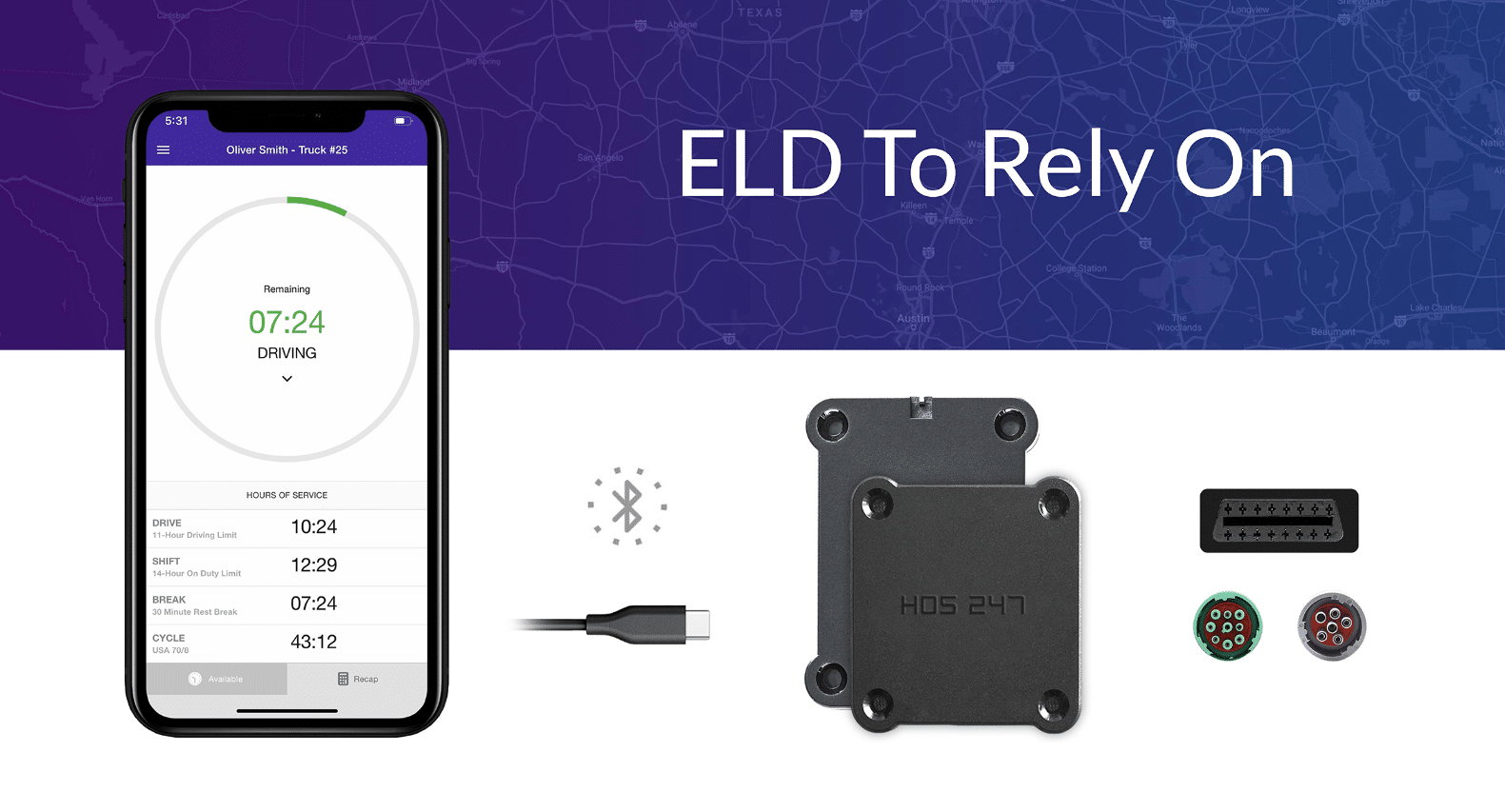
The Threshold: Navigating ELD Requirements for Local Drivers on Occasional Trips
Even carefully managed local fleets sometimes need to push past their standard boundaries. A customer might ask for a delivery beyond the usual zone, or a driver might be required to stay out overnight. Because the Commercial Vehicle Drivers Hours of Service Regulations do not provide a multi-day “grace period” for paper logs, these occasional trips require a specific shift in your compliance routine.
The “Daily Exemption” Reality
Unlike other jurisdictions that allow a set number of paper log days per month, the Canadian radius exemption must be “earned” every single day. The moment a driver anticipates crossing the 160 kilometer line or realizes they will not return to their home terminal to be released from duty, the exemption for that day is void.
Transitioning to a Record of Duty Status
When a short-haul driver breaks the radius or return-to-terminal requirements, they must immediately begin keeping a standard Record of Duty Status (RODS).
- Occasional trips. For a driver who normally operates under the radius exemption, a paper log is only permitted if they do not regularly or occasionally fall under the requirement to use an ELD.
- The ELD trigger. Under federal rules, if a driver is required to keep a Record of Duty Status — even occasionally — they must use a third-party certified electronic logging device. There is no “8-day” allowance; if the nature of the work requires a log, the law mandates that log be electronic unless a specific hardware exemption (like a pre-2000 vehicle or a short-term rental) applies.
Managing Operational Risk
Relying on occasional manual logging creates significant administrative and legal risks for a local fleet.
- Immediate compliance. Because there is no 8-day buffer, a driver must have the certified hardware installed and functional the very first time they cross the radius or stay out overnight.
- Paperwork gaps. If a driver switches to a paper log for a long trip, they must still be able to account for their previous 14 days of on-duty time to show they are within their cycle limits. Proving this with a mix of timecards and paper logs during a roadside inspection is often difficult and prone to errors.
- NSC audit exposure. One trip beyond the radius without a certified ELD is an immediate violation that can impact your National Safety Code (NSC) profile.
Because of the lack of a “buffer” rule, many local fleets choose to install certified ELDs across their entire operation. This “set and forget” approach ensures that if a driver is rerouted at the last minute or delayed past their shift, the fleet remains 100% compliant without the manager having to track rolling 30-day windows or scramble for paper logbooks.

Exploring Specific ELD Exemptions for Local Drivers
Beyond the standard radius rule, Transport Canada outlines a few highly specific scenarios where drivers are completely exempt from electronic logging. Identifying if your fleet qualifies for these targeted ELD exemptions for local drivers requires a close reading of the federal regulations.
The Pre-2000 Vehicle Exemption
Commercial vehicles manufactured before the model year 2000 do not require an electronic logbook. Unlike other jurisdictions, Canadian enforcement is based strictly on the model year of the vehicle, not the engine. If the vehicle’s model year is 2000 or newer, you must use a third-party certified ELD, even if it has been retrofitted with a pre-2000 engine. Safety officials check the vehicle identification number (VIN) and registration to confirm the manufacturing date.
The 30-Day Rental Exemption
A significant relief for local fleets dealing with seasonal surges or equipment breakdowns is the rental exemption. You do not need to install an ELD in a commercial vehicle that is subject to a rental agreement with a term of 30 days or less. However, this exemption cannot be used as a loophole; it does not apply if the same vehicle is subject to a renewed or extended rental agreement that takes the total term past 30 days.
Driveaway-Towaway Operations
This exemption applies when the commercial motor vehicle being driven is the actual commodity being delivered. For example, a driver delivering a brand-new bus or motorhome from a manufacturer to a dealership does not need to use an ELD, provided the vehicle is the cargo and is not carrying additional freight. In Canada, this exemption has been a point of specific industry focus and often requires the carrier to maintain strict documentation regarding the delivery contract.
While these exemptions offer vital relief to specific industries, they are very narrowly defined. During a roadside inspection, the burden of proof rests heavily on the driver. You must carry the proper paperwork and documentation to immediately prove to an enforcement officer that your current operation falls perfectly within an exempt category.
Why Reliable Hardware Is Key to ELD Compliance for Local Drivers
For fleets that occasionally cross the 160 kilometer boundary, choosing the right equipment is a critical operational decision. When a short-haul driver suddenly needs an electronic logbook to remain compliant, the hardware must work perfectly the moment it is required.
The Stress of Connection Stability
Long-haul drivers typically turn their engines on and drive for hours without stopping. Local drivers experience a completely different daily workflow. A regional delivery route involves dozens of stops, frequent engine shut-offs, and constant cab exits. This repetitive cycling puts immense stress on the wireless Bluetooth connection linking the engine hardware to the driver’s display tablet.
If a low-quality device fails to reconnect smoothly after a quick delivery stop, the hardware will continue to record the truck’s movement but will lose the connection to the driver’s profile. This creates a string of unassigned driving errors. When an auditor reviews the logs later during a National Safety Code (NSC) audit, these unexplained gaps look exactly like illegal log falsification.
Data Transfer Accuracy
During a roadside inspection, the primary goal is to securely hand over your data to the official as quickly as possible. Canadian inspectors prioritize the mandated email and local transfer methods established by the technical standard. They expect the digital file to arrive in their system almost instantly.
If your hardware loses its connection or the software freezes, and you cannot send the file promptly, you invite immediate regulatory scrutiny. An inspector who has to wait for a lagging, unresponsive system is much more likely to conduct a deeper inspection of your entire vehicle and your previous 14 days of records.
Purchasing a low-quality device might seem like a smart way to save money upfront. However, an unreliable system is a major operational hazard. The fines, unassigned driving errors, and roadside delays caused by cheap hardware will quickly erase any financial benefit of your local exemption status.
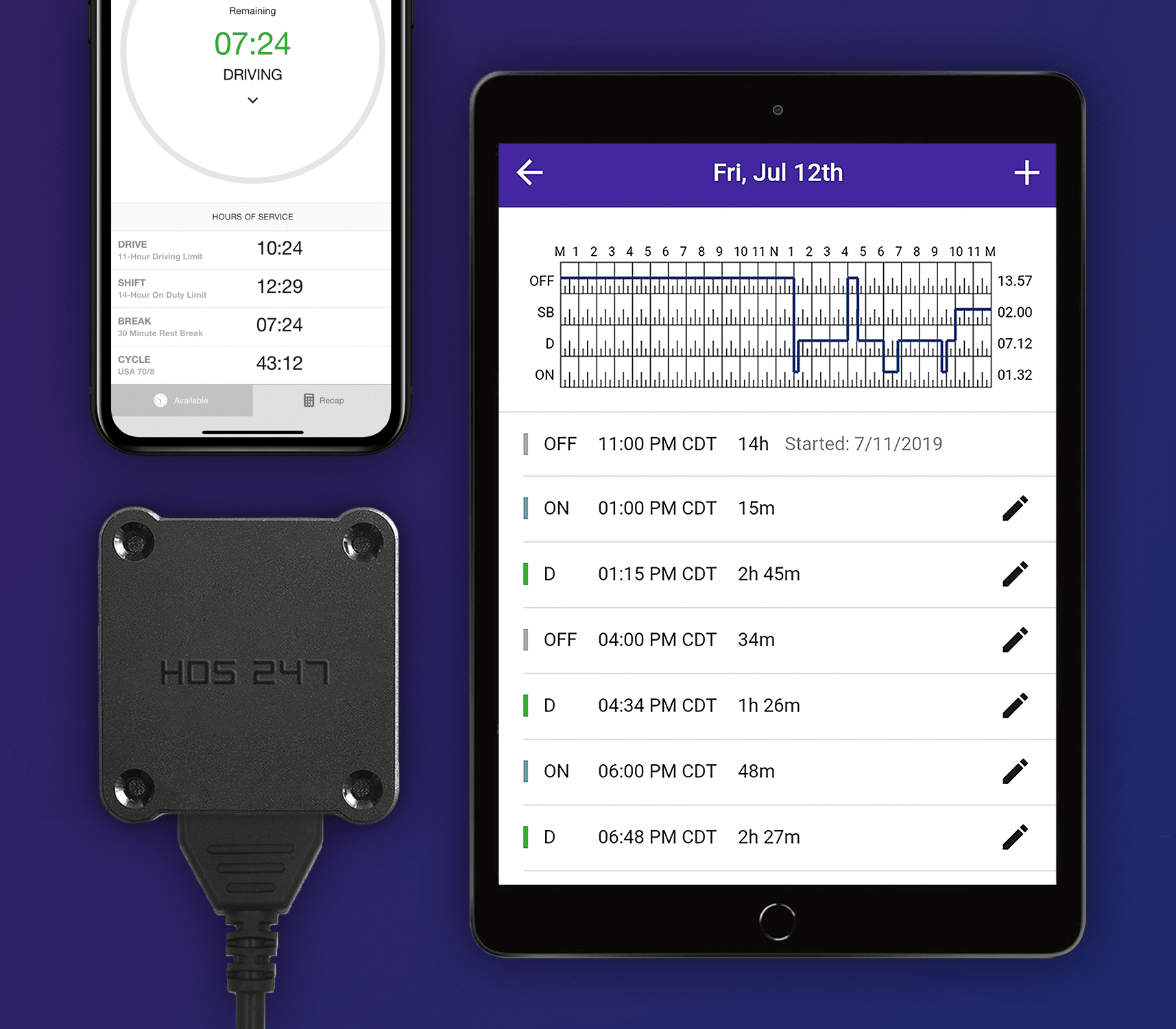
HOS247: The Most Reliable ELD for Local Drivers
Regional fleets need technology that matches their unique daily workflow. HOS247 provides a compliance platform specifically engineered to handle the constant starts, stops, and sudden schedule changes of local delivery routes.
Partnering with HOS247 delivers several distinct operational advantages for short-haul fleets:
- Intuitive driver interface. Keep daily logging frictionless with a top-rated app featuring large touch targets and a dedicated night mode.
- Live multilingual support. Get immediate help from real people seven days a week in English, Spanish, Russian, and Polish — no automated bots.
- Bring Your Own Device (BYOD). Let drivers use their own familiar iOS or Android smartphones and tablets, significantly reducing your upfront hardware costs.
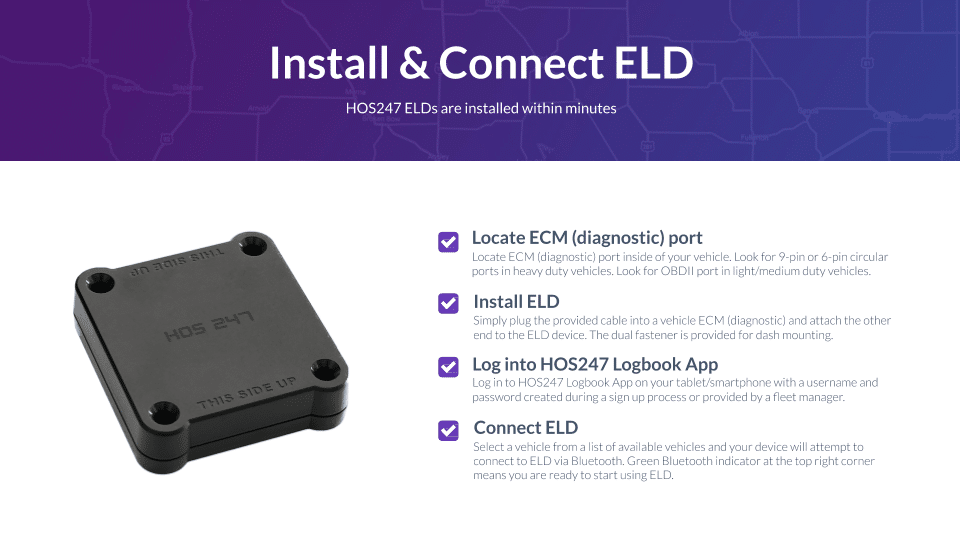
- Plug-and-play installation. Install the hardware in minutes without paying for specialized mechanics or pulling trucks off the road for a full day.
- Instant Bluetooth reconnection. Our proprietary hardware reconnects immediately after frequent delivery stops, preventing the unassigned driving errors that plague cheaper devices.
- Month-to-month flexibility. Scale your truck count up or down based on seasonal demand without being trapped in restrictive multi-year contracts.
- Electronic DVIRs. Streamline pre-trip and post-trip inspections, instantly communicating any vehicle defects directly to your maintenance shop.
- Real-time GPS tracking. Give dispatchers pinpoint visibility to optimize local delivery routes and provide accurate arrival times to customers.
- Fault code diagnostics. Read engine codes in real-time to catch minor mechanical issues before they turn into expensive roadside breakdowns.
- Idle monitoring. Track exactly how long trucks run while waiting at loading docks to help identify and reduce massive fuel waste.
HOS247 stands as the trusted partner for local motor carriers. By delivering certified technology and transparent business practices, we help short-haul drivers focus entirely on their deliveries rather than struggling with technical glitches.
Managing ELD Requirements for Local Drivers Effectively
While you might qualify for a radius exemption, proving that exemption during an audit takes significant preparation. National Safety Code (NSC) auditors view a missing or incomplete time record with the exact same severity as a missing logbook. If an auditor asks to see your daily records and your back office cannot produce them immediately, your fleet will face steep fines.
The Audit Trail Reality
Safety officials do not simply take a driver’s word that they stayed within the 160 kilometer radius. They cross-reference fuel receipts, toll tickets, and bill of lading addresses directly against the physical time records. If a driver failed to write down their exact start time or stop time on a Tuesday three months ago, that entire day is considered non-compliant. This rigid standard is exactly why manual recordkeeping often becomes a major liability for growing regional fleets.
The “Brain and Body” Benefit
To eliminate these paperwork errors, many regional carriers choose to run full compliance software even when they are legally exempt. This strategy creates a massive digital safety net. Because the software (the brain) is connected to the engine hardware (the body), the system automatically records the exact moment the truck turns on and shuts down for the day.
This provides the back office with perfect, automated time records. If an auditor ever questions a driver’s hours, the fleet manager can pull a flawless digital record that proves the driver operated safely within their legal limits.
Proper Annotation Habits
If your fleet uses logging software while running local routes, your drivers need to understand how to use digital annotations. An annotation is simply a digital note attached to a specific driving event to explain to an auditor why the vehicle was moving.
For example, if a driver is moving a trailer across a private terminal lot, they should annotate that time as a “Yard Move” to prevent it from counting against their standard driving limits. Similarly, if a driver is using the software purely as an electronic time record, they should regularly add a “Radius Exemption” note to their daily log. This simple habit clarifies their operational status immediately to any enforcement officer who might inspect their digital records. Proactive, highly detailed recordkeeping is the best possible way to protect your commercial driver’s license and your carrier’s overall safety rating.
Secure Your Local Authority with a Proven Solution
Maintaining proper ELD exemptions for local drivers is about proactive preparation, not just avoiding a roadside ticket. Relying on disorganized paper time records or guessing about your actual radius leaves your operating authority completely exposed to severe fines.
By using reliable compliance hardware, you transform a complex regulatory requirement into an automated, highly accurate back-office process. Protect your drivers, streamline your time-tracking, and secure your fleet’s safety rating with technology designed specifically for the rigorous demands of regional hauling.
Stop guessing about your exemption status and risking expensive audit failures. Schedule a demo or start your no-contract trial with HOS247 today to equip your local fleet with a stable, proven compliance solution.
A Note to Our Readers on Compliance
This article is intended for informational and educational purposes only. It is not a substitute for official regulatory guidance or legal advice. HOS and ELD regulations are complex and subject to change and interpretation by enforcement authorities. Please always refer to official sources for the most current and accurate information.

As an expert in B2B and B2C sales, I’ve dedicated myself to perfecting sales processes and client retention strategies in the logistics and trucking industry. I have significantly contributed to the expansion of the ELD service, catering to retail and wholesale clients in need of HOS247 ELD solutions. My unwavering commitment to implementing state-of-the-art sales techniques and technologies ensures the continuous growth and success of businesses I work with.








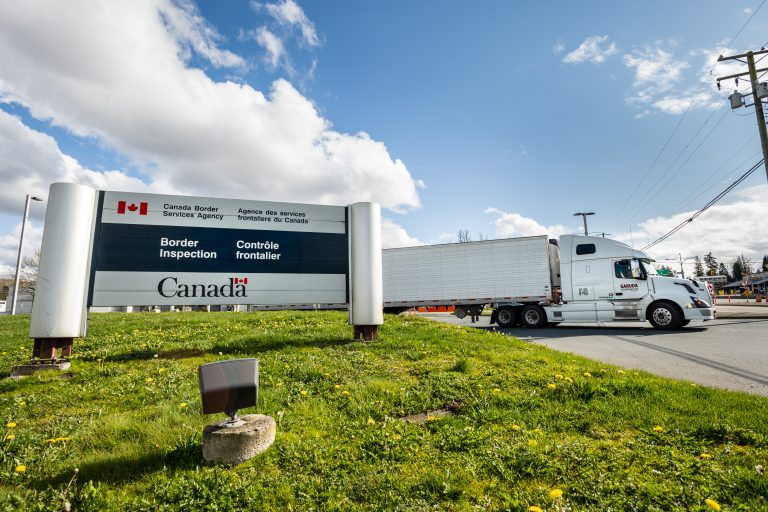
For truckers and trucking companies operating in Canada, the rules on how hours of service are to be collected and logged are changing. Beginning January 1, 2023, all commercial drivers in Canada must comply with the rules mandating the use
The Canadian ELD mandate final compliance phase is now almost in effect, but many trucking companies are stuck with outdated legacy providers and still have yet to make a move on the right compliance partner. They may not know whether
For commercial truck drivers, electronic logging devices (ELDs) are more than just another piece of technology — they’re essential tools that directly impact compliance, efficiency, and financial bottom line. Choosing the best app to log driving hours can mean the