
The Long Road: Evolution of the Driver Logbook
Understand current requirements by reviewing the history of the industry. The journey of the logbook reflects the consistent growth of commercial transportation. Regulators continuously update rules to protect operators and the public. These historical milestones explain the foundation of modern compliance standards. Fleets navigate today’s rules easily by knowing how these regulations developed over time.
1954: The Motor Vehicle Transport Act (MVTA)
Parliament officially passed the Motor Vehicle Transport Act, giving the federal government regulatory oversight over extra-provincial truck and bus operations. However, to keep management localized, Ottawa immediately delegated the authority to enforce and police these hours-of-service guidelines to individual provincial transport boards.
1987 to 1989: The Creation of the National Safety Code (NSC)
To fix a patchwork of conflicting provincial rules, the Canadian Council of Motor Transport Administrators (CCMTA) introduced the National Safety Code (NSC). Specifically, NSC Standard 9 (Hours of Service) was established to form the very first unified, cross-Canada standard for daily commercial driving limits and paper logbook formats.
Late 1980s: The Introduction of Automatic Recording
As cross-country shipping expanded, the early predecessors to modern electronic logs began popping up in North American fleets. These early on-board recording computers connected directly to the truck’s engine to log basic movement data, though they still required a heavy amount of manual driver input to complete the daily record.
2007: Modern Hours of Service Overhaul
Transport Canada implemented a sweeping update to the federal Commercial Vehicle Drivers Hours of Service Regulations. This landmark shift moved Canada away from old, rigid shift models to the flexible, modern framework we use today—introducing the specific Cycle 1 (7-day) and Cycle 2 (14-day) options to better combat driver fatigue.
2021 to 2023: Third-Party Certified ELD Mandate
Transport Canada officially enacted its electronic logging device mandate on June 12, 2021, to phase out traditional paper grid logs. Following a progressive enforcement and educational grace period, full, strict provincial enforcement went into effect on January 1, 2023. Crucially, Canada departed from the U.S. model by requiring all logging devices to be strictly tested and validated by an accredited third-party certification body rather than allowing providers to self-certify.
The progression from paper grids to connected applications demonstrates a strong industry commitment to safety. Fleet managers and operators adapt to these technological changes to maintain smooth operations. Understanding this historical progression prepares motor carriers for current regulations. Fleets navigate modern compliance standards successfully by building on this foundational knowledge.

The Purpose Behind Hours of Service Rules
Hours of service rules establish a balanced framework for commercial transportation. These regulations promote public safety while supporting a highly active freight market. Industry leaders and safety advocates developed these standards over decades of observation and data collection. Fleet managers understand these origins to better manage their daily dispatching routines.
- Fatigue mitigation. Industry researchers identified driver exhaustion as a primary safety concern, prompting regulators to mandate predictable rest periods that maintain high alertness levels.
- Labor union advocacy. Organizations pushed for regulated schedules historically to secure the long-term health of professional drivers and guarantee dedicated time for sleep and recovery.
- Federal-provincial action. The Canadian Council of Motor Transport Administrators (CCMTA) established the National Safety Code (NSC) Standard 9 to create data-driven frameworks that continually monitor and adjust commercial driving limits.
Standardized driving schedules protect the physical health of commercial operators. Consistent rules guarantee professionals receive adequate time away from the steering wheel. Fleets build reliable delivery networks by operating within these predictable timeframes. Dispatchers plan routes accurately when they know exactly how long an operator can safely remain on duty. This predictability secures customer relationships through consistent on-time deliveries.
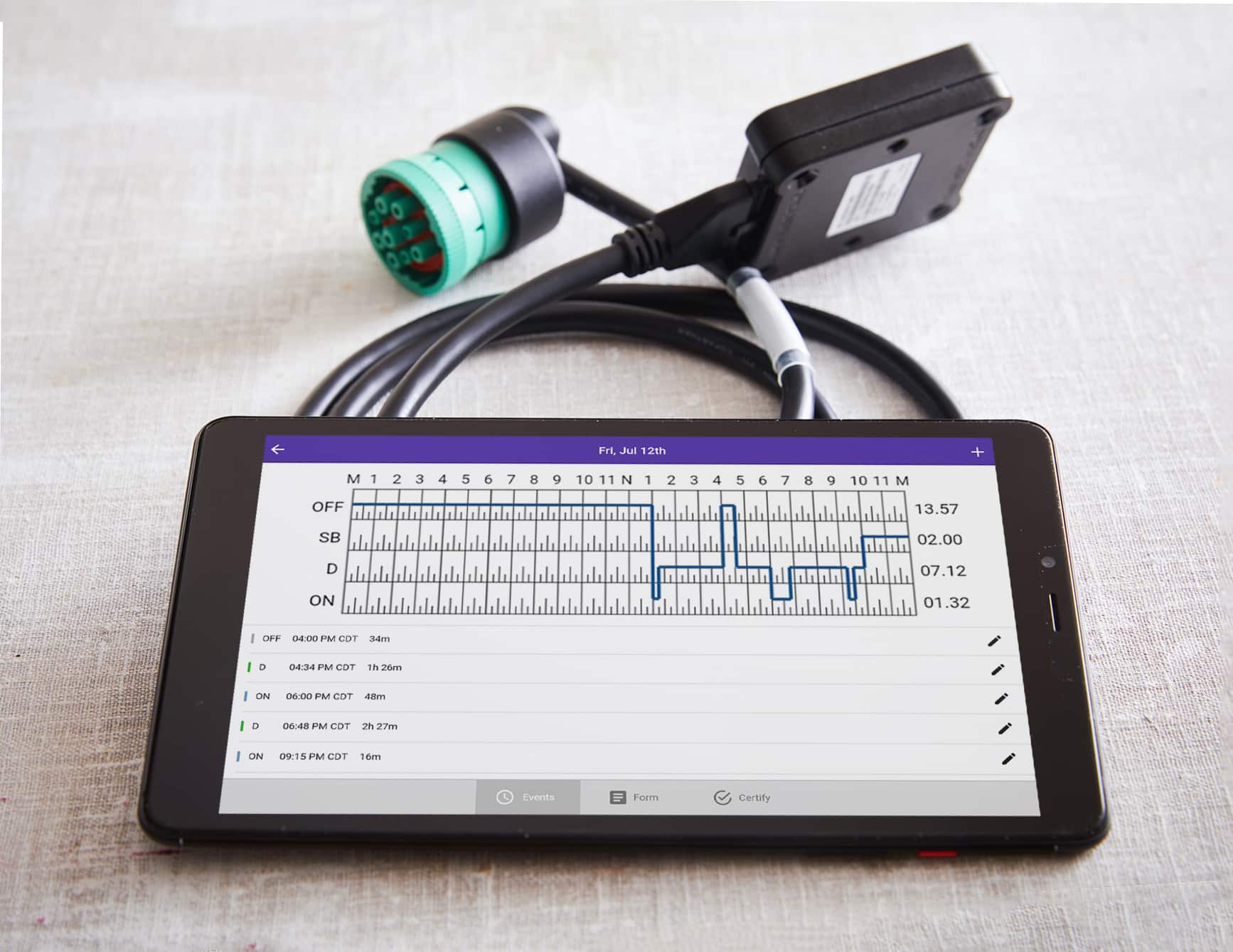
Transport Canada Requirements for Commercial Drivers
Staying compliant requires a complete understanding of federal regulations. Operators must track specific driving metrics continuously throughout their shifts. Fleets secure their operating authority by adhering strictly to these published guidelines. The driver logbook records these precise metrics to ensure a perfect compliance record. Motor carriers structure their entire dispatching operation around these core requirements.
|
Rule |
Metric |
Requirement |
|
13-hour limit |
13 hours |
Operators may drive a maximum of 13 hours after 8 consecutive hours off duty. |
|
14-hour window |
14 hours |
Drivers must complete all driving tasks within a 14-hour on-duty window per shift. |
|
16-hour elapsed time |
16 hours |
Operators cannot drive after 16 hours have elapsed since the end of the last core rest period. |
|
Sleeper berth |
10 hours |
a 5/5 split is strictly for passenger-carrying vehicles in Canada unless a fleet is explicitly registered in a Transport Canada cargo pilot program. For standard freight haulers, drivers can split their required rest into qualifying blocks of at least two hours where both periods are spent in the sleeper berth to pause the shift clocks. |
|
Data transfer |
Electronic |
Systems must export files via the mandated Canadian encrypted email or local transfer methods. |
Digital logs automatically calculate these countdowns. The system tracks the metrics even when the driver stops for fuel or meals. This automated tracking prevents mathematical errors that often occurred with paper grids. Operators plan their daily tasks efficiently by watching this primary clock, and fleet managers secure successful deliveries by assigning loads that comfortably fit inside these strict daily limits.
How to Choose a Reliable Driver Logbook
Selecting the right electronic system protects operational budgets and maximizes available driving time. Fleet administrators secure their operations by evaluating specific technical capabilities before purchasing a system. Dependable driver logbooks streamline daily reporting and reduce administrative burdens for back-office staff. Motor carriers establish a successful foundation by analyzing several critical hardware, software, and vendor factors during their selection process.
Hardware Reliability and Compatibility
Physical equipment must withstand the daily demands of commercial transportation. Operators lose valuable driving time when fragile devices break or disconnect on the road. Protect data collection by investing in high-quality hardware designed specifically for commercial vehicles.
- Stable connections. Maintain continuous tracking with hardware that stays securely plugged in via steady Bluetooth or specialized cables.
- Vibration resistance. Prevent unexpected reboots by selecting devices built to handle the constant physical movement of heavy-duty trucks.
- Device compatibility. Reduce upfront costs by choosing systems that operate smoothly on existing smartphones and tablets.
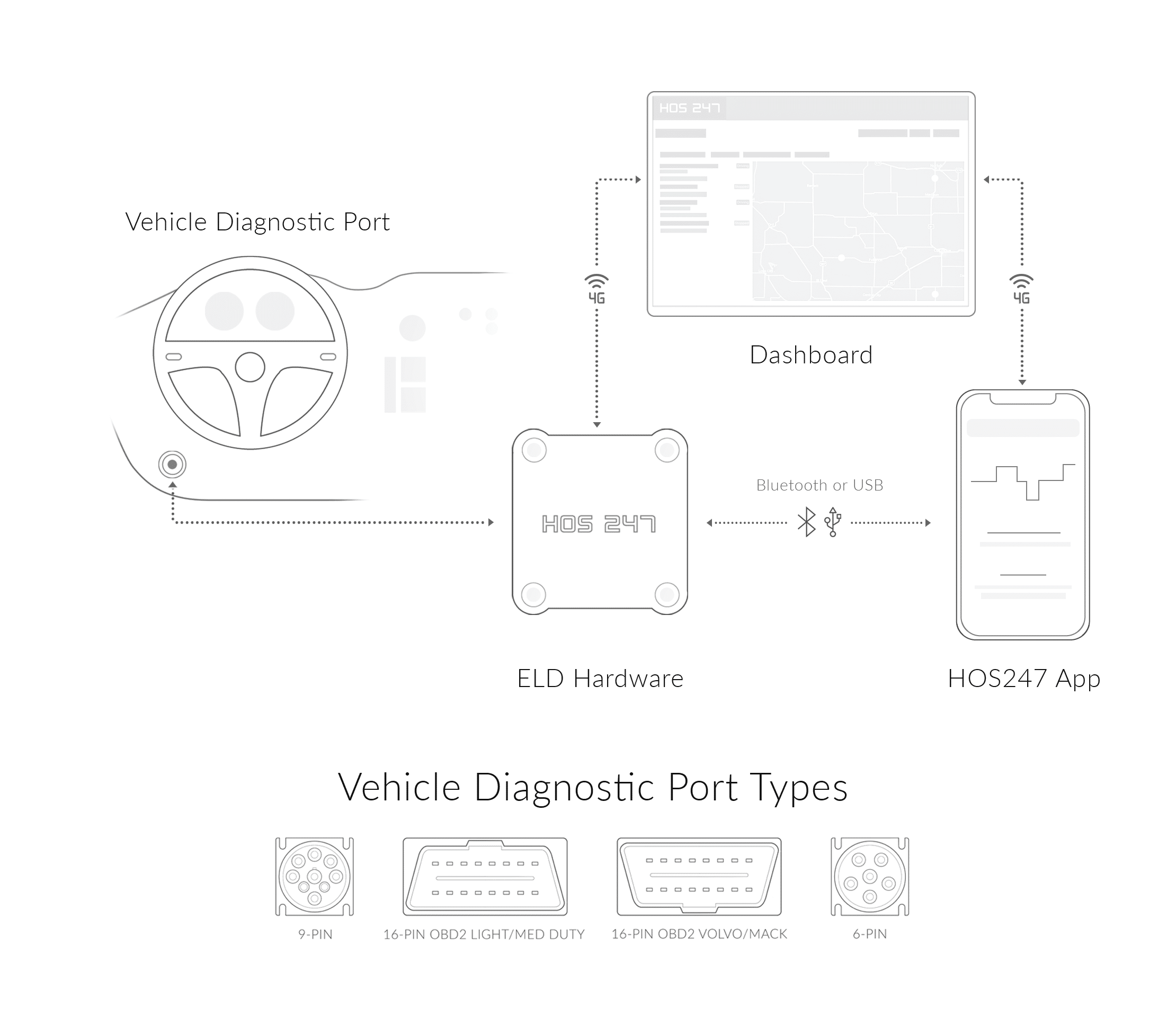
- Simple installation. Keep trucks moving by selecting plug-and-play hardware that connects directly to the diagnostic port within minutes.
Hardware performance dictates the accuracy of the entire compliance system. Reliable devices record precise engine data without requiring constant manual adjustments from the operator. Motor carriers prevent costly downtime by equipping their vehicles with durable tracking units.
Software Capabilities and Interface
Software design directly impacts daily efficiency for both operators and administrators. A complex application creates frustration and leads to accidental compliance errors. Choose software that prioritizes clarity and automated tracking.
- Offline tracking capability. Protect data integrity with a system that records logs in remote locations and syncs automatically once the vehicle returns to cellular range.
- Audit-proof interfaces. Facilitate smooth roadside inspections using a dedicated mode that displays only the specific 14 days of data required by law enforcement.
- Automated notifications. Prevent hours of service violations through screen alerts that warn operators before they exceed their driving limits.
- Clear administrative portals. Streamline dispatching duties using an organized online dashboard that displays real-time fleet locations and duty statuses.
Accessible software allows operators to focus entirely on safe driving. Clear interfaces reduce training times for new hires and improve overall data accuracy across the organization.
Vendor Support and Contract Flexibility
A compliance partner must provide reliable support long after the initial installation. Unresponsive customer service leaves operators stranded during critical technical issues. Evaluate the business practices of a vendor to ensure a secure long-term partnership.
- Accessible technical support. Resolve road issues immediately by partnering with providers that offer dedicated communication channels for active operators.
- No-contract flexibility. Maintain financial control by selecting providers that offer monthly plans instead of requiring locked multi-year agreements.
- Transparent pricing. Protect operating budgets by avoiding providers that hide administrative fees or charge extra for basic software updates.
Vendor reliability operates as a crucial component of fleet management. Motor carriers adapt to market changes easily when they avoid restrictive contracts. A dependable logging provider operates as an extension of the fleet operations team.
HOS247: The Standard for Driver-First Logging
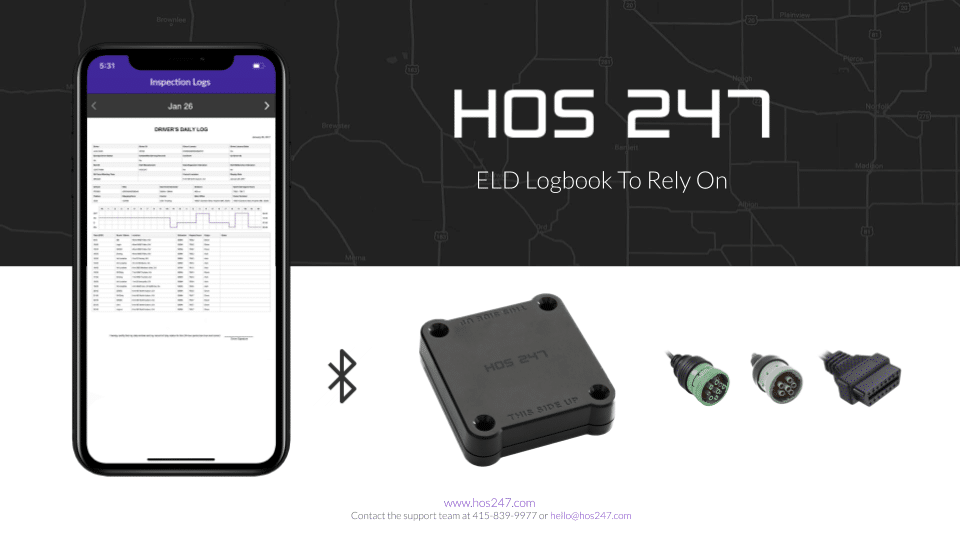
HOS247 builds its platform on a reliability-first philosophy to keep fleets moving efficiently. Operators simplify their daily routines using intuitive tracking tools. The platform reduces technical friction by focusing directly on practical functionality. Fleet managers streamline their back-office operations by consolidating compliance and maintenance tracking into one central interface.
- High-quality hardware. Prevent dropped connections using durable devices built specifically to withstand commercial vehicle vibrations.
- Easy-to-use software. Navigate compliance easily through an accessible mobile application for operators and a comprehensive online portal for administrators.
- Multi-lingual support. Resolve technical questions quickly with expert assistance available in English, Spanish, Russian, and Polish.
- Callback policy. Keep operators focused on their routes by allowing them to request a callback instead of waiting on hold. We will also call you back if the call drops for any reason.
- IFTA mileage calculations. Reduce administrative hours by letting the platform automatically calculate precise mileage data by jurisdiction to simplify fuel tax reporting.
- Preventative maintenance tracking. Extend vehicle lifespans by addressing engine fault codes immediately upon receiving automated system notifications.
- Transparent pricing structures. Manage fleet budgets effectively with straightforward monthly plans that operate without hidden fees or long-term commitments.
- Two-week trial period. Test the system securely under real road conditions using a 14-day trial backed by a hassle-free refund policy.
Implementing a driver-first system improves overall fleet efficiency and daily performance. Operators appreciate carriers that provide high-quality professional tools for the road. The HOS247 ELD platform supports commercial drivers directly by removing administrative stress from their schedules. Fleet administrators gain a clear view of safety and performance metrics across the entire organization. This clear visibility allows motor carriers to operate securely and confidently in a highly active transportation market.

Future Trends: What Is Next for Driver Logbooks?
Anticipate upcoming industry changes to prepare fleet operations for new technology. The next decade of commercial transportation introduces smarter tools to support professional operators on the road. The modern driver logbook serves as the foundation for these advanced systems. Fleet administrators secure long-term efficiency by understanding how compliance technology continues to develop and improve daily driving conditions.
Predictive Compliance and Route Planning
Prevent hours of service violations automatically through predictive technology. Future systems analyze real-time traffic patterns, weather conditions, and available parking data to guide operators safely. Driver logbooks alert professionals to secure parking long before their driving window expires. Dispatchers improve route accuracy by relying on systems that account for actual road conditions rather than simple distance calculations. This predictive capability reduces driver stress and prevents costly compliance fines.
Wellness Monitoring and Physical Metrics
Protect operator health by monitoring physical fatigue indicators safely. Advanced systems may soon suggest necessary breaks based on a driver’s physical metrics rather than a rigid countdown clock. These developments focus entirely on improving daily safety without intruding on professional privacy. Fleets reduce accident rates by supporting natural rest cycles based on actual physical needs. The industry continues to test these methods to ensure they provide practical benefits for commercial operators.
Dynamic Hours of Service Adjustments
Maintain freight movement during extreme conditions through flexible compliance frameworks. Regulators currently discuss dynamic hours of service rules that adjust automatically during severe weather or unexpected highway closures. A smart driver logbook calculates these temporary extensions instantly to keep operators compliant during emergencies. This flexibility prevents drivers from rushing through dangerous conditions simply to beat a rigid daily clock.
Integrating these advanced features requires a solid foundation in reliable compliance tracking. Motor carriers prepare for these changes by partnering with dependable providers today. A reliable logging system scales easily to adopt new safety features as they become legally approved. Fleets protect their investments by choosing platforms built for continuous development and long-term operational success.

Secure Fleet Compliance with a Dependable Driver Logbook
The driver logbook has advanced significantly from the basic paper grids of the 1930s. Modern commercial transportation relies on these digital systems to maintain highway safety and operational efficiency. Digital logs function as the most critical piece of technology inside the truck cab today. Motor carriers use these accurate records to protect their businesses from costly compliance failures and operational delays. Operators secure their daily schedules by relying on precise electronic tracking instead of manual calculations.
Choosing a reliable compliance partner means more than simply fulfilling a federal requirement. High-quality systems protect commercial driver’s licenses by preventing accidental hours of service violations before they occur. Fleet administrators streamline their entire dispatching process using clear, accessible location data. Dependable hardware and intuitive software keep trucks moving efficiently across all jurisdictions without technical interruptions.
Secure long-term profitability by implementing a dependable driver logbook. Platforms like HOS247 provide the exact tools professional drivers and fleet managers need to succeed on the road. Maximize available driving time and simplify roadside inspections with a proven compliance system. Take control of fleet operations today by upgrading to a reliable, driver-first logging solution.
A Note to Our Readers on Compliance
This article is intended for informational and educational purposes only. It is not a substitute for official regulatory guidance or legal advice. HOS and ELD regulations are complex and subject to change and interpretation by enforcement authorities. Please always refer to official sources for the most current and accurate information.

As an expert in B2B and B2C sales, I’ve dedicated myself to perfecting sales processes and client retention strategies in the logistics and trucking industry. I have significantly contributed to the expansion of the ELD service, catering to retail and wholesale clients in need of HOS247 ELD solutions. My unwavering commitment to implementing state-of-the-art sales techniques and technologies ensures the continuous growth and success of businesses I work with.









For businesses in the transportation industry, compliance with the HOS regulations established by Transport Canada is not optional, it is a legal requirement. Before the implementation of the ELD mandate, truckers were allowed to record their hours of service manually

For owner-operators to comply with the Transport Canada electronic logbook rules, you will need to have a good electronic log to track your hours. This will also help you stay competitive and safe while working in the industry. The ELD
The advantages of using GPS trackers are significant, including enhanced safety, reduced fuel costs, increased productivity, and better communication, all of which translate into lower operational costs. By enabling fleet managers to monitor and manage vehicles and assets in real-time,