
Why You Can’t Just “Download” Compliance
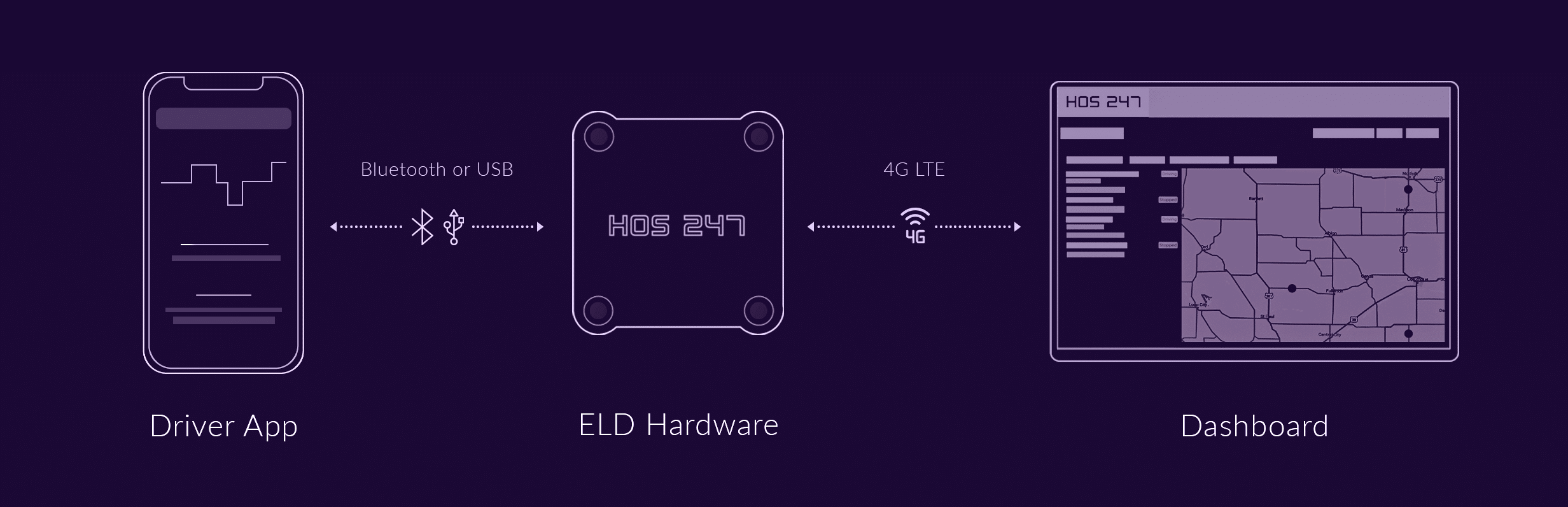
Many drivers mistakenly treat their electronic logbook like a standard smartphone app. You cannot simply download a piece of truck logs software from an app store and expect to be legal. The Transport Canada ELD Mandate requires a physical tether to the vehicle, creating a system that relies equally on heavy-duty physical hardware and intelligent digital software.
The Body: The Hardware Connection
The telematics device plugged into your diagnostic port acts as the muscle of the operation. This piece of hardware lives in a brutal environment — especially during Canadian winters. It must survive constant vibration, extreme cab temperature swings, and heavy dust while staying firmly connected to the ECM (Engine Control Module). Its sole job is to read the J1939 or OBDII protocols, accurately pulling raw data like vehicle speed, RPMs, and odometer readings directly from the truck’s computer.
The Brain: The Software Interface
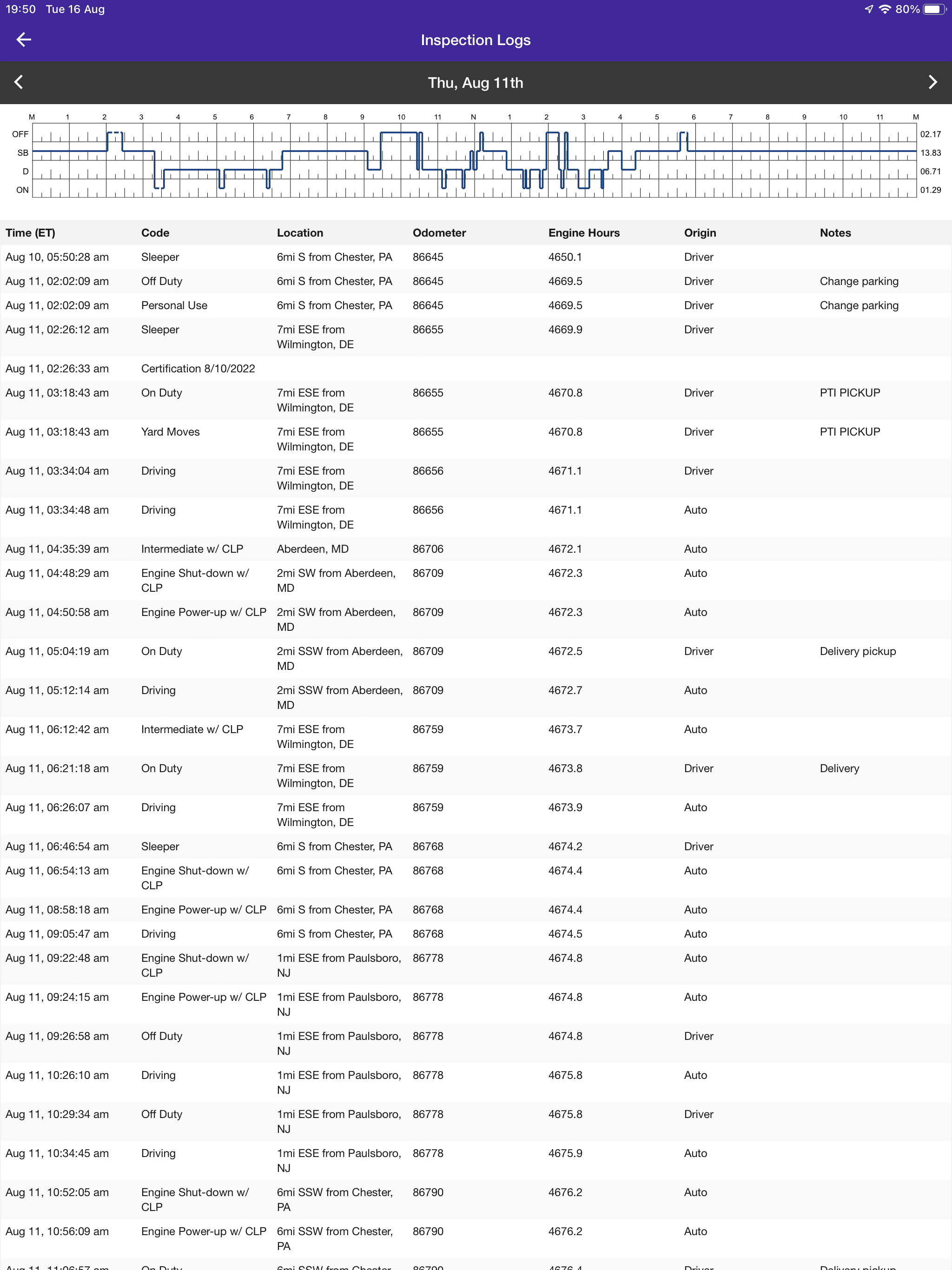
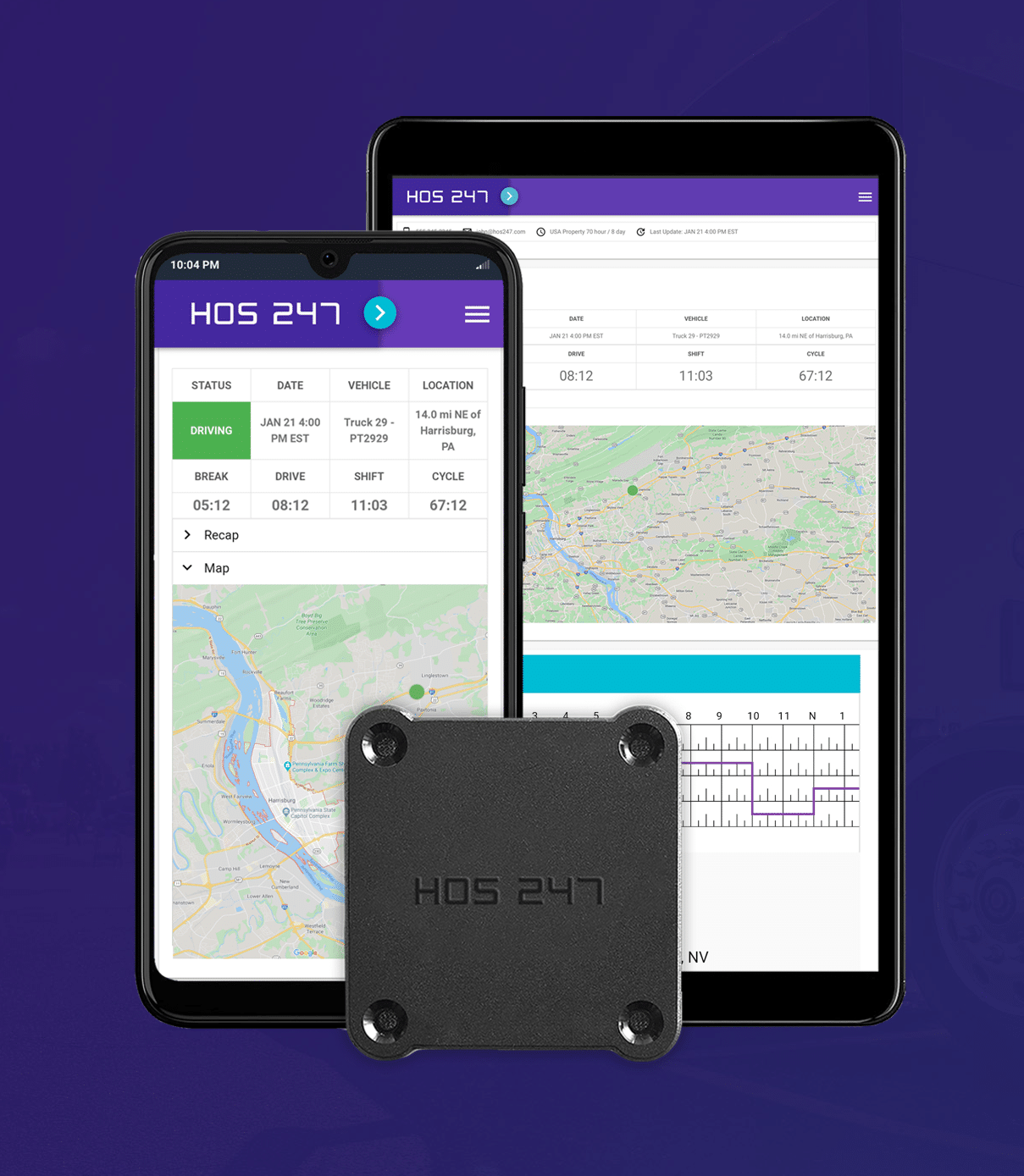
The application installed on your tablet or smartphone serves as the intelligence of the system. It takes the raw data streaming from the engine and translates it into a readable format. The software calculates your remaining hours based on South of 60 or North of 60 rules, generates the familiar grid graph, and formats the files for a roadside data transfer. A well-designed brain makes the driver’s daily workflow efficient, but it remains completely dependent on the raw information it receives from the engine.
The Critical Link
The failure point for most compliance tools is the invisible bridge between the brain and the body. When drivers complain about their software crashing, freezing, or losing miles, they may be experiencing a hardware connection drop. If the Bluetooth link between the ECM device and the tablet breaks, the app stops receiving data. The system flatlines, creating unassigned driving events and missing log segments that force the driver to spend hours making manual corrections.
The Reality of System Integration
A beautifully designed app will likely fail if it is paired with cheap, unreliable hardware. To pass a roadside inspection without delays, you need a system where the physical device and the digital application are engineered specifically to talk to each other without interruption. When the brain and the body are built for each other, compliance becomes automatic.
Warning: The 3 Types of Risky Software
Many products marketed as simple, cost-effective solutions are actually high-risk setups that can cost you your operating authority.
- The uncertified “international” app. To be legal in Canada, a device must be tested and certified by an accredited third-party body. Many U.S.-compliant devices have not undergone this Canadian certification. If your provider is not on the Transport Canada list of certified ELDs, you are effectively running on paper logs in the eyes of the law.
- The GPS-only “logger”. Mobile apps that rely entirely on your phone’s internal GPS are strictly illegal for commercial logging. An ELD must physically plug into the truck’s diagnostic port to read the engine’s data directly. If an app does not require a wired hardware connection to your dashboard, it is not a compliant system.
- The “free” hardware gimmick. If a provider offers you a logging device with zero upfront costs, you are usually paying for it through a rigid long-term data contract. These companies often use generic hardware components. If that hardware fails or vibrates loose, the driver is legally responsible for the missing logs and remains financially locked into paying the subscription fee.
Protecting your operation means reading the fine print and understanding the technology you are buying. Falling for a free hardware gimmick or relying on a standalone mobile app usually results in expensive citations, broken contracts, and forced downtime. A professional driver needs a professional, verified tool.
5 Must-Have Features for Reliable Truck Log Software
A compliant system keeps you legal, but a well-designed system actively makes your workday easier. When evaluating new electronic logging software, you need tools that prevent violations and handle the heavy administrative lifting automatically. Here are the five core features required for a compliant commercial operation:
- Robust offline mode. Canada’s geography presents unique challenges, from the remote stretches of the Trans-Canada Highway to the isolated pockets of the Canadian Shield. The software must continue to record and store engine data locally on the hardware device, then automatically sync that data to the cloud the moment a LTE or 5G connection returns.
- Automated IFTA reporting. Calculating fuel taxes manually is a massive drain on time, especially for cross-border carriers. Your software should track your jurisdictional mileage automatically as you cross provincial and state lines, turning a complex quarterly chore into a simple, one-click report.
- Predictive alerts. A highly effective app warns you before you run out of hours, rather than simply flagging a violation after it happens. Drivers need proactive audio and visual notifications — such as a warning that you are approaching your 13-hour driving limit or your 14-hour on-duty window — to plan their stops safely.
- One-click inspection mode. The roadside inspection workflow must be fast and secure. Drivers should be able to lock their tablet screen and successfully transfer their log files to a CVSA officer via the specific Transport Canada email or local transfer protocol in three taps or less.
- Vehicle diagnostics. Your system should help monitor the mechanical health of your truck. By reading diagnostic trouble codes (DTCs) directly from the engine, the software can alert you to minor engine faults before they develop into expensive roadside breakdowns in sub-zero temperatures.
What Reliable Means in Real Life
In the demanding environment of Canadian trucking, reliability is measured by exactly how much time a system saves you. A truly reliable setup delivers these specific real-world outcomes:
- Clean logs. Your records remain consistently accurate, free from unexplained gaps, frustrating unassigned driving events, or missing kilometers.
- Quick inspection workflow. When you pull into a scale or get pulled over for a roadside check, you can hand over your data confidently. You avoid fumbling through complicated menus or rebooting a frozen tablet while an officer waits at your window.
- Minimal downtime. You spend less of your day sitting on the shoulder or on the phone with dispatch trying to resolve a frustrating sync error between your engine and your display.
- Fast resolution. When a technical issue does arise, connecting with a knowledgeable support team gets your problem solved quickly so you can get back to driving immediately.
Ultimately, a dependable system translates directly to fewer headaches and more profitable kilometers. When your technology works quietly and accurately in the background, you spend less time managing your software and more time maximizing your driving hours safely.
Why HOS247 is the “Brain & Body” Solution
When searching for the right ELD, the market is filled with disjointed systems where the application and the engine device struggle to communicate. HOS247 takes a different approach. We built an integrated ecosystem where the digital brain and the physical body are engineered specifically to work together flawlessly — and, most importantly, are fully certified for use in Canada.
Engineered Integration
We do not just resell cheap, third-party hardware and pair it with a generic application. The HOS247 device is rigorously stress-tested to survive the harsh environment of a commercial vehicle. It is designed and programmed to maintain a stable Bluetooth link with our app, minimizing data gaps and dropped connections that cause compliance violations. Because we stand behind the durability of our equipment, every device comes with a one-year free replacement warranty.
Driver-Centric User Experience
A system is only effective if a driver can use it easily at the end of an exhausting shift. The HOS247 interface features large touch targets and high-contrast visuals to reduce input errors. We also include a dedicated Night Mode to minimize eye strain during late-night hauls. This intuitive design ensures that managing your duty status is fast and frustration-free.
The Freedom of No Contracts
Many providers lock fleets into restrictive, multi-year agreements to cover the cost of their “free” hardware. At HOS247, we are so confident in the reliability of our system that we offer flexible, month-to-month plans. We believe a provider should earn your business every 30 days based on performance, giving you the operational freedom to scale your fleet without hidden cancellation fees.
Top-Tier Multilingual Support
Even with the most reliable system, complex edge cases happen. When the regulations get confusing — whether you’re navigating Cycle 1 vs. Cycle 2 or deferring off-duty time — our support team is available seven days a week. We offer expert assistance in English, Spanish, Russian, and Polish. You get to speak with a knowledgeable human who understands Transport Canada rules and can resolve your issue quickly.
Operational Tools Beyond Logging
The HOS247 platform provides a suite of useful tools designed to improve your daily workflow. Alongside precise HOS tracking, the system includes real-time GPS fleet tracking, automated IFTA mileage calculations, and comprehensive reporting tools. These features turn a mandatory compliance device into a powerful fleet management asset.
The Ideal Fit for Your Fleet
HOS247 is built for drivers and fleet managers who demand true flexibility, highly responsive support, and dependable day-to-day performance. By combining rugged hardware with an intelligent, easy-to-use app, we provide a reliable system that keeps your records clean and your operations running smoothly from coast to coast.
How to Vet Your Software Provider
Finding dependable electronic logs requires looking past the glossy marketing website and examining a company’s technical track record. In Canada, the stakes are higher: a provider must not only be reliable but also third-party certified by Transport Canada. Before committing to a new system, you must run the provider through a strict buyer’s checklist to ensure they can actually deliver on their promises.
The Technical Evaluation Checklist
Use these three specific criteria to evaluate any potential compliance partner:
- Transport Canada certification. This is the first and most critical step. Verify that the ELD is on the official list of certified devices. Unlike the U.S. system of “self-certification,” Canadian devices must be vetted by an independent body. If they aren’t on that list, they aren’t legal.
- Update history. Check the Google Play Store or Apple App Store to see when the application was last updated. Has the app been updated in the last three months? Frequent updates indicate that the company is actively maintaining its code to keep up with shifting technical standards and bug fixes.
- Hardware ownership. Ask if the hardware is proprietary to the software provider or if it is a generic, third-party unit. Proprietary units generally offer much better firmware integration because the same engineers build both the “brain” and the “body.” This setup guarantees a more stable connection and faster support.
- The trial period. You should never sign a long-term contract without a proper road test. Always look for a provider that offers a 14-day trial so you can see exactly how the hardware handles the vibration of your truck and how the app performs during a roadside inspection workflow.
Treat your search for a compliance system the same way you would treat buying a new rig. Do your research, check the technical history, and test the equipment on the road. A thorough vetting process protects you from getting trapped with a buggy application and ensures you choose a partner capable of supporting your business.

Comparing App Store Ratings
A good starting point when comparing providers is checking app store ratings. Read the written reviews and look for recurring patterns. Consistent complaints about dropped Bluetooth connections, frozen roadside inspection modes, or unreachable customer support are major red flags. A slightly lower overall score with positive reviews about hardware reliability is often a safer bet than a five-star app that constantly disconnects from the engine. Here is a quick look at major providers in the ELD market.
Frequently Asked Questions About Truck Log Software
Is truck logs software the same as an ELD?
No. The software is just the visual interface you interact with on your screen. An Electronic Logging Device (ELD) refers to the complete, legally compliant system. In Canada, this system must be third-party certified and includes both the digital application and the physical telematics hardware plugged securely into the truck’s engine.
What’s the easiest truck log software for owner-operators in Canada?
The most effective systems for owner-operators combine a clean app design with flexible terms. Look for a solution with large touch targets for simple status changes, automated IFTA reporting for easy cross-border filing, and month-to-month billing that avoids locking you into long-term contracts.
Can I use truck logs software on my phone?
Yes, most modern Canadian-certified systems allow for “Bring Your Own Device” (BYOD). You can use your own smartphone or tablet, provided the app is officially certified by Transport Canada and pairs correctly with the required engine-connected hardware.
What should I do if my logs won’t load during an inspection?
Stay calm and inform the CVSA officer of the technical issue. Try to restart the app or your device. If it still won’t load, you must immediately switch to paper logs. Under federal rules, you must have a 15-day supply (the current day plus the previous 14 days) of blank paper logs in your cab. The motor carrier must repair or replace the malfunctioning ELD within 14 days of being notified of the issue, or upon the driver’s return to the home terminal if the planned trip exceeds 14 days. Note: Unlike the U.S., there is no formal federal extension process in Canada; any additional time is at the discretion of provincial/territorial authorities.
Month-to-month vs. contract ELD — what’s better?
Month-to-month plans are generally superior. They provide financial flexibility and ensure the provider continues to earn your business through high-quality support and software updates. Contracts often trap carriers with outdated hardware or poor service, backed by heavy cancellation fees.
What’s the difference between ELD hardware and the logging app?
The hardware is the physical device that plugs into the diagnostic port to read raw engine data (speed, engine hours, etc.). The logging app is the “Brain” that receives this data via Bluetooth, translates it into a compliant HOS grid, and displays it for your daily use.
How do I avoid hidden ELD fees?
Avoid “free” hardware offers, as the costs are usually hidden in expensive multi-year contracts. Look for providers with transparent, upfront monthly rates that include essential features like IFTA reporting and Canadian-specific HOS rules without extra surcharges.
The Value of Operational Knowledge
Having a clear understanding of these basics helps you cut through the sales noise. By knowing exactly how the technology works and which billing traps to avoid, you can confidently choose a tool that supports your business safely and efficiently from British Columbia to the Maritimes.
Secure Your Fleet with a Reliable Compliance System
Do not let a simple search for new truck log software lead you into a costly regulatory failure. In the enforcement climate of 2026, downloading a generic app is not enough. You need a Transport Canada-certified system where the digital brain and the physical body work together seamlessly to keep your records accurate and your trucks moving.
Choosing the right compliance partner means investing in reliable hardware, an intuitive interface, and accessible human support that understands Canadian regulations. Stop settling for dropped connections, frustrating inspection delays, and restrictive long-term contracts.
Upgrade to HOS247 to get a reliable, certified system engineered to work for you. Contact us today to start your no-contract, risk-free trial and experience hassle-free compliance.

As an expert in B2B and B2C sales, I’ve dedicated myself to perfecting sales processes and client retention strategies in the logistics and trucking industry. I have significantly contributed to the expansion of the ELD service, catering to retail and wholesale clients in need of HOS247 ELD solutions. My unwavering commitment to implementing state-of-the-art sales techniques and technologies ensures the continuous growth and success of businesses I work with.










As the ELD mandate is progressively enforced in Canada, motor carriers must look for suitable electronic logbook options. Initially, the idea of an electronic logbook with no monthly fee might sound like an attractive way to comply with federal regulations

Beginning January 1, 2023, with full enforcement of the ELD mandate, truckers will require electronic logbooks to demonstrate compliance with HOS regulations. While compliance is a priority, finding a device with the right feature for your business can help optimize
Electronic logging devices (ELDs) are now a standard requirement in the trucking industry, and their importance continues to grow in 2025. As truckers face stricter compliance demands and increasing operational challenges, having a reliable driving log app becomes essential. The