
Remote Clean Truck Check Program Testing: The Modern Solution
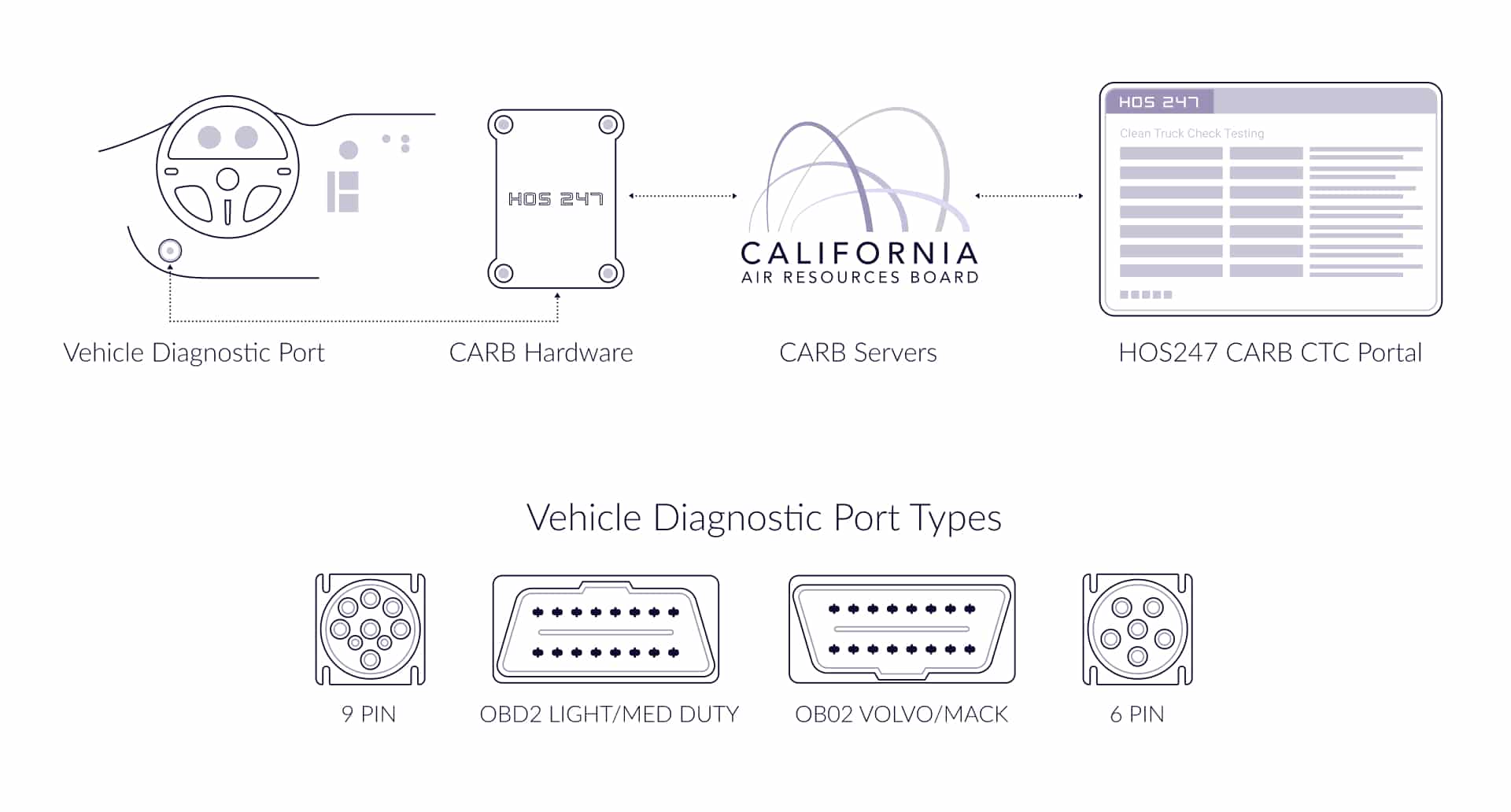
Remote emissions testing uses a continuously connected device plugged directly into a vehicle’s OBD diagnostic port to run emissions scans automatically without requiring a shop visit. By reading engine computer data during stationary idling, remote testing eliminates the need for physical shop appointments or mobile tester visits.
This automated testing option applies specifically to 2013 and newer diesel engines. Adopting remote testing provides key operational advantages for commercial carriers, including:
- Scheduled and on-demand testing. Tests run automatically on an established schedule or can be triggered on demand during an active submission window.
- Direct electronic reporting. Diagnostic test data transmits directly to CARB servers without manual reporting or paperwork.
- Automated compliance certificates. The CTC-VIS system generates official state compliance certificates automatically immediately following a passed emissions scan.
- Centralized portal management. Fleet managers monitor testing windows and test records for all their vehicles from a single portal dashboard.
- Zero shop downtime. Eliminates scheduling coordination, driver travel time, and vehicle downtime to conduct tests.
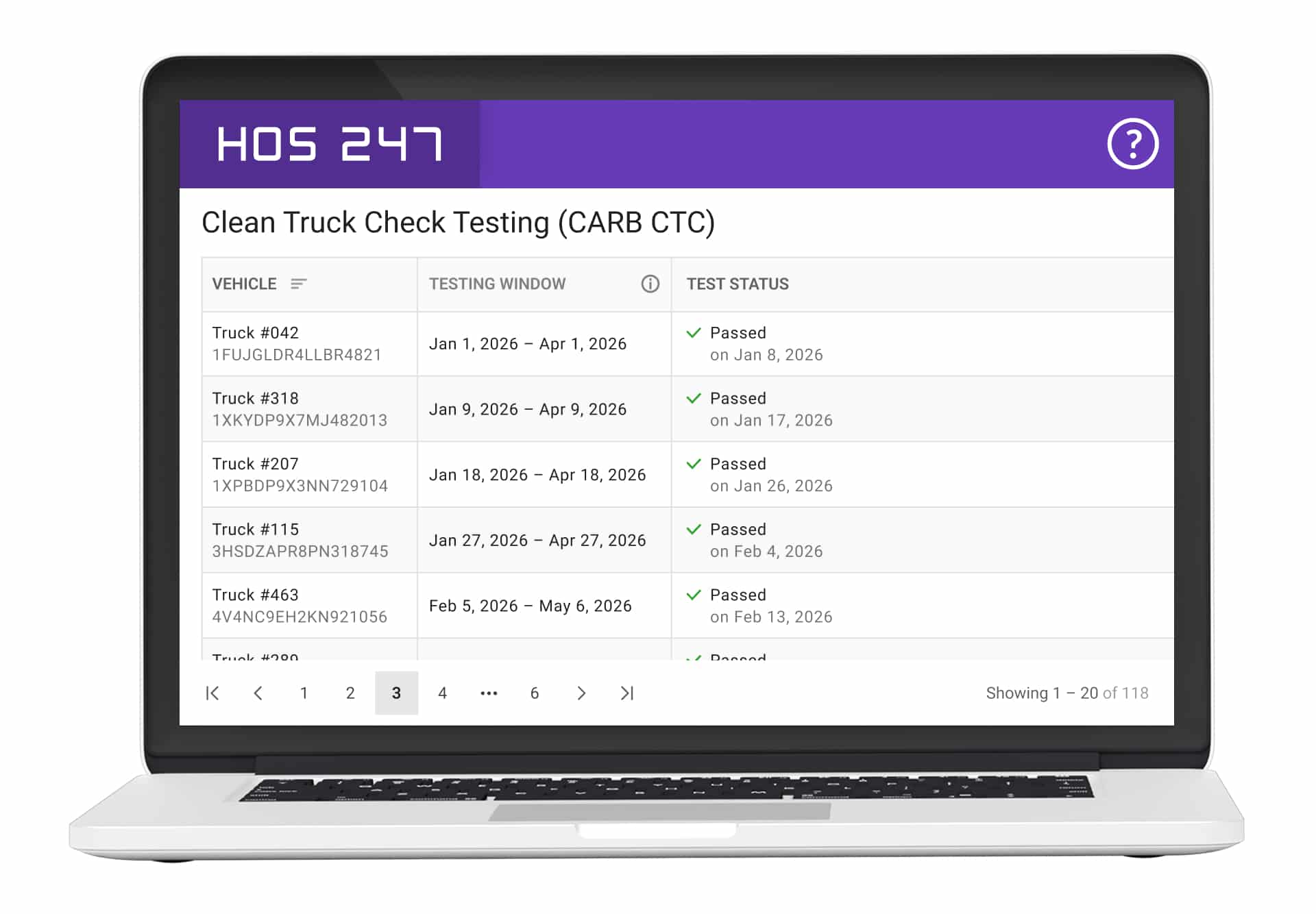
HOS247 offers a CARB-certified remote testing device, a fully integrated Clean Truck Check web portal, and 7-day multilingual customer support.

What Is the Clean Truck Check Program?
The Clean Truck Check program is the CARB’s statewide mandatory emissions testing and reporting program for heavy-duty and medium-duty vehicles operating in California. Designed to reduce emissions from commercial diesel trucks, the program replaced the older Periodic Smoke Inspection Program (PSIP) and took effect with updated testing requirements and enforcement mechanisms.
Program compliance requires three core steps: register all covered vehicles in CARB’s online Clean Truck Check-Vehicle Inspection System (CTC-VIS) portal, pay an annual vehicle compliance fee, and submit passing emissions tests within assigned compliance windows.
When a vehicle passes its emissions test, CARB automatically issues an official compliance certificate in the CTC-VIS database. This certificate serves as official proof of compliance during roadside inspections, state audits, port clearance checks, and annual DMV registration renewals. For OBD-equipped vehicles, testing requirements will increase from twice per year to four times per year beginning October 1, 2027.
Which Vehicles Must Comply With the California Clean Truck Check Program?
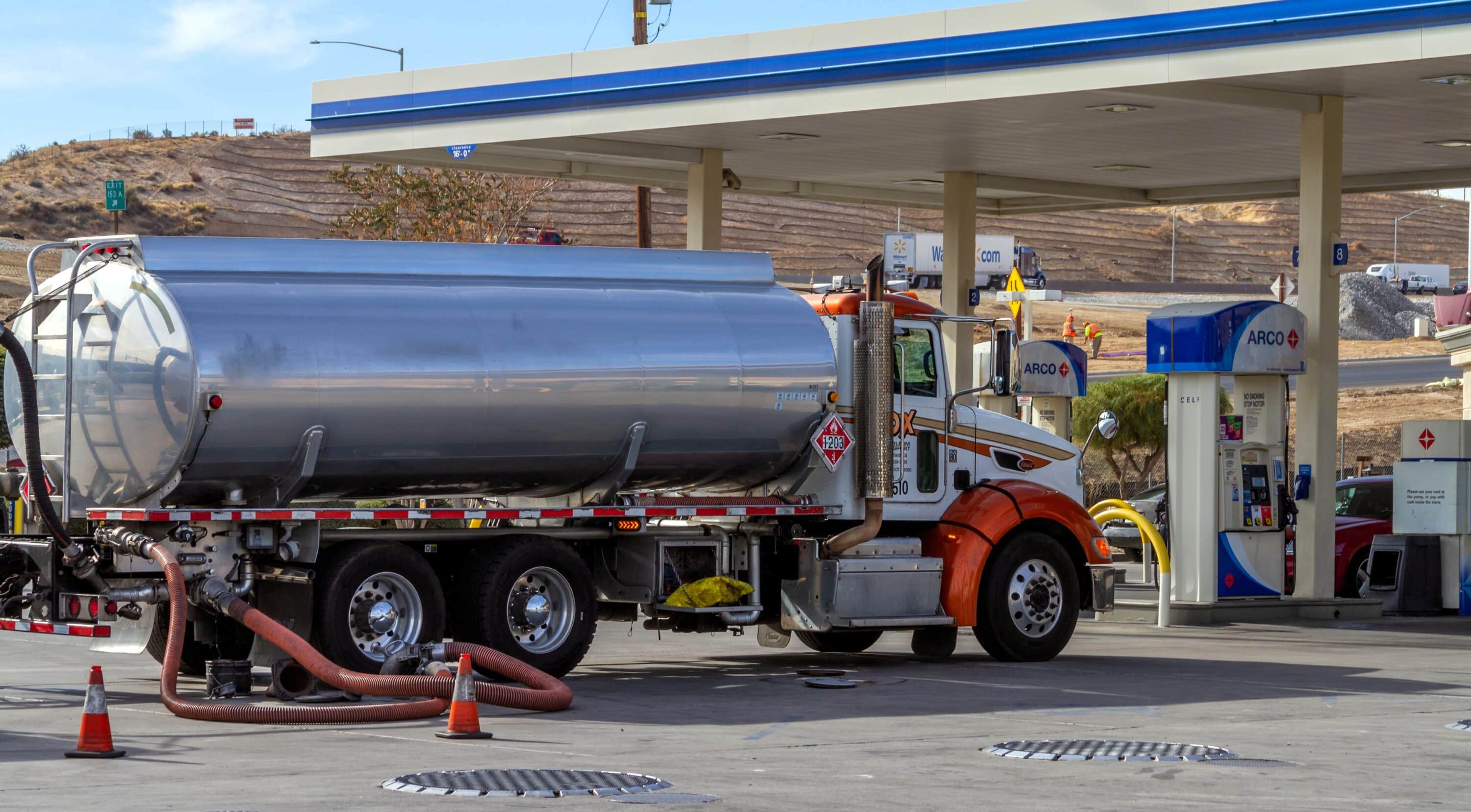
Commercial diesel trucks, passenger buses, and vocational vehicles over 14,000 pounds GVWR operating on California public roads must comply with state testing and reporting mandates.
Testing categories and eligible testing methods are determined by engine technology and model year:
|
Engine Type & Model Year |
Required Test Type |
Remote Testing Eligible? |
|
2013+ Diesel |
OBD (On-Board Diagnostic) |
Yes (In-shop, Mobile, or Remote) |
|
2012 & Older Diesel |
Smoke Opacity + Visual Inspection |
No (In-shop or Mobile only) |
The regulation includes specific exceptions for specialized vehicle categories:
- Agricultural vehicles. Designated agricultural trucks complete one test per year.
- California-registered motorhomes. CA-registered motorhomes complete one test per year.
- Occasional out-of-state operators. Out-of-state vehicles operating infrequently in California may apply for a single five-day short-term pass per vehicle per calendar year instead of periodic testing.
Identifying covered assets and exceptions is the first step in managing CARB compliance. Once vehicle eligibility is established, fleet managers must align each asset with its required submission window and testing method.
CARB Clean Truck Check Program Testing Requirements and Schedule
Registration in CARB’s CTC-VIS online portal is mandatory for all covered vehicles before testing can begin. Once registered, state systems assign official compliance deadlines based on vehicle registration details:
- California-registered vehicles. Testing deadlines align directly with the vehicle’s annual DMV registration expiration date, with subsequent deadlines calculated off the initial compliance date.
- Out-of-state and DMV-exempt vehicles. Testing deadlines are determined by the last digit of the Vehicle Identification Number (VIN), mapping digits 0 through 9 to specific assigned months.
Test results must be completed and submitted electronically to CARB within the 90-day window preceding the official deadline. Test results submitted prior to this window are rejected by CTC-VIS, requiring a retest.
|
Vehicle Category or Status |
Testing Frequency Schedule |
|
2013+ Diesel |
2 times per year through Sept 2027; 4 times per year starting Oct 1, 2027. |
|
Pre-2013 Diesel |
2 times per year (remains 2 times per year after Oct 2027). |
|
Agricultural Vehicles & CA Motorhomes |
1 time per year. |
|
Occasional Out-of-State Operators |
5-day pass option (limited to 1 per vehicle per calendar year). |
When a vehicle fails to complete and transmit passing test results before the window closes, it cannot operate legally in the state. As testing frequency increases from 2 to 4 times per year, automated remote testing mitigates the growing administrative burden of manual scheduling and shop coordination, reducing the risk of non-compliance.
Penalties for Missing or Failing Clean Truck Check Program Tests
Failing to complete required emissions testing or operating a vehicle with unresolved emissions failures exposes carriers to regulatory and operational penalties:
- Fines for missed testing windows. Financial penalties are assessed for each individual vehicle that fails to complete testing within an assigned window.
- Fines for unresolved test failures. Penalties escalate when a failed test is not followed by necessary repairs and a passing retest before the compliance window closes.
- DMV registration holds. CARB reports non-compliant California-registered vehicles to the DMV, placing an administrative hold that blocks registration renewal.
- Port and railyard access restrictions. Major California marine terminals and intermodal railyards cross-check CTC-VIS database records electronically and deny entry to non-compliant vehicles.
- Roadside enforcement citations. California Highway Patrol (CHP) officers and CARB inspectors issue citations during roadside stops, while automated roadside emissions sensors flag high-emitting trucks in transit.
- CARB audit exposure. Non-compliant vehicles are treated as red flags during state fleet audits, possibly triggering a review of full electronic testing histories.
Because penalties apply per vehicle, non-compliance costs multiply rapidly for multi-vehicle fleets — a single missed window in a 20-truck fleet can create significant financial and operational disruptions. Continuously connected remote testing devices reduce the risk of missed testing windows, helping prevent fines across commercial fleets.
How Clean Truck Check Testing Works
Testing procedures under the Clean Truck Check program evaluate emissions performance using distinct criteria based on engine technology:
- OBD testing. Equipment connects to the engine computer to check emissions system performance, fault codes, and monitor readiness against CARB thresholds.
- Smoke opacity testing. A credentialed tester uses an opacity meter to take physical measurements of exhaust smoke output during snap-acceleration tests.
- Visual inspection. A credentialed tester physically inspects emissions-related components to verify proper installation and operational integrity.
Three Testing Methods for OBD-Eligible Vehicles
For OBD-eligible vehicles, fleet managers can select from three operational execution methods:
- In-shop testing. The vehicle is driven to a CARB-certified facility where a credentialed technician performs the scan.
- Operational impact: Requires advance scheduling, driver travel time, facility fees, and vehicle downtime.
- Mobile testing. A credentialed tester travels directly to the fleet’s location to perform the test on site.
- Operational impact: Eliminates vehicle travel, but still requires scheduling coordination and creates vehicle downtime during testing.
- Remote testing. A continuously connected telematics device remains plugged into the vehicle’s diagnostic port.
- Operational impact: Tests run automatically on schedule or on demand while the vehicle idles stationary during routine operations. Results transmit directly to CARB without shop visits, driver involvement, or scheduling burdens.
Remote testing stands as an efficient operational solution for OBD-equipped fleets, eliminating the scheduling and labor overhead of managing up to four manual testing appointments per truck each year.
HOS247’s Remote Testing Solution for the Clean Truck Check Program
HOS247 provides a remote Clean Truck Check testing solution that eliminates physical shop visits for emissions testing. By pairing CARB-certified hardware with an automated web portal, the platform transmits required engine data directly to the state database. Fleet managers can complete mandatory emissions checks during routine operations without taking the trucks off the road and disrupting dispatch schedules.
CARB-Certified Plug-and-Play Hardware
The foundation of HOS247’s solution is the PT40 telematics device. The PT40 is officially CARB-certified as a continuously connected device for remote emissions testing and listed on the state’s official OBD test devices directory:
- Universal vehicle compatibility. Connects directly to diagnostic ports supporting SAE J1939, J1979 (OBD-II), and J1979-2 (OBDonUDS) protocols through standard 9-pin or 16-pin connectors.
- Rapid self-installation. Installs in minutes without professional technicians, wiring modifications, or shop visits.
- Dedicated cellular connection. Features built-in cellular connectivity to transmit emissions data directly to state servers without requiring driver mobile pairing or local Wi-Fi networks.
- Multi-use telematics capability. Serves as a single-device solution for emissions testing while simultaneously supporting ELD, GPS tracking, and automated IFTA mileage calculations.
- Strict data privacy. Transmits exclusively the emissions-related data required by CARB during testing, keeping driver logbooks and location histories private from state submissions.
HOS247 Clean Truck Check Web Portal
The HOS247 web portal integrates directly with the PT40 hardware, giving fleet managers centralized oversight across their entire fleet:
- Automated test scheduling. Automatically tracks testing windows based on DMV registration renewal dates for California-registered trucks, or on the last digit of the VIN for out-of-state or DMV-exempt vehicles, and executes tests within assigned periods.
- Instant on-demand testing. With an active subscription, fleet managers can run immediate emissions scans at any time.
- Direct electronic reporting. Submits emissions results directly to CARB’s CTC-VIS database upon completion. CARB’s system generates official compliance certificates automatically if the test is passed.
- Compliance tracking dashboard. Displays pass/fail status, tracks testing schedules, and keeps test histories for all enrolled trucks in a single interface.
Comprehensive ELD, GPS, and IFTA Integration
Beyond emissions testing, HOS247 allows fleets to consolidate core operational tools into the same PT40 hardware and platform:
- Electronic logbook records. Tracks drivers’ hours of service electronically according to FMCSA rules and the ELD mandate with an easy-to-use driver app and simplified roadside inspection tools.
- Real-time GPS fleet tracking. Provides live visibility into vehicle locations, route histories, and asset status to improve dispatch efficiency and security.
- Automated IFTA mileage calculations. Calculates state-by-state mileage automatically using distance data captured by the device, to facilitate IFTA reporting.
- Proactive engine diagnostics. Monitors fault codes and engine health continuously to flag maintenance issues.
7-Day Support & Fleet Expertise
HOS247 backs its technology with efficient customer support seven days a week in multiple languages, including English and Spanish. Requests are handled directly by knowledgeable representatives — without chatbots or automated queues — backed by a call-back policy that avoids repeated explanations if a call drops.
As CARB emissions regulations expand and testing frequency increases to four times per year, manual testing methods and shop visits could affect operations and fleet profitability. HOS247’s remote testing system runs emissions scans during routine idling, delivering pass/fail outcomes, and submitting results straight to CARB. By consolidating state compliance and broader telematics into one reliable interface, HOS247 keeps your trucks on the road and streamlines fleet management.
What Happens After a Clean Truck Check Test
Once test results are submitted, CARB’s system processes the data and records the outcome in the CTC-VIS portal:
- Passed test. CARB’s CTC-VIS portal automatically generates an official compliance certificate containing the VIN, license plate number, engine year, test type, timestamp, pass status, certificate ID, and validity period. This digital record is immediately available for download or enforcement verification.
- Failed test. No compliance certificate is issued. CTC-VIS flags specific failure reasons (such as active fault codes or incomplete OBD readiness monitors). The vehicle must undergo necessary repairs and pass a retest before the active compliance window closes.
How CARB Uses Test Records
State enforcement and auditing rely directly on the test data recorded in the state database:
- Real-time enforcement verification. State inspectors, CHP officers, automated roadside sensors, and terminal entry gates cross-check the CTC-VIS database electronically to verify active compliance status during roadside stops, highway pass-throughs, DMV renewals, and terminal entry checks.
- Audit compliance history. Pass, fail, and timestamp records are stored permanently in the CTC-VIS database. State auditors review these full electronic histories during fleet audits to verify test timeliness and resolve outstanding violations.
Risks of Unresolved Test Failures
Failing an emissions test requires immediate action. Operating past a compliance deadline with an unresolved failure leads to escalating financial penalties, DMV registration holds blocking annual renewals, roadside citations, and denied access to California ports and intermodal railyards.
Included Retesting With HOS247
With HOS247, unlimited on-demand retesting is fully included with your active CARB testing subscription, allowing fleet managers to run an immediate retest through the portal as soon as repairs are completed, with no extra fees or shop appointments.
Frequently Asked Questions About the Clean Truck Check Program
The Clean Truck Check Program Is Expanding — Automate Compliance Before It Gets More Demanding
The Clean Truck Check program is actively enforced across California, and regulatory oversight continues to tighten. For OBD-equipped trucks, testing frequency will double from two to four times per year beginning October 1, 2027. Relying on manual in-shop or mobile testing requires scheduling, driver labor, and repeated shop downtime for every cycle. As mandatory testing cycles accelerate, the operational burden and risk of missed deadlines multiply.
For fleets with OBD-eligible vehicles, HOS247’s CARB-certified remote CTC system provides an efficient testing method with direct CARB submissions, and a clean, easy-to-use tracking portal. As Clean Truck Check program requirements expand, the value of automated testing grows with every additional testing cycle. Contact HOS247 to learn how remote testing can establish a dependable operational workflow that protects carriers from unexpected citations, freight facility access denials, and administrative registration holds as California’s emissions mandates scale.

I’ve co-founded, built and managed several transportation-related businesses. Now, I’m a founder and CEO of HOS247 – an AI Transportation Platform for trucking companies, freight brokers and other logistics operations. We are transitioning old-style operations to technology-advanced logistics entities and help them to grow their businesses. ELDs (electronic logging devices), fleet tracking and management 2.0 combined with AI-powered dispatch tools.









Commercial driver logs have become an integral part of the trucking industry. These records are a vital tool for monitoring driver activities and ensuring compliance with regulatory standards. By recording a driver’s hours of service (HOS) and duty status, they

At First, Free ELD Devices With No Monthly Fee Sounded Like a Good Idea Owner-operators who had every intention of being part of the trucking industry long-term were initially attracted to the idea of an ELD device with no monthly
Electronic logging devices (ELDs) have changed how truck drivers track their hours on the road, replacing paper logs with digital records. For team drivers sharing the wheel, using ELDs comes with extra challenges that solo drivers don’t face. Team drivers