
Beyond the Cab: Understanding Elog Synchronization
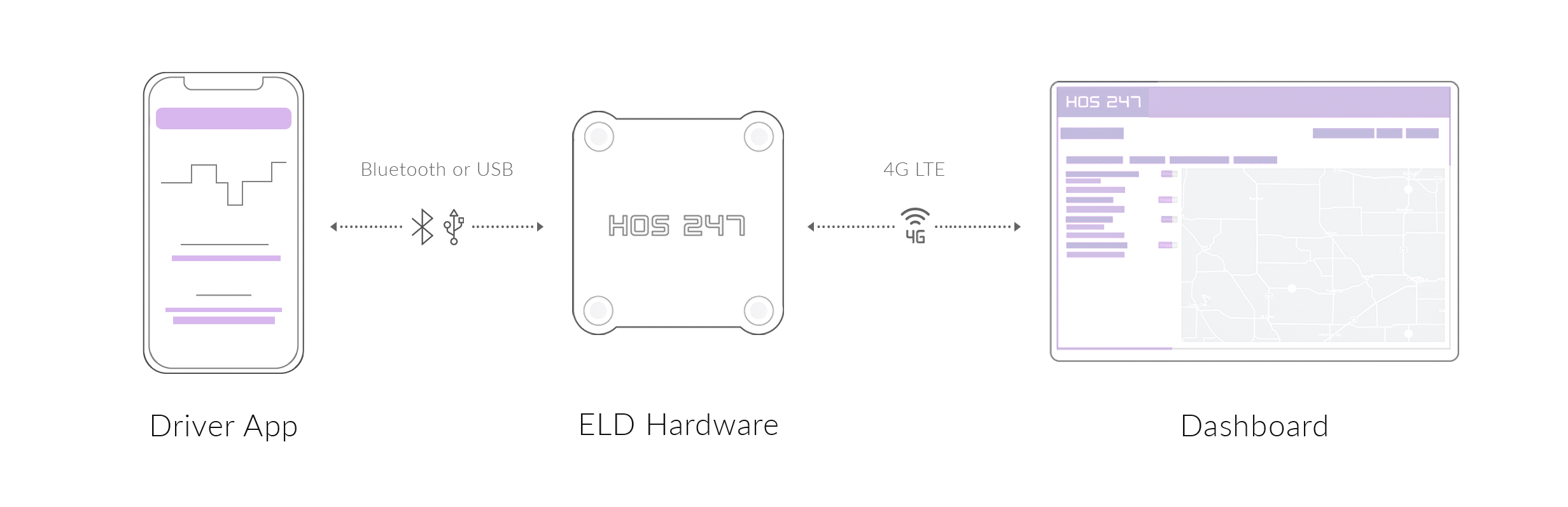
To troubleshoot effectively, you need to understand what is happening under the hood. A common misconception is that the tablet is the logbook. In reality, the app is just a display; the actual electronic logbook elog system relies on a complex synchronization between the hardware plugged into your truck and the software interface.
The ECM Device (Not Just a “Dongle”)
While often referred to as a “dongle,” the hardware unit is technically an ECM (Engine Control Module) interface device. Its primary function is to interpret the specific data protocols of your vehicle — typically J1939 for heavy-duty Class 8 trucks or OBDII for medium-duty vehicles.
A high-quality ECM device does more than just power on. It must read precise engine data, including total engine hours and odometer readings, and transmit them without latency. If this hardware cannot filter out “noise” from the engine’s electrical system, it leads to corrupted data and log gaps.
Integral Synchronization
FMCSA regulations require “integral synchronization.” This means your elog logbook must capture data within milliseconds of the engine’s behavior. The most critical threshold is the 5 mph rule.
- Motion detection. If the vehicle moves at 5 mph or more, the device must automatically record the status as “Driving.”
- The risk. If the connection between the hardware and the app lags, the device may record driving time that isn’t assigned to a logged-in driver profile. This creates “Unassigned Driving” events that must be manually resolved later, creating administrative headaches and red flags during audits.
Data Packet Transfer to DOT
When an inspection occurs, the system doesn’t just “show” the logs; it packages them into a standardized file to send to the FMCSA’s eRODS system via Web Service. This transfer relies on the app’s ability to compile days of data — grid graphs, location pings, and header information — into a specific encrypted format instantly. Reliable cellular connectivity and a stable app architecture are crucial here, as a failure to transfer is often cited as a failure to comply.
Understanding these technical links helps you spot the difference between a simple glitch and a critical hardware failure.
Mastering Complex HOS Scenarios with Your Elog Electronic Logbook
A basic app counts your hours, but a professional elog electronic logbook helps you navigate the gray areas of Hours of Service regulations. Understanding how to handle special driving categories is the difference between a clean log and a “falsification” violation.
Managing Unassigned Driving
One of the most frequent causes of log discrepancies is unassigned driving time. This usually happens when a mechanic moves the truck or a driver moves it within the yard without logging in.
- The problem. The device records vehicle motion, creating a “ghost” driving event. When you log in, the system asks you to accept or reject it.
- The fix. Never blindly accept unassigned time that isn’t yours. A capable system allows you to reject these events and annotate them (e.g., “Mechanic Test Drive”). This keeps them off your 70-hour cycle while preserving the record for the carrier to assign correctly.
Personal Conveyance (PC) Best Practices
Using Personal Conveyance (PC) allows you to move the truck for personal reasons while Off-Duty, but it is a common trigger for audits.
- Correct usage. Ensure your electronic logbook elog is switched to PC mode before you move. This ensures the system tracks the vehicle location with reduced precision (to protect privacy) and records the line as “Off-Duty,” preserving your drive time.
- The risk. If you forget to enable PC and drive even a mile, the “integral synchronization” will kick you into “Driving” status. Once recorded, this driving time cannot be edited to Off-Duty automatically; it requires an administrative annotation that looks suspicious to inspectors.
The Ag & Short-Haul Exemptions
Many drivers operate under specific exemptions, such as the 150 air-mile radius for short-haul or agricultural commodities. A rigid app will flag these as violations. You need a system that supports exemption configurations, allowing you to drive within the exempt radius without triggering false “11-hour” or “14-hour” alerts that clutter your log history.

Diagnosing and Fixing Elog Logbook Failures on the Road
Technology isn’t perfect. Cables vibrate loose, and GPS signals bounce. Knowing how to troubleshoot your elog logbook on the roadside can save you from being placed out of service for a “device malfunction.”
Connectivity Drops (Bluetooth Handshake)
If your tablet shows “Disconnected” or “VBUS Error,” the handshake between the ECM hardware and the app has failed.
- Safety first. Pull over. Do not fiddle with settings while driving.
- Cycle the power. Turn off the truck engine. Toggle Bluetooth OFF on your tablet/phone.
- Hard reset. Unplug the ECM device from the diagnostic port, wait 30 seconds, and plug it back in.
- Reconnect. Turn Bluetooth back ON and open the app. The “ECM” indicator should turn green.
Decoding Malfunction Indicators
Your screen may display single-letter codes indicating specific data failures. Here is how to translate them:
- “P” (Power Compliance). The device is not receiving enough power. This often means the connection to the diagnostic port is loose. Check that the device is clicked firmly into place and zip-tied if necessary to prevent vibration movement.
- “T” (Timing Compliance). The system clock has drifted more than 10 minutes from UTC time. This is usually a GPS receiver issue. Moving the truck to an area with a clear view of the sky often resolves this automatically.
- “U” (Unidentified Driving). This is a Data Diagnostic, not a Malfunction. It warns you that there are more than 30 minutes of unassigned driving time on the device that no one has claimed. You must review and resolve these records (accept or reject) to clear the code.
The 8-Day Paper Log Protocol
If the troubleshooting fails and the device is truly broken, you are required by law to revert to paper logs immediately.
- The rule. You must keep a supply of blank grid graphs in the cab.
- The timeline. You can use paper logs for up to 8 days.
- The notification. You must notify your carrier within 24 hours so they can file for an extension or ship you a replacement unit immediately.
Being prepared with this knowledge shows an officer that you are a professional who manages their equipment, not just a driver blaming the computer.
Why HOS247 is the Superior Elog Electronic Logbook Solution
When your revenue depends on compliance, “good enough” hardware is a liability. HOS247 is built for fleets and owner-operators who view their electronic logbook elog as a critical business tool, not just a regulatory hoop to jump through. We prioritize system stability and operational data over flashy, unused features.
Reliability First: Industrial-Grade Architecture
The most common point of failure in electronic logging is the hardware connection.
- Industrial-grade ECM devices. We do not use cheap, off-the-shelf dongles. Our hardware is stress-tested to withstand the constant vibration, dust, and temperature fluctuations of a commercial cab. This robust build quality ensures a “lock-tight” connection to the diagnostic port, significantly reducing the risk of “P” (Power) and “S” (Sync) malfunction codes.
- Stable app performance. The HOS247 app is optimized for stability. It is designed to handle duty status changes and data transfers without crashing or freezing, ensuring you are always ready for an inspection.
Advanced Fleet Management Tools (The “All-in-One” Advantage)
HOS247 transforms your mandatory compliance device into a comprehensive fleet management platform:
- Automated IFTA calculations. Manual mileage tracking is error-prone and time-consuming. Our system automatically calculates mileage by jurisdiction, turning hours of paperwork into a simple, one-click report for your quarterly filings.
- Real-time vehicle diagnostics. Don’t wait for a roadside breakdown. The system reads engine fault codes (DTCs) and alerts the fleet manager instantly. This allows you to schedule preventative maintenance before a check-engine light turns into an expensive tow bill.
- Idle monitoring. Excessive idling burns fuel and shortens engine life. Our elog logbook tracks idle time, helping you identify waste and improve fleet profitability.
- 4G/LTE GPS tracking. We provide high-speed, real-time location data. This improves dispatching efficiency and adds a layer of security for asset recovery in the event of theft.
The Support Difference
Technology is only as good as the people behind it.
- Multilingual expert team. Our support team is available 7 days a week and speaks English, Spanish, Russian, and Polish. We don’t just troubleshoot technical glitches; we understand trucking regulations and can help drivers navigate compliance questions on the spot.
- No-contract freedom. We believe we should earn your business every month. HOS247 operates on a flexible subscription model with no long-term contracts, giving you the freedom to stay because the system works, not because you signed a 3-year lock-in.
HOS247 is built for drivers and fleets that need consistency. With stable hardware, flexible terms, and responsive multilingual support, it delivers an elog system designed to perform reliably in real-world conditions. When compliance tools work the way they should, inspections stay routine and your focus stays on the road.
Seamlessly Transitioning to a New Electronic Logbook Elog System
Switching providers can feel daunting, but with the right preparation, you can upgrade your elog electronic logbook without disrupting your operations.
Data Archiving
Before you cancel your old service, remember that you are required to retain 6 months of HOS records.
- Action step. Download all driver logs and inspection reports from your current provider’s portal. Store them securely (digitally or printed) before the account is closed, as you may lose access to that data immediately upon cancellation.
Installation & Setup
Installing the HOS247 system is designed to be quick and tool-free.
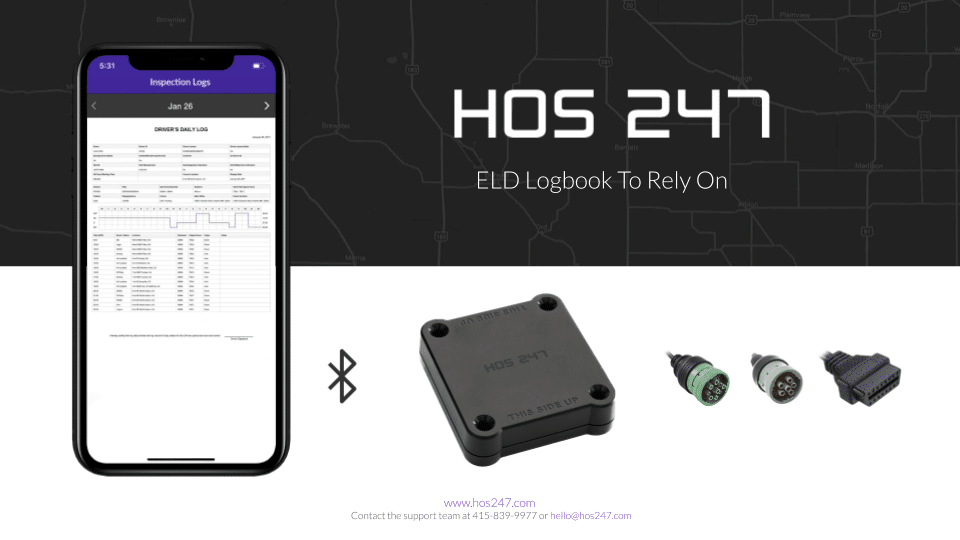
- Locate the port. Find your truck’s diagnostic port (usually 9-pin, 6-pin, or OBDII) located near the footwell or steering column.
- Secure the unit. Plug the HOS247 ECM unit firmly into the port. Listen for a click. We recommend securing the device with a zip tie to prevent it from vibrating loose on rough roads.
- Pairing. Turn the engine on and follow the simple in-app instructions to pair the device via Bluetooth.
Driver Training
The biggest hurdle in switching is often driver adoption. A user-friendly interface is critical here. Because HOS247 uses a clean, intuitive design with large buttons and clear status indicators, the learning curve is minimal. Most drivers are comfortable with the system within their first day of use, reducing the need for extensive training sessions.
Frequently Asked Questions
How do I handle an ELD malfunction during a roadside inspection?
If your device fails during an inspection, you must provide the officer with a manual instruction sheet (which you should always keep in the cab). You are then required to reconstruct your logs on paper for the current day and the previous 7 days. You must notify your carrier within 24 hours, and the device must be repaired or replaced within 8 days.
Can I use a tablet I already own for my elog?
Yes. HOS247 supports a “Bring Your Own Device” (BYOD) model. As long as your Android or iOS tablet meets the minimum operating system requirements and has Bluetooth capability, it can connect to our electronic logbook elog hardware, saving you the cost of buying proprietary screens.
What happens if I forget to log out of my electronic logbook?
If you fail to log out, the system may remain in “On Duty” status, eating into your restart break. Worse, if another driver moves the truck while you are still logged in, their driving time will be recorded on your log. You cannot edit “Driving” time once it is recorded; you can only annotate it, which creates extra work to explain during an audit. Always log out or double-check your status before leaving the cab.

Upgrade to an Elog System That Protects Your Time, Revenue, and Compliance
A modern elog logbook should be a tool that increases your fleet’s efficiency, not just a compliance burden that slows you down. Whether you are battling connection drops, wrestling with unassigned driving time, or just tired of paying for support that never answers, the solution lies in better technology.
HOS247 offers the reliability, industrial-grade hardware, and multilingual support necessary to keep your trucks moving and your CSA scores low. Upgrade to a system that works as hard as you do. Contact HOS247 today to learn more about our reliable, no-contract ELD solutions.

As an expert in B2B and B2C sales, I’ve dedicated myself to perfecting sales processes and client retention strategies in the logistics and trucking industry. I have significantly contributed to the expansion of the ELD service, catering to retail and wholesale clients in need of HOS247 ELD solutions. My unwavering commitment to implementing state-of-the-art sales techniques and technologies ensures the continuous growth and success of businesses I work with.











Trucking companies need to find solid solutions that help them to stay within their Hours of Service regulations. Making mistakes about this one crucial aspect of their company can be quite costly when DOT audits come around. Not only do
Today, there are many options to make drivers’ daily operations more organized, efficient and safe. Among them is the electronic logging device (ELD), which is required for most commercial drivers to stay compliant with federal regulations. It automates log keeping

In today’s highly competitive trucking industry, fleet managers face numerous challenges in ensuring the efficiency, safety, and profitability of their operations. One of the most effective tools for addressing these challenges is GPS fleet tracking technology. By providing real-time visibility