
Moving Past the Basics: The Importance of a Stable Connection in ELD Solutions
Experienced drivers already know how to manage their duty statuses. The real problem in modern trucking lies in the invisible link between the engine and the display screen. The most common point of failure in ELD solutions for truck operations is a dropped Bluetooth connection between the ECM hardware device and the driver’s tablet. When this wireless link breaks, the app stops recording drive time accurately, leaving frustrating gaps in the logbook.
In 2026, provincial and federal audits heavily target the specific errors caused by these connection drops. When a system frequently disconnects, it generates missing kilometers, data transfer failures, and a high volume of unassigned driving events. Safety officials actively look for these exact red flags during roadside inspections and facility audits. If your system cannot maintain a steady connection to the engine, you are at a high risk for administrative citations and inspection delays.
Passing an inspection requires more than just a user-friendly application. The reliability of the physical hardware plugged into your diagnostic port is just as critical as the software interface you tap on. Ensuring a rock-solid, uninterrupted connection is the foundation of a compliant and stress-free daily operation.
Why “Free” ELD Solutions Cost More
When evaluating a new ELD solution, it is tempting to choose the provider offering free hardware or deeply discounted subscription rates. However, in the commercial transportation industry, the upfront price tag rarely reflects the actual cost of operating the system. Contrasting professional compliance platforms with low-cost alternatives reveals that you usually pay a heavy operational price for what you do not get upfront.
Cheap Hardware Components
Low-quality telematics devices are often built with substandard materials that cannot handle the physical realities of trucking. These generic units frequently fail under the constant vibration of the chassis or the extreme temperature changes inside the cab. When the hardware breaks mid-trip, you are instantly out of compliance and at risk for a roadside violation.
Restrictive Data Contracts
Providers offering zero upfront costs typically recover their money by locking fleets into rigid, multi-year agreements. If the device freezes constantly and causes logbook errors, you are the one legally responsible for the citations. Yet, if you attempt to switch to a more reliable provider, you are hit with massive early cancellation fees that trap you in a failing ecosystem.
Automated Customer
Support The true test of any technology company happens when something goes wrong. Discount providers often cut costs by relying on automated chatbots or email-only support tickets. Dealing with an automated response system when you are delayed at a weigh station with a broken logbook leaves you completely vulnerable during a critical inspection.
The true cost of any compliance system is measured in continuous uptime and reliability. Saving a few dollars on a monthly subscription is useless if the system causes inspection delays or results in an Out-of-Service order. Investing in a professional platform upfront ultimately protects your revenue and your NSC profile.

Upgrading Your Experience with Advanced ELD Solutions for Truck Operations
Meeting the basic legal requirements for tracking Hours of Service is the bare minimum for any system. High-quality ELD solutions do much more than just keep you out of trouble; they actively make your workday easier. By focusing on smart operational features rather than just mandatory tracking, modern software handles the heavy administrative lifting for you.
- Reliable offline mode. Commercial routes frequently take drivers through cellular dead zones, such as remote mountain passes or vast stretches of rural highway. The software must automatically store your engine data locally on the hardware device and sync it seamlessly to the cloud the exact moment a cellular connection returns, preventing any gaps in your grid graph.
- Predictive compliance alerts. A highly effective app acts as a digital co-driver, warning you well before you run out of hours rather than simply flagging a violation after it has already occurred. Drivers need proactive audio and visual notifications — such as an alert that a mandatory 30-minute off-duty block is required — to plan their stops safely and efficiently.
- Streamlined inspection mode. The roadside inspection workflow must be fast, secure, and highly intuitive to avoid frustrating the safety official. Drivers should be able to lock their tablet screen and successfully transfer their data files to an officer via encrypted email or a local transfer method in three taps or less, keeping private fleet routing information completely hidden.
Great software significantly reduces administrative stress at the end of a long, exhausting shift. When a system provides these intuitive tools, it transforms a mandatory regulatory chore into a seamless daily workflow, allowing drivers to focus entirely on operating their vehicles safely.
Navigating Device Revocations with a Vetted ELD Solution
In 2026, Transport Canada actively monitors and removes non-compliant devices from its list of certified ELDs. Devices that fail technical data transfer protocols or no longer meet the Technical Standard are revoked. For carriers, this means the technology you purchased last year might suddenly become illegal to operate today.
If Transport Canada revokes your provider’s certification, the regulatory clock starts ticking. You must navigate strict timelines to protect your operating authority:
- The certification grace period. Unlike the self-certification model elsewhere, Canadian units must be third-party certified. If a certification is suspended or revoked, you must follow the specific replacement timeline issued by Transport Canada to install a fully compliant device from the current certified list.
- The 14-day malfunction limit. If an ELD malfunctions, the driver must notify the carrier immediately and keep a paper log. The motor carrier must repair or replace the ELD within 14 days of being notified of the malfunction, or upon the driver’s return to the home terminal if the planned trip is longer than 14 days.
Protecting your fleet requires active monitoring. Routinely check the Transport Canada list of certified ELDs and partner with established providers who continuously update their firmware to pass the latest regulatory audits.

Protecting Your Fleet’s Audit Trail with Top ELD Solutions
A reliable compliance system must accurately handle the kilometers driven when your primary driver is not behind the wheel. Events like yard moves, mechanic test drives, or simple terminal repositioning generate unassigned driving time. Ignoring these events is a major red flag that NSC auditors look for immediately.
When managing these necessary edits, your software must handle the data legally and transparently.
- Carrier responsibility. The motor carrier is legally required to review unassigned driving events daily. You must either assign these events to the correct driver or add a specific annotation explaining exactly why the truck moved.
- The original record. Compliant ELD solutions always maintain a tamper-proof original record, even after a carrier or driver makes a legal edit. The system must clearly show the original engine data right alongside the newly annotated duty status.
- Permanent drive time. Automatically recorded driving time cannot be shortened or deleted. If an application allows a user or dispatcher to permanently erase actual drive time, the system is illegal and will instantly fail a facility audit.
A clean, perfectly annotated back-office audit trail is your fleet’s absolute best defense against a comprehensive provincial or federal carrier review. Choosing software that makes managing unassigned time straightforward ensures your back office spends less time fixing logbook errors and more time booking profitable freight.
Turning Compliance into Profit with Advanced ELD Solutions for Truck Fleets
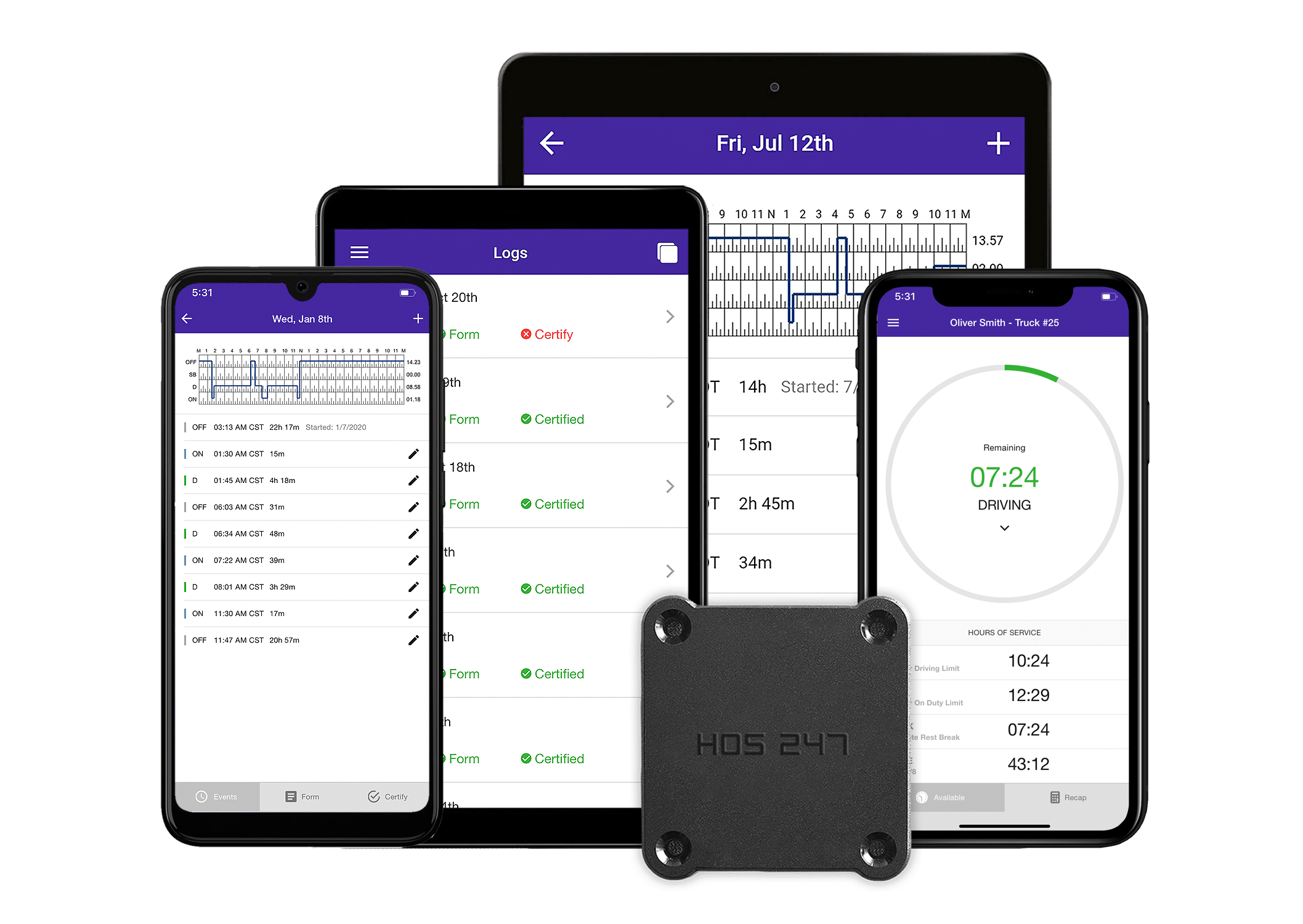
Setting up an electronic logging device is often viewed as a mandatory regulatory expense, but it actually presents a significant opportunity to optimize your business. Modern systems come packed with fleet management tools that actively save you money and improve your daily dispatching efficiency.
By leveraging the full capabilities of your hardware, you can transform a basic compliance tool into a powerful business asset.
Idle Monitoring
Tracking exactly how long a truck runs without moving helps identify massive fuel waste across your fleet. Reducing excessive idle time instantly lowers your weekly fuel bill and prevents unnecessary engine wear.
Preventative Maintenance Alerts
High-quality hardware reads diagnostic trouble codes (DTCs) directly from the engine’s computer. This allows you to catch minor mechanical faults early, alerting your maintenance team before a small issue escalates into an expensive roadside breakdown.
Automated IFTA Reporting
Calculating fuel taxes by hand takes hours of frustrating administrative work. An integrated system tracks your jurisdictional mileage automatically as you cross provincial and state lines, generating accurate quarterly reports in just a few clicks.
Real-Time GPS Tracking
Dispatchers and owner-operators can monitor vehicle locations with pinpoint precision. This improves daily route planning, provides accurate ETAs to waiting customers, and helps quickly locate stolen equipment.
Digital Vehicle Inspection Reports
Transitioning from paper to electronic DVIRs ensures that pre-trip and post-trip defect reports are instantly communicated to the shop. This keeps unsafe equipment off the road and streamlines the repair scheduling process.
Leveraging these advanced fleet management tools quickly offsets the initial cost of your compliance system. Instead of treating your ELD as just a forced mandate, you can use it to actively reduce fuel expenses, minimize downtime, and increase your overall profit margins.
Why HOS247 Offers the Best ELD Solution for Owner-Operators
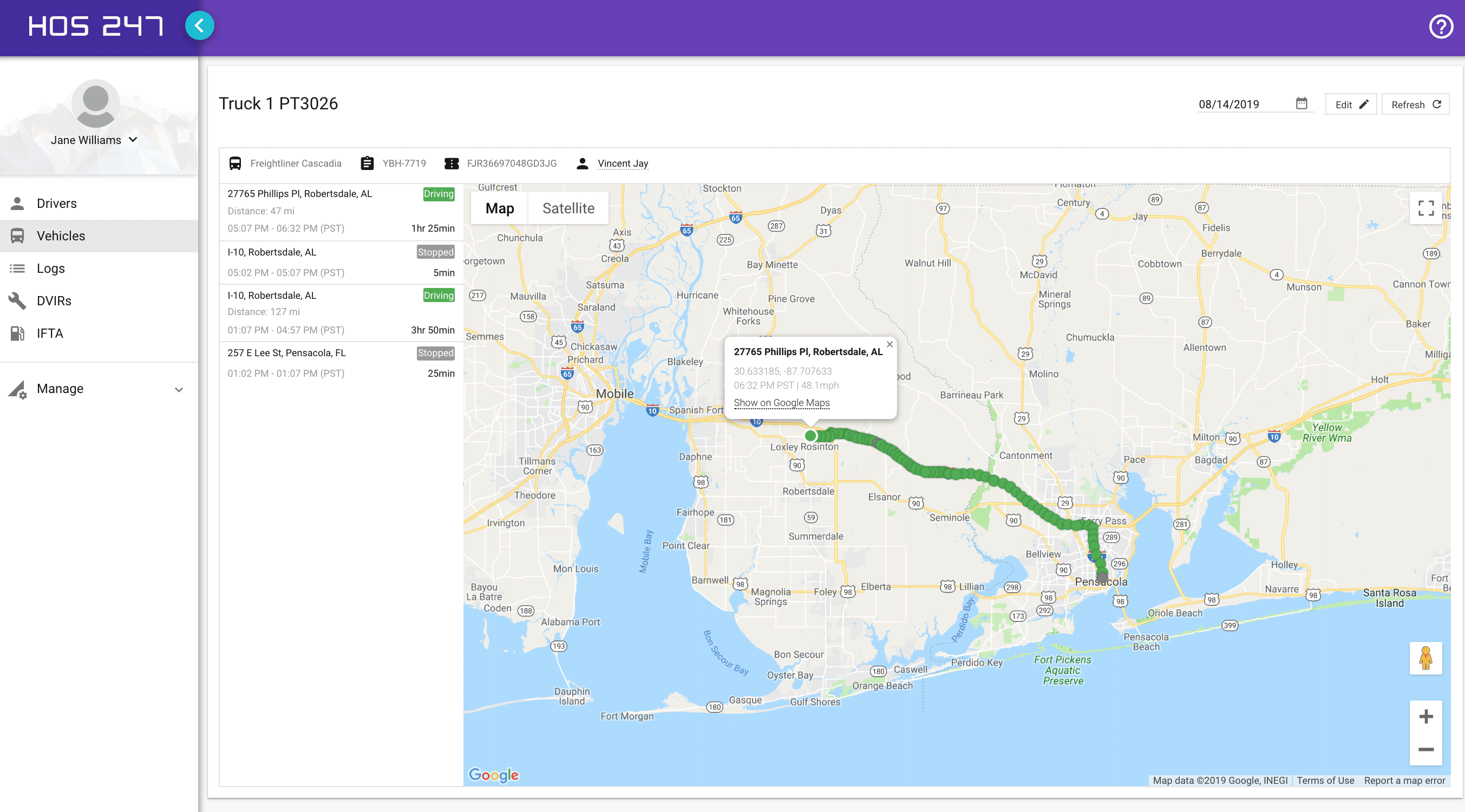
With Transport Canada actively monitoring the list of certified ELDs, choosing the right partner is critical to protecting your business. HOS247 is built to handle the physical demands of the road while delivering a highly intuitive digital experience. We prioritize stable hardware and transparent business practices over gimmicky sales tactics.
Our platform is engineered specifically to eliminate the daily frustrations that drivers experience with low-quality systems.
- Engineered stability. We provide proprietary, stress-tested hardware designed to maintain a rock-solid Bluetooth connection with your display. This stable link prevents the data gaps and sync errors that cause unassigned driving violations.
- Top-rated reliability. Our system maintains exceptional driver reviews across major app stores and is third-party certified to meet the latest Canadian technical standards.
- Driver-centric BYOD design. Our application is optimized for the tablets and smartphones you already own (Android and iOS). The clean, high-contrast interface makes managing your duty status fast and completely frustration-free.
- Multilingual human support. Trucking happens every day of the week, and so does our support. Our team is available seven days a week and speaks English, Spanish, Russian, and Polish to help you resolve any technical issues quickly.
- No-contract freedom. We believe in earning your business every single month. Our transparent, month-to-month billing gives you complete operational flexibility without locking you into a restrictive multi-year agreement or hiding early cancellation fees.
HOS247 provides the exact combination of rugged hardware reliability, user-friendly software, and honest customer support that modern truckers require. We give you the tools you need to stay compliant and profitable, without the hidden fees or connection headaches.
Frequently Asked Questions About ELD Solutions
Staying informed on these operational rules helps drivers handle roadside inspections and fleet management with complete confidence. Knowing exactly how your technology interacts with provincial and federal law prevents easily avoidable administrative citations.

Secure Your Fleet’s Future with a Reliable Partner
Operating a commercial vehicle requires technology that works as hard as you do. Relying on low-quality, outdated systems is a risk modern fleets simply cannot afford. A dropped connection or a failed data transfer can quickly turn a routine scale inspection into an expensive Out-of-Service order.
By investing in a reliable e log solution, you protect your NSC profile and streamline your daily operations. You need a system that acts as a dependable digital co-driver rather than a daily administrative headache.
Stop settling for systems that slow you down. Schedule a demo or start your no-contract trial with HOS247 today to experience stable, hassle-free compliance.

I’ve co-founded, built and managed several transportation-related businesses. Now, I’m a founder and CEO of HOS247 – an AI Transportation Platform for trucking companies, freight brokers and other logistics operations. We are transitioning old-style operations to technology-advanced logistics entities and help them to grow their businesses. ELDs (electronic logging devices), fleet tracking and management 2.0 combined with AI-powered dispatch tools.








Truckers and commercial motor vehicle drivers in Canada still have some time to adjust to the incoming ELD Mandate, but there will be no excuse for not complying with its regulations come January 1, 2023. Without a compliant electronic logging

In today’s fast-paced business world, managing a commercial fleet can be challenging, but it doesn’t have to be. With the help of fleet management systems, carriers can enjoy various benefits, such as reducing fuel costs, enhancing driver safety, providing better
GPS tracking for trucks helps carriers in Canada cut operational costs and optimize processes by monitoring vehicles’ locations in real-time, creating a more efficient workflow and increasing security for drivers and company assets. GPS tracking technology offers way more than