
What Is CARB Compliance in California
CARB compliance is an umbrella term requiring motor carriers to satisfy all environmental, operational, reporting, and diagnostic rules established by the California Air Resources Board. While the Clean Truck Check program serves as the primary testing mechanism today, maintaining full CA CARB compliance spans five core operational areas:
- Emissions hardware functionality. Fleet managers must verify that all onboard emissions control hardware — the integrated systems and sensors designed to monitor, treat, and reduce tailpipe pollutants — operates properly.
- Central database reporting and fee payment. Fleet administrators must maintain complete vehicle profiles in state databases such as the Clean Truck Check Vehicle Inspection System (CTC-VIS) and pay annual compliance fees to generate active state compliance certificates.
- Periodic diagnostic submissions. Fleets must complete scheduled emissions checks through physical shop visits or automated telematics uploads, submitting passing test records to CARB within mandatory submission windows.
- Operational and idling rules. Fleets must follow strict five-minute engine idling limits, maintain required clean idle decals, and upgrade legacy engines according to state phase-out schedules.
- Enforcement and violation clearance. Fleets must resolve open emissions-related recalls, clear Notice to Submit to Testing (NST) roadside screening flags, and satisfy outstanding state citations.
Historical enforcement relied on visual checks and annual opacity testing under the older Periodic Smoke Inspection Program (PSIP). Today, state enforcement relies on digital verification. State systems cross-reference automated license plate camera feeds against central databases containing submitted engine diagnostic records and DMV registration statuses to verify vehicle compliance continuously on California highways.
Who Must Comply With CARB Regulations
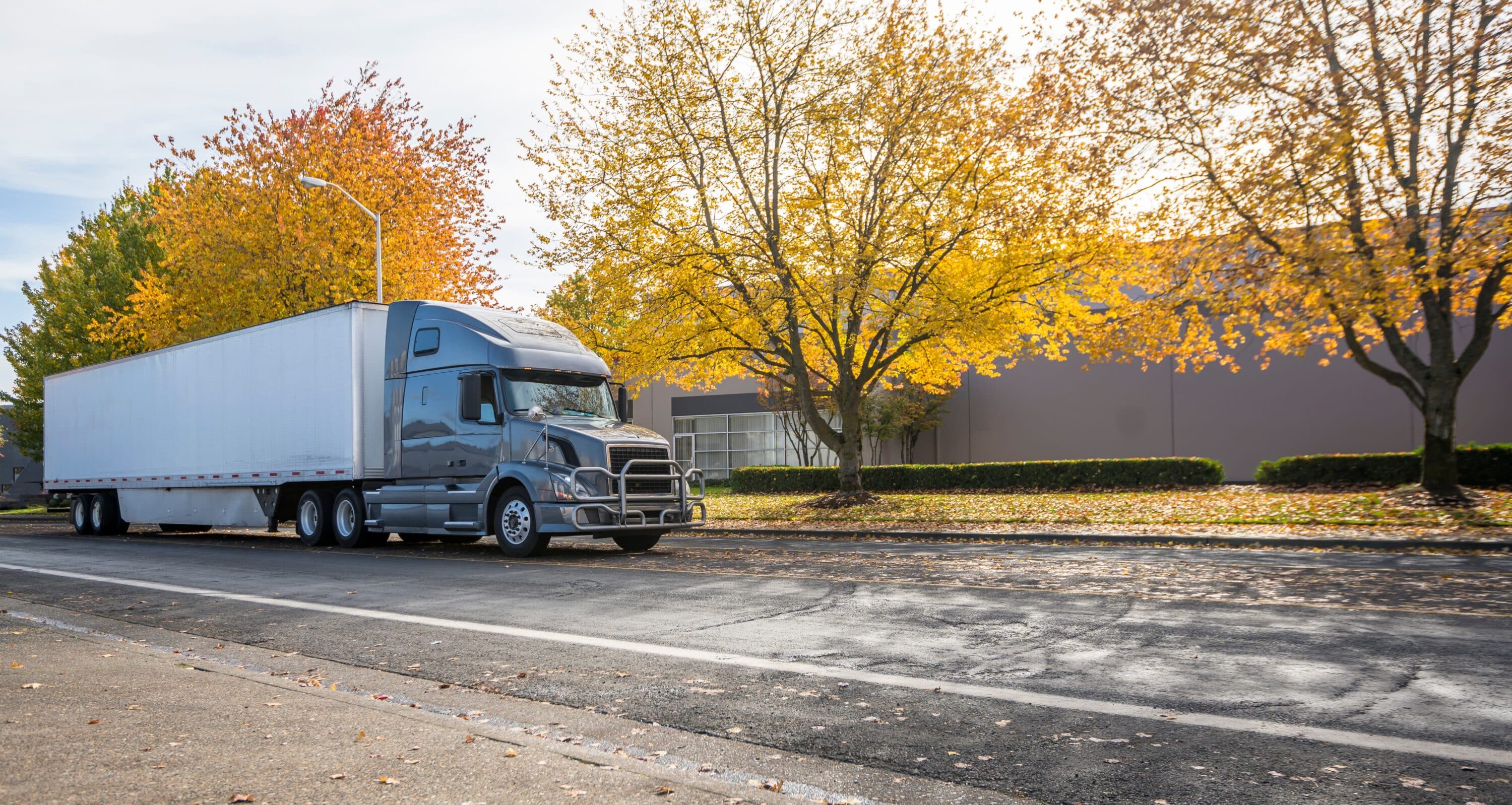
CARB regulations apply to nearly all non-gasoline commercial vehicles with a Gross Vehicle Weight Rating (GVWR) over 14,000 pounds operating on California public roads. Out-of-state motor carriers often assume these rules apply only to trucks registered or domiciled in California, but state law mandates that California Air Resources Board Compliance is required for any vehicle running within state borders, regardless of home state registration or company headquarters, that fits into any of these categories:
- Heavy-duty commercial vehicles. Any diesel, alternative-fuel, or hybrid commercial vehicle operating in California with a Gross Vehicle Weight Rating (GVWR) over 14,000 pounds must comply with Clean Truck Check periodic scans. This includes Class 5 through Class 8 vehicles, such as box trucks, day cabs, sleeper tractors, dump trucks, and vocational rigs.
- Interstate freight carriers. Diesel, hybrid, and alternative-fuel fleets headquartered outside California that dispatch trucks over 14,000 pounds GVWR into the state must satisfy registration and testing rules before crossing state lines.
- Port and railyard transport assets. Heavy-duty non-gasoline trucks over 14,000 lbs GVWR operating at marine terminals or intermodal railyards face automated gate checks and zero-emission port entry rules. Gate systems deny entry to non-compliant vehicles.
- Specialty, agricultural, and lease fleets. Heavy-duty non-gasoline agricultural trucks, seasonal harvest transport vehicles, commercial passenger buses, California-registered motorhomes (diesel or gasoline) over 14,000 pounds GVWR, and short-term rental trucks must comply. Specific sub-categories follow modified reporting schedules, but registration and fee obligations remain mandatory.
Understanding which vehicle categories fall under these mandates allows motor carriers to identify their exact compliance obligations and prepare for the specific regulatory programs enforcing them.

Key CARB Programs That Affect Fleets
Maintaining full CARB compliance requires fleet managers to coordinate several overlapping regulatory frameworks, including:
- Clean Truck Check. This program requires periodic OBD emissions scans, database registration, and a mandatory annual fee.
- Commercial idling restrictions. This rule enforces a five-minute engine idling cap and Clean Idle decal requirements.
- Engine emissions hardware rules. These regulations mandate the proper maintenance of onboard emissions control hardware and diagnostic systems to prevent high-emitting failures on active routes.
- CTC-VIS fleet reporting. This framework oversees fleet registration, engine VIN tracking, and electronic record archiving.
Clean Truck Check (CTC) / Heavy-Duty Inspection and Maintenance (HD I/M)
The Heavy-Duty Inspection and Maintenance regulation is the core program for heavy-duty emissions oversight. This rule is commonly known as Clean Truck Check. It requires periodic emissions testing for non-exempt vehicles over 14,000 lbs GVWR. This program combines annual $32.13 (2026) per-vehicle state fees with mandatory periodic emissions verification.
Commercial Vehicle Idling Restrictions
Heavy-duty diesel commercial vehicles operating in California cannot idle primary engines for more than five consecutive minutes. Key operational requirements include:
- Clean idle certification. Engines meeting low-emission idle standards must display an official Certified Clean Idle decal applied by the engine manufacturer.
- Restricted zone prohibitions. Idling is prohibited within 100 feet of restricted locations, such as schools, residential zones, or daycare centers. This applies regardless of sleeper-berth status.
CTC-VIS Reporting and Record-Keeping
Fleet managers must maintain active account profiles in the Clean Truck Check Vehicle Inspection System. Core administrative obligations include:
- Asset registration. Register all commercial vehicles operated in California within the state database.
- Engine data tracking. Record engine serial numbers, Vehicle Identification Numbers (VINs), fuel types, and state registrations.
- Annual fee processing. Pay the mandatory annual state compliance fee per vehicle.
- Record retention. Maintain digital test logs and compliance certificates for at least three years to satisfy state audit protocols.
Maintaining accurate reporting across these core programs provides state regulators with complete visibility into fleet activity, establishing the framework for how individual vehicles undergo routine emissions checks.
Clean Truck Check (CTC) as a Core Part of CARB Compliance
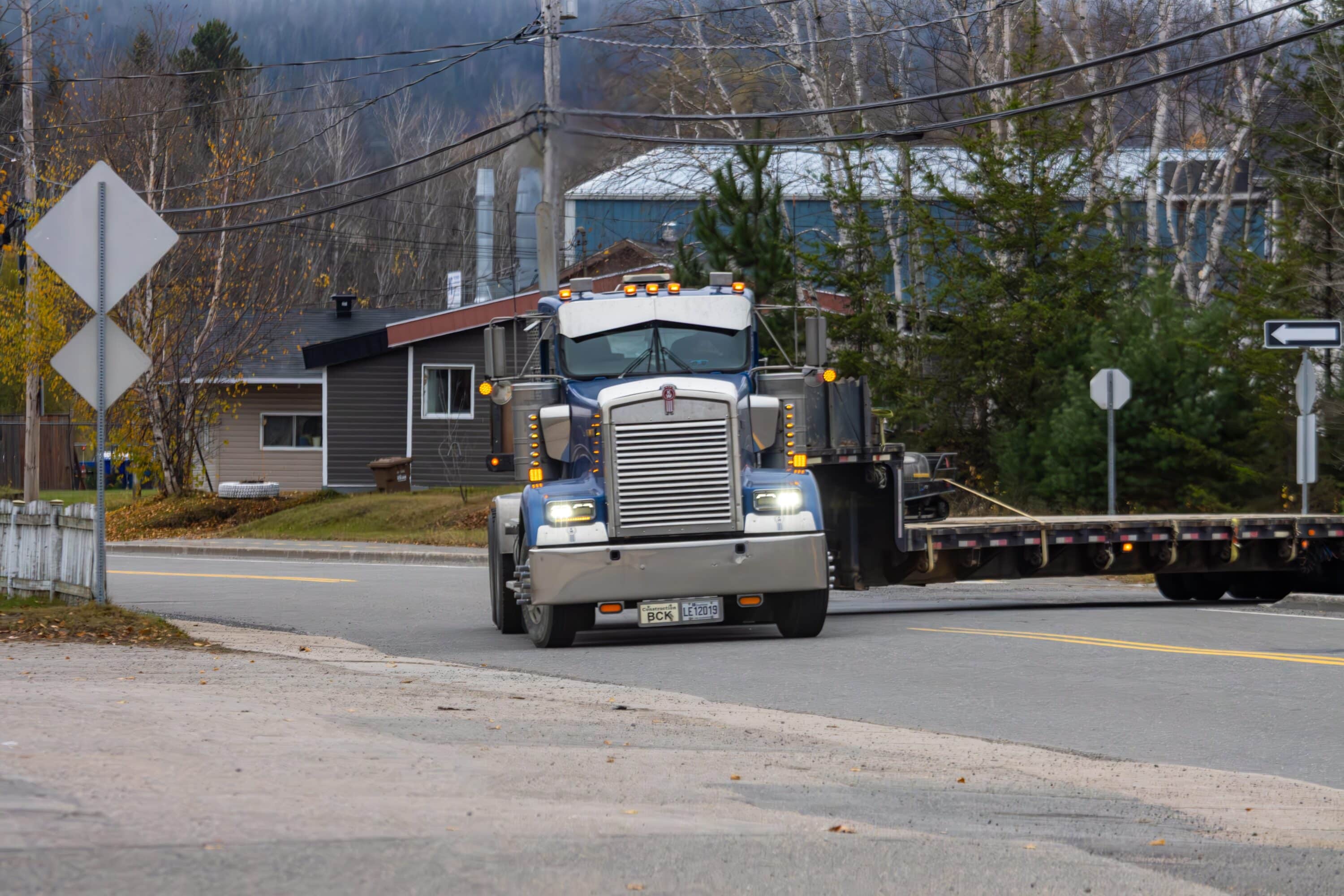
The Clean Truck Check program shifts enforcement from annual tests to continuous digital monitoring. For decades, the Periodic Smoke Inspection Program (PSIP) served as the primary tool for detecting high-emitting engines. PSIP required physical snap-acceleration opacity tests conducted with specialized smoke meters at repair shops.
While PSIP identified severely worn engines, it created several operational challenges that restricted dispatch flexibility:
- Facility and staffing demands. PSIP required dedicated shop space and credentialed testing personnel.
- Limited snapshot visibility. Testing provided only a single annual check on engine condition.
- Undetected intermittent faults. PSIP failed to catch intermittent electronic component failures occurring between annual test cycles.
Clean Truck Check replaces physical smoke inspections with electronic On-Board Diagnostics (OBD) monitoring. Modern diesel, hybrid, and alternative-fuel engines use electronic control architectures to monitor exhaust components continuously; certified hardware reads diagnostic data directly from the vehicle Engine Control Module (ECM). This allows state systems to evaluate engine health without forcing vehicles into shops for physical opacity testing.
Testing requirements depend on vehicle age and engine configuration:
- OBD-equipped vehicles. 2013 and newer diesel and hybrid engines, alongside 2018 and newer alternative-fuel platforms, submit compliance data electronically. The scan verifies that the MIL light is off, checks for active diagnostic trouble codes, and confirms that internal emissions monitors are ready. Fleets can collect and transmit this data remotely using CARB-certified telematics hardware.
- Non-OBD vehicles. Older assets without standard OBD protocols (pre-2013 diesel and pre-2018 alternative fuel) must complete traditional SAE J1667 opacity tests performed by CARB-credentialed testers, alongside visual checks confirming hardware integrity.
|
Feature Parameter |
OBD-Equipped Vehicles |
Non-OBD Legacy Vehicles |
|
Model Year Eligibility |
2013+ Diesel/Hybrid; 2018+ Alt-Fuel |
Pre-2013 Diesel; Pre-2018 Alt-Fuel |
|
Primary Test Method |
Electronic ECM Diagnostic Extraction |
SAE J1667 Opacity Smoke Inspection & Visual Check |
|
Remote Testing |
Supported via Certified Telematics |
Not Supported (Requires Shop Visit) |
|
Monitored Parameters |
Active DTCs, MIL Light Status, Readiness Monitors |
Tailpipe Exhaust Opacity, Visual Hardware Check |
Identifying whether an asset relies on electronic OBD data extraction or physical opacity checks determines not only the inspection method, but also how fleet managers must plan for recurring testing deadlines.
CARB Compliance Deadlines and Testing Frequency
Fleet managers must track CARB compliance deadlines carefully to avoid enforcement action and operational disruption. The CTC program enforces a structured timeline that transitions from basic database registration and semi-annual checks to a high-frequency quarterly requirement for modern engines.
Current Compliance Requirements
Clean Truck Check compliance began with initial fleet reporting and mandatory annual state fee payments in the CTC-VIS. Currently, the program operates under a semi-annual testing schedule:
- Standard commercial fleets. Most non-gasoline commercial vehicles over 14,000 pounds operating in California must submit passing emissions test results twice per year.
- California-registered assets. Deadlines align directly with the vehicle’s annual DMV registration renewal date. The primary test window opens 90 days before registration renewal, with the secondary test due exactly six months later.
- Out-of-state assets. Submission deadlines are tied to the final digit of the Vehicle Identification Number (VIN), establishing two 90-day submission windows spaced six months apart across the calendar year.
- Agricultural vehicles and motorhomes. Designated agricultural trucks and non-gasoline motorhomes over 14,000 pounds GVWR qualify for a reduced annual (1x/year) testing schedule, provided they are properly classified within CTC-VIS.
The October 2027 Transition to Quarterly Testing
Beginning October 1, 2027, CARB will accelerate compliance requirements for OBD-equipped vehicles, moving them from semi-annual to quarterly testing. Legacy non-OBD vehicles (pre-2013 diesel) will remain on the semi-annual schedule.
Submitting validated diagnostic data every 90 days introduces major operational challenges for fleets relying on traditional in-shop testing:
- Increased truck downtime. Routing trucks to certified physical test facilities four times per year increases non-productive driving hours, service queue delays, and lost freight revenue.
- Escalating inspection expenses. Paying third-party testing fees and shop labor rates four times a year per vehicle increases annual compliance costs.
- Administrative tracking burdens. Managing four distinct 90-day submission windows per asset significantly increases administrative overhead and the likelihood of overlooked deadlines.
Because scheduling shop visits manually every 90 days creates unsustainable friction for trucking operations, fleet operators are preparing by adopting automated telematics workflows. Transitioning to automated emissions data extraction allows carriers to fulfill mandatory state checks continuously on active routes, eliminating physical testing delays while ensuring deadline windows are never missed.
HOS247: A Remote Solution That Simplifies CARB CTC Testing
Automating Clean Truck Check (CTC) compliance through remote telematics is the most efficient way for motor carriers to meet state testing requirements without operational disruption. Traditional in-shop testing burns valuable operating hours — requiring drivers to navigate to test facilities, wait in service queues, pay third-party inspection fees, and manually upload compliance forms.
The HOS247 telematics platform functions as a consultative operational helper, eliminating physical shop visits entirely and keeping trucks on the road.
The platform combines robust hardware, automated data processing, and fleet management tools to deliver comprehensive compliance benefits.
CARB Remote Testing Hardware & Connectivity
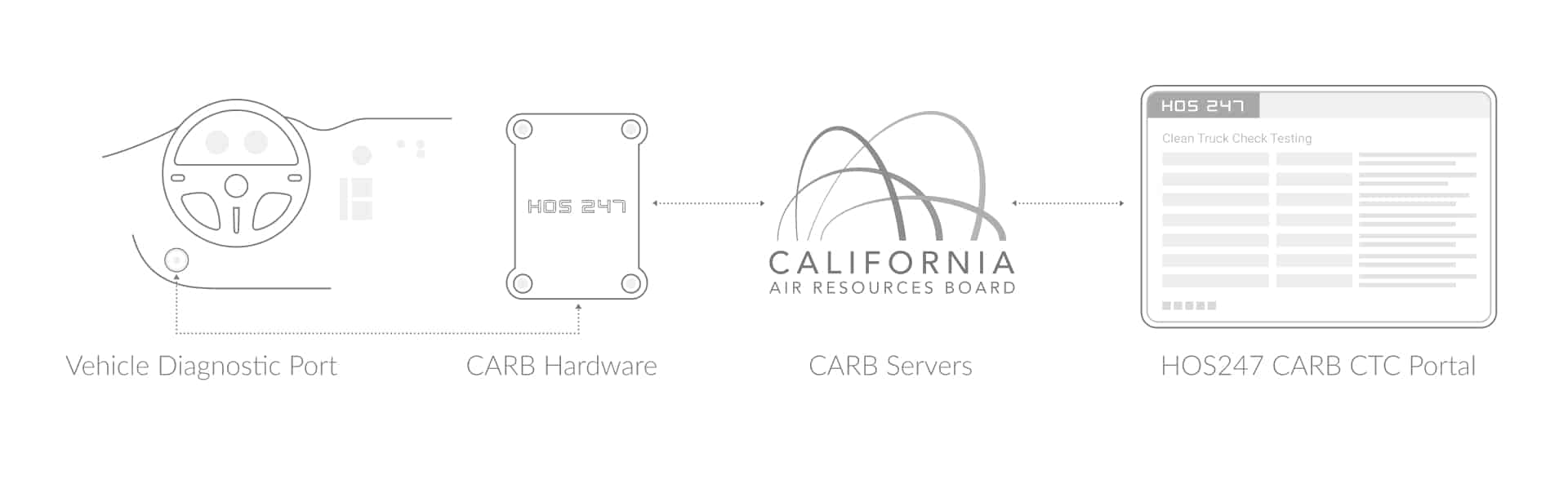
- CARB-certified PT40 hardware. The system relies on the CARB-certified PT40 device, which plugs directly into the vehicle’s diagnostic port. It features easy plug-and-play installation requiring no professional technician and stays continuously connected.
- Universal vehicle compatibility. Fully supports both heavy-duty SAE J1939 and light/medium-duty OBD-II protocols, ensuring complete coverage across diverse commercial fleets.
- Built-in cellular connectivity. The PT40 device features dedicated cellular transmission, sending test records directly to CARB’s system without requiring driver smartphone pairing, mobile app interaction, or local Wi-Fi networks.
- Hardware warranty and protection. Devices are backed by a 1-year limited hardware warranty covering material defects, supported by a straightforward replacement policy to prevent coverage gaps.
Automated Compliance & Fleet Management
- Automated background testing and zero downtime. Completes scheduled or on-demand emissions tests while the truck remains in regular operation. This eliminates the 2 to 5 hours of vehicle downtime typically lost per traditional shop inspection.
- Scalability for quarterly rules. Handles increased testing frequencies seamlessly. As CARB transitions OBD-equipped assets to quarterly testing, the platform automates background data extraction without multiplying labor hours or third-party facility costs.
- Selective data privacy. Transmits strictly necessary emissions data and VIN data to state regulatory systems. Vehicle location, speed, telematics data, and driver logs are never shared with CARB.
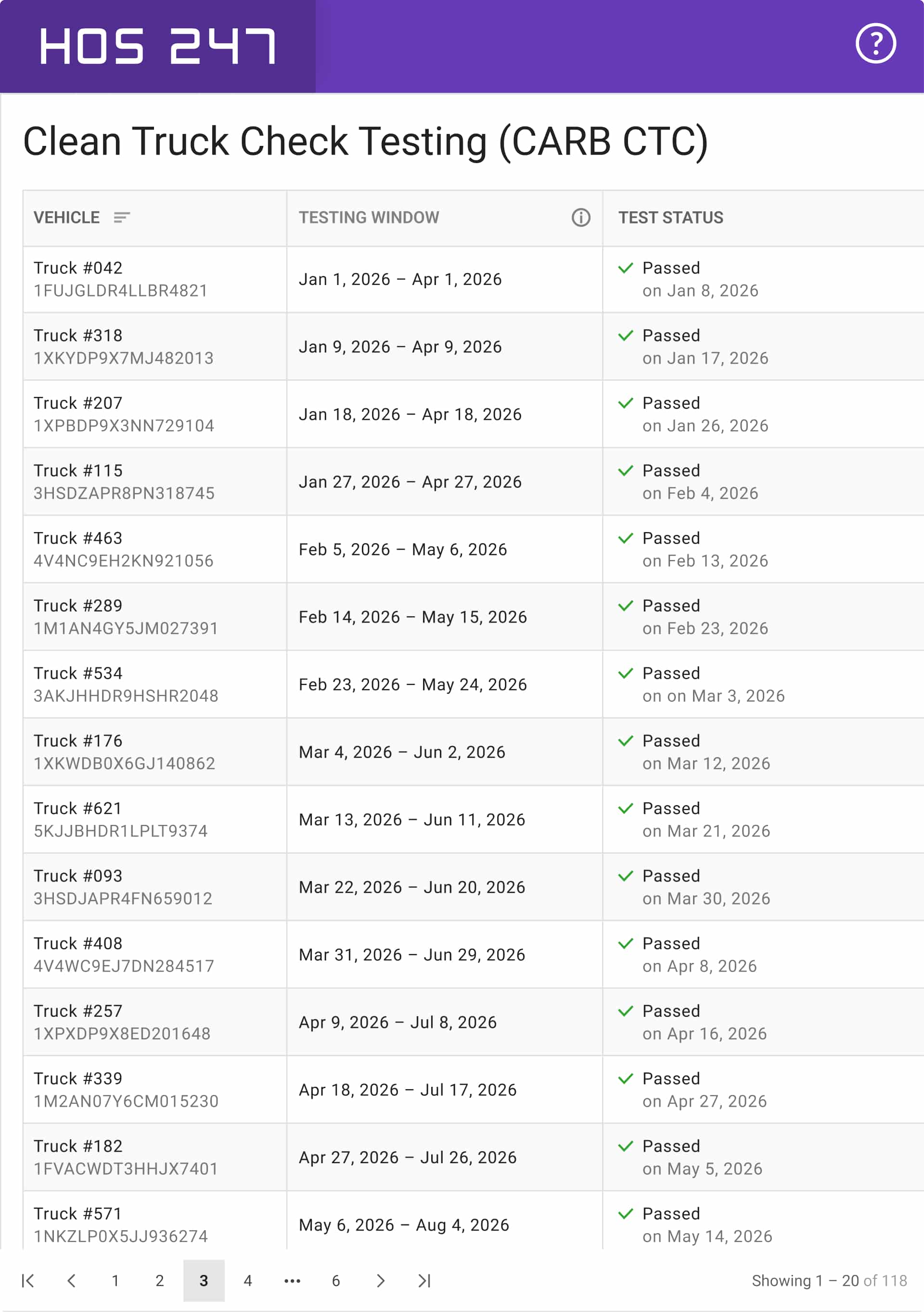
- Centralized management portal. Features a web portal where fleet administrators can schedule remote tests, review processed test results, and track submission deadlines across the entire fleet in real time.
Additional Fleet Tools & Customer Support
- Integrated ELD and GPS functionality. Fleets requiring electronic logging can subscribe to FMCSA-compliant Hours of Service tracking on the same platform. The system also offers real-time GPS tracking and fleet visibility without requiring secondary hardware, as well as IFTA mileage calculations.
- 7-day multilingual support with callback policy. Provides live technical assistance seven days a week in multiple languages. Our support specialists understand compliance requirements and troubleshooting protocols to help truckers through any issue. If the call drops, we will call you back and track your issues through complete problem resolution.
HOS247 automates emissions testing and transmits records directly to CARB’s CTC-VIS database. Fleet managers have access to the HOS247 dashboard to monitor submission windows and test results.
How CARB Compliance Certificates Work
A CARB Compliance Certificate serves as official digital proof confirming a non-gasoline commercial vehicle has passed required emissions checks and paid annual state compliance fees for the active compliance period.
Step-by-Step CTC Certificate Workflow
- Annual fee payment. Fleet administrators submit the state-mandated annual per-vehicle compliance fee through the Clean Truck Check Vehicle Inspection System (CTC-VIS).
- Diagnostic data submission. The vehicle completes a passing emissions test — via automated remote telematics data transmission or traditional in-shop testing by a CARB-credentialed tester — which uploads directly to CTC-VIS.
- Automated state validation. CARB systems cross-reference the incoming emissions data against state diagnostic standards and confirm fee payment.
- Digital certificate issuance. Once payment clears (typically 1 to 5 business days depending on payment method) and test data is validated, CARB’s system generates an official, downloadable digital PDF compliance certificate linked to the vehicle’s VIN in the CTC-VIS portal.
- Statewide database synchronization. Compliance status syncs automatically across state enforcement networks. This clears CA DMV registration holds, permits entry at port and intermodal railyard gates, and marks the VIN as compliant in roadside Automated License Plate Reader databases.
Certificate Expiration and Compliance Windows
Certificates are valid for a single compliance cycle. When the deadline passes, the certificate expires, requiring passing a new test to maintain compliance. Missing a submission or failing to pass the test before the deadline flags the VIN as non-compliant across state databases.
Because state systems continuously cross-reference license plates on public roadways, an expired certificate exposes motor carriers to roadside citations, gate access denials at state-monitored ports and railyards, and DMV registration holds. Automating CTC through remote telematics ensures test records are submitted well ahead of expiration windows, to maintain valid compliance certificates across the fleet.
Penalties for CARB Non-Compliance
Operating non-compliant vehicles in California exposes fleets to financial penalties and registration blocks. State enforcement agencies actively deploy automated tracking tools and integrated databases to identify non-compliant assets running on public roadways.
Statutory Daily Fines
Under Section 43016 of the California Health and Safety Code, operating a non-compliant commercial vehicle carries daily fines ranging from $500 up to $10,000 per violation, per day. Fines accumulate rapidly across multiple vehicles, creating severe financial liabilities.
DMV Registration Holds
CARB integrates directly with the California Department of Motor Vehicles. California-registered trucks that fail to submit required emissions tests or owe outstanding state compliance fees face an immediate DMV registration hold. Carriers cannot renew vehicle license plates until submitting passing emissions tests and validating compliance in CTC-VIS.
Denied Port and Railyard Access
California marine terminals and intermodal railyards operate automated gate control systems linked directly to CTC-VIS. ALPR cameras scan approaching trucks in real time. Non-compliant vehicles face immediate automated gate rejection, forcing drivers to turn away
Roadside Inspections and Out-of-Service Orders
CARB field inspectors and the California Highway Patrol enforce rules at weigh stations, port access corridors, and highway inspection sites. Non-compliant vehicles receive state citations, court summons, and potential out-of-service orders that prevent vehicle movement until compliance is restored.
To avoid these costly disruptions, it is important for fleet managers to understand the automated tools state regulators deploy to monitor traffic and identify violations on the road.
How CARB Enforces Compliance
CARB uses an automated enforcement network to monitor commercial vehicle traffic across California. This setup ensures continuous oversight of commercial fleets operating on public roads.
Automated Screening Technologies
- Automated License Plate Readers (ALPR). CARB operates a network of Automated License Plate Readers along major corridors, weigh stations, and state border crossings. ALPR cameras scan passing commercial vehicles, reading plates and verifying VINs against the CTC-VIS database in real time. Vehicles flagged for unsubmitted tests or unpaid fees receive automated enforcement notices.
- Portable Emissions Automated Screening Systems (PEAMS). CARB deploys PEAMS along high-volume routes to identify high-emitting vehicles during active transit. PEAMS units combine optical sensors with remote sensing technology to analyze exhaust plumes as trucks pass at highway speeds. Vehicles emitting excessive polluting particles are flagged and issued an official Notice to Submit to Testing (NST), requiring a passing test submission within 30 calendar days.
Inter-Agency Database Synchronization
CARB maintains automated data links across state and transport systems:
- Department of Motor Vehicles. Automatically blocks registration renewals for non-compliant California vehicles.
- Port management platforms. Platforms like eModal and PierPass cross-reference vehicle compliance status before granting gate entry.
- Law enforcement databases. Provides CHP officers with live compliance status during roadside traffic stops.
On-Site Fleet Audits
CARB inspectors conduct unannounced audits of fleet maintenance records. Auditors review smoke inspection logs, telematics reporting histories, diagnostic trouble code resolution records, and CTC-VIS submissions. Failing an audit leads to fleet-wide financial penalties.
Because enforcement mechanisms are entirely digital and increasingly automated, carriers must adopt equally organized internal processes to stay ahead of enforcement actions.
Best Practices for Maintaining CARB Compliance
Motor carriers can simplify Clean Truck Check testing with automated telematics systems like HOS247. Combining remote testing with accurate records, timely fee payments, and regular maintenance helps fleets manage program requirements with less administrative effort:
- Maintain accurate vehicle records in CTC-VIS. Register covered vehicles in the Clean Truck Check Vehicle Inspection System, whether they are registered in California, another U.S. state, Canada, or Mexico. Verify VINs, fuel types, and registration information, and update records when vehicle details or ownership change.
- Install certified hardware across assets. Equip OBD-eligible vehicles with CARB-certified telematics hardware. Continuously connected devices plug directly into the vehicle’s diagnostic port to retrieve required emissions data without driver intervention.
- Automate emissions testing. Use a remote CTC testing platform like HOS247 to run automated emissions tests over the air. The device extracts required emissions data and transmits it directly to CARB state databases. This approach bypasses routine in-shop and mobile testing appointments, reducing travel fees, scheduling work, and vehicle downtime.
- Monitor testing deadlines and results. Remote testing providers enable fleet managers to track testing schedules and results for every truck from a single dashboard, making it easy to schedule tests and submit emissions data to CTC-VIS within the window.
- Address maintenance issues promptly. Using predictive maintenance tools to identify mechanic issues early and complete necessary repairs.
- Pay annual CARB compliance fees on time. Passing an emissions test alone does not establish compliance. Motor carriers must pay the annual state fee directly to CARB through CTC-VIS and pass tests to obtain compliance certificates.
Automated testing reduces the coordination required for recurring Clean Truck Check submissions. Subscribing to a remote testing service and installing continuously connected hardware allows tests to run automatically in the background. Fleet administrators can use the time saved to keep portal records current, manage annual fee payments, and address failed test results before deadlines.
CARB Compliance Is Mandatory — Automation Makes It Sustainable
Meeting CARB requirements is an ongoing part of operating in California. Recurring shop visits and mobile testing appointments can add costs, coordination, and service interruptions to each testing cycle.
HOS247 simplifies this process by combining CARB-certified PT40 hardware with a centralized fleet dashboard. The system collects required emissions data while vehicles are idling and submits it directly to CARB, reducing the need for routine testing appointments.
With GPS fleet tracking, multilingual support, electronic logging, and IFTA mileage calculations available through monthly subscription plans, HOS247 also supports daily fleet operations. Automating recurring emissions tests helps fleets reduce administrative work and manage testing deadlines with less disruption.

I’ve co-founded, built and managed several transportation-related businesses. Now, I’m a founder and CEO of HOS247 – an AI Transportation Platform for trucking companies, freight brokers and other logistics operations. We are transitioning old-style operations to technology-advanced logistics entities and help them to grow their businesses. ELDs (electronic logging devices), fleet tracking and management 2.0 combined with AI-powered dispatch tools.









In the high-stakes environment of American logistics, the “yard hunt” has become one of the most persistent drains on carrier productivity. Drivers often waste billable hours searching through massive terminals for the correct equipment, leading to delayed departures and wasted

With more than 700 providers on the Federal Motor Carrier Safety Administration’s list of self-registered electronic logbooks, it is important to do some research to find the best one for your business. When the ELD Mandate went into effect in

Motor carriers must understand and correctly apply DOT ELD exemptions to keep operations efficient and compliant. The Federal Motor Carrier Safety Administration (FMCSA) mandates electronic logging devices for most commercial operations across the country. However, federal rules allow exceptions based