
Standard HOS Rules for Long-Haul Commercial Drivers
When a driver does not qualify for the short-haul exemption, standard interstate regulations govern the shift:
- 11-hour driving limit. Drivers can drive a maximum of 11 hours after completing 10 consecutive hours off duty.
- 14-hour driving window. Driving is prohibited beyond the 14th consecutive hour after coming on duty following a 10-hour off-duty break.
- Mandatory 30-minute rest break. Drivers must take a 30-minute break after accumulating eight hours of driving time without an interruption of at least 30 consecutive minutes.
- Weekly driving caps. Drivers cannot drive after accumulating 60 hours on duty in seven consecutive days or 70 hours on duty in eight consecutive days.
- 34-hour restart. Drivers can reset cumulative weekly hours back to zero by taking 34 or more consecutive hours off duty.
- Sleeper berth provisions. Drivers can divide the required 10 hours off duty using qualifying sleeper berth periods, such as an 8/2 or 7/3 split.
While these baseline rules establish clear boundaries for long-distance transit, federal regulations also recognize that local delivery routes operate under different circumstances. These baseline limits clarify how short-haul exceptions modify daily operational rules for regional drivers.
Intrastate vs. Interstate Local Driving Rules
Federal hours of service regulations apply directly to commercial motor vehicles operating in interstate commerce — meaning cargo or routes that cross state lines. Drivers operating strictly within a single state follow state-specific intrastate regulations. Many state transportation authorities adopt the federal 150 air-mile short-haul framework, but several major freight states offer higher daily limits for intrastate routes:
- California intrastate rules. Intrastate property-carrying drivers in California can drive up to 12 hours within a 16-hour on-duty window after 10 consecutive hours off duty.
- Texas intrastate rules. Texas permits intrastate drivers up to 12 hours of driving time within a 15-hour on-duty window, with a cumulative weekly limit of 70 hours in seven days.
- Florida intrastate rules. Florida allows intrastate drivers up to 12 hours of drive time within a 15-hour shift window, supported by a 70-hour in seven-day weekly cap.
Motor carriers operating local fleets must verify whether routes cross state lines or remain entirely intrastate. Using federal rules for in-state routes restricts driver schedules unnecessarily, while applying state-level exceptions to cross-state loads might trigger federal logbook citations.
Details of the 150 Air-Mile Short-Haul Exemption
The short-haul exemption is one of the most widely used operational provisions in commercial transportation, but it requires meeting three strict conditions every single day:
- Geographic radius. The driver operates exclusively within a 150 air-mile radius of the normal work reporting location.
- Shift duration. The driver returns to the normal work reporting location and is released from duty within 14 consecutive hours.
- Driving cap. Total driving time during the shift does not exceed 11 hours.
Operational Benefits for Local Fleets
- Exemption from daily logging. Drivers do not maintain daily graph logs or log into electronic tracking systems.
- Exemption from rest breaks. Drivers operate without taking a mandatory 30-minute break after eight hours of driving.
Carrier Recordkeeping Responsibilities
In exchange for waiving daily driver logs, motor carriers must maintain time records at the principal office for at least six months. These records must document the driver’s start time, end time, and total daily on-duty hours.
Common Short-Haul Myths Clarified
- Myth: Timecards must remain inside the vehicle. Drivers do not need time records in the cab. During roadside checks, drivers inform enforcement officers that operations fall under the 150 air-mile short-haul exemption and that time records are kept at the carrier’s principal office.
- Myth: Crossing state lines voids the exemption. State boundaries do not impact short-haul eligibility. Interstate drivers can cross state lines freely while remaining within the 150 air-mile radius.
- Myth: Driving over 150 road miles voids the exemption. The 150 air-mile radius is a straight-line measurement from the reporting location, equivalent to approximately 172.6 statute miles. Drivers can operate unlimited road miles within that circular boundary.
- Myth: Specific cargo types or passenger transports disqualify drivers. The short-haul exemption applies universally to qualifying commercial drivers regardless of whether they haul general freight, hazardous materials, or passengers.
Understanding these distinctions helps local operators take full advantage of short-haul flexibility without introducing unnecessary compliance concerns. By verifying that daily routes stay within straight-line boundaries and keeping accurate office timecards, local fleets can operate confidently while avoiding the administrative burdens of over-the-road recordkeeping.
How On-Duty Non-Driving Tasks Impact the 14-Hour Clock
A common source of compliance violations for local drivers is failing to account for on-duty non-driving time. The 14-hour duty window is a continuous timer that begins the moment a driver performs any work-related task. Once started, this clock runs continuously regardless of off-duty breaks or meal stops taken during the shift.
For local delivery and vocational operators, non-driving tasks consume significant portions of the daily 14-hour window:
- Pre-trip and post-trip vehicle inspections. Completing required safety inspections at the start and end of each shift counts toward daily on-duty hours.
- Cargo loading and unloading. Physical handling of freight, securing flatbed loads, or operating material handling equipment consumes on-duty time.
- Facility wait times. Waiting at shipping docks, distribution hubs, or construction job sites counts directly against the 14-hour window.
- Fueling and administrative duties. Topping off fuel tanks, completing delivery paperwork, and managing dispatch communications must be logged as on-duty time.
If non-driving tasks consume six hours of a shift, a driver has only eight hours of available drive time remaining before reaching the 14-hour limit. Minimizing non-driving delays helps drivers preserve available drive time within their window.
Timecard Compliance and FMCSA Audit Requirements
When operating under the 150 air-mile short-haul exemption, motor carriers replace daily driver logbooks with office timecards. However, waiving the ELD requirement does not mean waiving documentation standards. During a formal FMCSA compliance review or safety audit, investigators examine carrier timecard records to verify short-haul eligibility.
Under 49 CFR § 395.1(e)(1)(v), compliant timecard records must include four specific data points for every driver:
- Driver identification. The driver’s full legal name or official employee identification number.
- Daily start time. The exact time the driver reports for duty at the home terminal.
- Daily end time. The exact time the driver is released from work duty at the end of the shift.
- Total daily hours. The total number of hours spent on duty for each 24-hour shift period.
Motor carriers must retain these time records at their principal place of business for at least six months. Auditors cross-reference timecards with supporting documents — like fuel receipts, bills of lading, and GPS logs — to confirm drivers stayed within radius and shift limits.
Limitations and Risks of the Short-Haul Exception
While the 150 air-mile provision offers flexibility for local operations, fleet managers and drivers must remember that the exemption is conditional and evaluated on a daily basis. Qualifying for short-haul status on Monday does not guarantee that Tuesday’s shift will automatically meet the same legal standard.
The moment a local driver exceeds any core boundary — whether by driving past the 150 air-mile radius, staying on duty beyond 14 hours, or failing to return to their home terminal — the exemption ends. When this happens, standard HOS rules apply for that entire shift. The driver must take a mandatory 30-minute rest break after eight hours of driving and must begin recording their RODS using an ELD or paper graph log.
Crossing this threshold unexpectedly introduces compliance risks during roadside DOT checks:
- Unplanned logbook violations. Crossing the 150 air-mile boundary without a logging method in the cab results in citations for missing records and out-of-service orders.
- The eight-in-30 threshold. Exceeding short-haul limits and maintaining paper RODS more than eight times within any rolling 30-day period requires installing a compliant ELD in the vehicle.
Unplanned route changes, extended loading delays, and heavy traffic can easily push a local driver past the 14-hour window or 150 air-mile mark. Relying entirely on manual timecards without a secondary tracking tool leaves local fleets vulnerable to unexpected violations, costly roadside delays, and damaged carrier safety scores.
Managing the Eight-in-30 ELD Transition Window
The “eight-in-30” rule acts as the regulatory bridge between short-haul timecard logging and full ELD compliance. Under 49 CFR § 395.8(a)(1)(iii)(A), drivers who temporarily exceed short-haul criteria can use paper graph logs to record duty status, provided they do not exceed eight days of paper logging within any rolling 30-day period.
To manage this transition effectively, fleet managers should enforce structured tracking procedures:
- Monitor rolling 30-day windows. Safety managers must track paper log usage across a rolling 30-day timeline rather than a standard calendar month.
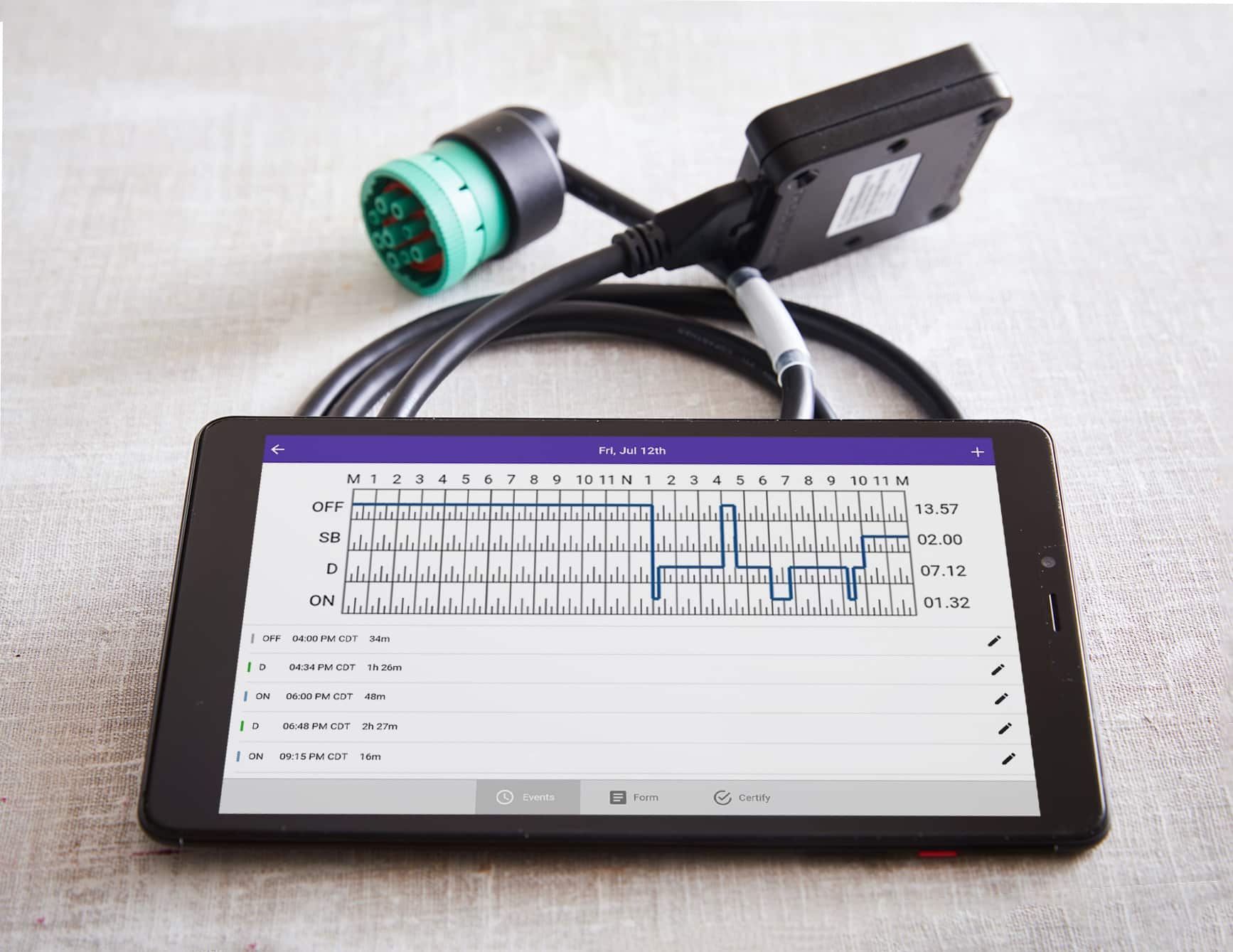
- Equip vehicles proactively. Fleets running regional routes that occasionally cross the 150 air-mile mark should mount ELD hardware in vehicles permanently. Drivers maintain timecard status on local days and log into the ELD software only when embarking on long-distance runs.
- Maintain cab compliance kits. Drivers transitioning from timecards to paper logs during an unexpected long-distance shift must carry a supply of at least eight blank paper log sheets, an ELD malfunction guide, and a data transfer instruction sheet.
Managing this transition proactively keeps carriers below the eight-day paper log limit, preventing urgent hardware orders and roadside penalties. Easy-to-use electronic logbooks help fleets remain prepared whenever a daily route unexpectedly extends beyond short-haul boundaries.
Why Local Fleets Choose HOS247 for Electronic Logging
While any FMCSA-certified device can technically record standard driving hours, basic logging platforms often cause daily friction for local haulers through dropped signals, unhelpful support, and rigid contracts.
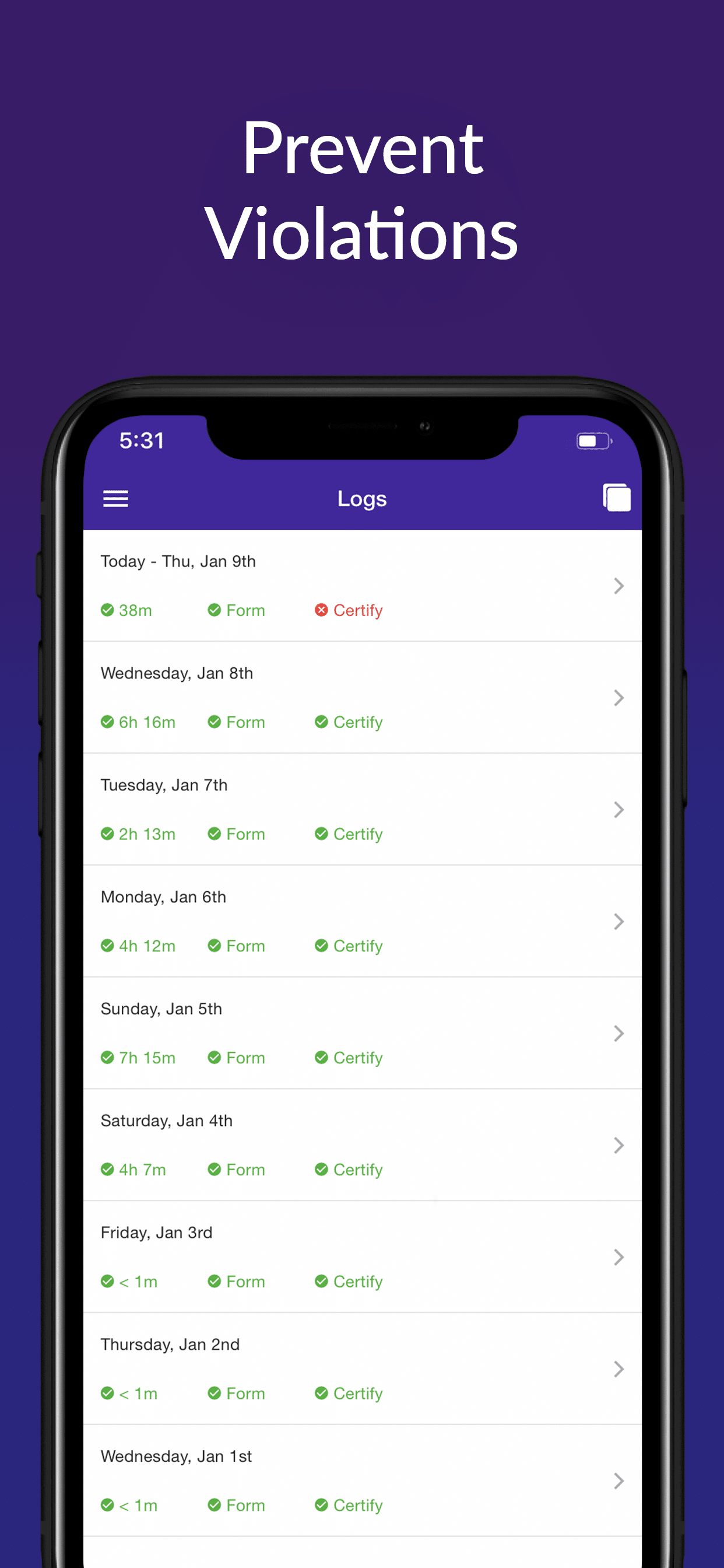
HOS247 provides a reliable platform designed to simplify local workflows and maintain fleet productivity:
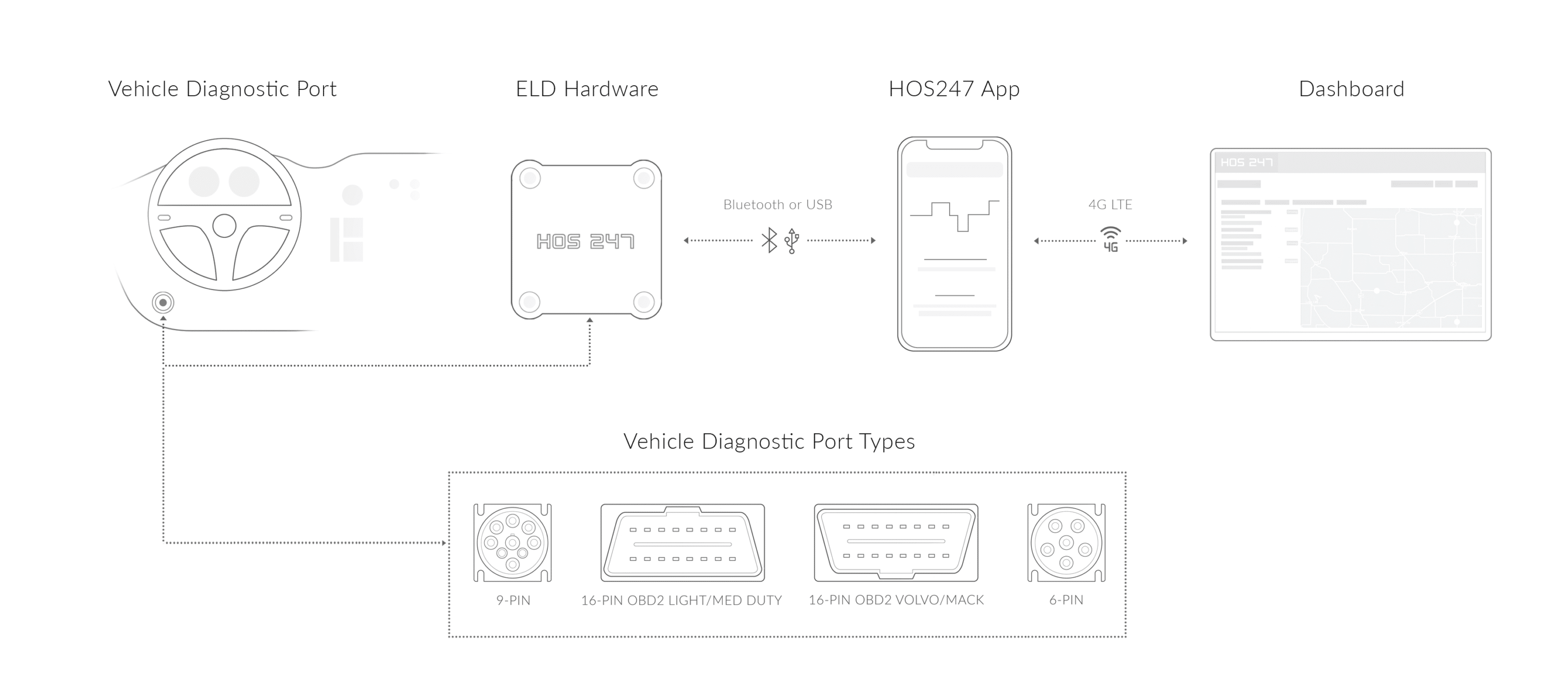
- Stable Bluetooth hardware connection. Establishes a persistent link between the vehicle gateway and the mobile screen, preventing dropped connections during transit.
- Driver callback policy. Connects support specialists directly back to drivers if a line drops or traffic is heavy, eliminating long hold times during roadside checks.
- One-year hardware warranty. Replaces defective gateways or cable assemblies quickly without extra fees.
- Intuitive app and portal interface. Eliminates complicated sub-menus for drivers on mobile screens and managers on desktop dashboards.
- Seven-day multilingual support. Provides access to technical specialists fluent in English, Spanish, Polish, and Russian every day of the week.
- Transparent subscription plans. Allows local fleets to scale vehicle counts up or down without long-term hardware leases or contract penalties.
- Automated IFTA tax calculations. Records jurisdiction mileage reports automatically to streamline quarterly tax filings without manual state-line fuel tracking.
- Real-time engine diagnostics. Reads vehicle fault codes through the diagnostic port to identify mechanical issues early.
- Live GPS asset tracking. Tracks real-time vehicle location and shipper facility detention to help dispatchers optimize daily local routes.
- Remote CARB emissions testing. Allows California operators to run required emissions tests remotely, as the vehicle’s ECM completes tests while the gateway transmits diagnostic data directly to CARB’s portal.
Pairing dependable vehicle hardware with responsive support and an intuitive mobile interface allows local haulers to operate with total confidence. By choosing an ELD platform engineered for day-to-day stability, local fleets turn mandatory recordkeeping into a streamlined operational advantage.
Achieving Operational Compliance
Determining how many hours can a local CDL driver drive under federal law comes down to remaining within short-haul limits or following standard hours of service rules. While the 150 air-mile short-haul exemption offers relief from daily graph logs, a single detour or shipper delay alters a driver’s legal status.
Relying entirely on paper timecards leaves fleets exposed whenever daily routes spill past standard boundaries. Equipping commercial vehicles with a reliable ELD platform provides the flexibility needed to handle route changes seamlessly. Having digital logging tools in place ensures drivers can switch between short-haul timecard status and active electronic tracking with no downtime, protecting operations against unexpected roadside citations.

As an expert in B2B and B2C sales, I’ve dedicated myself to perfecting sales processes and client retention strategies in the logistics and trucking industry. I have significantly contributed to the expansion of the ELD service, catering to retail and wholesale clients in need of HOS247 ELD solutions. My unwavering commitment to implementing state-of-the-art sales techniques and technologies ensures the continuous growth and success of businesses I work with.









Fleet asset tracking gives carriers an opportunity to improve operations by providing full fleet visibility, reducing operating costs, and increasing productivity. These systems monitor, track, and analyze vehicle data, such as location, diagnostics, routing, fuel consumption, and driver performance, to

Truck drivers are now required to use ELD log books. These devices collect data such as truck movements with GPS locations, miles driven, and engine hours to prevent drivers from exceeding the hours of service limits. Federal Motor Carrier Safety

The ELD mandate, also known as ELD final rule, was issued by the Federal Motor Carrier Safety Administration as a measure to improve the safety of drivers and road traffic. The rule requires truck drivers to use ELDs, electronic logging