
The New 2026 Vetting Overhaul: What It Means for Truckers
To make informed decisions for your fleet, it is essential to understand why devices are being removed. The standard for what constitutes a “compliant” device has fundamentally changed. The FMCSA is no longer looking for a signature on a PDF; they are looking for proof of technical competence.

FMCSA’s New ELD Vetting Process Explained
The most critical update is the transition to a Categorization Model. In the past, a device was either “Registered” or “Revoked.” Now, new and existing devices are subject to a four-tier review process before they can be considered “Approved” for the registry.
- Category 1 (Approved). These devices have passed the FMCSA’s internal technical audit. The provider has submitted actual data transfer logs, proven that their “Integral Synchronization” meets the millisecond-latency requirements, and demonstrated robust fraud prevention measures. Also, Category 1 devices now undergo a Fraud Detection check that cross-references new applications against previously revoked providers.
- Category 2 (Information Requested). The application is pending. The FMCSA has flagged potential issues — such as inconsistent data recording or unclear user manuals — and is waiting for the provider to clarify.
- Category 3 (Further Review). This is a probationary status. The device is under deeper scrutiny, often due to reports from roadside inspectors about data transfer failures or “ghost logs.”
- Category 4 (Denied). The device failed to meet the minimum standards. This can be due to hardware limitations (e.g., inability to maintain a stable Bluetooth connection) or software failures (e.g., failing to calculate unassigned driving time correctly).
The End of the Generic Loophole
For years, overseas manufacturers would produce generic “black box” dongles and sell them to dozens of different software companies, who would simply slap their own sticker on the case.
The new regulations require that the entire system, hardware and software combined, be vetted as a single unit. If a generic hardware component fails a stress test, every provider using that rebadged hardware is at risk of mass revocation. This creates a “domino effect” where one technical failure can take down multiple ELD brands simultaneously.
Why It Matters to Your Operation
This overhaul is ultimately good for the industry because it prevents you from buying a system that will get you cited during an inspection. However, because the FMCSA is applying these standards retroactively, many older, budget-tier providers are being flagged for removal. We saw this begin in late 2025 and accelerate into early 2026 with the removal of over nine major devices. If your provider is still relying on the old paperwork without passing the new vetting checks, your compliance status might be ticking on borrowed time.

Managing a Revoked ELD (The 60-Day Rule)
If you receive a notification that your electronic logbook provider has been removed from the registry, do not panic. The FMCSA has established a clear, legal protocol to ensure that fleets are not unfairly penalized for a vendor’s failure. However, you must follow this timeline strictly to avoid citations.
The 60-Day Grace Period
From the date of the revocation notice, you have exactly 60 days to replace the non-compliant hardware.
- Enforcement status. During this window, safety officials are instructed not to cite drivers for “No Record of Duty Status” (395.8(a)(1)) or “Failing to use a registered ELD” (395.22(a)).
- Proof of compliance. You should carry a copy of the revocation notice or the FMCSA email in the cab. If stopped, present this to the officer to verify that you are in the transition period.
The “Functional” Requirement
There is a critical caveat to the grace period: The device must still work. The 60-day rule only applies if the device is revoked but still functional. If the provider shuts down their servers, or if the device stops recording engine data, you are no longer compliant. In this scenario, you cannot point to the 60-day rule. You must immediately switch to paper logs or logging software to record your hours.
- Paper log rule. If the device is dead, you are legally required to reconstruct your logs on paper for the current day and the previous 7 days. You must keep a supply of at least 8 days of blank grid graphs in the truck for this exact scenario.
The Cliff Edge: Day 61
On Day 61, the grace period expires. If a driver is caught using the revoked device after this deadline, the consequences are severe:
- Out of Service (OOS). The driver will be placed OOS for 10 hours.
- Citation. The carrier will be cited for operating without a compliant ELD.
- Tow/Replacement. The truck cannot move until a compliant device is installed or a valid exemption is proven.
Contractual Considerations
Many fleets worry about the cost of breaking a contract with a revoked provider. It is important to know that a “Material Breach of Contract” has likely occurred. If a vendor promised to provide a “FMCSA-compliant solution” and is then revoked, they are no longer fulfilling their side of the agreement. Do not let the threat of “early termination fees” stop you from switching to a compliant provider.
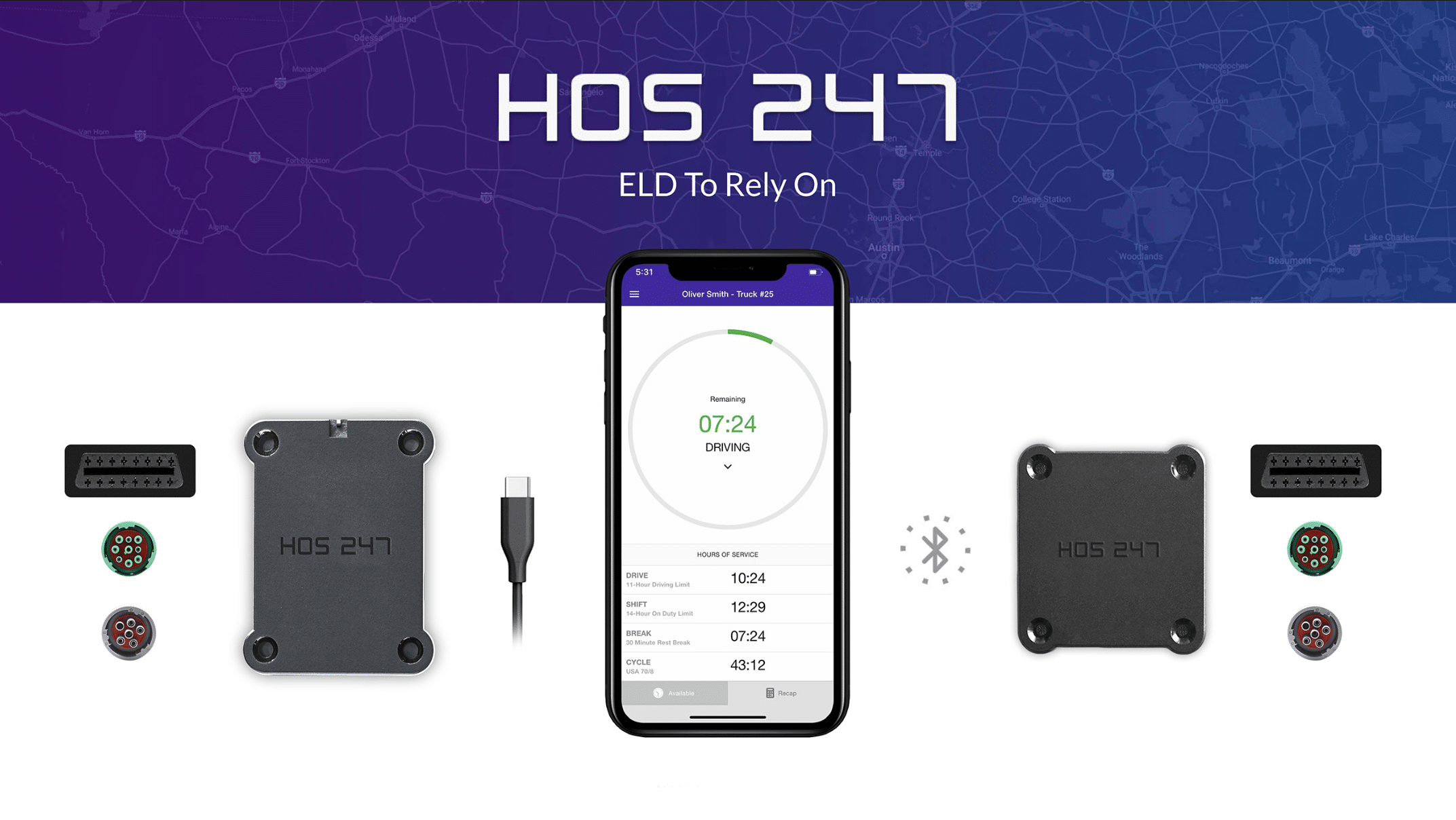
Future-Proofing: Level VIII Inspections & Wireless Enforcement
While the vetting overhaul addresses the quality of the devices, other regulatory changes are reshaping how those devices are inspected. The industry is moving toward a model of “Wireless Roadside Inspection” (WRI), known as the Level VIII Inspection.
Understanding Level VIII Inspections
Currently in an “Operational Test” phase as of early 2026, the Level VIII inspection is designed to conduct compliance checks while the vehicle is in motion.
- How it works. As your truck passes a roadside sensor or weight station at highway speeds, the elog system wirelessly transmits a “data packet” to the enforcement software.
- What it checks. This packet includes your DOT number, operating authority status, CDL validity, and current Hours of Service (HOS) status (e.g., “Driving,” “On-Duty,” or “Violation”).
The Technical Challenge
Level VIII inspections require 100% connectivity uptime. If your ELD hardware has a weak Bluetooth signal or a slow cellular modem, it may fail to transmit the data packet in the few seconds you are passing the sensor. In the eyes of the system, a “failed transmission” looks suspicious. It may trigger a “red light” on your PrePass or Drivewyze transponder, forcing you to pull in for a manual inspection.
This shift makes hardware quality a direct factor in your fleet’s efficiency. A cheap device might save you money upfront, but if it causes you to be pulled in for manual inspections because it can’t handle wireless data transfers, it is costing you hours of drive time.
The Pre-2000 Exemption Update
For drivers of older equipment, the 2026 regulatory landscape remains stable but scrutinized.
- Exemption status. The “Pro-Trucker Package” passed in June 2025 confirmed that the ELD exemption for engines manufactured before model year 2000 remains in effect.
- Enforcement reality. While the exemption stands, enforcement officers are now more rigorous about verifying it. “Glider kits” (new trucks with old engines) are a common target. Officers are trained to check the engine block data plate to verify the serial number and manufacturing year. Ensure your paperwork matches your engine hardware exactly to avoid delays.
Whether it is high-tech wireless inspections or low-tech engine tag verification, the trend is clear: the new regulation for truck drivers on elog devices is closing the loopholes. The era of passive compliance is ending. Drivers must now ensure that both their physical equipment and their digital data can withstand a deeper level of scrutiny than ever before.
Choosing a Survivor: Criteria for a Compliant ELD
With the market consolidating and “Category 4” revocations increasing, choosing a provider is no longer just about price — it is about survival. You need a partner that acts as a “Safe Harbor” for your data.
When evaluating a new elog system, look for these three technical indicators of stability:
1. Verification of “Integral Synchronization”
Ask the provider specifically about their hardware’s synchronization protocol. A compliant device must read data directly from the ECM (Engine Control Module).
- Red flag. Avoid devices that use “GPS-based” motion detection as their primary source. GPS can drift or lose signal in tunnels. FMCSA rules require the device to track motion based on the truck’s actual wheel speed or engine RPM. Only a hardwired or robust plug-and-play ECM connection can do this reliably.
2. Data Transfer Success Rate
The number one reason for device revocation is the failure of the “Data Transfer” test. This is the moment during a roadside inspection when you tap “Send Logs to DOT.”
- The standard. A professional system should support multiple transfer methods (Web Service AND Email). It should provide a clear, on-screen confirmation that the file was received by the FMCSA server. If a provider’s sales rep cannot explain how their data transfer works, walk away.
3. Proprietary Hardware Architecture
Look for providers that control their own hardware supply chain. Companies that simply resell generic “white-label” devices have no control over the component quality. If the original manufacturer changes a chip to save money, it could break the device’s compliance.
- The safe choice. Providers like HOS247 that specify and vet their own industrial-grade hardware are insulated from these supply chain risks. They can guarantee that the device you buy today will still meet the technical specs tomorrow.
By filtering your options through these three criteria, you protect your fleet from the operational chaos of a sudden revocation. In this new regulatory environment, you cannot afford to gamble on the cheapest option. You need a partner that doesn’t just pass today’s test, but is engineered to withstand the rigorous enforcement of tomorrow.
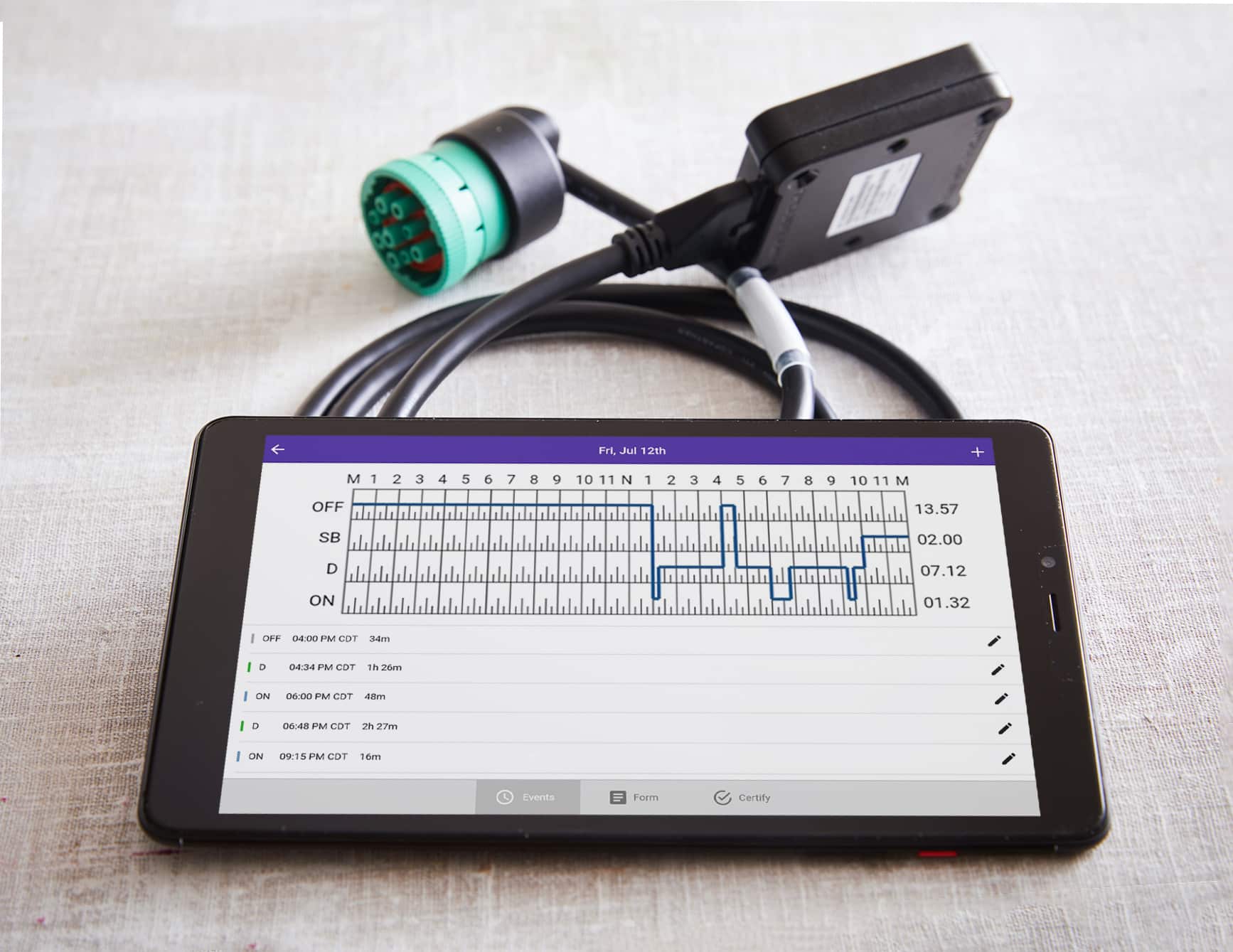
HOS247 is Built to Last
In a market defined by changes and revocations, HOS247 offers stability. We do not just react to new regulations; we build infrastructure designed to meet the FMCSA’s rigorous standards today and tomorrow. For fleets transitioning from a revoked provider, our goal is to make the switch an upgrade, not just a replacement.
Hardware That Stays Connected
Your compliance is only as good as your connection. Cheap plastic dongles often vibrate loose or overheat, causing “Power” and “Sync” malfunctions that get you flagged.
We use industrial-grade ECM hardware tested to handle the bumps, dust, and heat of the road. It locks in tight and stays connected, so you spend less time troubleshooting connections and more time driving.
Ready for the Future of Inspections
The rules are changing, and enforcement is getting faster. With wireless (Level VIII) inspections on the horizon, you need a system that can transfer data instantly without lag.
Our system is built for high-speed data transfer. Whether you are at a roadside stop or passing a weigh-in-motion sensor, your data is formatted correctly and ready to go, protecting your safety score.
Support That Speaks Your Language
When you are stuck at a scale house, you don’t have time to navigate a chatbot. You need a human who understands trucking.
Our support team works 7 days a week and speaks English, Spanish, Russian, and Polish. Whether you need help with a log edit or have a question about the rules, you can explain it in your own language and get a clear answer fast.
Freedom From Long-Term Contracts
We believe you should stay with a provider because the system works, not because a contract forces you to.
HOS247 operates on a month-to-month basis. There are no 3-year lock-ins. This puts the control back in your hands and ensures we work hard to earn your business every single month.
Ultimately, HOS247 provides more than just a compliant screen; we provide operational peace of mind. When you combine industrial-grade hardware with flexible, month-to-month terms, you get a system that supports your business goals rather than holding you hostage. You can focus on the road, knowing your logs are accurate, secure, and ready for any inspection.

Frequently Asked Questions About New Elog Regulations

As an expert in B2B and B2C sales, I’ve dedicated myself to perfecting sales processes and client retention strategies in the logistics and trucking industry. I have significantly contributed to the expansion of the ELD service, catering to retail and wholesale clients in need of HOS247 ELD solutions. My unwavering commitment to implementing state-of-the-art sales techniques and technologies ensures the continuous growth and success of businesses I work with.









For professional drivers and fleet managers, the ELD mandate is a settled reality. The question is no longer “Do I need an ELD?” but “Is my current ELD costing me money?“ DOT ELD regulations are a critical part of daily

Hours of service violations carry serious financial consequences for truckers. Individual fines can range from hundreds to thousands of dollars, but the real cost comes from out of service time, lost loads, and administrative expenses. Imagine the total cost of

In the landscape of commercial vehicle operations, effective log book management stands as a cornerstone for success. This article delves into the realm of commercial vehicle log books, hours of service (HOS) and electronic logging device (ELD) regulations, technological advancements,