
The Foundation of Compliant Logging: Core ELD Rules for Truck Drivers That Still Apply
While enforcement has become stricter, the basic ELD rules for truck drivers have not changed. When a DOT officer inspects your truck, they are not interested in marketing claims. They are looking for four specific technical requirements to verify your logs are legal.
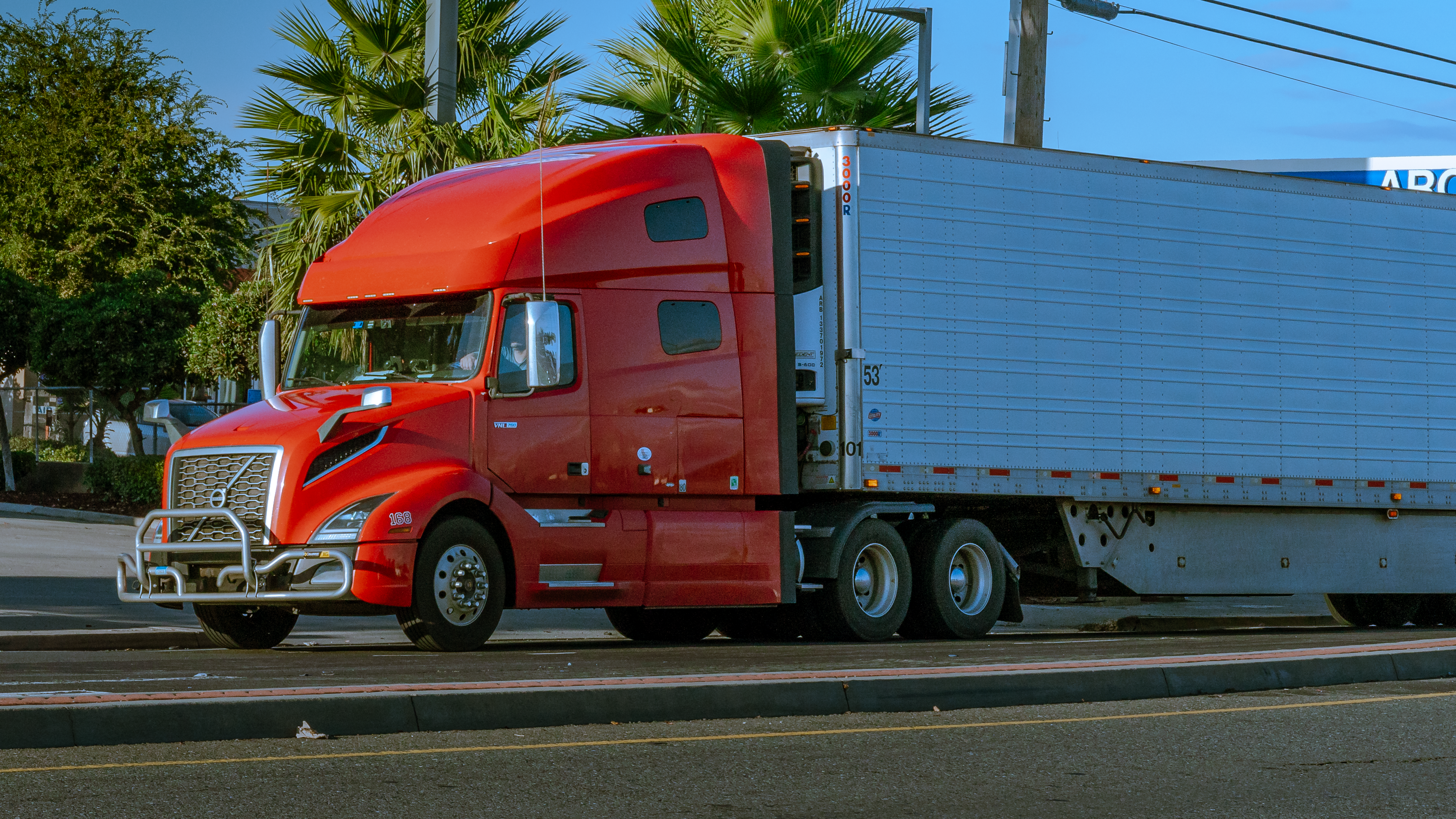
Integral Synchronization
The most common reason devices get revoked is a failure of “integral synchronization.”
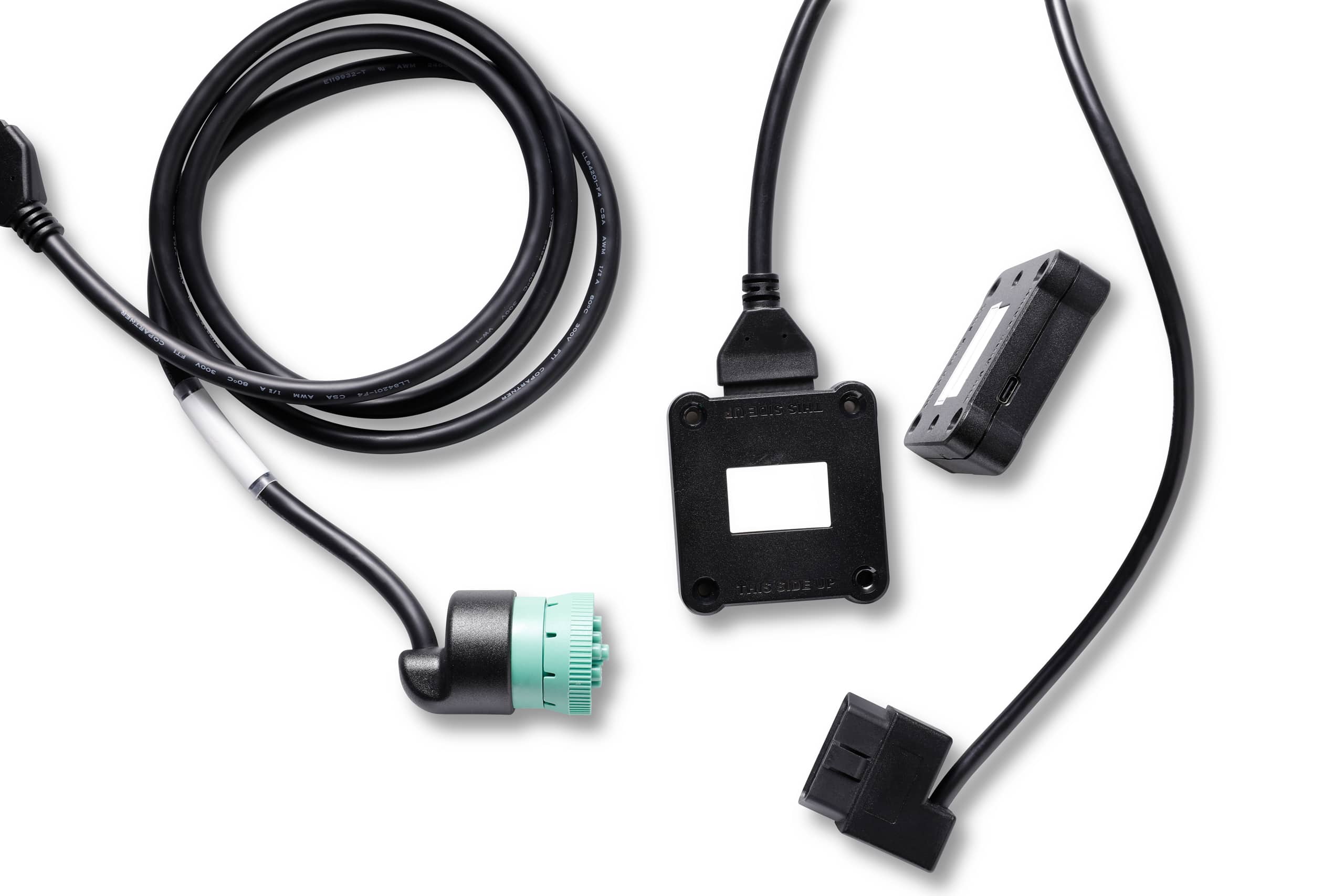
- The rule. The ELD must be hardwired to the truck’s engine (ECM). It must automatically record when the engine turns on, when the vehicle moves, and the total engine hours.
- The reality. You cannot use a GPS-only app on your phone. If your device does not plug into the diagnostic port (J1939 or OBDII) to read actual engine data, it is not compliant. Using a standalone app without a hardware connection is considered a “No Record of Duty Status” violation.
Using a standalone app without a hardware connection does not meet the requirement and will be treated as failing to maintain a proper electronic record of duty status.
The “Data Transfer” Standard
Passing a roadside inspection depends entirely on one moment: the Data Transfer.
- The requirement. Your device must be able to send your logs to the officer’s computer immediately. This is done via Web Service (internet) or Bluetooth.
- The risk. If the transfer fails because of a bad connection or software error, the officer cannot verify your logs electronically. This often leads to a long manual review of your log grid and can result in a citation for a non-compliant device.
Unassigned Driving Time
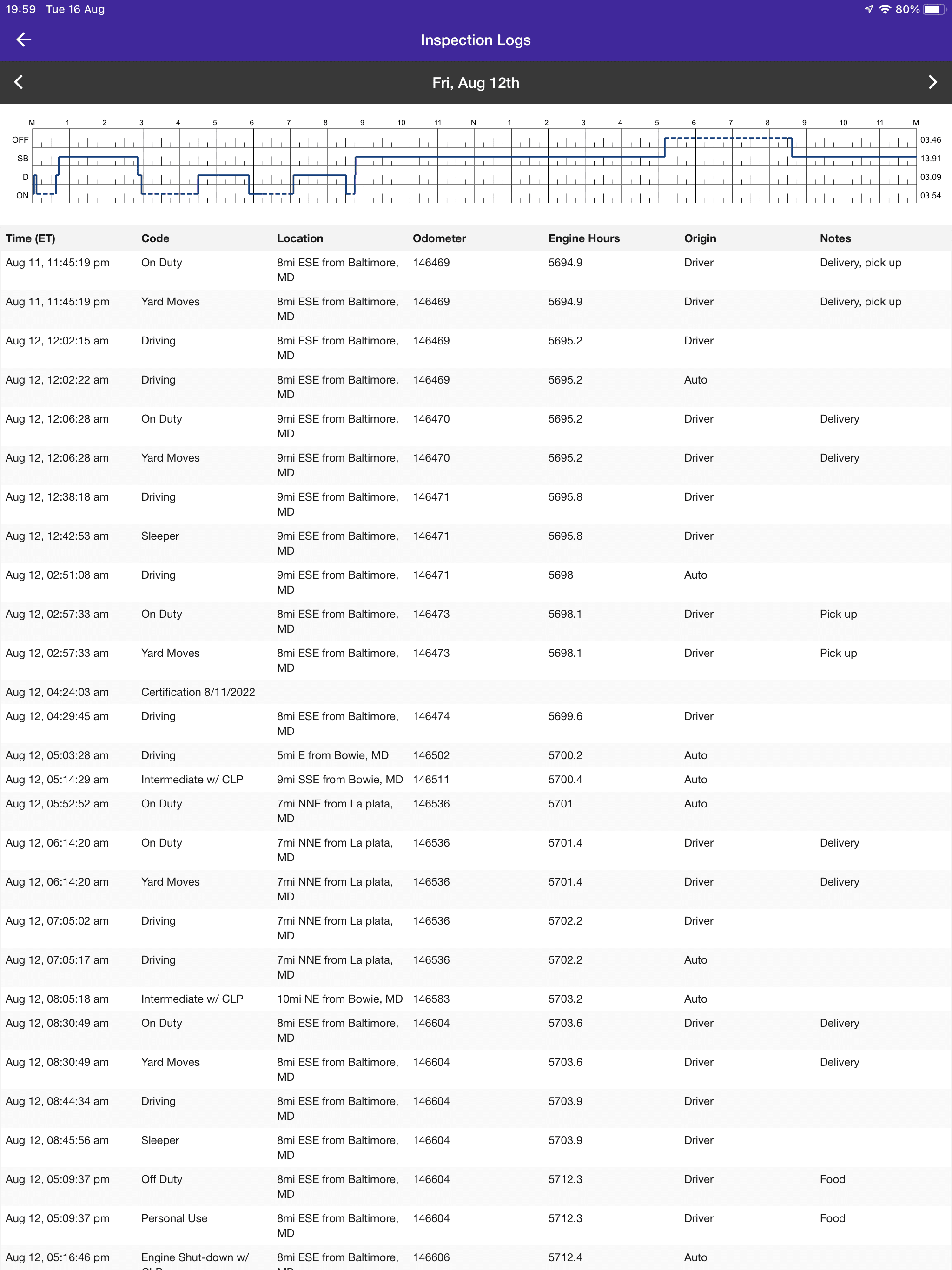
Unassigned driving events are a major target for auditors in 2026. The ELD automatically records “Driving” status whenever the vehicle moves at 5 mph or more.
- The mandate. Every mile the truck moves must be assigned to a driver. If a mechanic moves the truck or you drive in the yard without logging in, the device creates an “Unassigned Driving” event. You must review and explain these events daily. Leaving them unresolved looks suspicious to inspectors.
Paper Log Backup Rule
Technology can fail, and the regulations account for that.
- The supply rule. You are legally required to carry a supply of blank paper log graph grids sufficient for 8 days in the cab at all times.
- The function. If your ELD screen goes black or stops syncing, you must switch to paper logs immediately. Failing to produce these blank logs when asked is one of the easiest tickets to avoid, yet it remains a common violation.
These four rules are the pillars of a compliant roadside inspection. If your system cannot maintain a connection to the engine, transfer data instantly, or handle unassigned driving correctly, you are at risk. Ensuring your hardware meets these standards is the first step to protecting your safety score.
The “Exemption” Landscape: Who Is Safe?
While the ELD mandate covers most interstate drivers, it does not cover everyone. Specific operations and vehicle types are exempt from installing a device. However, in today’s enforcement climate, claiming an exemption requires solid proof. You must be able to document your status clearly to an officer.
Current ELD Exemptions (2026 Update)
1. The Short-Haul Exemption (150 Air-Mile Radius)
This is the most common exemption for local drivers, but it has strict limits. To qualify, you must meet all of the following criteria:
- Distance. You must operate within a 150 air-mile radius of your normal work reporting location.
- Time. You must return to that same reporting location and be released from work within 14 consecutive hours.
- Rest. You must have at least 10 hours off-duty between shifts.
- The catch. If you drive beyond 150 miles or work past the 14-hour limit even once, you must fill out a standard paper log for that day. If you exceed these limits more than 8 times in 30 days, you must install an ELD.
2. The Pre-2000 Engine Rule
This exemption protects drivers of older trucks, but it is often misunderstood. The rule is based on the engine model year, not the truck’s VIN or chassis year.
- The glider kit detail. If you drive a 2026 glider kit with a 1998 engine, you are exempt.
- The proof. You must be able to show the officer the engine data plate (usually found on the valve cover) that proves the engine was made before 2000. If that tag is missing or unreadable, you risk a citation.
3. Driveaway-Towaway Operations
This applies to drivers delivering vehicles where the “cargo” is the vehicle itself.
- The rule. If the vehicle you are driving is the shipment (like delivering a new truck to a dealership) and at least one set of its wheels is on the road, you are exempt. You are not expected to install hardware into a vehicle you do not own.
If you operate under any of these exemptions, proper documentation is your best defense. Keep your engine tags clean and legible, and track your air-miles carefully. If there is any doubt about whether you qualify, using a compliant ELD is often the safer choice to avoid arguments at the scale house.
2026 Enforcement Trends & Rule Changes
If 2025 was the year of warnings, 2026 is the year of consequences. The FMCSA has shifted its focus from ensuring drivers have devices to ensuring those devices actually work. Three major trends are currently reshaping the rules for carriers.
What is Actually Changing in 2026?
Trend #1: Aggressive Device Revocations
The most immediate threat to your business is the FMCSA’s “zero-tolerance” policy for technical failures. In early 2026, the agency removed multiple popular devices from the approved list because they failed data audits.
- The impact. If your provider is revoked, you have a strict 60-day grace period to replace the hardware. You can drive during this time, but you must carry paper logs as a backup.
- The danger. On Day 61, if you still have that revoked device in your cab, you are driving without a logbook. You will be placed Out of Service (OOS) until you install a new, compliant unit.
Trend #2: The Rise of Level VIII (Wireless) Inspections
The industry is moving toward “inspections in motion.” The Level VIII inspection allows DOT officers to check your compliance status wirelessly while you are driving at highway speeds.
- The status. As of early 2026, this is in an “Operational Test” phase and is not yet a nationwide requirement.
- The future. This technology requires a perfect data connection. It works by grabbing a “data packet” from your ELD as you pass a roadside sensor. If you use a cheap device with poor connectivity, it may fail this wireless check, triggering a red light on your transponder and forcing you to pull in for a manual inspection.
Trend #3: Broker Financial Responsibility
This rule change affects your wallet. As of January 16, 2026, the FMCSA has tightened the financial requirements for brokers to fight fraud.
- The change. Brokers must now maintain “assets readily available”—specifically $75,000 in liquid trusts or bonds. They can no longer use “group trusts” that are hard to access.
- Why it matters. This ensures that if a broker goes out of business, there is actual cash available to pay the drivers. When booking loads, checking if a broker meets this 2026 standard adds a layer of financial security to your work.
These changes mean that the “set it and forget it” approach to compliance no longer works. You need to be proactive. Whether it is verifying your broker’s bond status or checking your ELD provider’s standing on the registry, staying informed is the only way to avoid disruptions in this new enforcement environment.
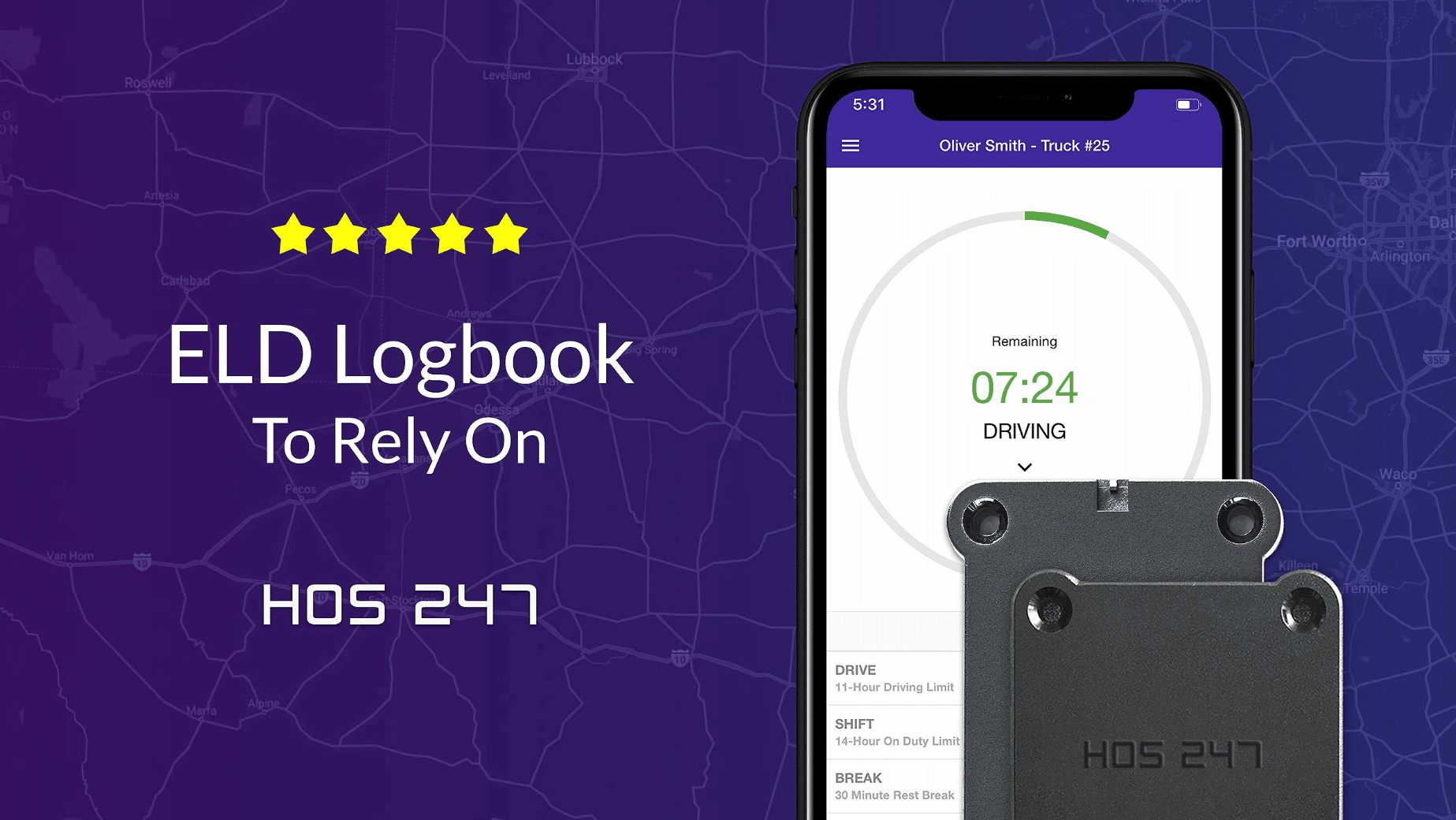
HOS247 ELD Benefits: Stability in a Volatile Market
In a market defined by revocations and regulatory uncertainty, HOS247 offers a foundation of stability. While “fly-by-night” brands are being delisted for technical failures, HOS247 remains a verified, top-rated provider on the FMCSA registry. We don’t just sell hardware; we provide an ecosystem designed to protect your operations.
FMCSA Compliance You Can Trust
Your compliance is only as good as the technology backing it.
- Vetted technology. Unlike white-label providers that resell generic, untested dongles, HOS247 utilizes industrial-grade hardware that has been rigorously tested to meet FMCSA technical specifications.
- Future-ready. Our system architecture is built to support advanced data transfer protocols, ensuring your fleet is prepared for the next generation of enforcement, including the eventual rollout of Level VIII wireless inspections.
Human Support Monday through Sunday
Regulations are confusing, and automated chatbots cannot explain the nuances of a split-sleeper berth.
- Real people. When you call HOS247, you speak to a human expert, not a machine.
- We speak your language. Our support team is available 7 days a week and speaks English, Spanish, Russian, and Polish. Whether you have a question about an edit or a connection issue at a weigh station, you can get clear answers in the language you are most comfortable with.
The Freedom of No Contracts
We believe a provider should earn your business every month, not lock you into it.
- Flexibility. In a volatile regulatory environment, signing a 3-year contract is a risk. HOS247 offers flexible month-to-month plans, putting the control back in your hands. You stay because the system works, not because you signed a piece of paper.
- One-year warranty. We stand behind our equipment. All HOS247 hardware comes with a one-year replacement warranty, giving you peace of mind against mechanical failures.
Operational Tools Beyond Compliance
Compliance is the baseline, but efficiency is the goal. HOS247 transforms your ELD into a fleet management tool.
- Intuitive interface. The driver app is designed with large buttons and simple workflows to minimize training time and log errors.
- Automated IFTA. The system automatically calculates mileage by jurisdiction, turning hours of fuel tax paperwork into a simple report.
- Real-time visibility. Integrated GPS tracking and vehicle diagnostics help you monitor fleet health and location without needing a separate subscription.
Choosing HOS247 means choosing a partner that is built for the long haul. By combining reliable hardware with flexible terms and expert support, we ensure that your technology is an asset to your business, not a liability.

Protocol for ELD Failures: The “8-Day” Rule
Even the best technology can encounter issues. If your ELD screen goes black or fails to sync with the engine, you must follow the FMCSA’s strict malfunction protocol immediately. Failing to do so can result in an “Out of Service” order even if your actual driving hours are legal.
Immediate Action (The 24-Hour Rule)
If you notice a malfunction, you cannot simply ignore it and hope it fixes itself.
- Driver responsibility. You must provide written notice to your carrier within 24 hours of the malfunction. A text message or email serves as proof of this notification.
- Reconstruct logs. You must immediately reconstruct your Record of Duty Status (RODS) for the current 24-hour period and the previous 7 consecutive days on paper logs, unless those records are already accessible on the device.
The 8-Day Repair Limit
The clock starts ticking the moment the malfunction is discovered.
- The rule. The motor carrier has exactly 8 days to repair, replace, or service the ELD. During this window, the driver is legally permitted to use paper logs.
- The cliff edge. On Day 9, if the device is not fixed, the driver is no longer compliant. Continuing to drive with paper logs after 8 days constitutes a violation unless an extension has been granted.
Requesting an Extension
If a replacement device is backordered or cannot be installed within 8 days, you must ask for permission to continue using paper logs.
- The process. The carrier must email the FMCSA Division Administrator for their state within 5 days of the malfunction.
- Required details. The email must include the carrier’s name, USDOT number, the specific reason for the delay, and proof that a “good faith effort” is being made to replace the unit. Do not wait until Day 8 to send this request.
Handling a malfunction correctly shows an inspector that you are a professional who knows the rules. Keep your paper logs neat, keep your malfunction notification documented, and ensure your carrier acts fast to get your electronic system back online.
Frequently Asked Questions About Truck Drivers ELD Rules in 2026
Is the pre-2000 engine exemption going away in 2026?
No, the exemption remains valid based on the engine model year (1999 or older). However, enforcement officers are now strictly verifying engine data plates to prevent VIN-swapping fraud. If your engine tag is missing or unreadable, you may be subject to a thorough inspection to prove your exemption status.
What do I do if my ELD provider is revoked?
If your device is removed from the FMCSA registry, you have a strict 60-day grace period to replace it. During this time, you must carry paper logs as a backup and proof of the revocation notice. Do not wait until day 59 to switch; finding a new provider and training your drivers takes time.
How do I request an official extension for a broken ELD?
If your ELD malfunctions and cannot be repaired within 8 days, you must email the FMCSA Division Administrator for your state within 5 days of the failure. Your request must include your carrier name, USDOT number, the specific error code, and a valid reason why the repair requires more time.
Are wireless (Level VIII) inspections legal now?
Yes, they are legal in specific operational test states and programs, but they are not yet a mandatory nationwide standard for every truck. However, the infrastructure is expanding rapidly along major freight corridors, making digital compliance essential for avoiding delays.
How does the new 2026 Broker Bond rule affect drivers?
As of January 2026, brokers must maintain $75,000 in available liquid assets (trusts or bonds) to ensure they can pay carriers. This rule reduces the risk of non-payment. When booking a load, you can now verify that the broker meets this higher financial standard, adding security to your revenue.
Can I use my US self-certified ELD in Canada?
No. Canada has a stricter standard requiring Third-Party Certification. A device that is legal in the US may be illegal in Canada if it hasn’t passed their specific testing. Always check the Transport Canada approved list before crossing the border.
Staying Informed
Regulations change, and relying on outdated information can lead to costly fines. Keeping up with these common questions ensures that you aren’t caught off guard by a rule nuance or a sudden enforcement blitz.

Secure Your Fleet’s Future with a Verified Partner
The rules of the road are evolving. 2026 is shaping up to be the year of “enforcement,” where non-compliant devices are being actively weeded out of the industry. The FMCSA has made it clear that simply having a screen in the cab is no longer enough; the data behind it must be accurate, transferable, and secure.
Rather than waiting to see if your current technology survives the next round of audits, take control of your compliance strategy now. Upgrading to a verified, stable system is the best way to protect your operating authority and avoid the stress of a forced transition.
Don’t gamble your business on a low-quality device that might be revoked next month. Switch to HOS247 for stability, multilingual support, and peace of mind. Contact us today to start your trial.
A Note to Our Readers on Compliance
This article is intended for informational and educational purposes only. It is not a substitute for official regulatory guidance or legal advice. HOS and ELD regulations are complex and subject to change and interpretation by enforcement officials. Please always refer to official sources for the most current and accurate information.

As an expert in B2B and B2C sales, I’ve dedicated myself to perfecting sales processes and client retention strategies in the logistics and trucking industry. I have significantly contributed to the expansion of the ELD service, catering to retail and wholesale clients in need of HOS247 ELD solutions. My unwavering commitment to implementing state-of-the-art sales techniques and technologies ensures the continuous growth and success of businesses I work with.










The transportation industry has evolved since the implementation of ELDs. Electronic logging devices for truckers are intended to improve road safety by ensuring compliance with HOS rules. However, finding a quality ELD that meets FMCSA standards might be challenging. The
Hours of service records have been a part of truckers’ jobs for many years. Since HOS rules became law and up until the ELD mandate was passed, paper logs were the way to keep records of duty status. Drivers would

In today’s highly competitive business environment, fleet managers face numerous challenges in ensuring the efficiency, profitability, and compliance of their operations. From managing driver hours and vehicle maintenance to optimizing routes and controlling fuel costs, the tasks associated with running