
Gain Full Control Over Your Fleet with GPS Tracking
The benefits of utilizing GPS devices go beyond just improved tracking capabilities. They also offer financial savings and increased efficiency and organization for fleet management. Let’s explore the advantages:
Fuel Cost Reduction
One significant advantage of incorporating truck monitoring devices is the potential to reduce fuel costs significantly. For fleet owners, cutting down on fuel expenses translates to substantial long-term profits. Telematics solutions, often integrated into these devices, provide crucial information about a truck’s speed and idling duration. Armed with this data, fleet owners can promptly take action to minimize fuel waste, ensuring that every drop of fuel is utilized efficiently.
Empowering Responsible Driving Behavior
Telematics software integrated into GPS devices also allows fleet owners to monitor driver behavior closely. Instances of excessive speeding and extended idling can result in costly repercussions, affecting both finances and safety. Tracking devices provide valuable data, including idle times and average driver speeds, enabling fleet owners to enforce driving policies and regulations. By discouraging unruly behavior and promoting responsible driving practices, fleet owners can improve overall driver behavior, leading to increased productivity and safety.
Enhancing Fleet Efficiency And Organization
Beyond fuel cost reduction and responsible driving, GPS devices contribute to increased efficiency and organization in fleet management. With real-time tracking capabilities, fleet managers can gain complete visibility of their vehicles’ locations, allowing for better route planning and optimized dispatching. As a result, fuel usage is reduced, truck mileage is minimized, and efficiency is maximized.
Lowering Insurance Premiums Through Data Transparency
The most direct path to reducing overhead is through the effective use of safety data. Modern insurance underwriters have shifted away from generalized statistics and now prioritize “Safety Scorecards” generated by GPS tracking systems. By sharing these verified reports — which highlight low instances of harsh braking, speeding, and aggressive cornering — carriers can negotiate significant discounts on their commercial premiums. Many providers now offer telematics-based rebates ranging from 10% to 15%, as the data proves the fleet is a lower risk for accidents and claims. This transparency not only lowers your immediate costs but also creates a “defensive shield” for your business in the event of disputed claims.
Maintenance as a Competitive Advantage
A reliable GPS fleet tracking system transforms maintenance from an unpredictable expense into a strategic advantage. Instead of waiting for a breakdown or relying on manual paper logs, fleet managers use real-time “odometer pings” to automate service schedules. This shift from reactive repairs to proactive scheduling ensures that oil changes, brake inspections, and tire rotations happen at the precise mileage intervals required. By catching minor mechanical issues before they escalate, you can virtually eliminate the risk of “Out-of-Service” (OOS) orders during roadside DOT inspections. Keeping your equipment in top shape doesn’t just prevent costly downtime; it preserves your reputation for reliability with shippers and brokers who demand on-time performance.
With GPS technology, fleet owners can navigate the path to long-term profitability and success while ensuring safer and more productive journeys for their drivers.
The Financial Case: Calculating ROI for Small Carriers
For a small carrier or owner-operator, every investment must be justified by its impact on the bottom line. While the initial cost of hardware and monthly subscriptions is often a primary concern, the real value of a GPS tracking system is found in its Return on Investment (ROI). When implemented correctly, these systems move from being a “cost center” to a “profit generator.”
The “Payback” Period
Most small businesses find that a reliable GPS tracking device for trucks can pay for itself within the first six months of operation. This rapid “payback” is generally driven by two major factors: fuel efficiency and labor optimization.
- Fuel savings. By identifying and reducing unnecessary idling and unauthorized out-of-route miles, carriers often see a noticeable drop in monthly fuel spend. In an industry where fuel is one of the largest variable expenses, saving even a small percentage per mile can cover the cost of the tracking subscription many times over.
- Labor and dispatch efficiency. Real-time visibility eliminates the need for frequent “check-calls,” allowing dispatchers and drivers to focus on moving freight rather than answering status updates. This leads to more efficient scheduling and the potential to fit more loads into the same workable hours.
Note: Individual results will vary based on fleet size, typical routes, and current management practices; however, the trend toward increased efficiency is a common outcome for modern fleets.
Hidden Cost Savings: The Value of “Exoneration”
Beyond the obvious savings on the fuel bill, there is a significant “hidden” financial benefit to GPS tracking: driver exoneration. In the event of an accident, a cargo dispute, or a claim of late delivery, “GPS breadcrumbs” provide an indisputable digital record of the vehicle’s location, speed, and status.
- Dispute resolution. If a shipper claims a driver was late, but the GPS data proves the truck was at the gate on time, the carrier is protected from unfair detention or late fees.
- Accident protection. In many roadside incidents, commercial drivers are unfairly blamed. Having hard data that proves a truck was traveling at the speed limit and in its proper lane can save a small carrier from massive legal fees and devastating insurance hikes. In this sense, the tracking system acts as a digital witness that provides peace of mind and financial protection.
Ultimately, calculating the ROI of a tracking system requires looking beyond the monthly subscription fee to the total protection of the business. By combining measurable reductions in fuel waste with the security of digital exoneration, small carriers can stabilize their cash flow and protect themselves from unpredictable legal and operational risks. Investing in this level of visibility helps your fleet move freight with a level of precision that protects every dollar earned on the road.
Benefits of HOS247 4G GPS Tracking System
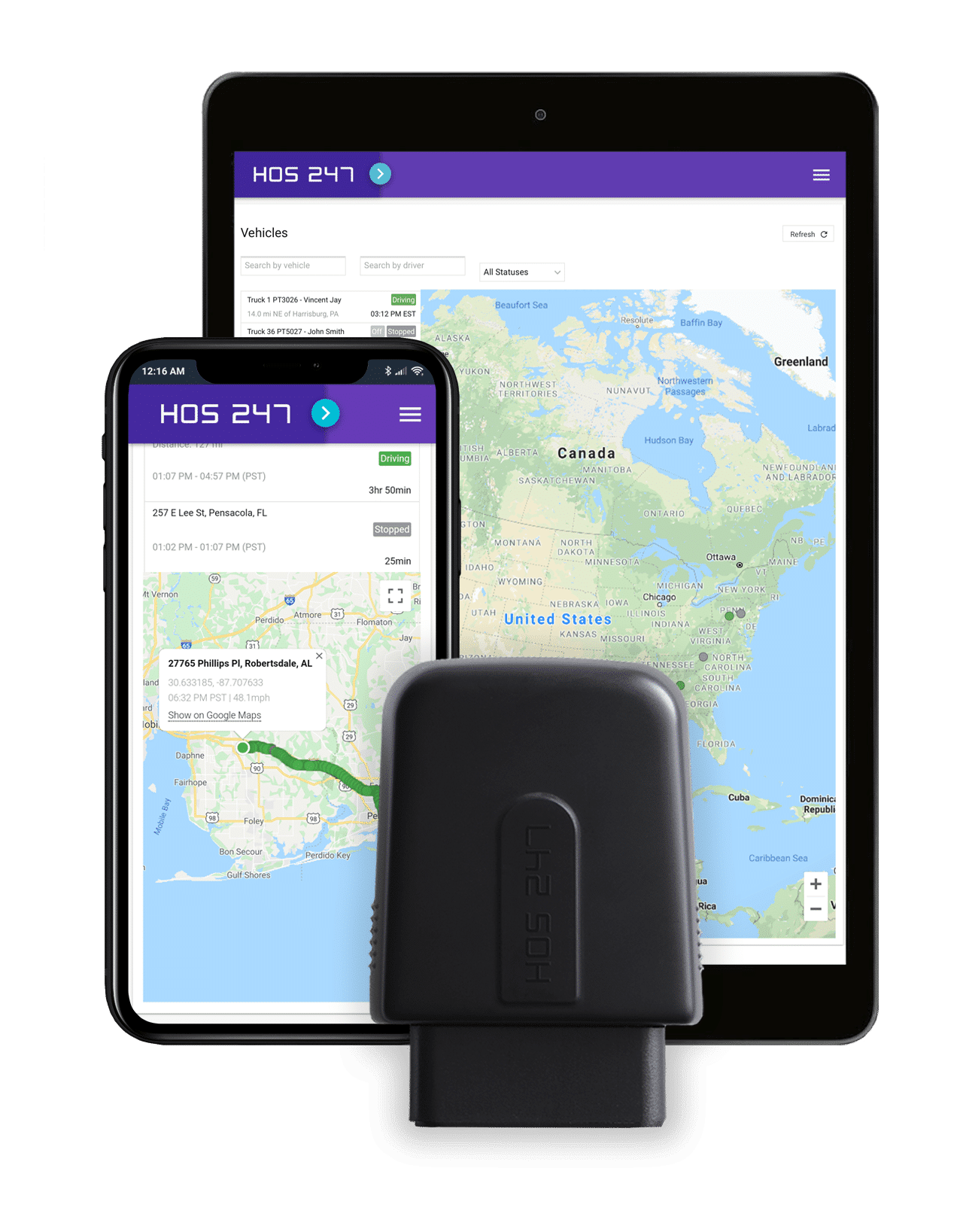
With a proven track record, HOS247 has tailored its 4G GPS tracking system to cater to the unique needs of truckers, delivering maximum value to businesses. Let’s explore the outstanding advantages that the HOS247 4G GPS tracking system brings to your fleet:
- Cost savings. The GPS device for trucks offers advanced digital tools such as idle reporting and vehicle diagnostics that empower businesses to significantly reduce fuel wastage and maintenance costs. Through efficient monitoring and analysis of vehicle performance, these features enable timely identification and resolution of issues like excessive idling and maintenance needs. The outcome is substantial cost savings as companies optimize fuel usage, enhance operational efficiency, and proactively manage maintenance requirements.
- Increased security. With HOS247 truck tracking devices, maximum security for the fleet can be enhanced while the drivers are on the road. Our real-time tracking system enables fleet managers to monitor vehicle locations and identify unauthorized movements promptly. Additionally, regular vehicle maintenance and inspections help identify security vulnerabilities and address them proactively.
- Easy access and simple installation. With our web-based fleet manager portal, accessing and utilizing the HOS247 tracking software couldn’t be easier. Simply log in to the portal using a standard internet browser, and you’re ready to go. No complex installations or additional hardware required.
- Stable connectivity. The HOS247 4G GPS Tracking System offers enhanced 4G connectivity, enabling fleet owners to maintain complete visibility of their fleet and receive real-time updates on truck drivers, even in remote areas.
From maximizing security to reducing costs, the HOS247 4G GPS Tracking System offers a wide range of benefits for fleet owners, helping to enhance fleet efficiency and streamline operations. In the next section, we will explore the various types of trackers offered by HOS247.
About HOS247 Truck Tracking Devices
To address the specific business needs of truckers, the HOS247 tracking system offers ELD-integrated and hardwired GPS trackers with a battery. Each type operates differently but provides crucial vehicle location information. Let’s delve into these distinctions in detail:
- The ELD-integrated tracker is a plug-and-play device that seamlessly connects to the vehicle’s port and reports its location when activated. Integration with an ELD enhances compliance with the ELD mandate, enabling drivers to avoid HOS violations, costly fines, and maintain low CSA scores.
- The 24/7 monitoring tracker, equipped with a separate battery, ensures the collection and transmission of real-time GPS data even when the vehicle is turned off. This feature provides enhanced security for business owners looking to protect their vehicles. The GPS tracking units for trucks can be discreetly concealed inside the vehicles, allowing motor carriers to track and recover them in case of theft. Installation is simple and can be carried out by the driver without the need for a specialist.
The HOS247 tracking system is designed to collect GPS coordinates at intervals between 30 seconds and 2 minutes, providing accurate vehicle data independently of the driver information. With HOS247 tracking devices, you can choose the right solution for your specific tracking requirements, whether it’s ELD integration for compliance or enhanced security and peace of mind.
Asset Tracking vs. Vehicle Tracking: Maximizing Productivity
Comprehensive fleet management requires a dedicated strategy for monitoring “unpowered” equipment like trailers, flatbeds, and specialized containers. While vehicle tracking focuses on the tractor and the driver’s movement, asset tracking addresses the equipment that often represents a significant, yet underutilized, capital investment. Equipping trailers with independent, battery-powered trackers prevents these assets from sitting idle or becoming “lost” at a shipper’s yard.
This visibility ensures every piece of equipment contributes to revenue. Fleet managers use this data to execute faster trailer swaps and maintain accurate inventory across multiple locations. Precise tracking of unpowered units eliminates the productivity gaps that occur when assets are left stagnant in remote drop-lots. By monitoring both the tractor and the trailer, carriers optimize their entire inventory and ensure no equipment remains unproductive.
How GPS Tracking Works (Simple Technical Breakdown)
Understanding the technology behind your tracking system helps you maximize its utility. Modern fleet management relies on a reliable and fast data chain to provide the visibility required in today’s market.
The Data Chain: From Road to Cloud
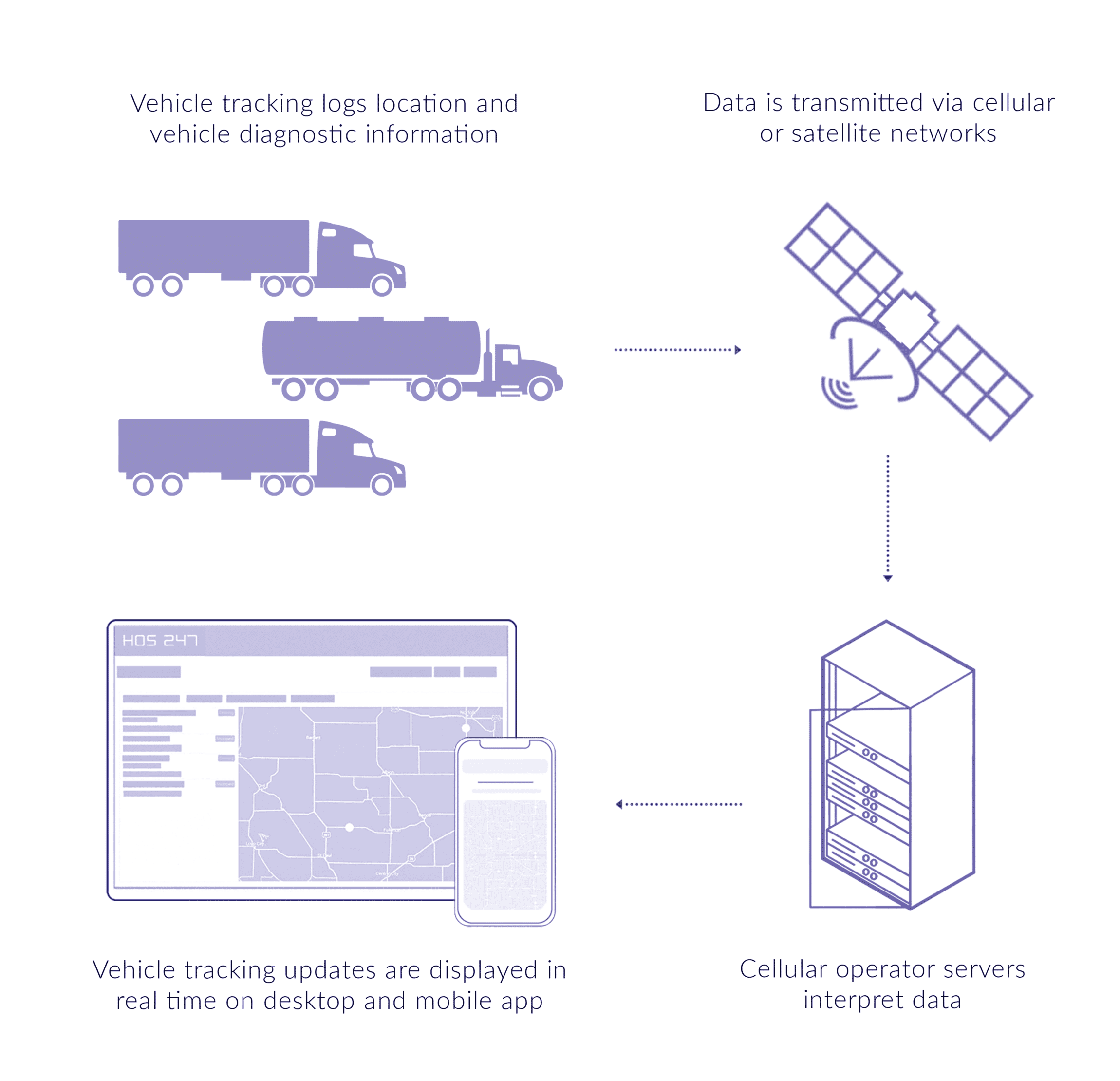
The tracking process follows a streamlined relay that operates in real-time. First, the GPS tracker in the truck receives signals from satellites to determine exact coordinates, speed, and direction. The device then transmits this data via 4G/LTE cellular networks to a secure cloud server. This server processes the raw information and sends it directly to the fleet manager’s web portal or mobile phone. This entire sequence happens in seconds, ensuring the location you see on your screen matches the truck’s actual position on the road.
Update Frequency: Choosing the Right Ping Rate
The frequency at which a device “pings” its location—known as the update interval—affects how you manage your operations.
- 30-second pings. These are essential for local delivery and urban “last-mile” operations. Frequent updates allow dispatchers to provide precise ETAs to customers and navigate trucks through fast-changing city traffic.
- 2-minute pings. This interval is generally sufficient for long-haul carriers operating on interstate highways. It provides enough detail to monitor progress and safety without generating excessive, unnecessary data points over a 500-mile stretch.
Selecting the correct update frequency ensures you have the right level of detail for your specific business model.

ELD Integration for Compliance and Enhanced Security
At HOS247, we are dedicated to providing top-of-the-line fleet management solutions that empower businesses to optimize their operations and ensure compliance with regulations. As part of our comprehensive offerings, we provide electronic logging devices to cater to the needs of commercial vehicle drivers subject to the ELD mandate. Carriers choose our services, including our trackers and electronic logbook, due to our customer care policies:
- Reliability. We prioritize delivering an efficient and seamless service, allowing you to focus on your core business functions with confidence.
- Flexibility. Choose from our flexible subscription plans with no long-term contracts, offering the freedom to scale up, down, or cancel as needed, whether on a monthly or yearly basis.
- Multilingual technical support. Our experts are available seven days a week to provide assistance with troubleshooting, compliance inquiries, and optimizing device usage.
- One-year hardware replacement warranty. We stand behind our products, offering a one-year warranty for hardware replacements, ensuring your satisfaction and peace of mind.
- Two-week trial and demos. Before committing, take advantage of our two-week trial and demos to ensure our products are the right fit for your business needs. Experience the difference with HOS247 and unlock the full potential of our innovative solutions to streamline your fleet management and compliance.
Avoiding the “Contract Trap”
Small businesses should prioritize operational flexibility when selecting an ELD and GPS provider. Many “enterprise” solutions in the industry require 36-month contracts that restrict a carrier’s ability to pivot or scale. These long-term commitments often become a “contract trap,” forcing small fleets to pay for equipment or services that may no longer fit their needs two years down the line. Prioritizing month-to-month or annual flexibility allows a business to grow at its own pace. This approach ensures you only pay for active vehicles and provides the freedom to adjust your service level as your fleet expands or contracts. By avoiding rigid long-term agreements, small carriers maintain control over their overhead and ensure their technology partner keeps providing high-quality service every month.
What Is the Carrier’s Responsibility in Ensuring That They Are Using DOT-Approved Electronic Logging Devices?
Ensuring the use of DOT-approved truck tracking devices is a critical responsibility that every motor carrier must diligently uphold. Under the purview of the Federal Motor Carrier Safety Administration (FMCSA), carriers are mandated to ensure that their electronic logging devices (ELDs) are registered and compliant with the prescribed regulations.
To fulfill this responsibility, carriers must regularly inspect the FMCSA’s registration and revocation lists to verify that their chosen ELDs remain on the approved list. This thorough checking process is essential because any removal of an ELD from the approved list triggers immediate notification from the FMCSA to both the affected users and the general public. By vigilantly adhering to these guidelines, carriers can be confident in their electronic logbook, ensuring their compliance with regulations and contributing to safer and more efficient operations within the trucking industry.

Implementation Guide: A 5-Step Checklist for Small Teams
Transitioning to a new tracking system is a structured process. Following this five-step checklist helps small teams implement the technology without disrupting their daily operations.
- Define internal policy. Draft a clear document outlining how the tracking data will be used. Focus on safety, efficiency, and fuel savings to ensure transparency with your team.
- Hardware installation. Perform the physical install during scheduled downtime. Whether using plug-and-play ELD-integrated units or hardwired trackers, verify that each device has a clear signal before the truck leaves the yard.
- Portal setup. Configure your web-based manager portal. Set up geofences around frequent delivery locations and establish automated alerts for excessive idling or speeding.
- Driver onboarding. Introduce the drivers to the mobile app and the benefits of the system. Demonstrate how the technology protects them through exoneration data and simplified communication.
- First monthly data review. After 30 days, review the initial reports. Use this data to identify your top fuel-saving opportunities and recognize drivers who consistently follow safety protocols.

Scaling Your Business with Confidence
The advancements in GPS technology and truck tracking devices offer a clear path for carriers to drive their operations to new heights. By utilizing the power of real-time visibility, businesses can navigate the complexities of modern logistics with precision. HOS247 serves as a dedicated partner in this journey, providing the reliable hardware and flexible service plans required to maintain long-term profitability.
As the trucking industry continues to evolve, HOS247 remains the proven choice for carriers who value reliability and simplicity. Our 4G/LTE systems provide the stable connectivity needed to scale your business with confidence, regardless of how the regulatory environment changes. By combining FMCSA-approved logging with advanced asset tracking, HOS247 ensures your fleet is prepared for the demands of tomorrow. Experience the difference of a system designed to keep your trucks moving and your business growing.

As an expert in B2B and B2C sales, I’ve dedicated myself to perfecting sales processes and client retention strategies in the logistics and trucking industry. I have significantly contributed to the expansion of the ELD service, catering to retail and wholesale clients in need of HOS247 ELD solutions. My unwavering commitment to implementing state-of-the-art sales techniques and technologies ensures the continuous growth and success of businesses I work with.








Now that truckers and commercial motor vehicle (CMV) drivers have had time to become acclimated with the ELD Mandate, there’s no excuse for not complying with its regulations. Without a compliant electronic logging device, drivers risk being fined, placed out

In today’s fast-paced business world, managing a commercial fleet can be challenging, but it doesn’t have to be. With the help of fleet management systems, carriers can enjoy various benefits, such as reducing fuel costs, enhancing driver safety, providing better

Running a successful commercial motor carrier operation comes down to maintaining operational momentum, but keeping your wheels turning requires strict adherence to federal safety regulations. Meeting standard truck driver log book requirements is a legal necessity designed to keep drivers