
Regulatory Compliance: Do Box Trucks Need ELDs?
One of the most dangerous misconceptions in the industry is assuming that because a driver lacks a commercial driver’s license (CDL), an ELD is not needed. This is false. The ELD mandate is primarily tied to the weight of the vehicle and the type of commerce, not the license type.
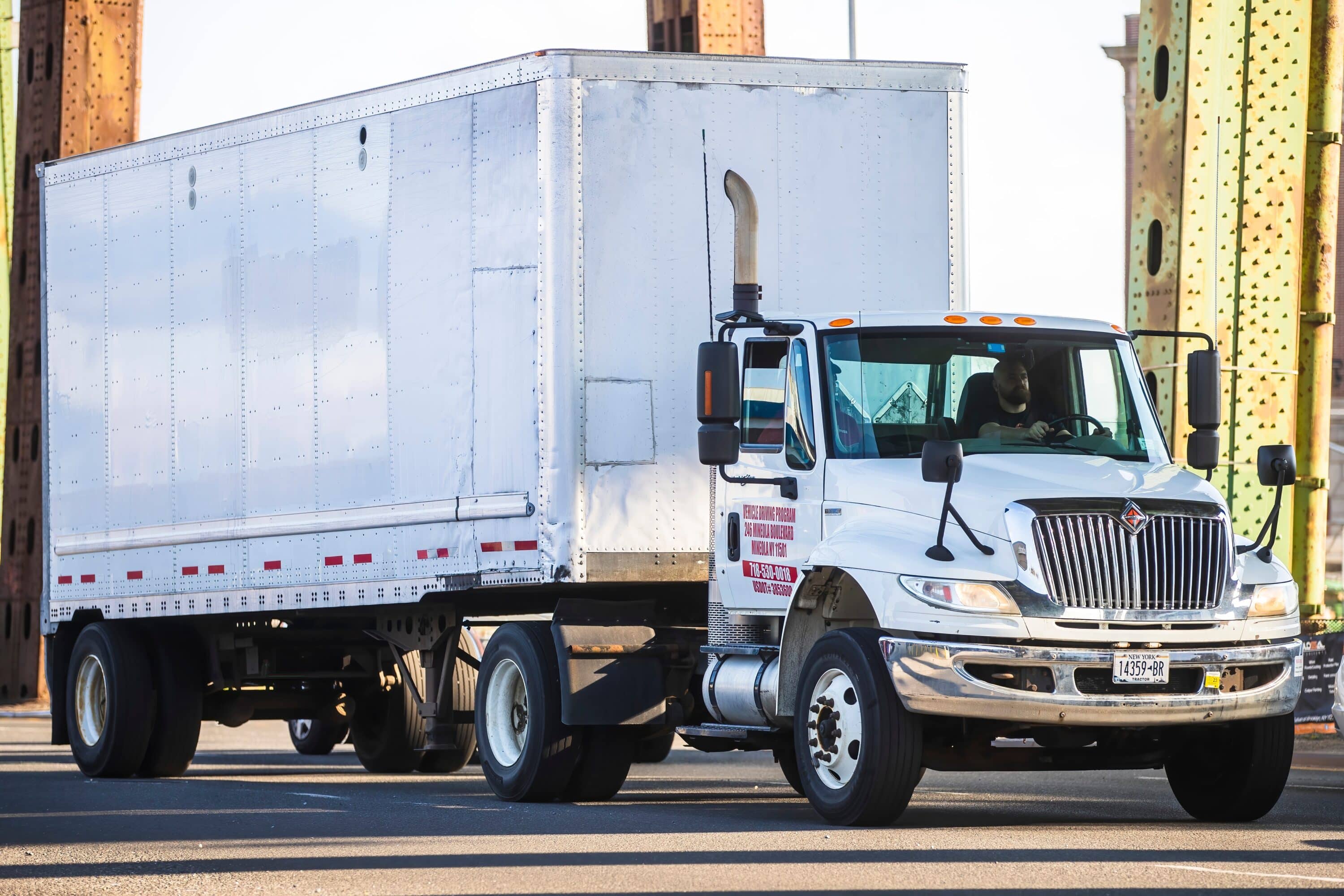
To determine if a box truck requires an ELD, check these three critical criteria:
- The “10,001 lb rule” (interstate). If the vehicle travels across state lines (Interstate Commerce) and has a Gross Vehicle Weight Rating (GVWR) OR Gross Combination Weight Rating (GCWR) of 10,001 lbs or more, an ELD is generally required.
- Note: Regulations apply to “whichever is greater”—the manufacturer’s rating (GVWR) or the actual weight. Even if operating an empty 12,000 lb GVWR truck that currently weighs only 8,000 lbs, the mandate still applies because the rating exceeds the limit.
- Intrastate nuances (staying local). If the fleet never leaves the home state (Intrastate Commerce), the rules depend entirely on state laws. This creates confusion for fleets operating in multiple regions:
- California. Strict alignment with federal rules. For intrastate operations in CA with a vehicle >10,001 lbs GVWR, an ELD is likely required.
- Texas & Florida. These states often have higher thresholds for purely intrastate drivers, typically triggering HOS/ELD compliance only at 26,001 lbs GVWR.
- Action: Verification of the “Intrastate adoption of FMCSRs” for the specific state is essential.
- The rental trap. Short-term rentals (8 days or less) are generally exempt from ELD use. However, renting a substitute box truck for longer than 8 days requires installing an ELD or using a portable one.
Non-CDL Drivers Are Not Exempt
A driver operating a 16,000 lb box truck (like a standard 16-foot moving truck) does not need a CDL, but following Hours of Service (HOS) rules is required if crossing state lines. If the operation does not qualify for the Short-Haul exemption (discussed in the next section), using a compliant device is mandatory.
Understanding Exemptions: The 150 Air-Mile Radius
Many box truck operators fall under the “Short-Haul Exemption,” enabling them to bypass the requirement for an ELD. However, failing to strictly adhere to the conditions of this exemption is a leading cause of violations.
To qualify for the short-haul exemption and operate without an ELD, a driver must meet all of the following criteria:
- Radius limit. The driver must operate within a 150 air-mile radius of their normal work reporting location.
- Daily return. The driver must report back to the same work location and be released from work within 14 consecutive hours.
- Time records. The carrier must maintain time records (time cards) showing the start time, end time, and total on-duty hours for each day.
Why Use an ELD Device for Box Trucks if Exempt?
Even if a fleet qualifies for the exemption, installing an ELD device for box trucks is often a strategic choice. The exemption is fragile; exceeding the 150-mile radius or working past the 14-hour limit by even 15 minutes requires the driver to complete a standard log for that day. If the driver does not have a paper logbook handy or makes a mistake, they face a violation. Using an ELD provides a “safety net,” automatically switching to compliant logging if the driver unexpectedly exceeds the short-haul limits.

Key Features of the ELD for Box Trucks
Selecting the right device for a medium-duty fleet differs from outfitting long-haul Class 8 tractors. Box trucks typically run local routes with frequent stops, requiring specific hardware and software capabilities.
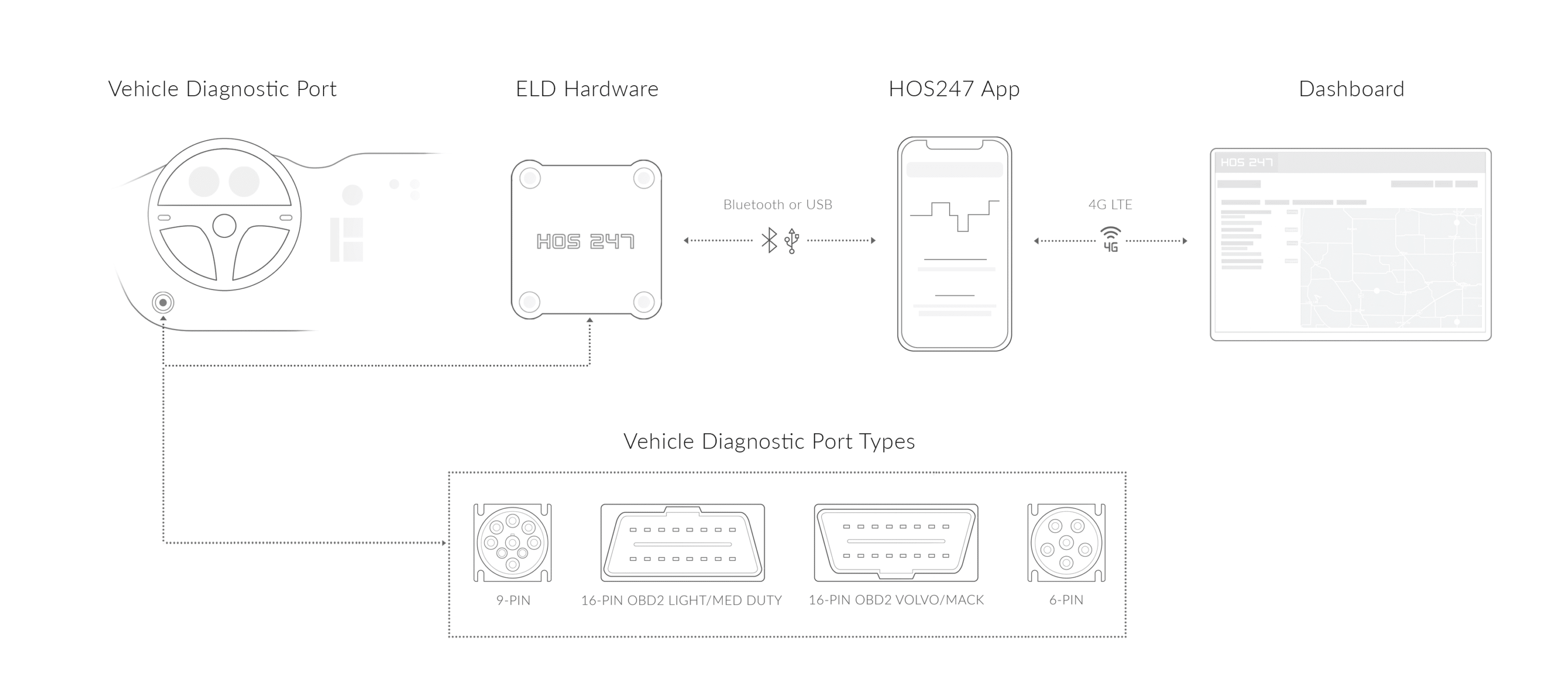
- Connector compatibility (OBDII vs. J-Bus). This is the most critical technical specification. While semi-trucks typically use 9-pin (J1939) connectors, many box trucks (especially Ford, GMC, and Isuzu models) utilize OBDII ports similar to passenger cars. The best ELDs for box trucks must offer the correct cable sets to ensure a secure connection to the Engine Control Module (ECM) without needing aftermarket adapters that can vibrate loose.
- Durability for frequent stops. Unlike long-haul trucks that drive for hours at a time, delivery box trucks may stop 20 times a day. The hardware must be robust enough to handle frequent ignition cycles without losing connectivity or rebooting constantly.
- Real-time GPS for dispatch. Since box trucks often handle local deliveries, dispatchers need real-time visibility to optimize routes and update customers. An integrated system combining HOS compliance with GPS tracking eliminates the need for separate telematics hardware.
- Intuitive driver interface. Many box truck drivers are not long-haul veterans accustomed to complex logbooks. The software interface must be simple, requiring minimal training to manage duty statuses and vehicle inspections (DVIRs).
- Vehicle diagnostics. Breakdown prevention is vital for local delivery schedules. A system that monitors engine fault codes allows fleet managers to address maintenance issues before a truck is stuck on the side of the road with a full load of cargo.
Ultimately, the goal is to find a system that fits your vehicles. By prioritizing compatible hardware and features that streamline operations, the ELD becomes a valuable asset rather than a daily obstacle for drivers.
Operational Benefits Beyond Compliance
While the federal mandate drives the initial adoption of ELDs, smart fleet managers quickly realize that these devices offer far more than just a digital logbook. When viewed as a fleet management tool rather than an obligation, an ELD for box trucks becomes a key asset for efficiency and profitability.
- Slash administrative paperwork. The most immediate impact is the elimination of physical paper logs. Drivers no longer need to spend 15 minutes a day drawing lines on a grid, and safety managers don’t have to waste hours auditing messy handwriting for errors.
- Protect your CSA scores. In the world of trucking, your Safety Measurement System (SMS) score is your reputation. Paper logs are prone to “form and manner” errors — simple mistakes like forgetting a signature or date — that officers love to cite. An ELD automates this, ensuring logs are clean, legible, and compliant, which protects your fleet from unnecessary violations and keeps your safety score healthy.
- Automate fuel tax reporting. For interstate box trucks, quarterly IFTA reporting is a massive headache involving mileage tracking by jurisdiction. A modern ELD automatically calculates miles driven in each state, simplifying tax reporting.
- Lower insurance premiums. Insurance providers love data. Many carriers offer discounts to fleets that utilize monitored telematics because it proves a commitment to safety. By using an ELD to monitor critical events like hard braking or speeding, you can demonstrate a proactive safety culture that may help negotiate lower premiums.
Viewing the ELD mandate as an opportunity rather than a burden allows fleets to unlock significant operational improvements. By leveraging these automated features, box truck operators can modernize their workflow, reduce administrative overhead, and turn a federal requirement into a genuine competitive advantage for their business.

HOS247 ELD: A Superior Solution for Box Truck Fleets
For box truck operators, finding an ELD provider that understands the nuances of medium-duty trucking is rare. Most systems are over-complicated and built solely for long-haul semi-trucks. HOS247 has established itself as a top-tier partner for box truck fleets by focusing on reliability, simplicity, and flexibility.
- Top-rated multilingual support. When a driver is stuck at a roadside inspection, they need help immediately, not a “submit a ticket” button. HOS247 offers an expert support team available every day of the week. Uniquely, they provide support in English, Spanish, Polish, and Russian, ensuring that drivers can get clear, technical assistance in their native language.
- Reliability & connectivity. Box trucks endure frequent stops and starts, which can wreak havoc on lesser hardware. HOS247 uses robust, hardwired-style locking connectors that maintain a stable Bluetooth connection to the driver’s tablet or phone. This stability is crucial for avoiding the dreaded “data transfer failed” error during DOT inspections.
- User-friendly interface. The HOS247 app is designed for simplicity. It features a clean, intuitive interface that allows drivers to change duty status, perform DVIRs, and certify logs in seconds. This ease of use reduces training time and frustration for drivers who may be less tech-savvy.
- No-contract flexibility. The box truck industry can be seasonal and volatile. Unlike competitors that lock fleets into 3-to-5-year contracts, HOS247 operates on a flexible, no-contract basis. You can scale your fleet up or down as needed, ensuring you only pay for the active trucks you have on the road.
- Comprehensive fleet portal. Beyond just logs, the HOS247 web portal gives dispatchers a bird’s-eye view of the operation. You can track vehicle locations in real-time, monitor engine health with diagnostic fault codes, and automatically calculate IFTA miles all from a single dashboard.
By combining this flexible business model with reliable hardware and support, HOS247 provides a solution that actually fits the operational reality of box truck fleets. It removes the friction from compliance, allowing managers and drivers to focus on deliveries rather than troubleshooting their technology.
Installation and Maintenance Guide
Proper installation is the single most important factor in preventing technical malfunctions on the road. For box trucks, this process is slightly different than for heavy-duty tractors due to the variety of diagnostic ports used by manufacturers.
- Locate the diagnostic port. In many medium-duty box trucks (like Isuzu NPRs, Ford F-Series, or GMC Savanas), the port is often a rectangular OBDII connector located under the dashboard near the steering column, similar to a passenger car. However, larger Freightliner or International box trucks may use the round 6-pin or 9-pin (J1939) ports found in semi-trucks. Identifying the correct port type before ordering is critical.
- Secure the device. Box trucks often operate on city streets with potholes and frequent stops. A loose device is the primary cause of “power compliance” malfunctions. Once plugged in, ensure the device is secured tightly with zip ties or mounting tape so it cannot wiggle loose due to vibration.
- Routine maintenance. Hardware requires very little maintenance, but cables should be checked during routine vehicle service to ensure they haven’t been kicked or frayed. Additionally, always keep the ELD app updated on the driver’s phone or tablet to ensure you have the latest features and compliance patches.
Taking ten minutes to install the device correctly and securing it against vibration can save hours of frustration during a roadside inspection. A solid physical connection ensures the data keeps flowing, keeping the truck compliant and on the road.
Frequently Asked Questions
Here are quick answers to the most common questions regarding ELD for box trucks.
Does a rental box truck need an ELD?
Generally, no, if the rental is for 8 days or less. The FMCSA provides an exemption for short-term rental trucks. However, if the rental exceeds 8 days, you must install an ELD or use a portable compliant device.
What happens if a driver exceeds the 150 air-mile radius?
If a driver operates outside the 150 air-mile radius or exceeds the 14-hour duty limit, they lose the short-haul exemption for that day. They must immediately start using an ELD (or a paper log if the truck is older/exempt) to record their Hours of Service for that specific day.
Is an ELD required for a box truck under 26,000 lbs?
Yes, often. The requirement is not based on the CDL weight threshold (26,001 lbs). If the vehicle is used in interstate commerce and has a GVWR of 10,001 lbs or more, an ELD is required unless another exemption (like the short-haul rule) applies.
Can I use a smartphone as an ELD?
Yes, but not on its own. You can use a smartphone or tablet as the display if it is connected via Bluetooth to an FMCSA-registered hardware device plugged into the truck’s engine. A phone app by itself without the engine connection is not compliant.
These answers cover the basics, but regulations can vary by state and specific operation type. Always verify your specific status to ensure you aren’t risking unnecessary fines.
Conclusion
Navigating the rules for an ELD for box trucks can initially seem complex, especially with the specific weight thresholds and the nuances of the short-haul exemption. However, understanding these regulations is the key to running a compliant, efficient, and profitable fleet.
Whether a fleet runs interstate routes requiring full logging or operates locally under exemptions, the right technology serves as a vital safeguard. Investing in a reliable ELD device does more than simply satisfy a federal mandate; it modernizes operations, protects safety scores, and eliminates the guesswork and storage associated with manual paperwork.
Choosing a partner like HOS247 ensures that this transition is smooth and beneficial. By prioritizing reliable hardware, intuitive software, and accessible support, fleet managers can turn compliance into a seamless part of their daily routine. The right system allows drivers to focus on the road and businesses to focus on growth, secure in the knowledge that their compliance is handled by a dependable solution.

I’ve co-founded, built and managed several transportation-related businesses. Now, I’m a founder and CEO of HOS247 – an AI Transportation Platform for trucking companies, freight brokers and other logistics operations. We are transitioning old-style operations to technology-advanced logistics entities and help them to grow their businesses. ELDs (electronic logging devices), fleet tracking and management 2.0 combined with AI-powered dispatch tools.










Since the ELD mandate was enforced in the US, it has led to confusion among carrier companies and truck drivers. More than the urgency to switch to an electronic logging system, carriers are now looking for a versatile device that

It is 6:00 PM, the logbook shows 10.5 hours of driving, and the destination is still 40 miles away. Every professional driver knows this scenario. It is the moment where understanding the rules becomes critical for protecting a safety rating

Truck drivers are now required to use ELD log books. These devices collect data such as truck movements with GPS locations, miles driven, and engine hours to prevent drivers from exceeding the hours of service limits. Federal Motor Carrier Safety