
What Is a Clean Truck Check Certificate?
A Clean Truck Check compliance certificate is the digital record that CARB generates automatically in its online portal. CARB creates this record once a vehicle passes a certified emissions test, as long as the owner has no open violations. Fleet owners do not apply for or fill out this document by hand.
CARB issues the same certificate whether a truck tests at a traditional shop, uses a mobile tester, or uses a continuously connected telematics device that sends engine data automatically to bypass shop service visits entirely. This digital record proves the vehicle is compliant. State agencies check for a compliant status during roadside inspections, audits, and registration renewals.
The certificate is not permanent. CARB ties the document to a specific testing cycle, meaning it expires once that window closes. To stay compliant, fleets must get a new certificate each testing period by submitting a passing test and paying the annual fee.
Vehicles Subject to Clean Truck Check Certification
Understanding jurisdiction rules prevents gate denials and operational delays across California. The Clean Truck Check program applies to non-gasoline medium- and heavy-duty vehicles with a Gross Vehicle Weight Rating (GVWR) over 14,000 pounds. This includes diesel, alternative-fuel, and hybrid trucks.
Out-of-state trucks operating within California must also comply with these standards. Jurisdiction depends entirely on where the vehicle operates, not where it is registered. Out-of-state trucks must hold a valid certificate to run legally on California roads.
State agencies and facility operators verify compliance through four main enforcement channels:
- DMV registration renewals. California-registered trucks face immediate registration holds if they lack a valid compliant status in the state database. The DMV will block license renewals until the fleet resolves the missing records.
- Port and rail yard access. Marine terminals and rail hubs check the CARB database automatically at their entry gates. Non-compliant trucks are turned away immediately, leading to missed delivery windows and cargo delays.
- Roadside inspections. State inspectors scan truck VINs and license plates at weigh stations to verify compliance status on the spot. Operating a truck with an expired certificate results in immediate citations.
- Fleet audits. State auditors regularly review a carrier’s full certificate history during routine safety and environmental reviews. Missing historic records can trigger broader fleet-wide penalties.
CARB follows a specific process to issue these digital certificates. Because these checkpoints enforce the rules strictly, fleets must know how to get and maintain their compliant status.
How to Get a Clean Truck Check Certificate
CARB generates digital Clean Truck Check certificates directly in the system portal when a vehicle satisfies three core program requirements:
- Initial account registration. Owners must report the vehicle in CARB’s CTC-VIS online portal when joining the program.
- Annual compliance fee payment. Fleet managers must pay the mandatory compliance fee for each registered truck once per year. CARB will not issue a certificate without this payment, even if a vehicle submits a passing emissions test.
- Passing emissions test submission. The vehicle must undergo an emissions check on its assigned state schedule and submit a passing result to the state database.
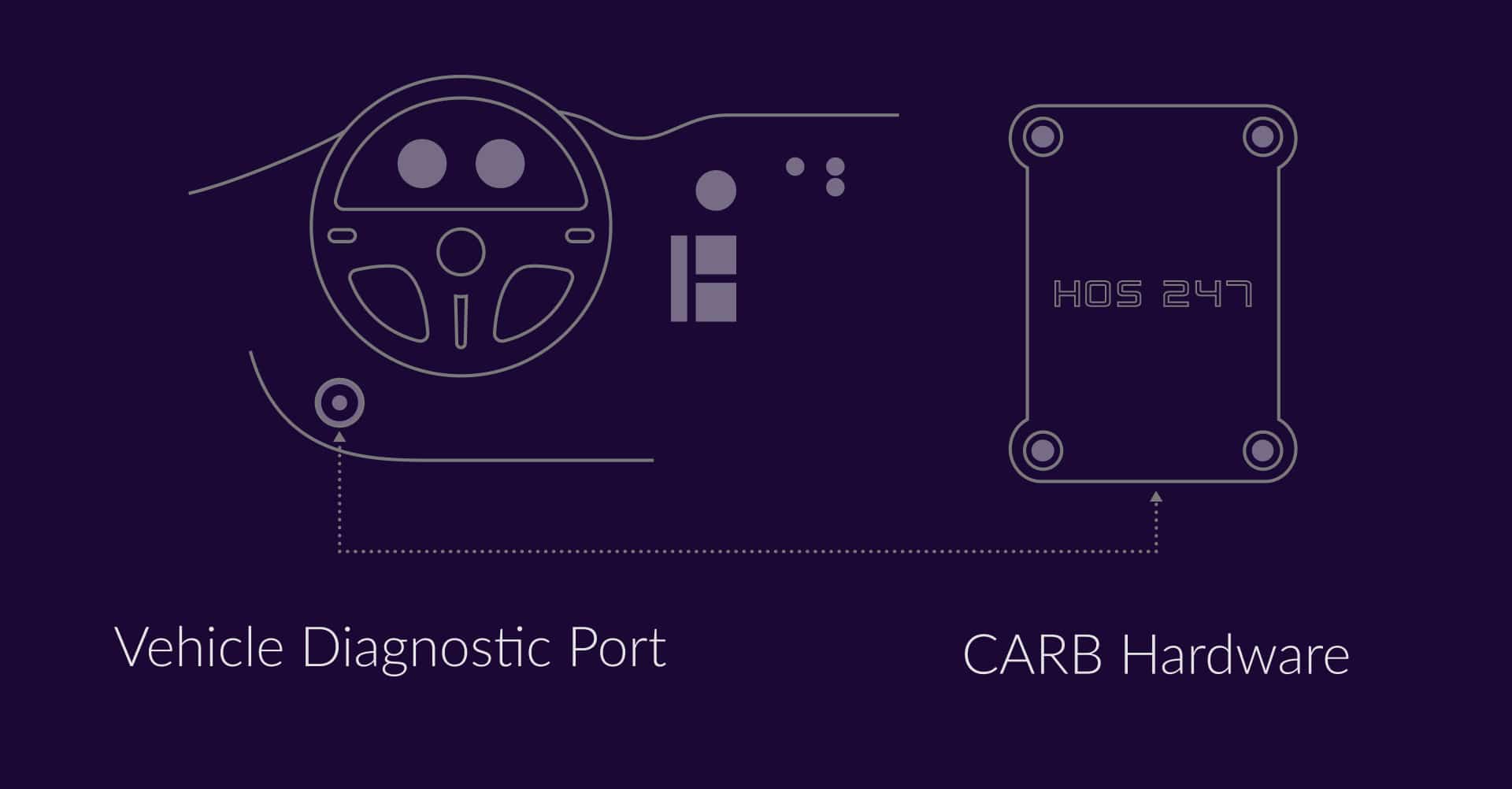
If using an in-shop or mobile tester, a credentialed inspector uploads the test file manually through their tester account. If using a remote telematics solution, the device reads the required emissions data directly from the vehicle’s diagnostic port and transmits it electronically.
Once CARB verifies the annual fee payment and receives a passing test record, the portal automatically generates the digital certificate. If a vehicle fails the test, CARB holds the certificate until the fleet completes necessary repairs and submits a passing retest.
Remote CTC testing platforms like HOS247 simplify this process by capturing information during regular operations. Connected devices read engine data from the diagnostic port and transmit passing results directly to CARB, triggering automatic certificates while trucks remain in active service.
Certificate Validity and Renewal Requirements
To protect uptime and prevent vehicle groundings, fleets must carefully track their compliance deadlines. A Clean Truck Check certificate remains valid for only a single testing cycle. If a fleet fails to submit passing test results before the deadline, the certificate expires, and CARB marks the vehicle as non-compliant in the state database.
The current testing schedule requires most commercial vehicles to test two times per year. For California-registered trucks, CARB anchors the primary testing deadline to the vehicle’s annual DMV registration renewal date, and sets the secondary deadline exactly six months later. Out-of-state vehicles, upcoming frequency shifts, and early test submissions follow a different set of parameters.
Calculating Deadlines by Registration or VIN
For trucks registered in California, compliance deadlines are tied directly to the vehicle’s registration expiration month. If a truck’s registration renewal falls on March 15, its semi-annual testing deadlines are March 15 and September 15.
Vehicles registered outside of California follow a schedule based entirely on the last digit of their VIN. CARB assigns a specific compliance month to each number from zero through nine. A truck with a VIN ending in zero has its primary deadline on October 31, and a secondary deadline of April 30. A VIN ending in one must complete its requirements by November 30 and May 31. Semi-annual testing is required until the end of September 2027.
Shifting to Quarterly Testing
Starting October 1, 2027, all commercial vehicles equipped with 2013 and newer engines must transition to a quarterly testing frequency.
Instead of tracking two deadlines per year, managers must schedule, verify, and submit engine data four times a year for every active 2013 and newer truck — unless the fleet deploys a remote testing system, like HOS247 CARB CTC, that handles these submissions automatically in the background.
The 90-Day Submission Window
CARB accepts emissions data up to 90 days before compliance deadlines. The state database automatically rejects any test records submitted earlier than this 90-day window, forcing the operator to run a new test during the valid timeframe to satisfy the requirement.
The HOS247 Clean Truck Check system is configured to run tests as soon as the 90-day testing window opens, giving fleets more time to address potential issues. A passing result satisfies the testing requirement nearly three months before the deadline. If the vehicle fails, the fleet has up to 90 days to diagnose the issue, complete repairs, and submit a passing retest before the deadline. Retests are included in the HOS247 subscription at no additional charge.
Remote Clean Truck Check Testing with HOS247
The HOS247 remote testing system automates emissions testing to keep vehicles compliant without operational downtime. The platform combines certified hardware with an online fleet management portal to completely eliminate shop visits for CTC.
The HOS247 PT40 is a CARB-certified device that plugs directly into a truck’s diagnostic port without requiring tools or a technician. The device reads emissions data from the engine control module and sends it over a built-in cellular connection. The hardware supports most vehicle protocols, covering the bulk of modern diesel and alternative-fuel fleets.
Setting up remote automated testing involves three straightforward steps:
- Register the vehicle in the CARB CTC-VIS portal and pay the annual compliance fee.
- Install the PT40 device into the vehicle’s diagnostic port.
- Enable CARB functionality in the HOS247 portal.
Once enabled, the system runs scheduled or on-demand tests in the background. Diagnostic data transmits directly to CARB, and official certificates are issued automatically upon passing — preventing missed deadlines with minimal fleet involvement.
Key advantages of the HOS247 platform include:
- Direct-to-CARB test reporting. Emissions data is sent directly to CARB through the portal so official certificates are generated automatically — eliminating physical shop visits, travel time, and route disruptions.
- Retests without extra costs. Follow-up scans can be run immediately through the portal as soon as repairs are made, avoiding per-test fees, appointment delays, and lost driving hours.
- Pre-entry out-of-state testing. Managers can trigger on-demand tests remotely from any location so drivers secure active CARB certificates before crossing California state lines.
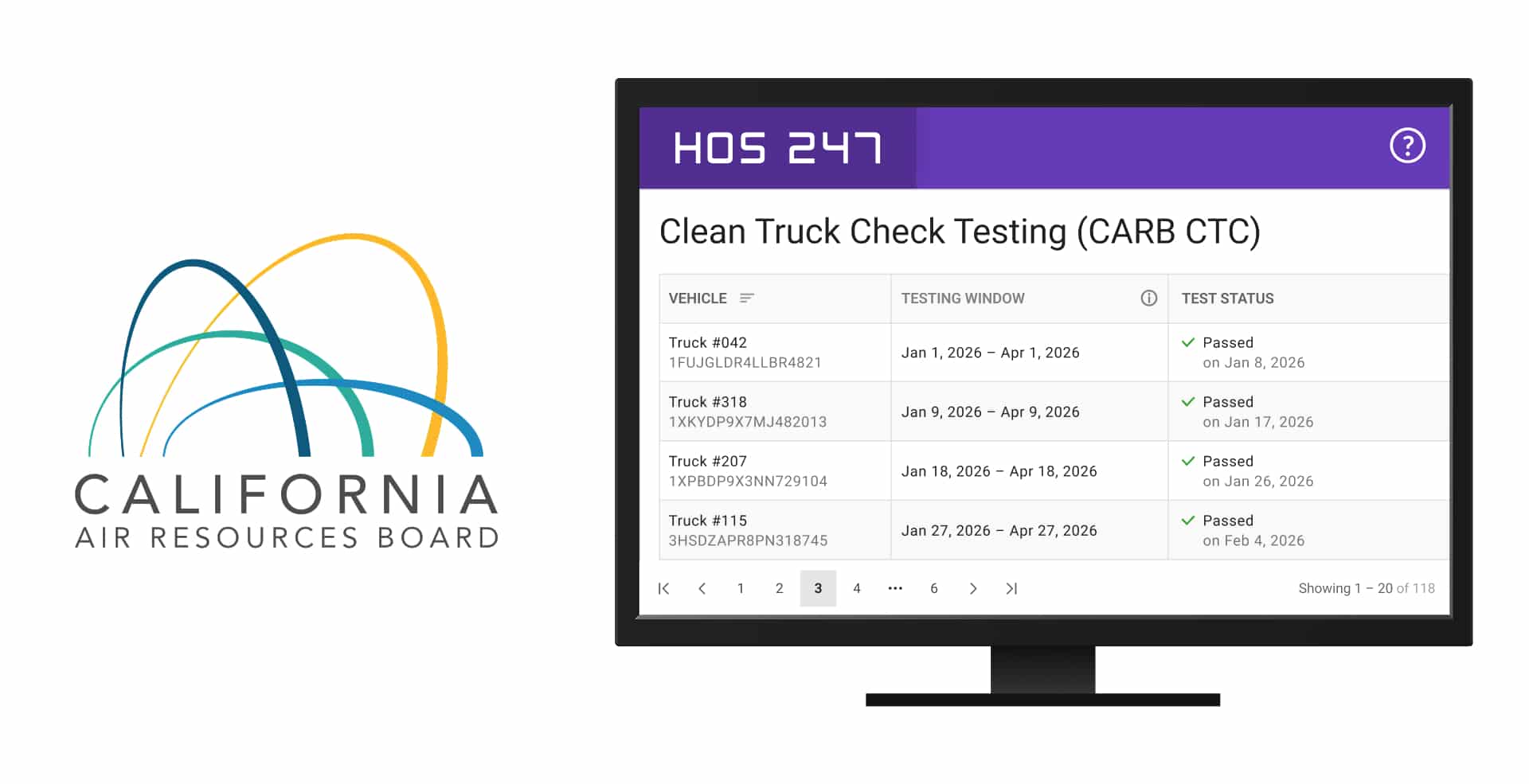
- Centralized fleet visibility. Track test statuses and view renewal deadlines for all vehicles on a single dashboard to prevent tracking errors across mixed fleets.
- Hardware and subscription savings. Consolidate CARB compliance, GPS fleet tracking, ELD logging, and IFTA calculations onto the single PT40 device, eliminating extra hardware purchases and separate software fees.
- Seven-day multilingual support. Access dedicated system and compliance guidance seven days a week, in multiple languages including English and Spanish.
Remote testing eliminates downtime, prevents missed deadlines, and keeps Clean Truck Check certificates active with minimal fleet involvement.
What Information Appears on a Clean Truck Check Certificate
The Clean Truck Check test certificate is the official record showing the truck met state standards for the current testing cycle. The digital document contains the following information to verify compliance:
|
Certificate Field |
What It Verifies |
|
Vehicle Identification |
The truck’s VIN, license plate number, and engine model year to match carrier records. |
|
Test Details & Timestamp |
The specific type of test performed and the exact date and time the system captured the data. |
|
Pass Confirmation |
Explicit display of a passing status to clear the vehicle in the state database. |
|
Certificate ID & Validity |
A unique identification number tracking the submission, alongside the exact date range the certificate remains active. |
Drivers are not required to carry a paper certificate in the cab, as state enforcement agencies verify compliance by checking vehicle VINs directly against CARB’s database. While carriers can download official certificate files from CARB’s CTC-VIS portal for formal audits, day-to-day operations rely on status tracking rather than PDF documents.
Vehicles that fail emissions tests do not receive certificates until repairs are completed and passing test results are submitted. Passing retests before compliance deadlines prevents DMV registration holds and roadside enforcement actions.
What Happens When a Vehicle Fails a Test
A failed emissions test means CARB will not issue a compliance certificate. To clear this flag and secure a valid certificate, the operator must complete all necessary mechanical repairs and complete a successful retest. This passing result must be submitted and accepted by the state database before the deadline.
Traditional physical repair shops and mobile testers usually charge an inspection fee for every individual test run. This increases operational expenses if a truck requires multiple diagnostic checks while mechanics troubleshoot. HOS247’s service subscription, on the other hand, includes unlimited retests.
Regulatory Enforcement and Operational Penalties
Failing to submit a passing emissions test by the required deadline can lead to enforcement actions and operational disruptions:
- Financial penalties. Operating a vehicle that does not meet Clean Truck Check requirements can result in fines.
- DMV registration blocks. California places an immediate hold on registration renewals for local vehicles. This block prevents trucks from operating legally until the test is passed successfully.
- Denied port or rail yard access. Noncompliant trucks may be denied entry to seaports and rail yards, potentially disrupting pickups and deliveries.
To avoid registration and access disruptions, fleets should verify that each vehicle’s CTC-VIS record shows compliance before registration renewal or scheduled port and rail yard visits.
How Enforcement Agencies Verify Certificates
Enforcement agencies verify compliance automatically using the VIN rather than inspecting a paper document in the cab. Officials look up the truck directly in CARB’s online database, meaning the vehicle must show an active status to clear checkpoints.
State agencies check this compliance status across several daily operations:
- Roadside inspections. Inspectors scan truck VINs and license plates against CARB’s online database to confirm active compliance status on the spot.
- Port and rail yard gate systems. Electronic gate infrastructure cross-references vehicle scans with the state compliance database before granting entry, blocking uncertified trucks automatically.
- Registration renewal verification. The DMV automatically checks the CARB database during annual renewals, blocking license plates for California-registered trucks that lack an active status.
- Routine fleet audits. State auditors review a carrier’s full certificate history during routine fleet environmental reviews, checking for continuous compliance over previous years.
- Automated roadside sensors. Roadside Emissions Monitoring Devices (REMD) capture emissions data and license plates in real time on public roads. High-emitting trucks receive a Notice to Submit to Testing (NST), giving the owner 30 days to submit a passing test to avoid fines.
Because certificate checks rely entirely on the digital VIN record, drivers do not face a legal requirement to carry a physical or digital copy of the certificate inside the truck. However, CARB still recommends keeping a copy on hand. The primary obligation is keeping the status active in the database, not carrying paperwork.
There is no way to bypass these digital checkpoints. A truck either reads as compliant in the system or it does not, and a non-compliant status triggers an operational bottleneck. Using a remote testing system to manage emissions testing is a more reliable strategy than treating every deadline as a one-off task.

Staying on Top of Clean Truck Check Compliance
Tracking testing deadlines manually becomes more demanding as fleets grow and testing frequencies increase. Automating routine tests and submissions reduces administrative work and helps prevent missed deadlines.
The HOS247 CARB CTC solution automates emissions testing and submits results to CARB while trucks remain in service, helping fleets meet the testing requirements for a Clean Truck Check compliance certificate. Fleets can review test results and upcoming deadlines in one dashboard, making it easier to identify vehicles that need attention. With retests included in the subscription, HOS247 helps fleets manage recurring testing without scheduling shop visits.

I’ve co-founded, built and managed several transportation-related businesses. Now, I’m a founder and CEO of HOS247 – an AI Transportation Platform for trucking companies, freight brokers and other logistics operations. We are transitioning old-style operations to technology-advanced logistics entities and help them to grow their businesses. ELDs (electronic logging devices), fleet tracking and management 2.0 combined with AI-powered dispatch tools.








Selecting a truck logbook for owner-operator drivers may seem easy, but one must think carefully to find the most effective option. Large carriers have different needs compared to truckers who drive their own vehicle. That said, we have prepared this
The advantages of using GPS trackers are significant, including enhanced safety, reduced fuel costs, increased productivity, and better communication, all of which translate into lower operational costs. By enabling fleet managers to monitor and manage vehicles and assets in real-time,

Running a successful commercial motor carrier operation comes down to maintaining operational momentum, but keeping your wheels turning requires strict adherence to federal safety regulations. Meeting standard truck driver log book requirements is a legal necessity designed to keep drivers