
Importance of Choosing a Reliable ELD Provider
Selecting a reliable ELD provider is one of the most critical decisions a fleet manager or owner-operator can make. The right provider can help streamline operations, ensure compliance with FMCSA regulations, and ultimately save time and money. On the other hand, choosing an unreliable provider can lead to numerous headaches, including technical issues, compliance problems, and even financial losses.
Compliance with FMCSA Regulations
Compliance with FMCSA Regulations A reliable ELD provider will offer a solution that fully complies with all FMCSA technical specifications and requirements. This includes features such as automatic recording of driving time, accurate data collection, and secure data transfer. A compliant ELD system will help drivers and fleet managers avoid costly fines and penalties associated with non-compliance, which can range from $1,000 to $10,000 per violation.
Moreover, a dependable provider will stay up-to-date with any changes in FMCSA regulations and promptly update their software to ensure ongoing compliance. This proactive approach ensures that fleets using the provider’s ELD solution remain compliant, even as regulations evolve.
Protecting Compliance Through Technical Reliability
Part of this protection includes how the software handles background data processing on iOS devices. Because iPhones are designed to aggressively close background apps to save battery life, a poorly designed app might disconnect when a driver switches screens to view navigation or a dispatcher message. A reliable provider ensures their software maintains a continuous background link with the engine hardware, preventing data gaps, unassigned driving hours, and the costly recordkeeping penalties that come with them.
When evaluating ELD providers, it is also crucial to consider their experience in the industry and overall reputation. A provider with a long track record of success and a deep understanding of the trucking industry is more likely to offer a reliable and compliant solution. One way to gauge a provider’s reputation is by reading customer reviews and testimonials. A reliable provider will have a strong track record of positive feedback from fleet managers and drivers alike. These reviews can provide valuable insights into the provider’s customer service, product reliability, and overall user experience.
Operational Features That Drive Fleet Efficiency
Finally, a reliable ELD provider will offer a range of features and integrations that can help fleets optimize their operations. Some valuable features to look for include:
- GPS tracking. Real-time GPS tracking can help fleet managers monitor vehicle locations, optimize routes, and improve overall efficiency.
- Fuel tracking. Integrated fuel tracking can help fleets monitor fuel consumption, identify potential fuel theft, and optimize fuel efficiency.
- IFTA mileage. Automated IFTA calculations can save fleet managers time and reduce the risk of errors associated with manual calculations.
- API integrations. A reliable provider will offer API integrations that allow their ELD solution to seamlessly connect with other fleet management software, such as dispatching and maintenance tools.
Choosing the right partner ensures that your data remains secure and your logs stay completely compliant, allowing your team to focus on moving freight safely.
Best ELD App for iPhone
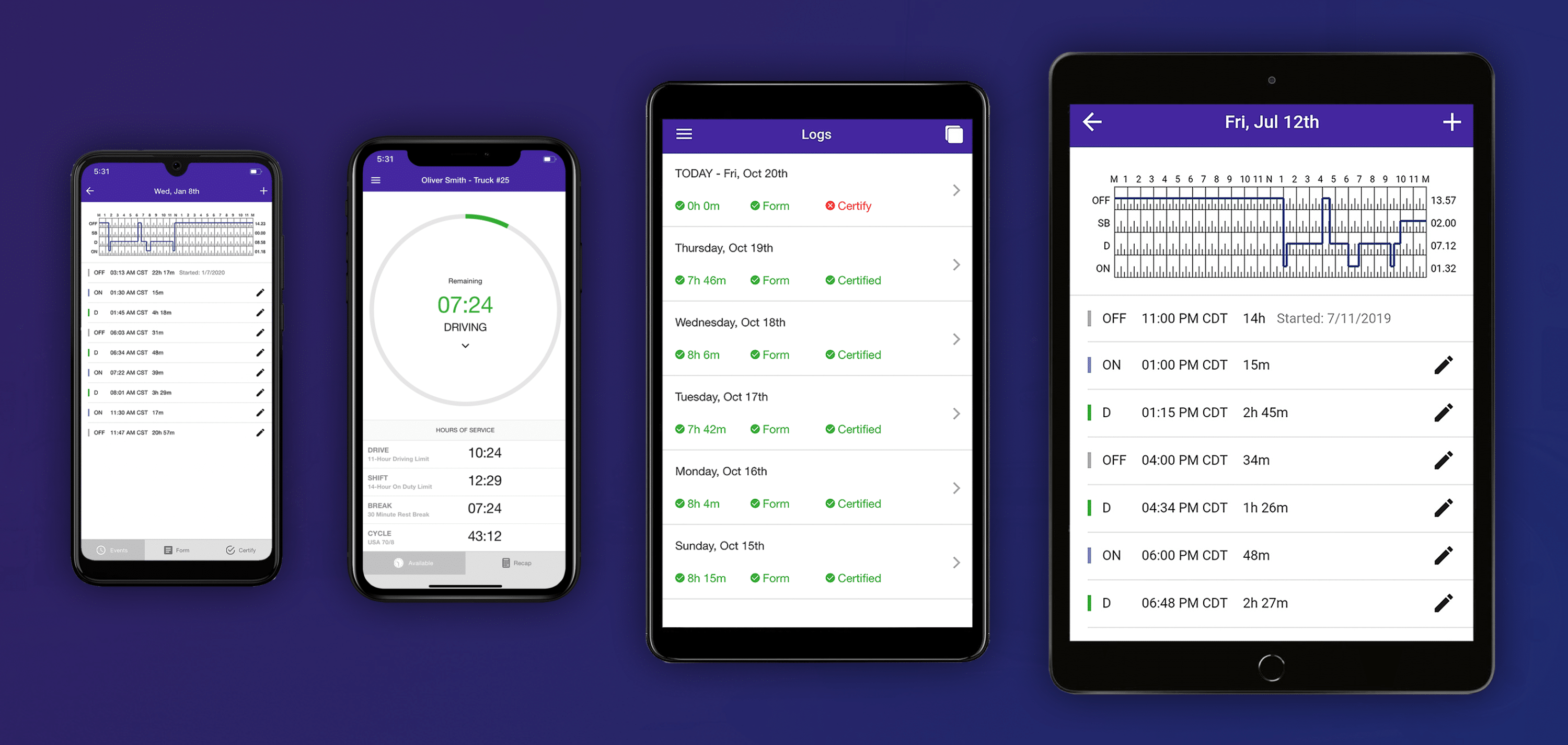
Choosing the best ELD app for iPhone requires looking beyond a polished App Store listing. The most effective solutions combine a stable iOS application with reliable engine-connected hardware, responsive support, and a proven compliance record. Since an iPhone functions as the driver-facing interface of the ELD system, software reliability is critical for maintaining accurate Hours of Service (HOS) records and avoiding roadside inspection issues.
While many providers offer similar core compliance functions, significant differences exist in hardware quality, customer support, contract requirements, and overall user experience. Comparing the available options helps carriers identify the platform that best matches their operational needs.
Top ELD Apps for iPhone Comparison
What Makes an ELD App Reliable on iPhone?
The best ELD applications are designed to operate consistently in real-world trucking conditions. Drivers frequently switch between navigation apps, communication platforms, fuel card applications, and dispatch software throughout the day. A dependable ELD solution must maintain stable communication with the vehicle hardware even while running in the background.
Professional-grade iPhone ELD apps should provide:
- Stable Bluetooth communication with the ELD device.
- Fast synchronization of duty status records.
- Reliable operation in areas with weak cellular coverage.
- Automatic log preservation during connectivity interruptions.
- Simple inspection mode access for roadside compliance.
- Clear HOS countdowns and violation alerts.
- Continuous software updates that keep pace with regulatory changes.
Why Many Fleets Choose HOS247
For fleets seeking a balance between compliance, ease of use, and operational visibility, HOS247 combines a dedicated iPhone application with ELD hardware, GPS tracking, DVIR management, IFTA reporting, and driver support resources. This unified approach helps reduce administrative workload while providing drivers with a simple interface designed specifically for daily trucking operations.
The most important factor when selecting an ELD app is not the mobile application alone but the complete ecosystem behind it. Reliable hardware, stable software, responsive support, and ongoing compliance management work together to create an ELD solution that drivers can trust every day on the road.

HOS247’s Electronic Logbook for iPhone
There are many logbook apps for ELDs on the market, which can make it hard to find a truly reliable option. When trying to choose the best ELD app for iPhone, it’s important to make sure the app is reliable and that the company that created the ELD product is dependable. Without consistency between the two, a logbook app is useless.
A truly dependable setup requires an integrated system, which simply means pairing a stable mobile app with dedicated vehicle hardware that plugs straight into your truck’s diagnostic port. If the software and the physical device do not communicate perfectly, your fleet loses the complete operational visibility needed to keep track of assets on the road. HOS247 is seen as a leader in the industry, providing a truck driver log book app for Apple devices that makes compliance easier.
Reliable Logbook App & Benefits to Help Streamline Operations
The HOS247 electronic logbook provides drivers and fleets with the following benefits:
- Easy log management. Drivers can quickly manage electronic logs and electronic driver vehicle inspection reports (DVIRs) right from their phones.
- Live over-the-phone assistance. Over-the-phone assistance on how to use the iPhone ELD app makes drivers more likely to use it and reduces the risk of questions arising while they’re out on the highway.
- Easy compliance. Drivers can pass every DOT inspection with the confidence that HOS247 is registered and verified with the FMCSA and meet all requirements.
- IFTA mileage calculations. Automated tracking reduces the risk of human error and simplifies quarterly state tax reporting.
- Vehicle diagnostics notifications. Live alerts keep fleet managers and owner-operators on top of maintenance needs before minor faults turn into major bills.
- On-duty GPS fleet tracking. Dispatchers can view truck locations in real-time whenever a driver is on the clock.
- Automated CARB emissions testing. The ELD hardware is also CARB-certified to execute mandatory California Clean Truck Check testing while the engine idles, sending data directly to the state portal.
This straightforward design delivers real value when drivers are sitting at busy shipping docks. Instead of wasting time tapping through confusing menus while trying to load, a driver can make rapid data entries in just a couple of clicks. Back in the office, safety managers can monitor compliance status instantly across the entire fleet without forcing administrative delays or calling drivers for updates.
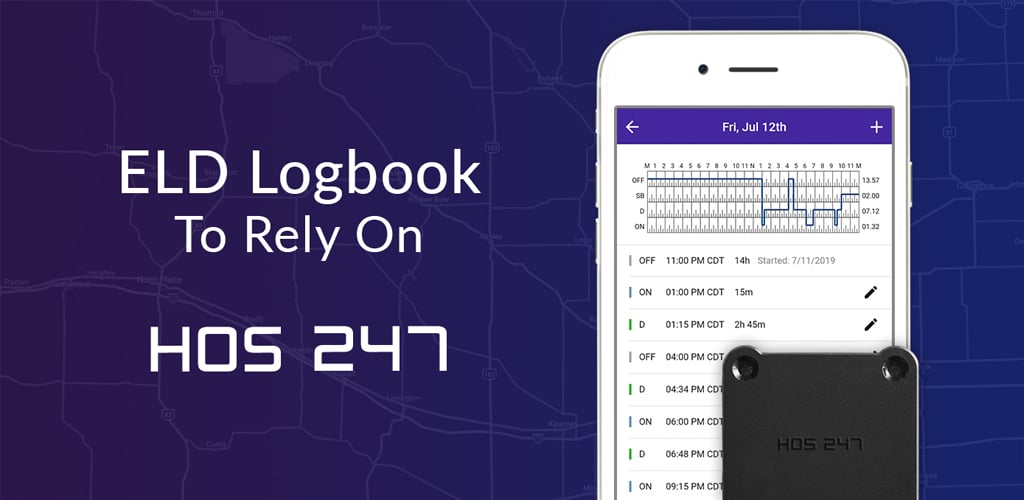
Optimizing the iOS Operating System for Trucking Compliance
Operating a business on consumer smartphones requires setting up your devices to handle long hours on the road. Apple devices work exceptionally well for logging, but carriers need to understand how the phone’s software acts during a long haul to prevent logging gaps.
Managing Background App Refresh
To keep your data syncing properly, you must allow the app to run in the background. If a driver switches screens to look at a navigation map or check dispatcher messages, the iPhone needs to keep an uninterrupted Bluetooth data stream alive with the engine hardware. Turning on “Background App Refresh” in your iOS settings ensures that the logging system continues to record hours of service metrics silently without dropping the connection.
Thermal and Power Management
Long hours sitting in a dashboard cradle during hot daylight hauls can cause a smartphone to overheat or drain its battery rapidly. Professional software minimizes this strain by running lightweight code that prevents the phone’s processor from working too hard. To keep hardware safe, drivers should use cooling dash mounts that block direct sunlight and rely on high-quality charging cables to ensure the device stays powered without overheating.
Taking these small steps with your device settings eliminates accidental duty status disconnects, keeping your logs accurate and your equipment compliant through every mile of the trip.
Are Logbook Apps FMCSA-Compliant?
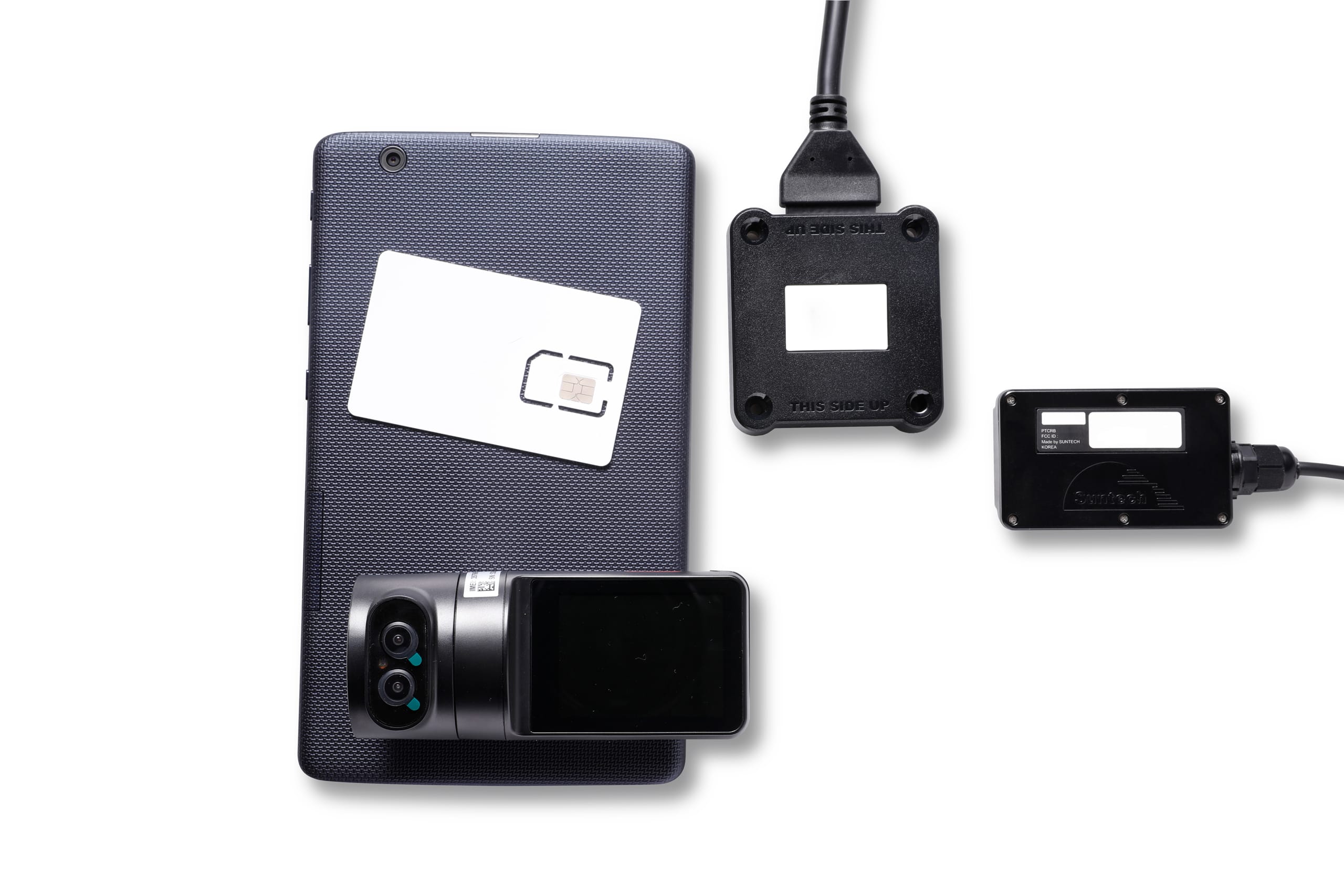
The FMCSA is tasked with ensuring that ELDs meet certain technical specifications. FMCSA regulations state that a logging device must be connected directly to the vehicle’s engine control module to record hours of service and records of duty status automatically. Alone, an ELD app cannot satisfy these requirements. The physical hardware plugged into the diagnostic port records the actual vehicle information, and the mobile application is used to display it on an Apple device.
Under federal regulations, the phone screen simply acts as the mandatory viewer for safety officials during a roadside check, while the electronic logging device handles the actual calculations in the background. In short, your iPhone ELD app can only be compliant as part of an integrated ELD system where the matching hardware is also certified. If a company’s complete hardware and software setup meets all federal requirements, it can be self-certified by the manufacturer and included on the list of registered ELDs.

What Is the Carrier’s Responsibility when Choosing a Logbook App and Device?
The job of ensuring an ELD and an app that are compliant with FMCSA regulations falls on the motor carrier. It is important to remember that an ELD and driver’s daily log app might be compliant one day, but their self-certification could be revoked by safety regulators the next day if the provider fails to maintain federal standards.
Safety managers must protect company safety ratings by verifying the active registry status of their equipment regularly. Although the FMCSA makes efforts to inform affected users when a device is removed from the list, these notification emails can take time and are not a reliable way to ensure ongoing compliance. Leaving a revoked device in your trucks can lead to immediate “no record of duty status” violations, which can put your drivers out of service at the scalehouse. Therefore, checking the active and revoked devices lists periodically is a critical carrier responsibility to make sure your provider stays in good standing.
Who Must Comply with the ELD Mandate?
Motor carriers and drivers must comply with the ELD Mandate if they are required to maintain records of duty status under federal transportation laws, whether they operate commercial buses or commercial motor vehicles. This requirement also applies directly to drivers domiciled in Mexico and Canada who cross the border to haul freight within the United States.
There are some specific exceptions to the list of who must comply with the ELD Mandate, including:
- Short-haul drivers. Local drivers who operate within a 150 air-mile radius and return to their work reporting location within 14 hours are not required to maintain records of duty status.
- The eight-day threshold. Drivers who are only required to keep records of duty status for eight days or less in any 30-day rolling period can use standard paper logs instead.
- Drive-away or tow-away operators. Employees delivering an empty commercial vehicle as the actual commodity being shipped do not need a permanent logging device installed.
- Pre-2000 engines. Vehicles with an engine manufactured before model year 2000 are exempt because older engines lack the electronic control modules required to transmit telemetry data.
Local fleets must also stay aware of state-level regulation updates that affect purely regional operations. For instance, although intrastate drivers in Texas and Florida were exempt from federal logging rules in the past, both states have enacted their own intrastate mandates. Drivers operating commercial motor vehicles entirely within these states must now utilize compliant electronic logging software unless they meet one of the four narrow exemptions listed above.
Why Switch to a Better ELD App for iPhone?
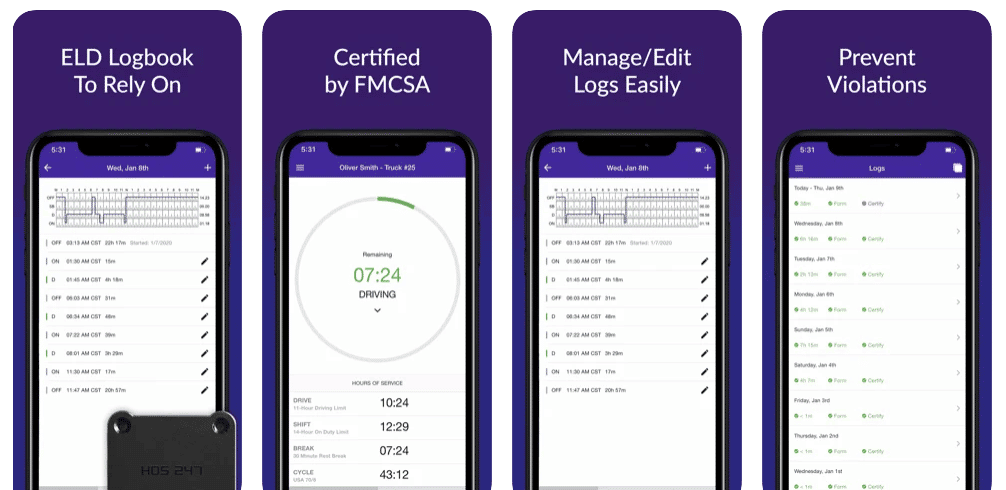
Before the ELD Mandate was enforced, many commercial motor vehicle drivers found themselves scrambling to find a self-certified electronic logging device. Many chose the cheapest option available instead of selecting a platform that would stay compliant, protect driver safety, and save operational costs over the long haul. Many carriers ended up facing significant financial losses while dealing with completely unreliable or overly complicated applications. Furthermore, many truckers were locked into long-term contracts.
Switching to a stable platform allows fleets to reclaim operational efficiency, erase daily administrative frustration, and lower driver turnover caused by bad technology. Just like long-term contracts and poorly designed software, several specific red flags indicate that it is time to switch to a better ELD provider:
- Lack of responsive support. If a fleet manager or a driver on the road cannot reach technical support during a critical roadside issue, it is time to change companies. Paying customers should not struggle to get a live person on the phone, and support agents must be knowledgeable enough to get drivers back to work quickly.
- Complicated administrative tasks. Managing driver logs takes considerable office time. If an electronic logbook makes administrative tasks harder, carriers should find a system that allows them to quickly locate logs, calculate remaining driving hours, match drivers to jobs, and track hours of service violations.
- Non-driver-friendly designs. If drivers do not like the interface, they are less likely to use the electronic logs correctly, leading to frequent errors and administrative stress. An application should be straightforward enough that drivers prefer it over paper logs without requiring intensive training.
- Misleading upfront pricing. Some providers promise low rates upfront but add hidden fees after a carrier commits to the service. Providers should maintain complete transparency with their pricing structures, acting as long-term partners rather than focusing on quick upfront revenue.
- Inexperienced software providers. Providers that started doing business immediately after full compliance was enforced often lack a long-term track record. Their software and physical devices may require extra testing to ensure stability under real-world over-the-road conditions.
- Proprietary hardware locks. Some companies force carriers to purchase specialized, proprietary handheld displays instead of allowing them to use standard consumer smartphones or tablets. Using an iPhone or iPad offers much more operational flexibility and reduces hardware replacement costs.
Recognizing these technical and operational gaps allows carriers to make an informed decision when upgrading their fleet compliance software. Shifting away from restrictive platforms and toward flexible, driver-approved technology allows transportation companies to eliminate everyday administrative stress completely. Investing in a straightforward mobile logging system backed by clear customer protections gives owner-operators and safety managers the stability they need to maximize operational efficiency and keep equipment moving productively.
How to Install a HOS247’s iPhone ELD App
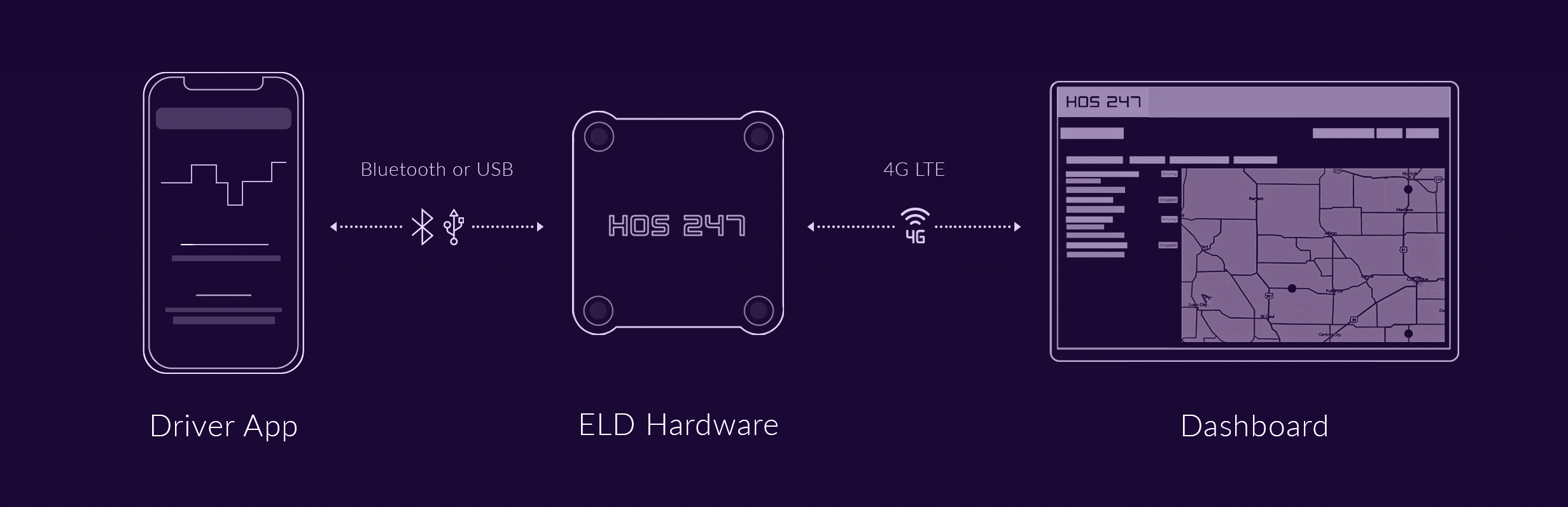
The process of installing an electronic logging device to be used with a mobile app should be seamless. A HOS247 ELD is easy and quick to install, allowing fleets to complete setup in three basic stages.
Fleet safety personnel can use these standardized instructions to ensure a uniform setup across multiple trucks, minimizing roadside troubleshooting and establishing consistent data habits across the company.
Step One: Web Portal Setup Instructions
- Log in to the HOS247 portal with the provided credentials by visiting the official log-in page online.
- Click the management tab to add or update company information, commercial vehicles, portal users, and active drivers.
- Ensure that portal users and drivers have different login credentials, even if the same employee handles both roles.
Step Two: ELD Hardware Installation Instructions
- Plug the nine-pin ELD into the vehicle’s diagnostic port before turning on the vehicle and before running the mobile application. Use adapters if the vehicle configuration requires them.
- Verify that the light flashes green slowly, which indicates that the device has received power. A flashing red light shows that the internal global positioning system is searching for a satellite signal, while a solid red light indicates the position is locked. Drivers can move to the next step immediately without waiting for the signal to lock.
- Turn on the vehicle engine.
- Watch for a fast-flashing light, which indicates that the device has successfully detected vehicle engine activity.
- Wait for the light to turn solid green, meaning that you can now safely open and run the software on your mobile device.
- The hardware will now retain the necessary information to communicate with the logbook app over a secure Bluetooth link. Note that the power light may turn off during standard operation for power-management reasons.
Step Three: Mobile Application Setup Instructions
- Download the HOS247 ELD Logbook application directly from the Apple App Store.
- Confirm that the iPhone Bluetooth setting is turned on, noting that there is no need to manually pair the app within the main iOS settings menu.
- Log in with the specific driver credentials created previously on the web portal.
- Select the correct vehicle from the active list provided by the portal.
- Enter the specific device identification address listed on the physical hardware casing.
- Check for the green Bluetooth indicator icon at the top right corner of the screen to confirm the system is active and ready for the road.
Following a uniform setup routine ensures that hardware connections remain solid and electronic logs record accurately through every state jurisdiction.
Mastering the Roadside Inspection Workflow on iOS
When a law enforcement officer pulls a commercial vehicle over for a random roadside safety check, the driver must be prepared to present compliance records quickly. Roadside inspections can cause anxiety, but utilizing an intuitive app on a familiar iPhone ensures that the process moves smoothly. Knowing the exact sequence to execute within the software protects driver privacy and minimizes time spent sitting on the shoulder of the highway.
Activating the DOT Inspection Mode
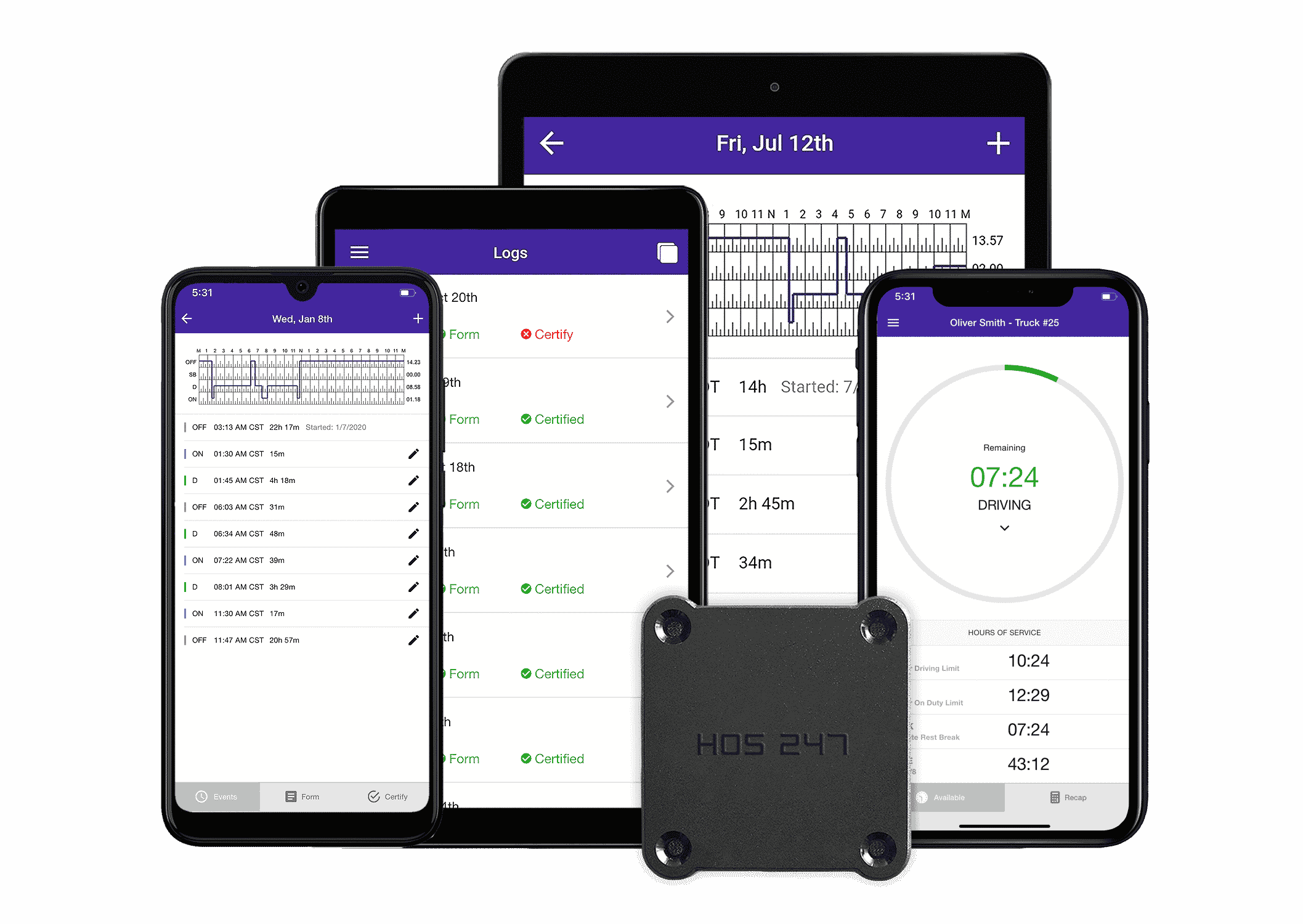
Before handing an Apple device to an inspector, the driver must activate the dedicated “DOT Inspection Mode” inside the app. This feature securely locks the user interface, preventing enforcement officers from browsing through personal phone files, private text messages, or photo libraries. The secure screen lock displays only the mandatory hours of service logs and inspection summaries required by law, keeping personal driver data completely private.
Executing Federal Web Services Transfers
Once the officer requests the official log files, the driver initiates an electronic data transfer directly through secure federal communication channels. The software packages the logging data and transmits it using the FMCSA’s web services platform, uploading the logs to the inspection database instantly. This modern data transmission eliminates the need to print out paper files or pass a physical device back and forth, significantly accelerating the roadside review process.
Navigating this workflow with absolute confidence helps the driver maintain a professional relationship with safety officials. Getting through inspections quickly and without errors keeps your driving records clean and protects the overall safety profile of the motor carrier.
Safeguarding Fleet Performance with Reliable Technology
Choosing the right electronic logbook is a critical decision for fleet managers and owner-operators looking to ensure compliance with FMCSA regulations and streamline their daily operations. As the trucking industry continues to evolve and face new logistical challenges, having a trusted logging provider like HOS247 in your corner can make all the difference in staying competitive and profitable.
By moving past complicated, legacy hardware locks and adopting an agile mobile setup built for consumer devices, carriers can erase daily compliance headaches and lower driver frustration.
By investing in the best ELD app for iPhone, fleet managers and drivers can rest assured that they are well-equipped to navigate the complex landscape of electronic logging and fleet management.

I’ve co-founded, built and managed several transportation-related businesses. Now, I’m a founder and CEO of HOS247 – an AI Transportation Platform for trucking companies, freight brokers and other logistics operations. We are transitioning old-style operations to technology-advanced logistics entities and help them to grow their businesses. ELDs (electronic logging devices), fleet tracking and management 2.0 combined with AI-powered dispatch tools.









The driver logbook has developed from a basic paper grid into an essential digital tool for the commercial transportation industry. Fleet managers and operators rely on these systems to maintain complete compliance. The primary goal remains safety across highways and

The California Air Resources Board (CARB) is the state agency responsible for protecting air quality in California. Under the CARB Clean Truck Check program, most heavy-duty trucks must complete periodic emissions testing twice a year in 2026. However, for a

Long-haul trucking is the backbone of America’s supply chain, but staying compliant with federal regulations while navigating tight schedules can be challenging. The ELD mandate, enforced by the Federal Motor Carrier Safety Administration (FMCSA), requires most commercial motor vehicle operators