
Understanding Baseline Driver Log Rules
The foundation of commercial compliance rests on accurate tracking of daily and weekly operational limits. The FMCSA enforces strict driver log requirements to mitigate fatigue and ensure highway safety. Operators must track four primary clocks precisely to maintain legal operating status:
- 11-hour driving limit. A commercial driver is permitted to drive a maximum of 11 hours only after completing 10 consecutive hours entirely off duty. This limit represents the absolute boundary for steering-wheel time during a single shift. Any extra driving time is instantly classified as a critical safety violation, and the driver will be ordered out of service immediately.
- 14-hour duty window. The daily duty cycle consists of a 14-hour continuous window that begins the moment a driver comes on duty following their mandatory 10-hour rest period. This clock does not pause for fuel stops, loading delays, meals, or vehicle inspections. Once the 14 hours expire, all commercial driving is strictly prohibited until a new 10-hour off-duty period is recorded.
- 30-minute break. Drivers must log a 30-minute rest break after accumulating 8 hours of actual driving time without a qualifying 30-minute interruption. This break is legally satisfied using off-duty time, sleeper berth time, or on-duty/not-driving time. This provides flexibility for drivers who choose to complete vehicle inspections or fuel their trucks during their rest period.
- 60/70-hour weekly limit. Drivers may not operate a commercial vehicle after reaching 60 hours on duty in 7 consecutive days or 70 hours in 8 consecutive days. This rolling weekly limit requires continuous monitoring, as every on-duty minute contributes to the total capacity available for the following days.
To optimize these available hours without risking non-compliance, the regulations provide two essential operational tools:
The 34-Hour Restart
The 34-hour restart allows a driver to reset their cumulative weekly total back to zero. To trigger this reset, a driver must spend at least 34 consecutive hours entirely off duty, in a sleeper berth, or a combination of both. Once this period concludes, the driver’s full 60-hour or 70-hour weekly bank is completely restored, regardless of how many hours they logged before the break. Drivers can execute a restart at any point in their cycle, and there are no longer limits on how often a restart can be used in a single month.
The Split Sleeper Berth Provision
The sleeper berth provision permits drivers to split their mandatory 10-hour rest period into two separate blocks, such as a 7/3 split or an 8/2 split. Both blocks must total at least 10 hours when combined, and the longer block must be spent entirely inside the sleeper berth. The shorter block can be taken as off-duty time, sleeper berth time, or a combination of both. Neither period counts against the 14-hour duty window, allowing fleets to navigate unexpected delivery delays without running out of legal driving time.
While these core driver log rules remain standard across the industry, the enforcement mechanisms tracking them rely on advanced digital infrastructure. Automated roadside audits instantly flag impossible trips, such as discrepancies between logged distance and recorded speed limits. The HOS247 ELD system tracks these metrics automatically, ensuring the recorded data aligns perfectly with the physical movement of the vehicle. Operators use precise telematics to capture engine data accurately and eliminate the manual calculation errors that trigger compliance audits.
Addressing Administrative Driver Log Requirements
Operating within time limits is only one component of federal compliance. Inspectors frequently issue out-of-service orders for administrative omissions, commonly referred to as form and manner errors. An electronic logging device must capture specific operational data accurately to satisfy driver log rules. If these fields are left blank or contain typographical errors, the entire log for that 24-hour period can be deemed invalid during a safety audit.
A compliant logbook requires several administrative elements:
- Data header. The daily record must include the motor carrier name, the carrier’s main office address, the specific vehicle and trailer numbers, shipping document numbers, and the starting time of the 24-hour period. These elements must match the company registration data exactly to prevent identification mismatches.
- Unassigned driving. Every physical movement of the commercial vehicle must be assigned to an active driver profile or properly annotated as a yard move or mechanic test drive. Unassigned miles are a primary target for roadside inspectors, as they often indicate undocumented driving time.
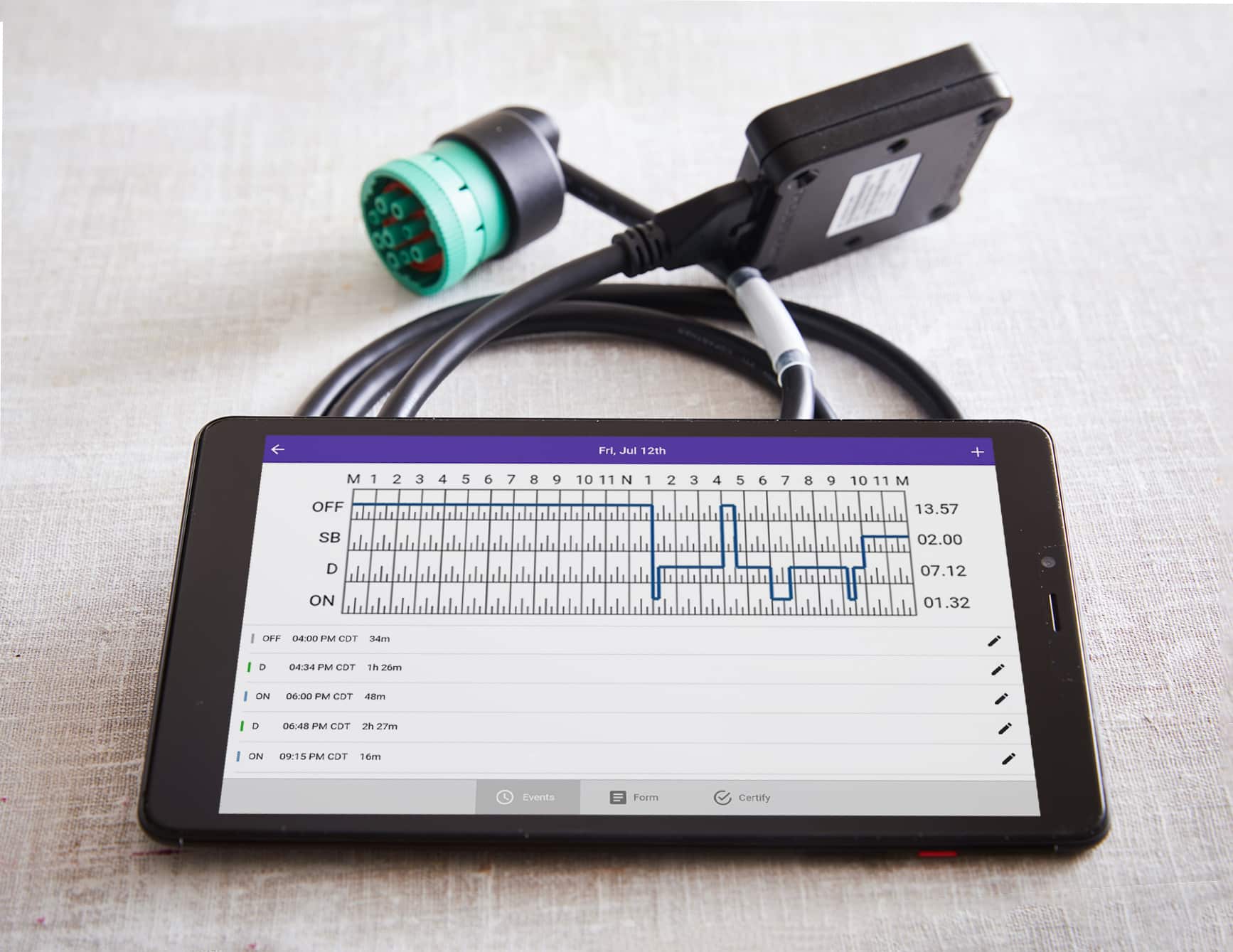
- Graph grid display. Drivers must be able to generate and present a visual graph grid of their daily duty status to enforcement officers upon request. The grid must clearly display transitions between off-duty, sleeper berth, driving, and on-duty statuses.
- Supporting documents. Operators must maintain copies of bills of lading, fuel receipts, and dispatch records to verify the accuracy of the electronic log during an audit. These documents serve as secondary verification to prove that a driver was at a specific location at the logged time.
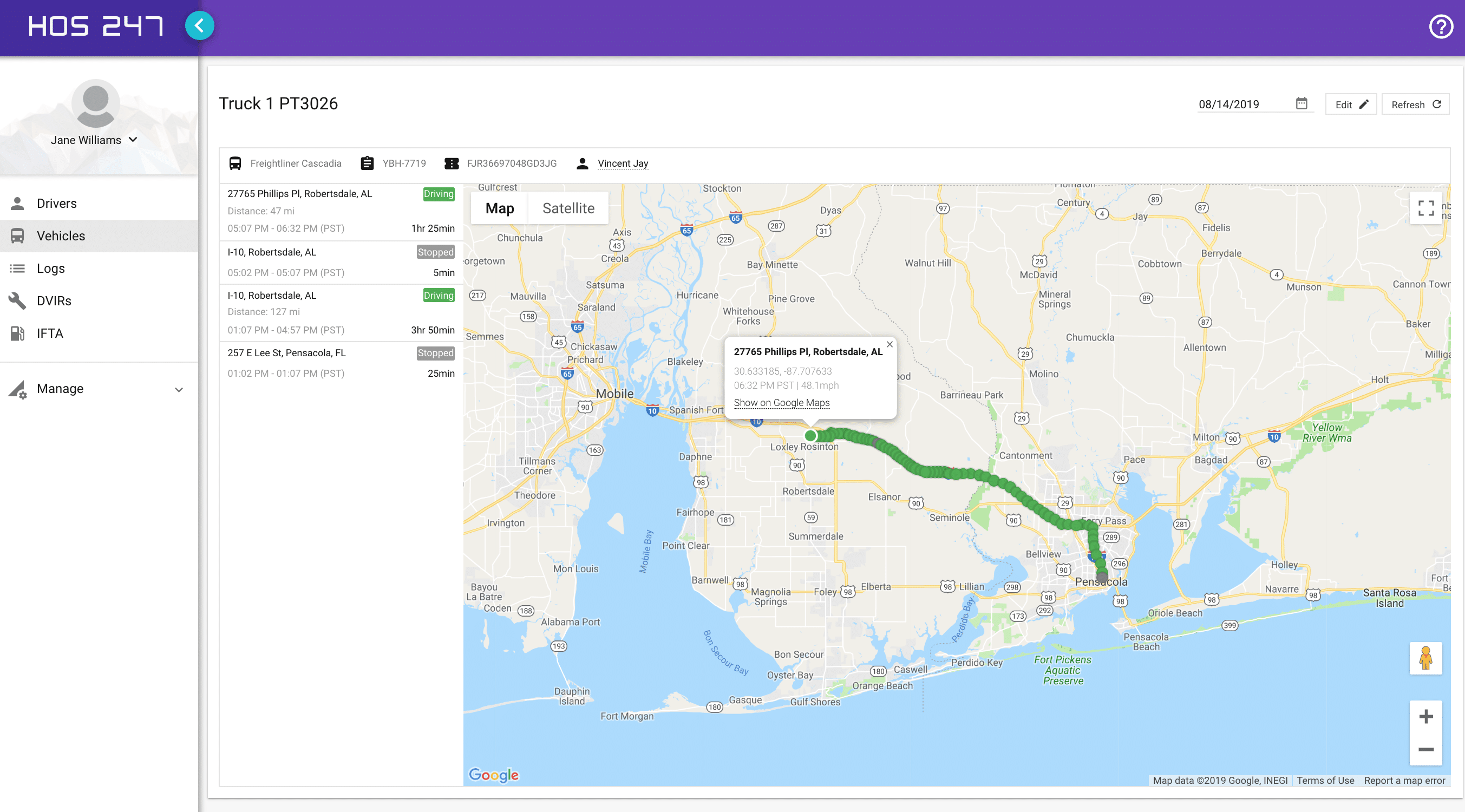
Managing unassigned driving events is one of the most significant operational challenges for modern safety managers. When a vehicle is moved without an active driver login, the hardware records the distance and flags it as unassigned. Safety managers must review these events within the carrier portal and either assign them to the correct driver or input a detailed explanation, such as terminal maintenance or yard jockey movement. Leaving these events unassigned creates an immediate compliance gap that suggests a carrier is attempting to hide actual driving hours.
HOS247 automates form and manner compliance to eliminate administrative violations. The system populates the data header with carrier and vehicle information automatically. It also captures all vehicle movement directly from the engine control module, allowing fleet managers to reconcile unassigned driving events promptly before they trigger an audit flag. This automation removes the burden of manual entry from the driver, ensuring that every log sent to an inspector is structurally complete and legally sound.

Navigating Modern Enforcement Trends and Driver Log Rules
Enforcement protocols continue to evolve alongside digital tracking technology. The FMCSA utilizes advanced data analysis to identify compliance anomalies that previously went unnoticed during manual paper inspections. A reliable electronic logging system is required to withstand these modern audit techniques and protect carrier safety ratings. Understanding these modern investigative methods allows fleets to update their training procedures and reinforce proper logging habits among their drivers.
Ghost Co-Driver Audits
Digital audits now specifically target continuous team driving records to eliminate hours of service fraud. Inspectors analyze logs for prolonged movement without a valid and verified co-driver login, searching for patterns where a single driver logs into two separate accounts to bypass the 11-hour driving limit. Systems that allow unverified profile switching trigger automated flags during roadside reviews. HOS247 utilizes secure, individual driver credentials that accurately track active duty status and prevent unauthorized profile manipulation, ensuring that team operations remain completely transparent and fully compliant.
Level VIII Wireless Inspections
The expansion of Level VIII inspections allows enforcement officers to conduct compliance checks wirelessly while the commercial vehicle is in motion. This enforcement method requires the electronic logging device to maintain constant uptime and instant data transmission capabilities. Officers utilize roadside sensors to pull identification data and digital logs directly from the vehicle as it passes at highway speeds. The HOS247 platform maintains continuous connectivity, allowing drivers to transmit data successfully without interrupting their route or pulling into a physical weigh station.
Engine Tag Verification
Operators utilizing the pre-2000 engine exemption face increased scrutiny regarding glider kit fraud. Inspectors now verify the physical engine block tag rather than relying solely on the vehicle identification number listed on the registration. This change prevents carriers from installing older vehicle identification numbers on modern, electronically controlled engines to avoid using an ELD. While older engines remain exempt from strict ELD mandates, fleets operating mixed-age vehicles must still maintain accurate time records. HOS247 provides flexible tracking options that accommodate diverse fleet compositions while ensuring complete adherence to all driver log requirements.
Meeting FMCSA Rules with Reliable Hardware
Compliance with daily operational limits depends entirely on hardware reliability. Fleets can maintain perfect compliance records internally, but hardware malfunctions that disconnect the electronic logging device from the mobile application create immediate data gaps. These missing data segments appear as violations during automated roadside inspections, even if the vehicle operated completely within legal limits. When a connection drops, the system cannot verify whether the truck was moving or stationary, leading to automated alerts that attract regulatory scrutiny.
The HOS247 electronic logging system prevents technical gaps through robust vehicle connectivity and automated data recording:
- Connection stability. The hardware connects directly to the J1939 engine diagnostic port to ensure stable data collection. This continuous connection eliminates the data drops and Bluetooth disconnects that cause unassigned driving violations.
- Automated administrative inputs. The software automatically populates carrier information, vehicle identifiers, and odometer readings. This automation eliminates typographical errors and protects drivers from form and manner penalties.
- Secure data retention. Operational logs are securely stored for the legally mandated 6-month period. This cloud storage ensures fleet managers can access complete, historical records during compliance reviews.
- Multilingual driver support. Fleet operators have access to customer support 7 days a week. Assistance is available in English, Spanish, Russian, and Polish to resolve complex log issues or split-sleeper questions immediately.
Hardware durability is especially critical in heavy-duty commercial environments where vibration, temperature extremes, and electrical surges are common. A poorly manufactured logging device can easily lose its connection when hitting rough pavement or experiencing a power fluctuation from the vehicle alternator. The HOS247 hardware is stress-tested to remain functional under demanding road conditions. By maintaining a hardwired link to the engine, the device ensures that every second of engine data is captured and synchronized with the driver app, providing complete protection against data loss.
Managing Hardware Malfunctions Legally
Electronic logging devices can experience unexpected mechanical or electrical failures due to vehicle power losses or physical damage. When technology fails, federal driver log requirements dictate an exact procedure to maintain compliance and avoid severe roadside penalties. Fleet managers and operators must follow these protocols precisely until hardware functionality is restored, as failing to execute the backup logging protocol is treated as a severe compliance violation.
The FMCSA outlines three mandatory steps for managing an electronic logging device malfunction:
- Immediate carrier notification. A driver must provide written notification of the hardware malfunction to the motor carrier within 24 hours of discovering the issue. This notification must detail the exact nature of the failure to initiate the repair timeline.
- Paper log reconstruction. Operators must reconstruct their driving records on paper graph grid logs for the current day and the previous 7 days, unless the records can still be retrieved directly from the device screen.
- The 8-day repair window. Fleets have a maximum of 8 days to repair, reprogram, or replace the malfunctioning hardware. If a carrier requires additional time, an extension request must be submitted to the applicable FMCSA Division Administrator within 5 days of the driver’s initial notification.
Drivers are legally required to carry a supply of blank paper graph grid logs inside the commercial vehicle cab at all times. This supply must be sufficient to cover at least 8 days of manual logging. Failing to present these blank paper logs during an equipment malfunction constitutes an immediate out-of-service violation, as it leaves the driver with no legal method to document their duty status during a roadside inspection.
Securing Compliance Through Reliable Fleet Technology
Maintaining accurate tracking records involves more than simply monitoring the daily compliance clocks. Failing to follow driver logs rules through a single unassigned mile, a missing data header field, or a hardware disconnection can compromise a carrier’s safety profile and lead to costly roadside penalties. As automated enforcement systems and wireless inspections continue to expand, compliance accuracy relies heavily on hardware and software integration. Fleets can no longer afford to risk their operating authority on systems that drop connections or require complex manual adjustments from drivers.
The HOS247 electronic logging platform automates data collection, eliminates administrative errors, and secures critical operational records. By utilizing reliable hardware built to withstand rigorous roadside enforcement, fleets can focus on daily operations instead of managing compliance gaps. Contact our team to schedule a system demonstration and secure the reliable compliance tools necessary for uninterrupted operations.
A Note to Our Readers on Compliance
This article is intended for informational and educational purposes only. It is not a substitute for official regulatory guidance or legal advice. HOS and ELD regulations are complex and subject to change and interpretation by enforcement authorities. Please always refer to official sources for the most current and accurate information.

I’ve co-founded, built and managed several transportation-related businesses. Now, I’m a founder and CEO of HOS247 – an AI Transportation Platform for trucking companies, freight brokers and other logistics operations. We are transitioning old-style operations to technology-advanced logistics entities and help them to grow their businesses. ELDs (electronic logging devices), fleet tracking and management 2.0 combined with AI-powered dispatch tools.









Since 2016, the DOT has established a set of rules for the trucking industry that compel drivers to record their HOS using electronic logbooks. This mandate is currently enforced by the FMCSA. A major consideration to fully attain compliance with
What is the ELD mandate for truckers? What are the best electronic logging devices? This article will explain the mandate, its requirements, the technology behind electronic logbooks, and their impact on hours of service (HOS) regulations. We will also give

The appropriate ELD solution is the answer to keeping compliant DOT driver log books, which will help carriers, drivers, and owner-operators avoid hefty fines and penalties. The HOS247 ELD meets the FMCSA’s requirements. The app is suitable for iPhone and