
Understanding the Basics of the ELD Mandate Law for Local Drivers
Determining if a local operation requires an ELD involves looking beyond the daily route and focusing on the vehicle and the nature of the commerce.
Defining Local vs. Long-Haul
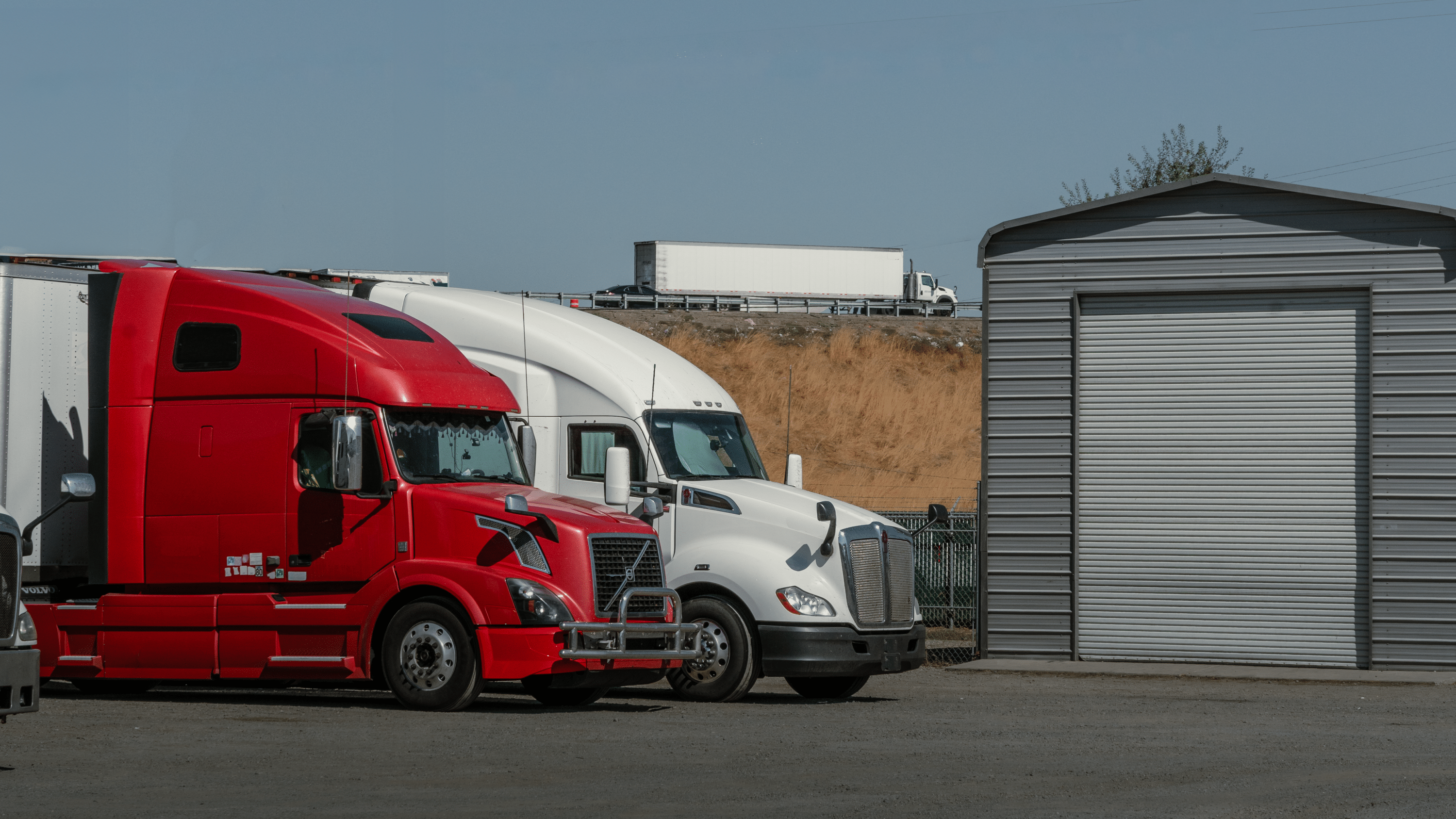
In the eyes of the FMCSA, “local” is defined by the operational pattern rather than the vehicle type. A driver is generally considered local — and potentially exempt from ELD use — by operating within a specific radius (usually 150 air-miles) and returning to the work reporting location at the end of every shift. Staying in a hotel or a sleeper berth overnight effectively classifies the operation as “long-haul” for that day regarding logging requirements.
The 10,001 lb Rule
The requirement for an ELD often starts with the vehicle itself. The mandate generally applies to commercial motor vehicles (CMVs) involved in interstate commerce that meet any of these criteria:
- Weight threshold. The vehicle has a Gross Vehicle Weight Rating (GVWR) or Gross Combination Weight Rating (GCWR) of 10,001 pounds or more.
- Passenger capacity. The vehicle is designed to transport 8+ passengers (for compensation) or 15+ passengers (not for compensation).
- Hazardous materials. The vehicle transports hazardous materials requiring placards.
Vehicles meeting these weight standards without qualifying for a specific exemption (like the Short-Haul rule) likely require an ELD.
Interstate vs. Intrastate Distinctions
Distinguishing between interstate and intrastate commerce is a common source of confusion.
- Interstate commerce. Cargo originating in another state or destined for another state typically classifies the operation as interstate, even if the truck never leaves city limits. Federal ELD rules apply here.
- Intrastate commerce. Operations where the driver and cargo never cross state lines are subject to state-specific regulations. Many states, such as Texas and California, have adopted mandates mirroring federal rules but often with different start times or weight thresholds.
Warning for State Drivers: While federal rules allow 150 air-miles and 14 hours, some states (like California) stick to stricter limits (100 air-miles / 12 hours) for intrastate drivers. Always check your specific state regulations.
Here is the updated section, simplified and focused on the confirmed regulatory shifts for 2026.
2026 Enforcement Trends
As 2026 progresses, enforcement is moving away from basic visual checks and toward digital verification. A confirmed priority for the year is ensuring that all Electronic Logging Devices (ELDs) are legitimate. The FMCSA has recently removed several devices from its registered list. Roadside officers are now actively checking that the specific device in a truck matches the current approved list. If a carrier is using a “revoked” device, they face immediate citations for having no record of duty status.
The industry is also preparing for the Registration Modernization update (often called the “Motus” system). This upcoming change aims to replace old identifiers (like MC numbers) with a single USDOT number. This digital update makes it much easier for officers to instantly verify if a carrier has valid operating authority, closing the loopholes often used to claim “false exemptions.”
Non-CDL & “Grey Area” Compliance
Many drivers still mistakenly believe that a standard driver’s license means they do not need an ELD. This is false. Federal rules depend on the vehicle’s weight and commerce type, not the license type.
For 2026, inspectors are paying close attention to vehicles between 10,001 and 26,000 lbs that cross state lines. A driver in a 16,000-lb box truck is subject to the same ELD rules as a big rig driver, unless they strictly meet the daily short-haul requirements. With the new digital registration systems coming online, these “grey area” fleets are becoming easier for safety officials to track and audit.
The Short-Haul Exemption: A Critical Tool
For local operations, the Short-Haul Exemption is the primary method for legally operating without an ELD. However, this is a specific conditional exemption that must be earned daily. Violating its terms by even one mile or one minute voids the exemption for that day, and standard logging rules apply.
The 150 Air-Mile Radius Rule
To qualify for this exemption, operations must meet specific criteria.
- Air miles vs. road miles. Understanding the difference is critical. 150 air miles (nautical miles) is roughly equivalent to 172.6 standard road miles, calculated “as the crow flies.”
- Start and end location. The shift must start and end at the same work reporting location every day. Starting at a terminal and ending at a customer’s site or home disqualifies the driver.
- The 14-hour duty limit. Drivers must be released from work within 14 consecutive hours of coming on duty. Unlike long-haul drivers who have a 14-hour driving window, short-haul drivers must be clocked out by the 14th hour.
Record-Keeping Requirements
Operating without an ELD does not remove the need for records. In place of a logbook, the motor carrier must maintain time cards for 6 months. These records must accurately show:
- The time the driver reports for duty.
- The time the driver is released from duty.
- The total hours on duty for the day.
Failure to produce a time record or a previous days’ record during a stop can result in a citation for having no logbook.
The 8-Days-in-30 Rule
This rule acts as a safety valve for local drivers who occasionally take a longer trip.
- The rule. Installing an ELD is not required if the driver breaks the short-haul rules (exceeding the radius or time limit) for 8 days or fewer within any rolling 30-day period.
- Handling exceptions. On days exceeding the 150-mile radius or 14-hour limit, a standard paper log (RODS) must be kept for that day.
- Mandatory ELD trigger. Reaching the 9th day of needing a log within a 30-day window voids the exemption, requiring immediate ELD installation for the remainder of that cycle.

Other Key Exemptions Local Drivers Should Know
While the short-haul rule is the most common, other specific exemptions can prevent local fleets from purchasing unnecessary equipment. Understanding these nuances ensures efficient compliance management.
Pre-2000 Engine Exemption
This exemption is often misunderstood as applying to the vehicle model year.
- The details. Vehicles equipped with an engine manufactured in the model year 1999 or earlier are exempt from the ELD mandate, regardless of the chassis build date.
- Documentation. Since registration papers often show the chassis year, keeping documentation in the cab that proves the engine’s model year, such as a manufacturer’s letter or the engine tag, avoids confusion during inspection.
Driveaway-Towaway Operations
This applies specifically when the commercial motor vehicle is the cargo itself.
- Qualifying scenarios. Examples include delivering a new truck from a factory to a dealership or transporting a motorhome.
- The condition. If the vehicle being driven is the commodity being delivered, an ELD is not required. However, driving a tow truck hauling another vehicle generally requires one unless the short-haul exemption applies.
Agricultural Exemptions
Drivers hauling agricultural commodities benefit from flexibility during state-defined planting and harvesting seasons.
- The 150-mile radius. Transporting agricultural commodities (including livestock and bees) is exempt from HOS and ELD rules within a 150 air-mile radius of the source of the commodities.
- Livestock expansion. Current regulations also extend this exemption to include a 150-mile radius from the destination for livestock haulers.
- Mixed use. Once the vehicle leaves that 150-mile radius or operates out of season, standard ELD rules apply immediately.
Mixed-Use Vehicle Considerations (Personal Conveyance)
Personal Conveyance (PC) allows for the personal use of a commercial vehicle while Off-Duty.
- The guideline. PC permits the use of the truck for personal reasons, such as commuting home.
- The restriction. PC cannot be used to advance the load or move towards the next pick-up. Driving a laden truck home to be “closer to the route” for the next day is often viewed as driving time by enforcement officers.
Strict adherence to PC guidelines is essential to maintain accurate logs and avoid falsification violations.
Common Compliance Challenges for Local Drivers
Local operations face a unique set of compliance hurdles that differ significantly from long-haul trucking. While long-haul drivers settle into a steady rhythm of driving, local drivers manage frequent stops, complex duty status changes, and the constant risk of inadvertently breaking exemption rules.
Stop-and-Go Delivery Patterns
High-frequency delivery routes create a complex log of duty status changes.
- Duty status accuracy. Drivers making 10 to 20 stops a day must ensure their status accurately reflects their activity. While the “Driving” status triggers automatically at 5 mph, the driver must manually switch to “On-Duty Not Driving” upon arrival at a delivery site.
- Best practices. Maintaining a habit of updating status immediately upon stopping ensures the 14-hour clock is tracked accurately and prevents “Driving” time from accumulating while the truck is stationary but idling.
Yard Moves and Personal Conveyance
Misunderstanding these special driving categories is a frequent source of violations during audits.
- Yard moves. This status allows for moving the vehicle within a terminal or customer yard without triggering driving time. It requires the driver to be in an “On-Duty” status and strictly within a non-public yard.
- Personal conveyance limits. As discussed, using the vehicle for personal transport is permitted, but using it to commute to a closer staging area for the next day’s work is considered driving time.
Crossing the Line: When Exemptions Don’t Apply
The most critical challenge for local fleets is managing the transition from “exempt” to “non-exempt.”
- Unexpected route changes. A detour or a new customer pickup that pushes a driver beyond the 150 air-mile radius immediately voids the short-haul exemption for that day.
- Traffic and delays. Getting stuck at a dock or in traffic can easily push a shift past the 14-hour limit. Once the 14th hour passes, the exemption is lost, and a standard log grid must be completed for the entire day.
- Emergency compliance. Fleets must have a protocol in place for these scenarios. Drivers should carry blank paper logs or have an ELD installed and ready to activate if the exemption limits are exceeded.
Documentation Management
For exempt drivers, the time card is the legal equivalent of a logbook.
- Paperwork consistency. Time records must include the start time, end time, and total hours on duty. Missing or incomplete records are treated with the same severity as a missing logbook during a roadside inspection.
Maintaining audit-ready records requires diligence. Regular training ensures that drivers understand the ELD mandate law for local drivers, exemptions, and when they must switch to standard logging procedures.
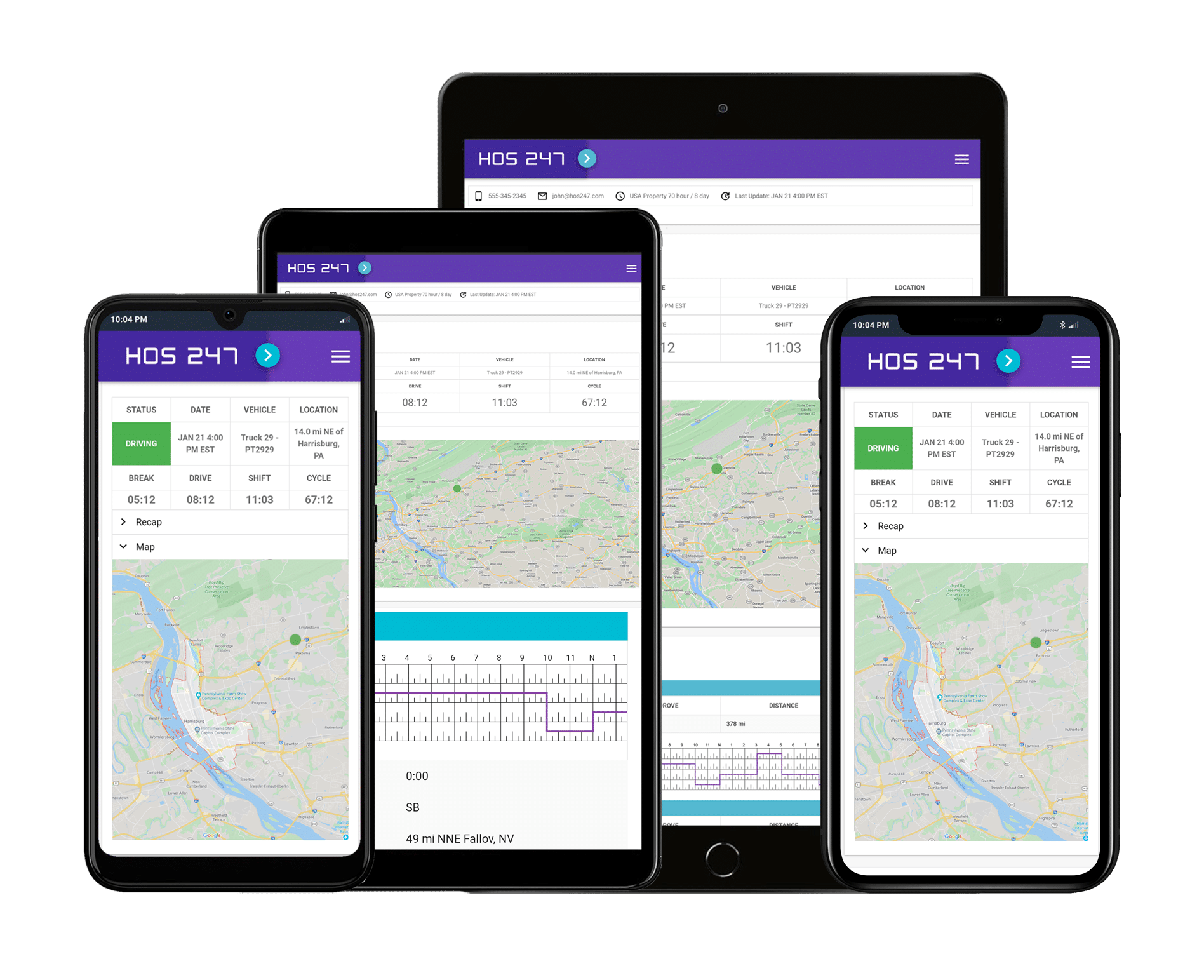
HOS247 ELD: The Smart Solution for Local Fleets
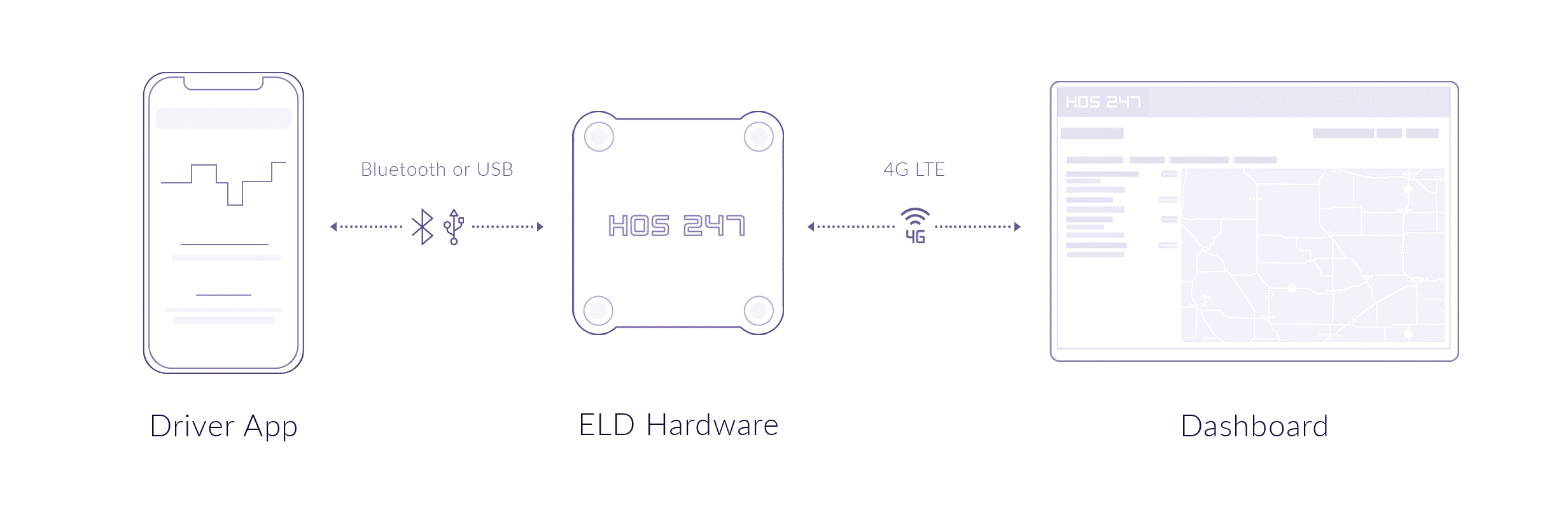
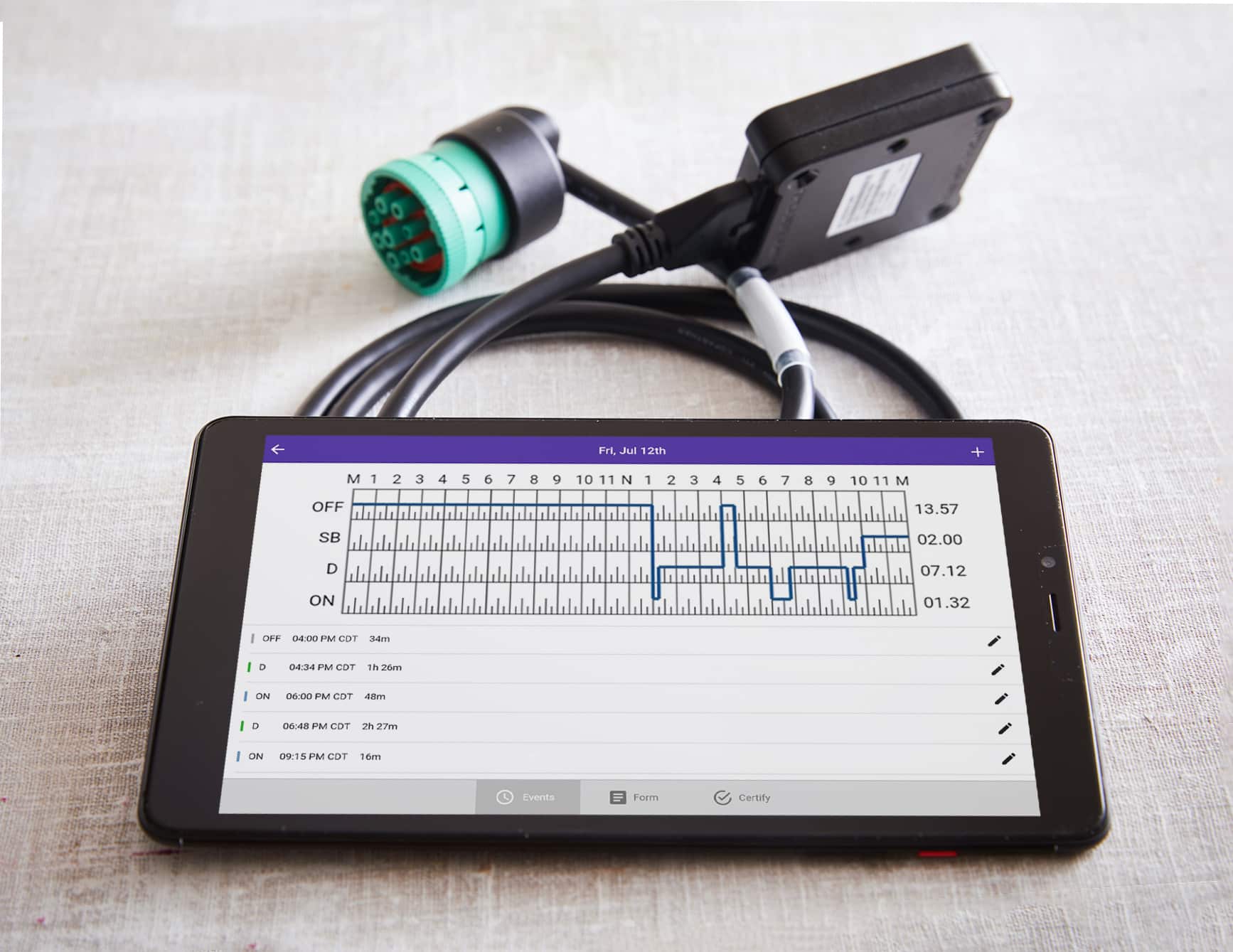
Local fleets require technology that adapts to variable schedules and frequent stops. The HOS247 system is designed to provide the flexibility and simplicity that local operations demand, ensuring compliance without slowing down deliveries.
Tailored Benefits for Local Operations
The HOS247 platform offers specific features that address the needs of short-haul and mixed-use fleets.
- Flexibility features. The service operates on a month-to-month basis with no long-term contracts. This model allows seasonal operations to scale up or down as needed without financial penalties.
- Easy status switching. The system allows for seamless transitions between exempt and non-exempt status. Drivers can easily maintain logs when a long trip arises and revert to short-haul operations when appropriate.
- Two-week trial. Fleets can test the hardware and software on their specific local routes to ensure compatibility before committing.
User-Friendly Design for Local Drivers
The interface is built for efficiency, minimizing the interaction required during a busy delivery day.
- Quick installation. The hardware installs in minutes, allowing vehicles to get on the road quickly.
- Intuitive interface. The app requires minimal training. Large, clear buttons make changing duty status simple, even for drivers who are less comfortable with technology.
- Automatic duty status. The system automatically switches to “Driving” when the vehicle reaches 5 mph, ensuring that drive time is captured accurately without driver input.
- Violation prevention. Clear visual and audio alerts notify the driver of approaching limits, helping to prevent violations before they occur.
Support That Understands Local Operations
Reliable support is essential for maintaining a compliant fleet.
- Multilingual assistance. The support team speaks English, Spanish, Russian, and Polish, ensuring clear communication for diverse driving teams.
- Seven-day availability. Support is available every day of the week, accommodating drivers with varied schedules including weekends.
- Callback policy. The support team employs a callback policy to ensure drivers and managers are not left waiting on hold during critical operational hours.
The HOS247 system provides a dependable, flexible foundation for local fleet compliance. By combining reliable hardware with adaptable software and accessible support, the platform ensures that local operations run smoothly and legally.
Best Practices for Maintaining Compliance
For local fleets, compliance is not about simply installing a device; it is about establishing a routine that prevents violations before they happen. Whether operating under an exemption or using an ELD, these actionable strategies ensure operations remain audit-ready.
Route Planning and Buffer Time
The most common violation for short-haul drivers is exceeding the 14-hour duty limit due to unforeseen delays.
- Smart scheduling. Dispatchers should build “buffer time” into routes. If a route typically takes 13 hours, a single traffic jam or slow receiver can push the driver over the 14-hour limit, voiding the exemption.
- Radius technology. Use GPS tools to alert dispatchers if a vehicle approaches the 150 air-mile limit. This allows for proactive decision-making — either swapping the load or ensuring the driver switches to a standard log immediately.
Training and Communication
Drivers often unknowingly create violations because they misunderstand the rules.
- Regular education. Conduct brief, quarterly training sessions on exemption rules. Ensure every driver knows exactly what triggers a switch from “exempt” to “non-exempt.”
- Clear policies. Establish a simple company policy for “exception days.” If a driver knows they will exceed the limits, they should have a clear protocol to follow: activate the ELD app, log the day, and notify safety management.
- Annotation habits. Train drivers to properly annotate any edits or unassigned driving time. A simple note explaining a “Yard Move” can prevent a false log violation during an audit.
The Hybrid Approach: Using ELDs for Exempt Fleets
Many forward-thinking local fleets now choose to run ELDs on all trucks, even those that qualify for exemptions.
- Competitive advantage. A fully connected fleet provides real-time visibility for customers, allowing for accurate ETAs and better service.
- Automated safety. Using an ELD continuously eliminates the risk of missing time cards or messy paperwork. It acts as an automated safety net, ensuring that if a driver unexpectedly crosses state lines or works late, they remain compliant without scrambling for a paper log.
- Added benefits. Beyond compliance, the data collected simplifies IFTA fuel tax reporting and provides vehicle health alerts, preventing breakdowns before they delay a delivery.
By using these strategies, fleets can make compliance much easier. Whether relying on time cards or digital logs, consistent training and clear records are the best way to avoid fines and keep trucks moving.
Looking Ahead: Future of ELD Rules for Local Drivers
The rules for commercial driving do not stand still. As the industry moves through 2026, local operators should prepare for updates that could affect exemption status and how inspections are conducted.
Regulatory Changes on the Horizon
- Pre-2000 engine review. The FMCSA continues to review the exemption for pre-2000 model year engines. Safety advocates argue that older trucks should adhere to the same tracking standards as newer vehicles. Fleets relying on this specific rule should monitor news for potential changes.
- Stricter “false exemption” enforcement. Authorities are increasingly using data to identify carriers claiming the short-haul exemption while driving long distances. Officers are conducting more targeted roadside checks, specifically requesting time records to verify that the 14-hour limit is being respected.
Technology and State Trends
- State-level variations. States like California and Texas are refining their intrastate rules to align more closely with federal standards. This trend suggests that the distinct “local rules” used by many intrastate fleets may eventually disappear, bringing all drivers under a single standard.
- Smarter enforcement. Roadside inspections are becoming more technology-driven. Enforcement officers frequently use wireless methods to transfer data without entering the cab. This shift makes it essential for local fleets to use equipment capable of performing clean, instant data transfers when required.
Staying prepared for these developments is critical for long-term business stability. As enforcement becomes more precise and technology advances, outdated compliance methods carry greater risk. Flexible, modern solutions help ensure fleets remain audit-ready as regulations continue to evolve.
Conclusion: Making the Right Choice for Local Operations
Navigating the ELD mandate for local drivers does not have to be a source of stress. The key is clarity: knowing exactly when exemptions apply, maintaining impeccable documentation, and having a contingency plan for route changes.
For many local fleets, the prudent strategy involves shifting away from paper entirely. While the short-haul exemption is a valuable tool, managing it manually carries risk. A reliable ELD system acts as an insurance policy, protecting the business from violations while offering data that helps routes run more efficiently.
Proactive evaluation of compliance processes is essential to avoid issues during roadside inspections. For a solution that combines the flexibility of a no-contract plan with the reliability of top-tier hardware, HOS247 offers a robust option. The 14-day risk-free trial provides a practical way for fleets to experience how a tailored ELD solution simplifies local operations.
A Note to Our Readers on Compliance
This article is intended for informational and educational purposes only. It is not a substitute for official regulatory guidance or legal advice. HOS and ELD regulations are complex and subject to change and interpretation by enforcement officials. Please always refer to official sources for the most current and accurate information.

I’ve co-founded, built and managed several transportation-related businesses. Now, I’m a founder and CEO of HOS247 – an AI Transportation Platform for trucking companies, freight brokers and other logistics operations. We are transitioning old-style operations to technology-advanced logistics entities and help them to grow their businesses. ELDs (electronic logging devices), fleet tracking and management 2.0 combined with AI-powered dispatch tools.










Since the ELD mandate was published by FMCSA, it has created quite a stir among carrier companies and truckers all over the U.S.A. While many carriers are frantically looking for a reliable DOT compliant ELD, others are still deciding whether
Is your current ELD more of a headache than a help? As a professional driver, you rely on your tools to be efficient and dependable. Yet, many truckers are stuck with systems that cause constant frustration — dropped connections during
As the trucking industry advances, the adoption of electronic logging devices (ELDs) is reshaping how commercial motor vehicle (CMV) drivers maintain their records of duty status (RODS). This article sheds light on key differences between paper and electronic CMV logbooks,