
RODS 101: Understanding Basic Driver Log Requirements
Before diving into complex hardware connections or advanced compliance software, you must understand the core language of commercial logging. The federal rules dictate exactly how your daily time must be categorized and what identifying information must be permanently attached to those time segments.

The Four Core Duty Statuses
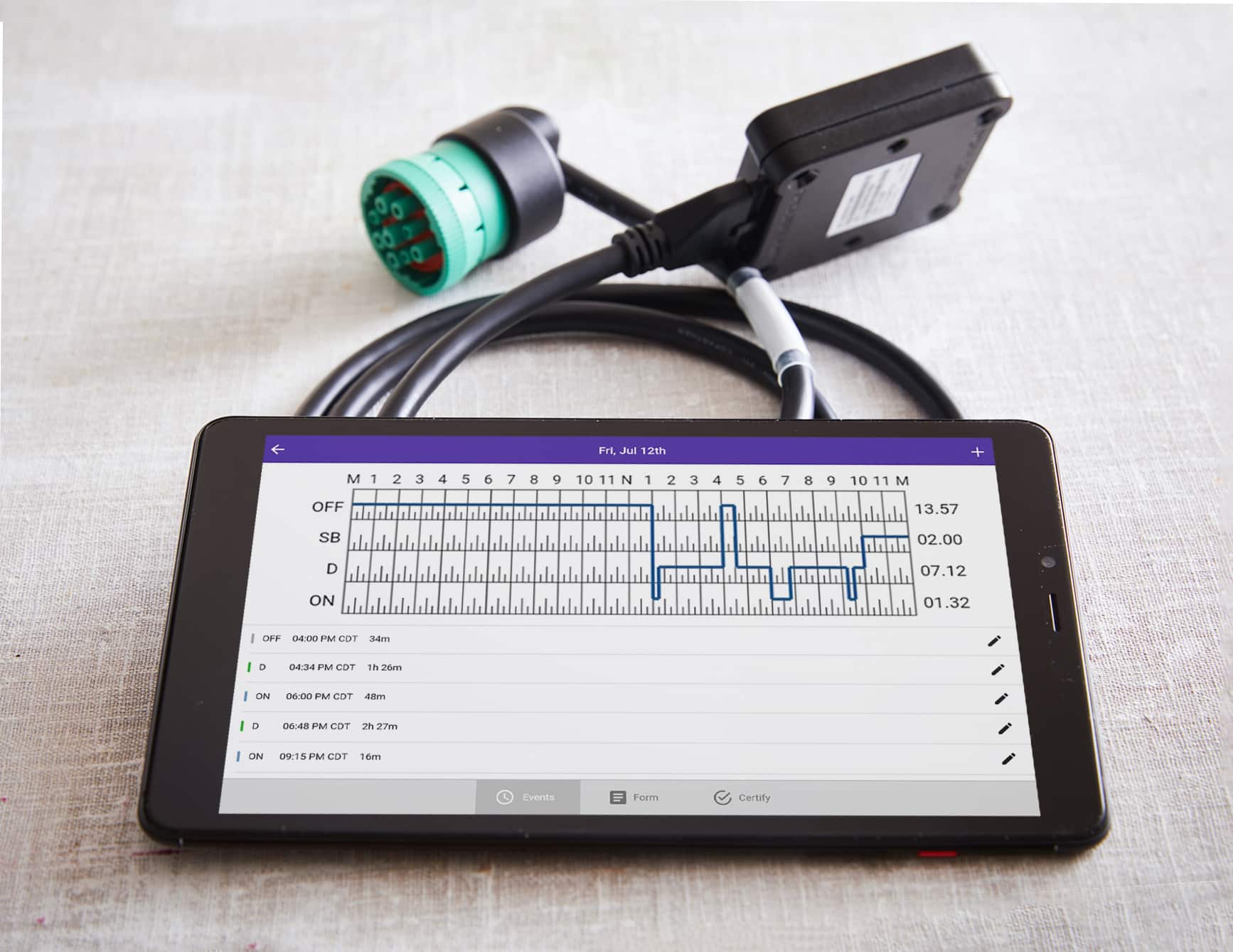
Every minute of a commercial driver’s day must be accurately categorized into one of four specific duty statuses. Your compliance software uses these four categories to generate the visual grid graph that safety officials review during an audit. These are:
- Off-Duty. This status applies when you are completely relieved of all responsibilities regarding the truck, the motor carrier, and the freight. You are free to pursue your own activities and leave the premises entirely.
- Sleeper Berth. This status is specifically reserved for time spent resting inside the compliant sleeper berth compartment of the commercial motor vehicle. Time spent resting in a day cab or a motel room cannot be legally logged as Sleeper Berth time.
- Driving. This status is automatically triggered by your telematics hardware. When the vehicle reaches a speed of five miles per hour, the system must instantly shift your status to Driving. This time cannot be manually edited or shortened.
- On-Duty Not Driving. This category covers all work-related activities performed when you are not actively behind the wheel. It includes fueling the truck, completing pre-trip and post-trip inspections, waiting at shipping docks, and signing bills of lading.
Mandatory Header Data
A visual grid graph alone does not constitute a legal logbook. Federal law requires specific administrative data to be attached to every daily record. If your electronic system fails to populate this information, the log is legally incomplete.
Your daily record must clearly display the current Date and the Total Miles driven within that 24-hour period. It must also include the exact Truck and Trailer ID numbers you are operating. Finally, the record must clearly state the Carrier Name and the main office address of the motor carrier you are operating under. Top-tier software platforms will pull the majority of this data automatically from your driver profile and the engine control module to save you time.
Mastering these basic administrative elements is the first and most effective step in avoiding “Form and Manner” violations during a roadside stop. When a DOT officer asks to see your screen, having perfectly organized header data and correctly categorized duty statuses immediately sets a professional, compliant tone for the rest of the inspection.
The “Brain and Body” Concept of a Commercial Driver Log Book
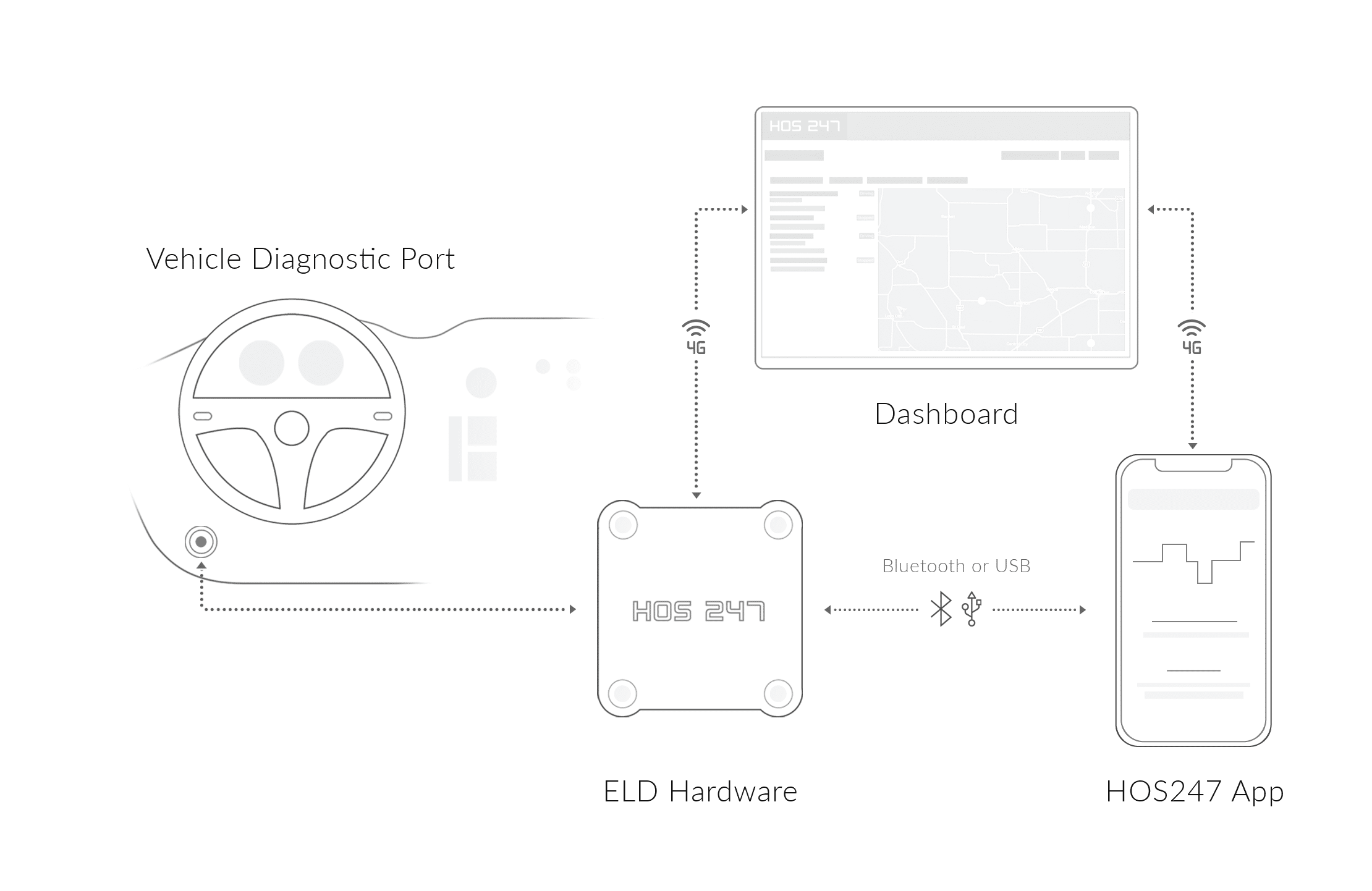
Many new operators mistakenly assume they can simply download an application to their smartphone and start hauling freight. However, federal law strictly prohibits standalone, GPS-only mobile applications. To be legally compliant in 2026, your system requires a physical tether to the vehicle. The digital software (the brain) is entirely useless without engine-connected telematics hardware (the body).
Understanding Integral Synchronization
The legal standard that binds the hardware and software together is known as “integral synchronization.” To meet this mandate, a physical telematics device must plug directly into the truck’s diagnostic port, which is typically a J1939 or OBDII connection.
Once secured, this hardware acts as a constant, passive reader. It pulls raw, unalterable data directly from the engine control module. This includes the vehicle’s true odometer reading, total engine hours, and real-time motion status. The hardware then continuously transmits this precise data to your tablet or smartphone interface, which formats it into the standard grid graph.
The Reality of Connection Failures
Understanding this physical tether explains the most common technical headache drivers face on the road. When a system appears to “crash,” freeze, or fail to record miles, it is rarely a software interface glitch. Instead, nearly 90% of these incidents are actually connectivity drops between the physical hardware and the mobile display.
If the Bluetooth or wired connection breaks, the digital brain immediately stops receiving data from the physical body. Because of this, evaluating a new system means looking past a sleek app design. A reliable system prioritizes a stable, engineered connection that can withstand the extreme temperature changes and heavy vibrations of a commercial cab.

Hours of Service (HOS) Mastery
A stable hardware connection ensures your data is recorded accurately, but the software must also correctly apply federal logic to that data. Modern systems must flawlessly track the complex web of Hours of Service (HOS) regulations to prevent costly roadside violations and forced downtime.
The Core Driving and Duty Limits
The federal mandate is built around three primary limitations that strictly govern a commercial driver’s schedule. Your compliance software must monitor all three of these clocks simultaneously:
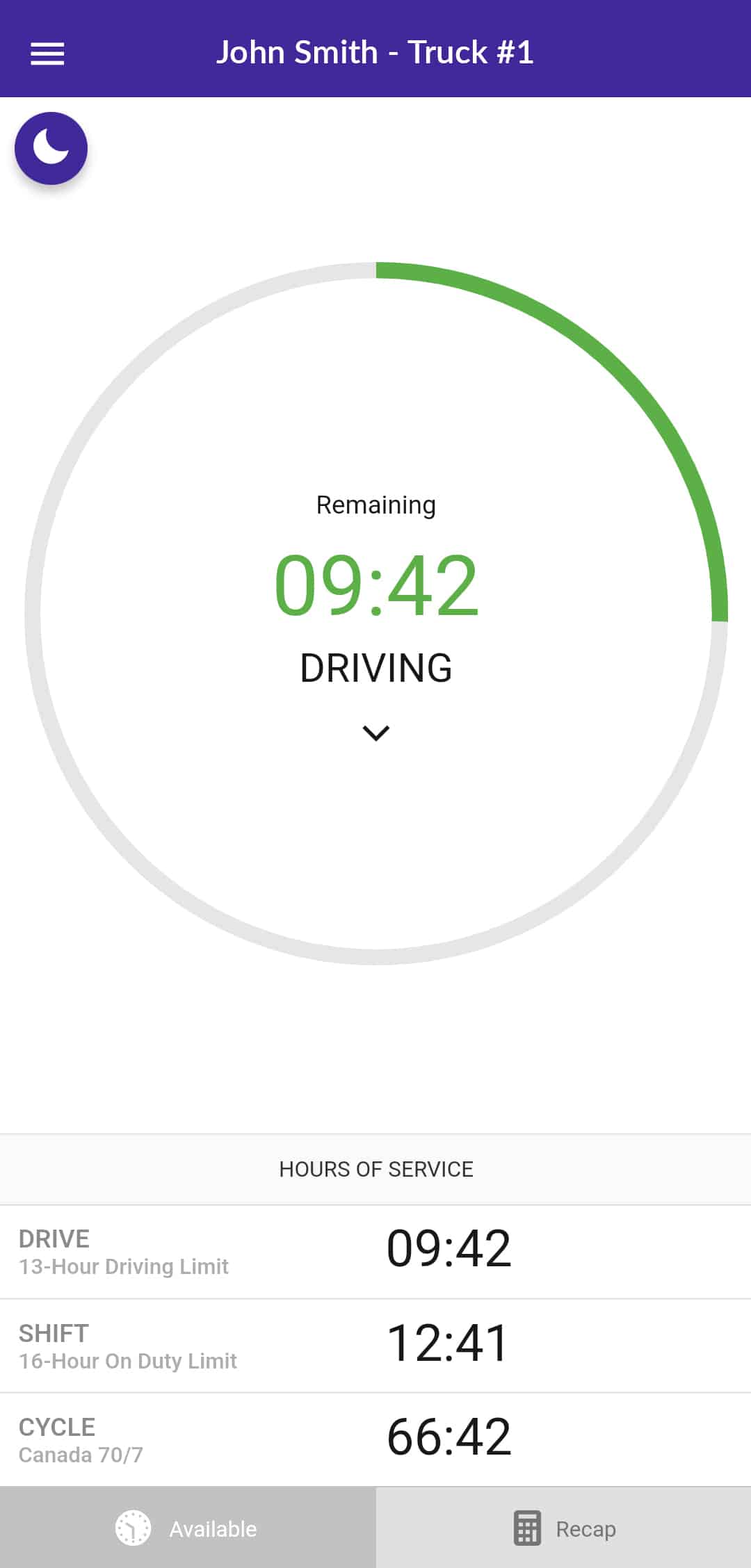
- The 11-hour driving limit. A driver may only operate a commercial vehicle for a maximum of 11 hours following 10 consecutive hours off duty.
- The 14-hour duty window. Once a driver comes on duty, they have a strict 14-hour window to complete their maximum 11 hours of driving. This 14-hour clock runs continuously and cannot be paused or extended by taking off-duty breaks.
- The 60/70-hour weekly cycle. A driver cannot drive after accumulating 60 hours on duty in 7 consecutive days, or 70 hours in 8 consecutive days, depending on the motor carrier’s specific operating schedule.
Managing Breaks and Restarts
Beyond the core daily and weekly limits, the software must also accurately track mandatory rest periods. Under the current regulations, drivers must take a 30-minute break after eight cumulative hours of driving without at least a 30-minute interruption. Crucially, this break can be legally logged as “On-Duty, Not Driving,” allowing drivers to satisfy the requirement while fueling the truck or completing required paperwork.
When a driver exhausts their weekly cycle limits, they must complete a 34-hour restart. This rule requires 34 consecutive hours of Off-Duty or Sleeper Berth time to completely reset their 60 or 70-hour clock back to zero, allowing them to begin a new work week.
These federal rules serve as the complex logic that your software must manage automatically. High-quality systems calculate these rules continuously in the background, providing proactive alerts to keep the driver in the green and perfectly legal at all times.
Operational Compliance: Data Transfer and In-Cab Materials
A successful roadside inspection relies on much more than just having accurate driving hours. When a DOT officer approaches your window, they expect a standardized, highly regulated workflow. Failing to follow the specific procedures for data transfer or missing required physical documents can result in a violation, even if your driving record is perfectly clean.
The Roadside Inspection Workflow
During an audit, the primary goal is to securely hand over your digital records to the safety official’s computer system. The FMCSA requires compliant software platforms to support specific methods for this data transfer.
The most common and efficient method is the “Telematics” option, which allows the driver to send their files directly to the FMCSA server via Web Services or secure email. A secondary “Local Transfer” option requires the hardware to support a localized transfer via Bluetooth or a wired USB connection. Modern, high-quality systems almost exclusively utilize the Web Services method, allowing the driver to complete the data handoff securely in just a few taps without handing over their unlocked personal device to the officer.
Mandatory In-Cab Documentation
Despite the transition to digital compliance, federal regulations still require specific physical documents to be present inside the commercial motor vehicle at all times. If you cannot produce these items upon request, you will be cited. Every cab must contain:
- The system user manual. You must carry a printed or electronic document detailing how to operate the specific hardware and software installed in the truck.
- The data transfer instruction sheet. This document provides step-by-step instructions for the driver on how to successfully produce and transfer their safety records to an authorized safety official.
- The malfunction guide. You need a physical instruction sheet detailing exactly what steps the driver must take if the hardware or software experiences a critical failure.
- Blank paper logs. You are required to carry a minimum eight-day supply of blank paper grid logs. These serve as your mandatory legal backup if your digital system breaks mid-trip.
Being thoroughly prepared with both a smooth data transfer process and the correct physical paperwork significantly reduces the duration of a roadside stop. When you hand over your required materials confidently and transfer your data without hesitation, the inspection process becomes a routine administrative task rather than a stressful event.
Managing the Audit Trail: Unassigned Driving and Edits
While drivers handle the daily task of categorizing their hours on the road, dispatchers and safety managers carry the legal burden of managing the back-office data. The FMCSA expects motor carriers to actively monitor their fleet’s compliance platform, and failure to properly manage the resulting audit trail is a primary trigger for severe federal penalties.
Handling Unassigned Driving Events
One of the most heavily scrutinized areas during a motor carrier review is unassigned driving time. This occurs whenever the commercial vehicle moves without a recognized driver actively logged into the system. Common scenarios include a mechanic taking a truck for a test drive, a yard hostler repositioning a trailer at the terminal, or a driver simply forgetting to log in before pulling out of a truck stop.
Because the telematics hardware continuously reads vehicle motion, it will record these miles regardless of who is in the cab. The motor carrier is legally responsible for reviewing these unassigned events on a daily basis. Back-office staff must either assign the driving time to the correct driver’s profile or attach a specific, detailed annotation explaining exactly why the vehicle moved. Allowing unassigned miles to pile up unresolved shows a lack of administrative oversight and will immediately flag your company during an audit.
Transparent Edits and the Original Record
Mistakes happen, and federal regulations allow for legal corrections to a driver’s duty status. A dispatcher or safety manager can suggest an edit to fix a logging error, but the driver must manually approve that edit on their mobile interface before it becomes part of the official record.
Crucially, modern compliance software must handle these edits transparently. The system is legally required to permanently preserve the “Original Record.” Even after a legal correction is made and approved, the raw, automatically recorded engine data cannot be destroyed or overwritten. The software must clearly display the newly edited timeline right alongside the original, unedited data.
Maintaining a clean, well-annotated audit trail that preserves the original engine data is the best defense against a comprehensive FMCSA carrier audit. When safety managers proactively resolve unassigned miles and handle log edits strictly by the book, they protect the company’s operating authority and ensure the fleet remains in good standing.
Troubleshooting and the 8-Day Malfunction Rule
Even the most advanced compliance systems occasionally experience technical failures. When a screen freezes or a device stops recording, panicking during a roadside stop is not an option. Federal regulations provide a specific malfunction protocol that you must follow immediately to remain legally compliant and protect your operating authority.
The Technical Recovery Protocol
When you realize your system has failed, you must take immediate action to secure your driving record.
Step 1: Document the failure. Note the exact time and location when the hardware or software stopped functioning. Attempt basic troubleshooting, such as rebooting the tablet or checking the cable connections, but do not spend hours trying to fix a broken device while parked on the shoulder.
Step 2: Reconstruct your record. You must immediately begin recording your hours on your backup paper logs. You are legally required to reconstruct your duty status for the current 24-hour period and the previous seven consecutive days on paper, unless your dispatch team can retrieve those past records directly from the software’s web portal and send them to you.
Carrier Notification and the 8-Day Limit
The malfunction protocol also places strict deadlines on both the driver and the motor carrier to resolve the technical issue.
The 24-hour notification rule. A driver must provide written notice of the system failure to their motor carrier within 24 hours of discovering the malfunction.
The 8-day paper limit. Operating on paper is strictly a temporary, emergency measure. You are legally permitted to use paper logs for a maximum of eight days. The motor carrier must repair or completely replace the failing hardware within this eight-day window. If the truck operates on paper on the ninth day, the driver will be immediately placed Out of Service upon inspection.
Knowing exactly how to execute this malfunction protocol is just as important as knowing how to operate the software itself. It serves as your ultimate legal safety net when technology fails on the road.
The HOS247 Advantage: Reliability for American Fleets
Navigating the 2026 regulatory environment requires a technology partner capable of delivering consistent, daily performance. As the FMCSA actively audits and refines its approved registry, HOS247 provides fleets with a proven, heavily vetted compliance platform built specifically to handle the physical realities of the road.
We focus heavily on the physical connection between the brain and the body of the system, offering a comprehensive suite of tools designed to eliminate daily technical frustrations.
- Engineered hardware stability. We utilize proprietary, stress-tested telematics devices designed to maintain an unbroken Bluetooth link with the driver interface, virtually eliminating the dropped connections that cause unassigned driving errors.
- One-year hardware warranty. We stand behind the physical durability of our equipment in the commercial cab, providing a free replacement warranty to keep your trucks moving.
- Bring your own device (BYOD). Our application is fully compatible with the Android and iOS smartphones and tablets you already own, saving your fleet money on expensive proprietary screens.
- Driver-centric interface. The app features large touch targets, high-contrast visuals, and a dedicated night mode to minimize eye strain and make duty status changes fast and clear.
- One-click inspection mode. Drivers can lock their screens and securely transfer their data files to safety officials in seconds via web services, protecting private routing information and speeding up the DOT audit.
- Multilingual human support. Our top-tier support team is available seven days a week, offering live assistance in English, Spanish, Russian, and Polish to resolve technical issues exactly when they happen.
- No-contract freedom. We believe a provider should earn your business every month. We offer flexible, month-to-month plans without restrictive long-term contracts or hidden cancellation fees.
- Automated IFTA calculations. The system automatically tracks jurisdictional mileage as you cross state and provincial lines, simplifying a complex quarterly tax chore.
- Real-time GPS tracking. Dispatchers can monitor vehicle locations with pinpoint precision to improve daily route planning and provide accurate arrival times to waiting customers.
- Electronic DVIRs. Transitioning from paper to electronic vehicle inspection reports ensures that pre-trip and post-trip defects are instantly communicated to your maintenance shop.
- Fault code diagnostics. The hardware reads diagnostic trouble codes (DTCs) directly from the engine, alerting you to minor mechanical faults before they escalate into expensive roadside breakdowns.
- Idle monitoring. The system tracks exactly how long a truck runs without moving, helping fleet managers identify massive fuel waste and reduce unnecessary engine wear.
Partnering with a reliable technology provider allows drivers to focus entirely on safely operating their vehicles rather than struggling with technical glitches and frustrating administrative tasks.
Frequently Asked Questions About Electronic Commercial Driver Log Books
Staying informed on these common operational questions is a critical step in maintaining a violation-free record. Knowing exactly what the regulations require helps you handle roadside interactions and administrative tasks with complete confidence.

Secure Your Fleet’s Future with a Verified Partner
Operating a commercial fleet means navigating strict data transfer standards and aggressive technology vetting by federal safety officials. You cannot afford to rely on outdated, unverified systems that threaten your operating authority with constant connection drops and frustrating administrative errors.
Choosing the right technology partner is an investment in your company’s uptime and peace of mind. By outfitting your trucks with a reliable, fully engineered commercial driver log book, you protect your business from unnecessary fines and streamline your daily back-office operations.
Stop settling for poor hardware connectivity and restrictive multi-year contracts that offer zero flexibility. Schedule a demo or start your no-contract trial with HOS247 today to experience a compliance platform built for the rigorous demands of the road.
A Note to Our Readers on Compliance
This article is intended for informational and educational purposes only. It is not a substitute for official regulatory guidance or legal advice. HOS and ELD regulations are complex and subject to change and interpretation by enforcement authorities. Please always refer to official sources for the most current and accurate information.

As an expert in B2B and B2C sales, I’ve dedicated myself to perfecting sales processes and client retention strategies in the logistics and trucking industry. I have significantly contributed to the expansion of the ELD service, catering to retail and wholesale clients in need of HOS247 ELD solutions. My unwavering commitment to implementing state-of-the-art sales techniques and technologies ensures the continuous growth and success of businesses I work with.









For American trucking companies, managing a fleet of vehicles is more challenging than ever. It’s not just about keeping trucks on the road anymore. Today, it’s about using the right mix of vehicles, drivers, technology, and information to get the

According to the ELD mandate, published by the FMCSA and enforced by the DOT, commercial vehicle drivers must use approved electronic logging devices instead of paper logs to keep records of duty status since December 16, 2019. This includes commercial

Hours of service violations carry serious financial consequences for truckers. Individual fines can range from hundreds to thousands of dollars, but the real cost comes from out of service time, lost loads, and administrative expenses. Imagine the total cost of