
What Are the ELD Mandate Exemptions?
As a driver in the United States, it is very likely that you will have to follow the federal electronic logbook mandate and keep RODS using one. However, there are electronic logging device exemptions that can be claimed by drivers in specific circumstances.
For one, short haul drivers are not required to keep RODS and, therefore, do not require ELDs. Other than that, drivers have to keep HOS logs may do so on paper if one of the following exemptions to the electronic logging device policy applies:
- RODS kept for 8 out of 30 days. Drivers required to keep RODS for no more than 8 days within any 30-day period are exempt from the federal mandate.
- Drive-away-tow-away operations. When the vehicle being driven is the cargo or part of it, keeping electronic RODS is not necessary.
- Vehicles manufactured before 2000. Drivers of vehicles with engines manufactured before the model year 2000.
While these exemptions provide necessary flexibility for specific types of operations, they do not exempt a driver from the fundamental responsibility of safety. Even if you qualify for a paper-log or short-haul exception, maintaining organized and accurate records remains a legal requirement. For many operators, voluntarily adopting an electronic logging system is often the most efficient way to prove exemption compliance during an inspection.
Checklist of Federal ELD Mandate Requirements
Electronic logging device policy includes various requirements for an electronic logbook to be compliant. Here is a quick summary:
- Make sure the provider is registered on the list of registered devices (you can consult the list on the FMCSA website).
- The elog must be mounted on a fixed position and visible for the driver at all times and for safety officials looking from the outside of the vehicle.
- The driver must have the electronic logbook’s information packet on board including:
- A user manual with the essential information on how to operate the system.
- Step-by-step instructions on how to transfer data from the elog to safety officials during an inspection, as well as for reporting and recordkeeping procedures during a malfunction.
- Eight days’ supply of blank paper RODS graph grids.
- The ELD must be completely functional after one minute of the engine being turned on.
- The elog must be able to convert UTC standard date and time, adapt to the driver’s home terminal time, and account for daylight savings.
- The logbook must automatically determine the vehicle’s position in standard coordinates.
- The electronic logbook must allow the driver to enter vehicle location manually.
- Ensure that motor carriers can change settings to set up driver profiles and claim exemptions, as well as preventing unidentified driver data errors.
- The ELD must prompt a warning when the driver is not identified.
- Make sure the elog does not allow driving time to be shortened.
- The device must record when drivers certify and recertify their RODS. It should also associate RODS with a driver, vehicle, motor carrier, and shipping document number.
- The elog must detect vehicle movement automatically and set the status to driving if it exceeds 5 miles per hour.
- RODS data must be accessible in case of inspection.
Navigating this extensive list of technical specifications can be daunting, but these standards serve as the backbone of a fair and transparent enforcement environment. Ensuring your device checks every one of these boxes is the only way to protect your fleet from hardware-related citations.
HOS247 Helps Carriers Avoid Costly Violations
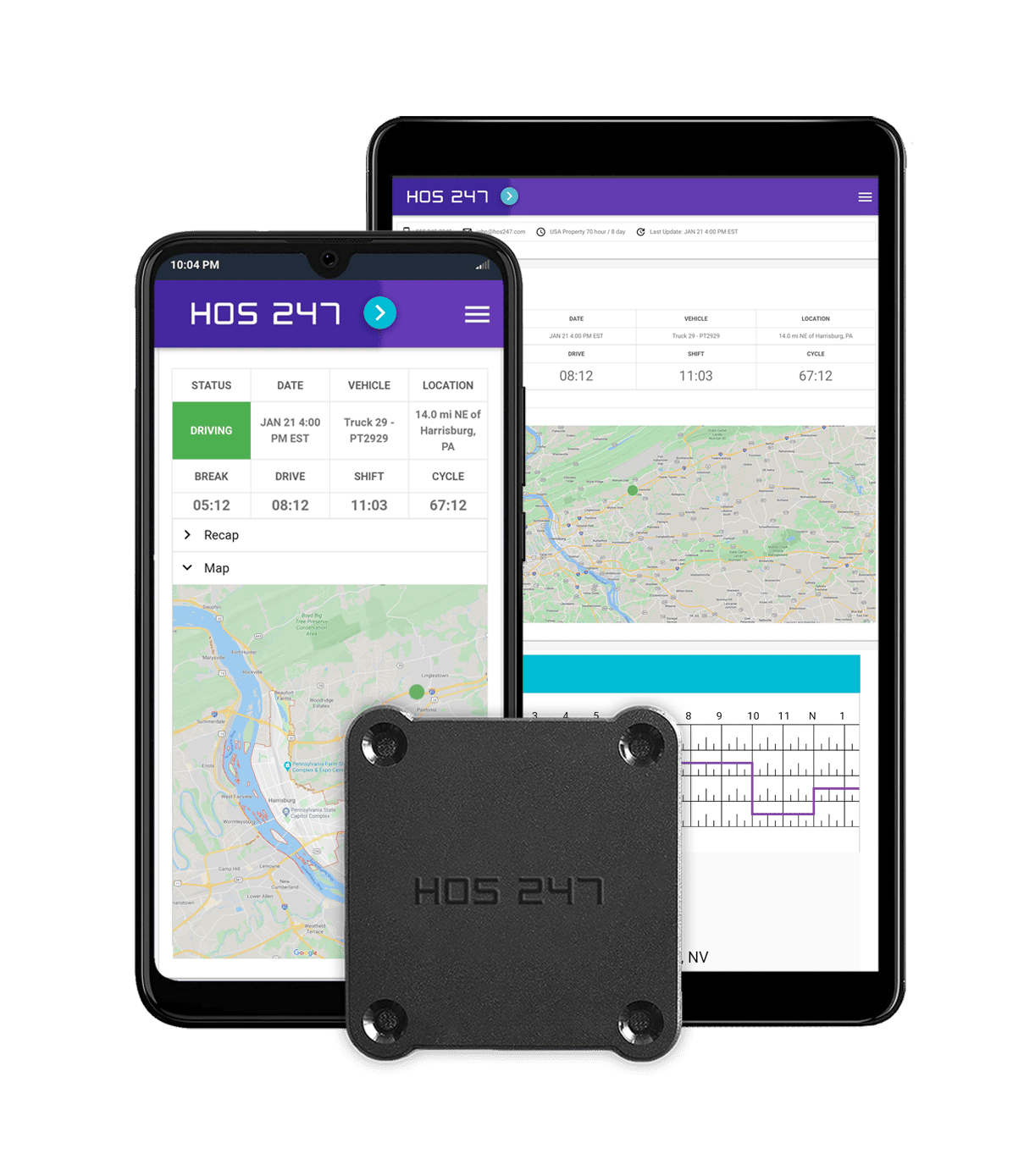
HOS247 offers motor drivers and carriers a reliable electronic logbook solution that meets the requirements of the current electronic logging device mandate. It is our company policy to offer reliability to prevent HOS violations and pass inspections easily. The logbook prevents common violations such as:
- Operating beyond 14 consecutive duty hours. According to federal rules, a driver must stop driving after 14 continuous hours on duty. Passenger vehicles are allowed to extend the limit to 15 hours.
- Operating beyond 60/70 hours in one week. Driving for more than 60 hours in 7 days, or 70 hours in 8 days is a violation of HOS law.
- Not updating duty status. The current electronic logging device policy requires drivers to keep RODS updated to the last hour.
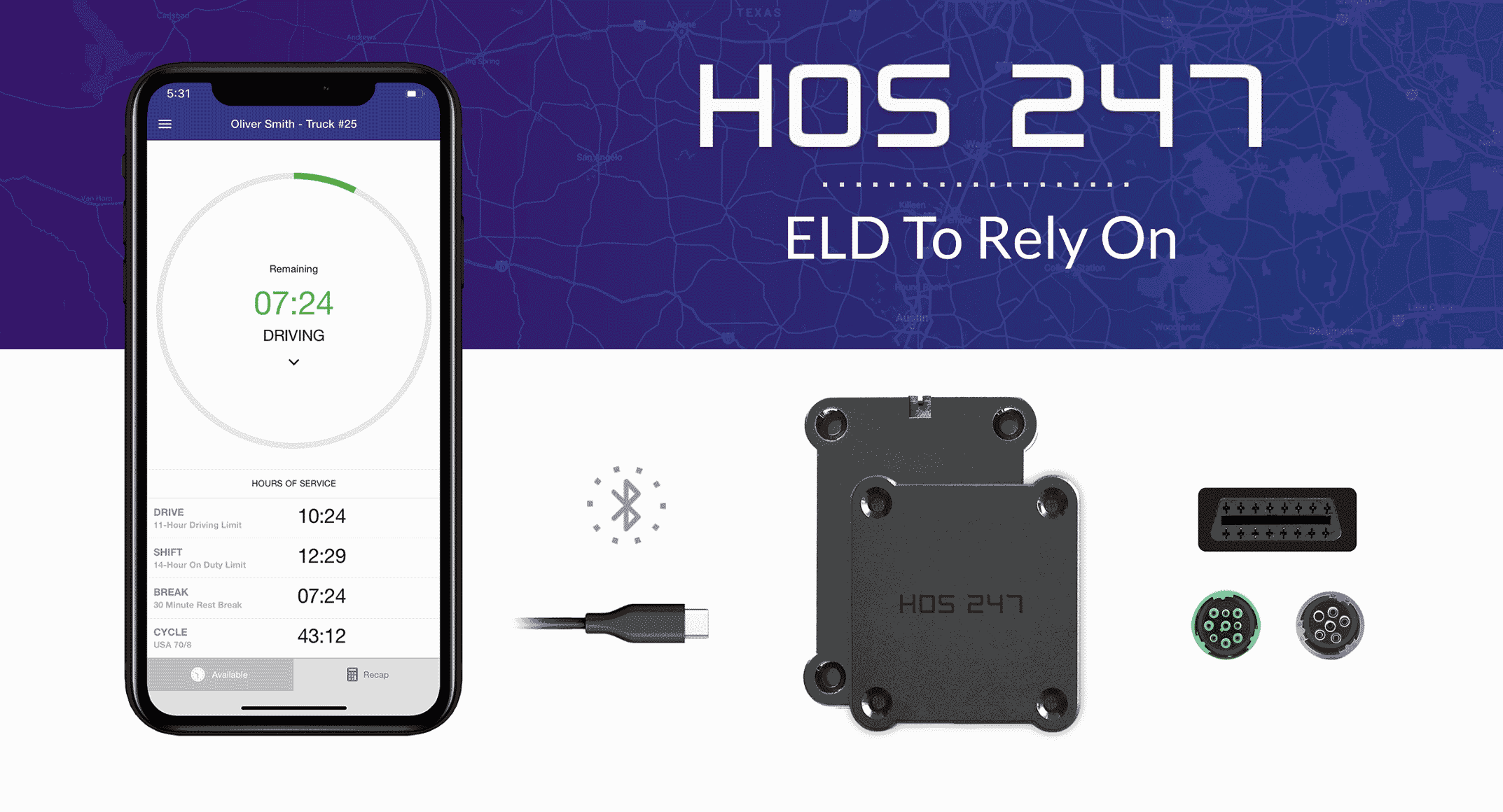
- Inaccurate vehicle logs. Inconsistencies in drivers’ RODS are subject to fines and CSA penalties. HOS247 devices are high quality and pair up with our app through a stable Bluetooth connection to record ELDs HOS data and keep it updated in real time, preventing human error and false information on RODS logs.
Avoiding these common pitfalls is about more than just dodging a fine; it is about preserving the long-term health of your business. A clean safety record leads to lower insurance premiums and better load opportunities from brokers who prioritize low-risk carriers. By using a quality system that alerts you to approaching limits, you transform compliance from a source of stress into a streamlined part of your daily workflow.
HOS247 Is a Leading ELD Service Provider
As a responsible elog developer and provider, HOS247 holds itself accountable to its clients and has made sure to meet expectations on electronic logging device policy and performance. We have integrated our knowledge of FMCSA law and HOS rules into the service, and our electronic logbook is sure to help prevent violations, optimize operations, and boost profit thanks to these critical capabilities:
- Accurate and timely logs. The stable Bluetooth connection allows for an accurate, automatic record of HOS hours.
- Reliable performance. Our hardware piece is durable and has been tested to ensure it performs as expected on the road.
- Top-rated customer service. Our technical service team is available seven days a week and in four languages (English, Polish, Russian, and Spanish) to help users troubleshoot any problem.
- No-contract company policy. To allow our users as much freedom as possible, we offer our services as a subscription. No contracts or extended commitments are necessary. Our plans can also be upgraded and downgraded as the needs of the customer change.
- Trial period. Save your business a risky decision and use our two-week trial period to become familiar with HOS247 ELD and its capabilities. If you are not satisfied, you may return it before this time and you will receive a hassle-free refund.
Ultimately, the value of an ELD provider is measured by how little you have to think about them during your workday. By combining high-performance hardware with a flexible, driver-first business model, HOS247 removes the friction points that typically complicate digital transitions.
General Information on the ELD Mandate
The FMCSA has developed its electronic logging device policy with the purpose of improving road safety for the public at large. This mandate applies to drivers operating commercial vehicles in interstate commerce operations in the United States, even if they live in Mexico or Canada.
Even though the FMCSA enforces the mandate and carries out inspections on drivers, they will not retain any data from the ELD unless there is a violation. Broadly speaking, the federal mandate has these basic principles:
- Mandatory use. Commercial drivers required to prepare HOS records for their operations must use electronic logbooks.
- Standardized design. ELD performance and design requirements have been standardized and require the provider to certify its product on the FMCSA list of approved devices.
- Forbids driver harassment. The mandate prohibits harassment upon drivers based on their ELD data or other technology. There is also a formal process for drivers to denounce harassment by the authorities.
These foundational principles illustrate that the mandate is not just about monitoring hours; it is about modernizing the entire industry’s approach to safety and driver well-being. By standardizing design and strictly forbidding driver harassment, the FMCSA has created a digital framework that protects professional truckers while ensuring a level playing field.

Conclusion: Compliance as a Competitive Edge
Ultimately, the federal electronic logging device policy isn’t just a hurdle to clear — it’s a data-driven framework designed to keep the most exhausted drivers off the road and the safest fleets in business. Navigating these rules successfully requires more than just a “plug-and-play” attitude; it requires a solution that understands the millisecond-latency of engine synchronization and the strict geometry of a 150 air-mile radius.
By choosing a provider like HOS247, you’re investing in an insurance policy against the administrative errors that sink CSA scores. In a world where an extra five minutes of drive time or a loose Bluetooth connection can trigger a costly out-of-service order, having a reliable, vetted, and driver-friendly system is the only way to ensure your focus stays where it belongs: on the road ahead.
A Note to Our Readers on Compliance
This article is intended for informational and educational purposes only. It is not a substitute for official regulatory guidance or legal advice. HOS and ELD regulations are complex and subject to change and interpretation by enforcement officials. Please always refer to official sources for the most current and accurate information.

I’ve co-founded, built and managed several transportation-related businesses. Now, I’m a founder and CEO of HOS247 – an AI Transportation Platform for trucking companies, freight brokers and other logistics operations. We are transitioning old-style operations to technology-advanced logistics entities and help them to grow their businesses. ELDs (electronic logging devices), fleet tracking and management 2.0 combined with AI-powered dispatch tools.











The Logbook App for iPhone to Rely On Electronic logging devices are critical for drivers and carriers that operate under FMCSA hours of service rules. The challenge is finding the right ELD when there are so many on the market.
For owner-operators to comply with the Federal Motor Carrier Safety Administration (FMCSA) electronic logbook rules, you will need to have a good electronic log to track your hours. This will also help you stay competitive and safe while working in
A truck daily log book is used to record duty statuses of commercial drivers to ensure compliance with hours of service rules and regulations. There are two types of logbooks: Paper logs. The driver must fill them out manually and