
Most commercial vehicle drivers must abide by the elog mandate (including trucks and buses), meaning it is mandatory for them to record drivers’ hours of service via an FMCSA- approved digital log book. Any data provided in paper logs or through an unregistered digital log book will not be accepted, subjecting carriers and drivers to penalties. Some drivers are exempt from these regulations, including:
- Short-haul drivers. Drivers operating within a 150 air-mile radius who return to their work reporting location every day and use time cards are exempt.
- 8-day RODS. Drivers are allowed to maintain RODS in paper logs only for a period of 8 days in a span of 30 days.
- Drive-away-tow-away operation. When the vehicle being driven is a commodity, the ELD mandate does not apply to the driver.
- Vehicles with older engines. Commercial vehicles with an engine model year of 1999 or older are not compatible with the technology used in registered vehicle logs, and are exempt from having a digital car log book.
To ensure compliance and make the most of your investment while ensuring everyone’s safety, it is vital to choose a reliable provider. With a dependable solution in place, commercial drivers can smoothly navigate the requirements of the digital logbook law, streamline record-keeping, and improve overall fleet management practices.
Local Timecard Retention Rules
While short-haul operators are exempt from carrying electronic logging devices inside the cab, motor carriers must still maintain strict time records. Federal rules require short-haul employers to document the driver’s daily start time, total duty hours, end time, and total consecutive off-duty time. Employers must retain these daily timecards at their principal place of business for at least six months to satisfy federal compliance reviews.
Understanding ELD Technical Standards
The FMCSA has established specific technical standards that every compliant digital logbook must meet. These requirements ensure consistent and accurate recording across all approved devices.
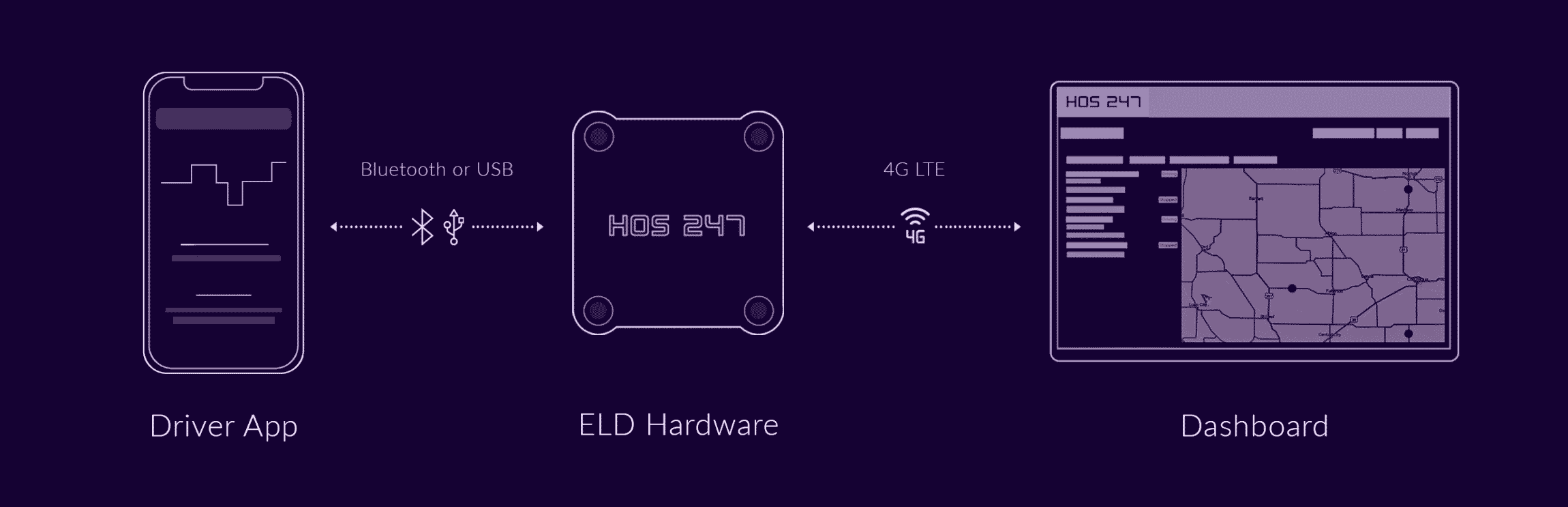
- Engine synchronization. A compliant ELD must connect directly to the vehicle’s engine control module. This connection enables automatic recording of engine power status, vehicle motion, and drive time. The device monitors these parameters continuously while the vehicle is in operation.
- Data accuracy and storage. The system must maintain accurate records of all required information, including date, time, location, engine hours, and vehicle miles. Drivers and carriers must have access to at least six months of recorded data, stored securely within the system.
- Real-time recording. Changes in duty status must be recorded in real-time, with automatic updates when the vehicle begins or ends motion. This ensures an accurate record of driving time and helps prevent hours of service violations before they occur.
These technical requirements are not just regulatory checkboxes – they form the foundation of a reliable electronic logging system. When evaluating different ELD providers, understanding these basic technical standards helps carriers and drivers make informed decisions. However, technical specifications are just one part of choosing the right digital logbook. Let’s examine who exactly must comply with these electronic logging requirements.
Streamlining Daily Screen Workflows
Beyond core telemetry tracking, modern ELD interfaces prioritize clean display layouts that reduce driver interaction time. Intuitive software design allows drivers to switch duty statuses, view available drive hours, and launch inspection mode with minimal screen taps, keeping attention focused safely on the road.
Choosing the Best Digital Log Book
While most providers claim to offer registered digital logbooks for trucks, their place on the FMCSA list does not guarantee compliance. A drop in the standard of quality may result in its removal of registration, leaving customers to face dire consequences. Purchasing another digital log book or and paying non-compliance fines can be a huge burden on the budget. This is the reason carriers and drivers should pay special attention that they are purchasing a certified elog from a dependable provider.
Here are the determining factors for choosing the right elog:
- Active customer support. A provider should have efficient technical support available for their customers in case they need it. If the provider is not easily accessible, it is better to choose one with a ready-to-help, proficient team of experts.
- Easy to configure technology. If the back-end panel seems extremely complicated to the carrier manager or owner-operator to carry out simple operations, then the digital log book might not be worth it.
- Driver user-friendly. A device should be user-friendly to encourage the driver to use it correctly, which will save time and help them increase productivity.
- No hidden costs. Sometimes, providers might not be transparent about their pricing policy. Additional costs may be charged for using their brand’s tablets, maintenance fees, or charges for add-on features. It is convenient to ask about the pricing structure before committing to anything.
- Reviews from real users. Thanks to the advent of digital platforms, current users of apps can now review them to help future users. These reviews help in understanding the performance of the product and the provider’s professionalism and customer care policies. It might be best to stay clear of providers with many negative reviews.
- No long-term contracts. Some electronic logbook providers lock customers through contracts for as long as 5 years, within which they cannot switch to any other provider. Any contract that exceeds one year should be avoided in order to keep the carrier’s options open.
Beyond these basic requirements, consider these crucial factors when selecting your provider:
|
Evaluation Area |
Key Selection Criteria |
Operational Impact |
|
Integration Capabilities |
• Fleet management system integration • Fuel tax reporting feature • Vehicle maintenance tracking • GPS fleet tracking |
Unifies dispatch, mileage calculation, and asset management into a single operational workflow. |
|
Implementation Process |
• Installation requirements and complexity • Training resources and support • Data migration assistance • Setup timeline and requirements |
Minimizes fleet onboarding time, prevents vehicle downtime, and ensures smooth software adoption. |
|
Provider Stability |
• A proven track record in the trucking industry • Strong financial stability • Regular system updates and improvements • Demonstrated compliance expertise |
Protects carriers from provider insolvencies, device revocations, and unhandled regulatory changes. |
Critical Red Flags to Avoid
Selecting an unproven electronic logging device introduces operational vulnerabilities. Fleet managers should steer clear of specific industry red flags during provider evaluations:
- Unverified self-certification and revocation history. Avoid cheap, unproven providers with a history of FMCSA non-compliance or poor technical auditing standards.
- Long-term contract locks. Avoid providers requiring 2-to-3-year binding agreements with steep early termination fees.
- Restricted “tier-locked” features. Watch out for base plans that hide necessary compliance tools (like unassigned driving logs or eDVIRs) behind expensive upgrade tiers.
- Unresponsive technical support. Avoid providers without live, 7-day technical support available when drivers face roadside inspection issues.
Provider Evaluation Checklist
Before committing to an electronic logging system, safety managers should perform three quick checks:
- Verify the hardware model on the active FMCSA registration database.
- Confirm the app’s capability to store logs offline during network drops.
- Review driver app store ratings for Bluetooth stability.
Conducting thorough provider vetting prevents costly secondary equipment purchases and protects fleet operational continuity.

Top ELD Providers: Ratings and Comparison
When it comes to Electronic Logging Devices (ELDs), choosing the right provider is crucial for ensuring compliance and efficient fleet management. To help you make an informed decision, we’ve compiled a list of major ELD providers along with their ratings to assist with your comparison process.
Digital Log Book Requirements
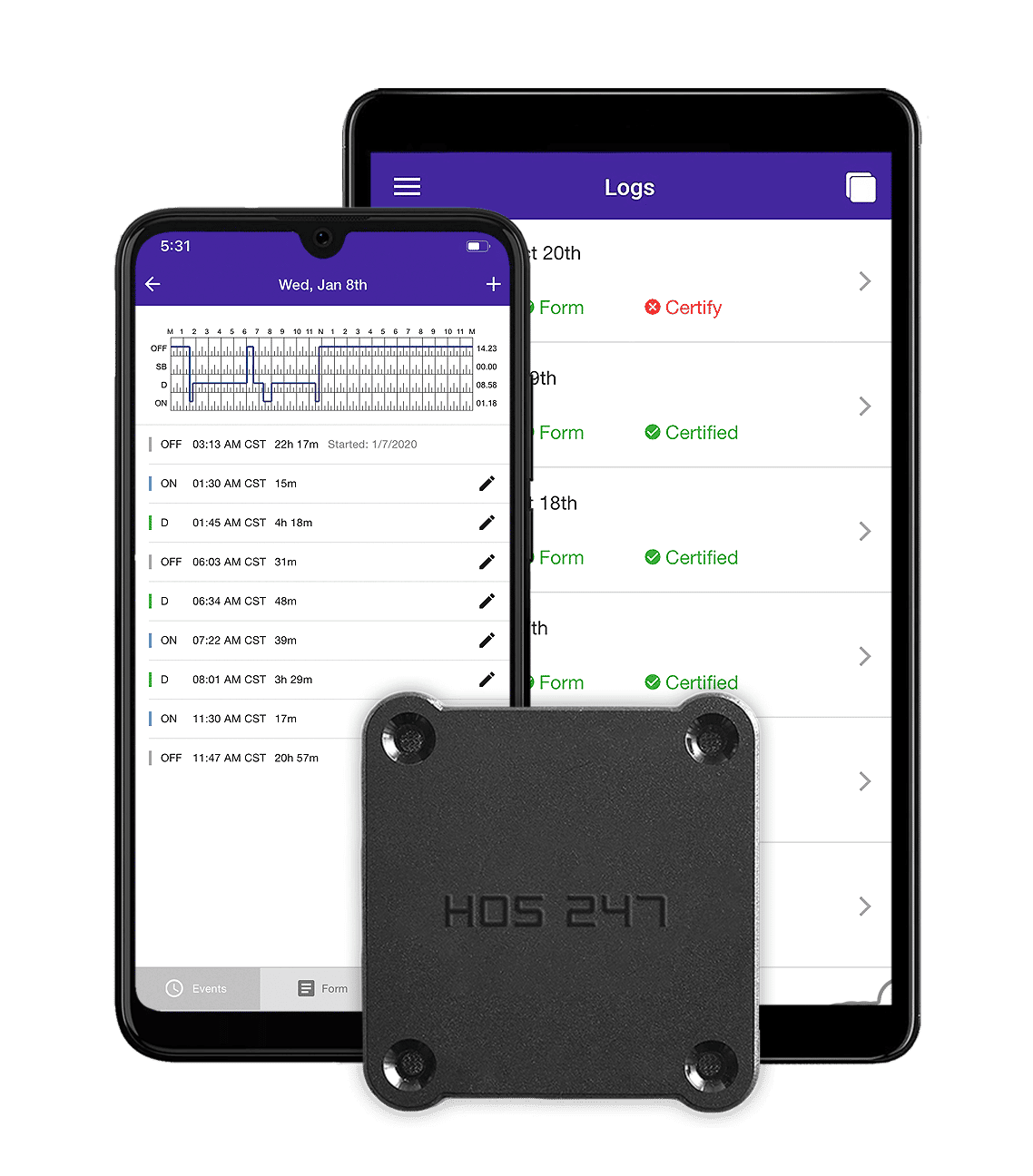
Registered ELD devices must be programmed to meet FMCSA standards. Some of the requirements pertaining the information that the elog must collect are:
- The driver’s status is displayed over a period of 24 hours on a grid that dedicates one box to every hour in a day.
- Four sections show different driver statuses: off-duty, on-duty, driving, and sleeper berth if the driver is using a berth.
- The information must automatically update after the last change in the duty status.
- The digital logbook must synchronize directly with the vehicle engine to record all the required data.
Failing to verify that an installed system meets every technical equirement can lead to immediate compliance failures during roadside inspections. When electronic logs fall short of these federal standards, motor carriers face steep financial penalties and regulatory enforcement actions.
Penalties for Violation of the ELD Mandate
To further fortify the ELD mandate regulations for truck drivers and carriers, the FMCSA has reviewed the penalty charges recently. Some violation causes that lead to these penalties are provided below:
|
Violation Clause |
Previous penalty charge |
New penalty charge |
|
Failure of the agency to testify records |
$1,112 to $11,125 |
$1,125 to $11,256 |
|
Out-of-service order for operation of CMV |
$1,928 |
$1,951 |
|
Recordkeeping maximum penalty per day |
$1,292 |
$1,307 |
|
Non-recordkeeping violations by drivers |
$3,923 |
$3,969 |
|
Maximum penalty for recordkeeping |
$12,919 |
$13,072 |
|
Falsification of vehicle records |
$12,919 |
$13,072 |
|
Violations of the commercial regulations for property carriers |
$11,125 |
$11,256 |
|
Reporting and recordkeeping |
$1,112 to $8,372 |
$1,125 to $8,471 |
|
Evasion of motor carrier regulations |
$2,226 to $5,562 |
$2,252 to $5,628 |
Note: Penalty amounts are subject to annual inflation adjustments by the FMCSA. Current penalties may be higher than those listed.
Impact on CSA Scores and Operating Authority
ELD violations affect both Compliance, Safety, Accountability (CSA) scores and a carrier’s operating authority. Rather than listing specific point values that may change, drivers and carriers should understand:
Severity of Violations
The FMCSA categorizes ELD violations based on severity:
- Critical violations that lead to immediate out-of-service orders.
- Major violations that significantly impact CSA scores.
- Minor violations related to form and manner issues.
Common ELD-Related Violations
- Operating without a registered ELD.
- Failing to maintain ELD data.
- Not transferring ELD data to safety officials.
- Device malfunctions without proper documentation.
- Missing records of duty status.
Inspection Preparation
- Maintain a properly functioning ELD at all times.
- Keep ELD user manual and instruction sheet in the vehicle.
- Know how to access and transfer logs to officials.
- Have a supply of blank paper logs as backup.
- Maintain required supporting documents.
For specific CSA score impacts and current violation penalties, drivers and carriers should consult the FMCSA website or their compliance consultants, as these values are subject to change.
Annual Inflation-Adjusted Penalty Caps and State Environmental Fines
Federal civil penalties under 49 CFR Part 386 are adjusted annually for inflation. Maximum daily fines for recordkeeping violations exceed $1,500 per day, while intentional record falsification or operating without approved logging equipment carries maximum penalties exceeding $19,000 per instance.
In addition to federal HOS fines, state-level environmental mandates impose strict financial burdens. Under California Health and Safety Code Section 42402, heavy-duty commercial vehicles over 14,000 lbs GVWR operating without verified California Air Resources Board (CARB) Clean Truck Check (CTC) compliance face daily civil fines ranging from $1,000 to $10,000 per vehicle. Non-compliant trucks face immediate DMV registration holds and bans from operating at California ports and intermodal railyards.
Out-of-Service Impact Categories
Severe compliance failures — such as operating without a registered ELD, failing to present eRODS during roadside checks, or unresolved CARB emissions holds — trigger immediate out-of-service (OOS) orders. Placing a vehicle out of service stops freight movements instantly, damages carrier safety percentiles, and threatens overall operating authority. Maintaining clean inspection records protects carrier CSA scores and preserves long-term business reputation.
HOS247 Helps Truckers Avoid Costly Violations
A reliable provider like HOS247 offers complete ELD solutions that suit the requirements of carriers. All HOS247 electronic logbooks are designed with intuitive technology and have been proven to meet the standards of the FMCSA. HOS247 devices provide compliance and increased productivity, since it automatically or alerts the driver to prevent DOT violations, such as:
- Operating after 14 consecutive duty hours. As per FMCSA HOS rules, a driver cannot drive after 14 continuous on-duty hours. For passenger vehicles, the limit is 15 consecutive hours.
- Driving over 60/ 70 hours in a week. Driving hours that exceed 60 or 70 in 7 or 8 days is considered a violation by the FMSA.
- Failure to record duty status. The FMCSA wants a report on the driver’s duty status every hour, failing which a hefty penalty will be charged. With a registered digital logbook like HOS247, the vehicle logs are automatically recorded from the engine and updated in real time.
- Inaccurate vehicle logs. Any discrepancy in drivers’ RODS is subject to violation charges. HOS247 digital logbooks help by automatically recording data and preparing a report, avoiding any chance of human error or false logs.
Preventing routine HOS violations requires more than basic logging capabilities; it depends on an integrated software platform built to simplify daily operations for both drivers and dispatchers.
Benefits of HOS247 Logbooks
Every HOS247 electronic logbook meets the highest standard in the industry and provides top-rated customer support seven days a week. Here are a few more advantages of HOS247:
- Multilingual dedicated support. HOS247 maintains an active team that guides customers on optimal use of the digital logbook. This ensures HOS247 customers get the maximum benefit from the device, creating a value for money experience.
- Compatibility options. HOS247 digital logbooks can be operated via Android or iOS tablets or smartphones. Information can be transferred through USB or Bluetooth.
- User-friendly fleet manager portal. The elog with an easy fleet manager portal, allowing complete monitoring of the vehicle or fleet. It can be installed in minutes and starts functioning almost immediately after being switched on.
- Flexible add-on features for upgraded support. We understand users’ needs and thus provide features like GPS and IFTA calculations. These features can be added as and when required depending on the growth of the company or business.
- No-contract policy. Customers do not have to commit to contracts, our large base of trusted clients stays because of the reliability of our solution.
- 14-day trial period. All HOS247 digital logbooks are available on a 14-days trial basis. The client may return the device during the trial period and get their money back without any hassle.
Automated CARB Telematics Testing
In addition to core logging and telematics features, HOS247 integrates automated CARB CTC compliance testing. The vehicle telematics gateway executes scheduled On-Board Diagnostics (OBD) emissions tests automatically while trucks operate on their normal delivery routes. The system submits test data directly to the CARB CTC portal, eliminating shop visits, manual testing fees, and vehicle downtime.
Combining hours-of-service tracking, GPS telematics, IFTA reporting, and CARB emissions testing into a single portal lowers back-office administrative workloads and ensures complete operational compliance.
Compliance is a critical and professional requirement for drivers. A dependable ELD is an absolute necessity to avoid the risks of DOT penalties. To achieve this, it is best to pick a reliable electronic logbook to assist your operations out on the road. HOS247 is a trustworthy provider with several years’ experience and a history of top-rated service to customers.
Troubleshooting and Support Essentials
Even the most reliable ELD systems occasionally require troubleshooting. Understanding common issues and knowing how to handle them helps drivers stay compliant and minimize downtime.
Common ELD Issues and Solutions
Drivers regularly face several technical challenges with their ELDs. Understanding these common issues and their solutions helps maintain compliance and reduce stress during operations.
Connection Problems
Devices may lose connection between the ELD unit and the mobile display, or between the ELD and the engine. This can happen due to loose connections, interference, or software glitches.
Possible solutions:
- Check the physical connection between the ELD and the ECM port.
- Verify Bluetooth is enabled if using wireless connection.
- Ensure your mobile device is within proper range.
- Restart both the ELD device and mobile app.
- Inspect cables for damage or loose connections.
Data Transfer Difficulties
During roadside inspections, drivers sometimes struggle to transfer their logs to safety officials, which can result in violations and delays.
Possible solutions:
- Keep login credentials easily accessible in a secure location.
- Maintain both primary (web services) and backup (USB) transfer capabilities.
- Store ELD manual in the truck with clear transfer instructions.
- Practice data transfer procedures during non-critical times.
- Test transfer methods monthly to ensure functionality.
System Malfunctions
When an ELD stops working properly, drivers must follow specific FMCSA requirements:
- Documentation requirements. Record the malfunction type and when it began. Drivers must notify their carrier within 24 hours and maintain paper logs until the issue is resolved. The carrier has 8 days to repair, replace, or service the ELD. If it takes longer, they must request an extension from the FMCSA. Keep detailed records of all communication with your ELD provider about the problem.
- Backup procedure. Every driver should understand how to:
- Switch to paper logs when necessary.
- Properly document the malfunction.
- Maintain compliant records during the outage.
- Return to electronic logging once resolved.
Preventive Maintenance
Regular maintenance helps prevent common issues:
- Daily checks. Perform quick daily inspections of your ELD system. Check cable connections, clean any dirt or debris from connection points, and verify the system is recording correctly before starting your day.
- System updates. Keep your mobile app and ELD firmware current. Updates often contain important fixes and improvements. Schedule updates during off-duty time to avoid interruption to your workday.
Support Requirements
Your ELD provider’s support system should include:
- Accessible help. Technical support should be available whenever trucks are operating. Look for providers offering multiple contact methods, including phone support for urgent issues and email or chat for general questions.
- Response time. Support should acknowledge urgent issues within minutes, not hours. Your provider should have clear standards for response times and escalation procedures for serious technical problems.
Activating Screen Inspection Mode
During a roadside safety check, drivers should switch the mobile app into dedicated inspection mode before handing the device to an officer. Inspection mode displays mandatory hours-of-service graph grids while locking access to personal files, text messages, and secondary applications.
Having a clear understanding of troubleshooting procedures and maintaining good preventive practices helps drivers stay compliant and productive. Conducting routine maintenance checks prevents unexpected hardware failures on the road, while picking a provider with responsive technical support minimizes operational downtime.

Frequently Asked Questions About Digital Logbooks

I’ve co-founded, built and managed several transportation-related businesses. Now, I’m a founder and CEO of HOS247 – an AI Transportation Platform for trucking companies, freight brokers and other logistics operations. We are transitioning old-style operations to technology-advanced logistics entities and help them to grow their businesses. ELDs (electronic logging devices), fleet tracking and management 2.0 combined with AI-powered dispatch tools.








The advantages of using GPS trackers are significant, including enhanced safety, reduced fuel costs, increased productivity, and better communication, all of which translate into lower operational costs. By enabling fleet managers to monitor and manage vehicles and assets in real-time,
Selecting a truck logbook for owner-operator drivers may seem easy, but one must think carefully to find the most effective option. Large carriers have different needs compared to truckers who drive their own vehicle. That said, we have prepared this

Ensuring compliance with government regulations is one of the biggest concerns for small fleets. The use of approved electronic devices is a vital part of that. This article focuses on what to take into account when looking for the best